

TMU
Owner
Tarbiat Modares University (TMU) is the owner of HEHP.

0.8
Cite Score 2025
Volume 14, Issue 1 (2026)
Health Educ Health Promot 2026, 14(1): 83-90 |
Back to browse issues page
Article Type:




History
Received: 2026/01/6 | Accepted: 2026/02/10 | Published: 2026/01/29
Received: 2026/01/6 | Accepted: 2026/02/10 | Published: 2026/01/29
How to cite this article
Shirzadi S, Arab Borzu Z, Taziki M, Safari S, Golghandashti N, Jahanfar S. E-Health Literacy and Its Relationship with Self-Care Behaviors among Iranian Hypertensive Patients. Health Educ Health Promot 2026; 14 (1) :83-90
URL: http://hehp.daneshafarand.org/article-4-83092-en.html
URL: http://hehp.daneshafarand.org/article-4-83092-en.html
Download citation:
BibTeX | RIS | EndNote | Medlars | ProCite | Reference Manager | RefWorks
Send citation to:


Rights and permissions
BibTeX | RIS | EndNote | Medlars | ProCite | Reference Manager | RefWorks
Send citation to:


Keywords:
Health Literacy [MeSH], Information Literacy [MeSH], Self-Care [MeSH], Hypertension [MeSH], Patient [MeSH]
| Abstract (HTML) (983 Views)
Full-Text: (170 Views)
Introduction
Hypertension is a common and increasing disease in society. The number of adults with hypertension increased from 594 million in 1975 to 1.13 billion in 2015, with the increase observed largely in low- and middle-income countries. An estimated 1.28 billion adults aged 30-79 years worldwide have hypertension, with upwards of 1 in 4 men and 1 in 5 women (over a billion people) having the condition [1]. It is estimated that 7.7 to 10.4 million deaths occur annually due to hypertension [2].
Hypertension can lead to serious complications, including an increased risk of left ventricular hypertrophy, atrial fibrillation, aortic valve stenosis, diastolic dysfunction, heart failure and heart disease, chronic kidney disease, and dementia [3-6]. Additionally, healthcare costs related to hypertension are increasing annually and are estimated at around 131 billion dollars [7].
According to the results of a meta-analysis study, the prevalence of hypertension in Iran between 2004 and 2018 was estimated at 25% [8]. Factors such as urbanization, aging, smoking and alcohol consumption, overweight and obesity, and salt consumption are among the causes of the increased incidence of hypertension [9, 10]. An estimated 46% of adults with hypertension are unaware that they have the condition. Less than half of adults (42%) with hypertension are diagnosed and treated. Approximately 1 in 5 adults (21%) with hypertension have it under control [1].
One of the ways to control hypertension and prevent its complications is timely diagnosis and self-care behaviors [11]. Self-care in hypertensive patients includes adhering to medication, refraining from smoking or drinking alcohol, losing weight, eating a low-sodium and low-fat diet, being physically active, reducing stress, and self-monitoring blood pressure [12]. In research conducted among Iranian hypertensive patients, the mean score for self-care behaviors is 48.78±10.66, which is relatively undesirable [13]. In other studies, self-care behaviors have been reported at a moderate level [14, 15].
One of the factors that can influence the improvement of self-care behaviors in patients with hypertension is health literacy [15, 16]. Electronic health literacy (e-health literacy) refers to an individual’s capacity to locate, evaluate, exchange, and use information from health communication technologies for their benefit and the benefit of others [17]. Today, the Internet has become a popular tool for searching for health information resources worldwide, with 50% of Americans searching the Internet for their medical issues [18].
In a study conducted by Aslani et al. in 2012 in Iran, the e-health literacy status of cardiac patients is estimated to be moderate [19]. In another study, patients with heart failure over 50 years of age have low e-health literacy scores [20].
The results of a systematic review and meta-analysis show a positive correlation between e-health literacy and health-related behaviors, indicating that e-health literacy can mediate the process by which health-related information leads to changes in health-related behaviors [21]. In their study, Bakhshayesh et al. determine that e-health literacy and self-care behaviors play an essential role in improving the quality of life of patients with heart failure [20]. In a study conducted on nurses in Turkey, a significant relationship is found between the level of e-health literacy of nurses and their overall health-improving behaviors [22].
Low e-health literacy restricts patients’ ability to interpret medical instructions and health resources, leading to disengagement from their care [23]. Low health literacy is associated with lower medication adherence, impacting overall health outcomes [24]. Furthermore, low e-health literacy correlates with reduced self-efficacy, which is critical for patients to manage their health effectively [25].
Given the increasing prevalence of chronic diseases, including hypertension, the expansion of the electronic world, and the use of electronic resources to obtain information, electronic health literacy is necessary to identify reliable information sources and use them correctly. Therefore, the present study aimed to investigate e-health literacy and examine its relationship with self-care behaviors in Iranian hypertensive patients.
Instrument and Methods
Study design, setting, and participants
This cross-sectional study was conducted from March to June 2024 among 240 hypertensive patients at healthcare centers in Neyshabur City, Iran.
Eligibility criteria included at least six months since the diagnosis of the disease, being literate, having internet access and the ability to use it, and taking antihypertensive medication. Hypertensive patients with physical or mental disabilities and those who withdrew consent during the study were excluded.
The sampling method employed was stratified-cluster sampling. Neyshabur city was divided into four regions (north, south, east, west), with each region considered a stratum. Within each region, there were two healthcare centers. These healthcare centers were considered clusters. One cluster was randomly selected from each stratum, resulting in the selection of four healthcare centers. The sample size within each stratum was determined according to the population residing in that region. Samples were randomly collected from the selected healthcare centers based on health records. Subsequently, the researchers (two public health students) contacted the selected individuals via phone. After providing sufficient and appropriate explanations about the study, they were invited to participate. If the invitation was accepted, participants were scheduled for an appointment at the healthcare centers (response rate=100%). During questionnaire completion, two public health students were present to assist with any questions.
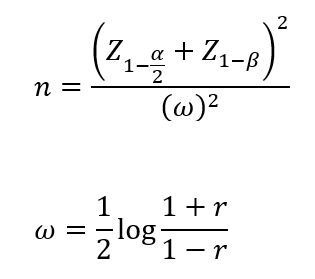
We used primary information from a pilot study with 20 hypertensive patients to determine the sample size. The sample size was estimated using the following formula: α=0.05, β=80% (power), r=0.43 (estimated correlation coefficient), and considering approximately 20% attrition, the final sample size was calculated to be 240.
Procedure
Participants were informed about the study’s aim and assured of the confidentiality of their data. All participants subsequently signed a consent form.
Instrument
Uing the demographic checklist, we collected information on socio-demographic and health-related factors, including age, gender, marital status, body mass index (BMI), occupational status, blood pressure readings, educational status, family history of diabetes, presence of other chronic diseases, ownership of a home blood pressure measuring device, home hypertension monitoring practices, insurance status, sleep status, and economic indicators.
The e-Health Literacy Scale (eHEALS), developed by Norman & Skinner, comprises eight items [26]. We utilized the validated Persian version of the e-HEALS, which has demonstrated a Cronbach’s alpha of 0.88 [27]. The internal consistency of the scale in our study was evaluated using Cronbach’s Alpha, yielding a coefficient of 0.79. It is a self-report measure designed to assess an individual’s knowledge and understanding of various aspects of online health information. This includes awareness of available health information resources on the internet, the ability to locate helpful resources, methods for accessing them, and the capacity to use the internet to address health-related queries. A key focus of the scale is the ability to critically evaluate online health information, differentiating between high-quality and low-quality sources. Responses to the items are recorded on a five-point Likert scale, ranging from 1 (strongly disagree) to 5 (strongly agree). The total score for the scale ranges from 8 to 40, with higher scores indicating a greater level of e-Health Literacy. A score of 24 or above on the e-HEALS is considered indicative of high e-health literacy [28].
The hypertension self-care profile, developed by Han et al., with 20 questions, was used to assess various aspects of hypertension self-care, including diet, physical activity, medication adherence, blood pressure self-monitoring, and smoking cessation [29]. Items are rated on a four-point Likert scale: 1 (never/rarely), 2 (sometimes), 3 (often), and 4 (always). The total score ranges from 20 to 80, with higher scores indicating a greater level of self-care. The validated Persian version of this profile was utilized, yielding a Cronbach’s alpha of 0.86 [30]. In the current study, the estimates of internal consistency, as measured by Cronbach’s alpha, was 0.79.
Data analysis
All analyses were conducted using SPSS 22. Multiple linear regression, t-tests, and one-way analysis of variance were employed to achieve the study’s analytical objectives.
Findings
The mean age of the respondents was 41.01±5.69 years. The sample comprised 141 women (58%). A family history of diabetes was reported by 190 participants (72.2%). The majority of participants, 218 (90.8%), were married and had a diploma-level education, with 112 (46.7%) reporting an average economic situation (Table 1).
Table 1. Demographic/underlying characteristics of hypertensive patients (n=240)
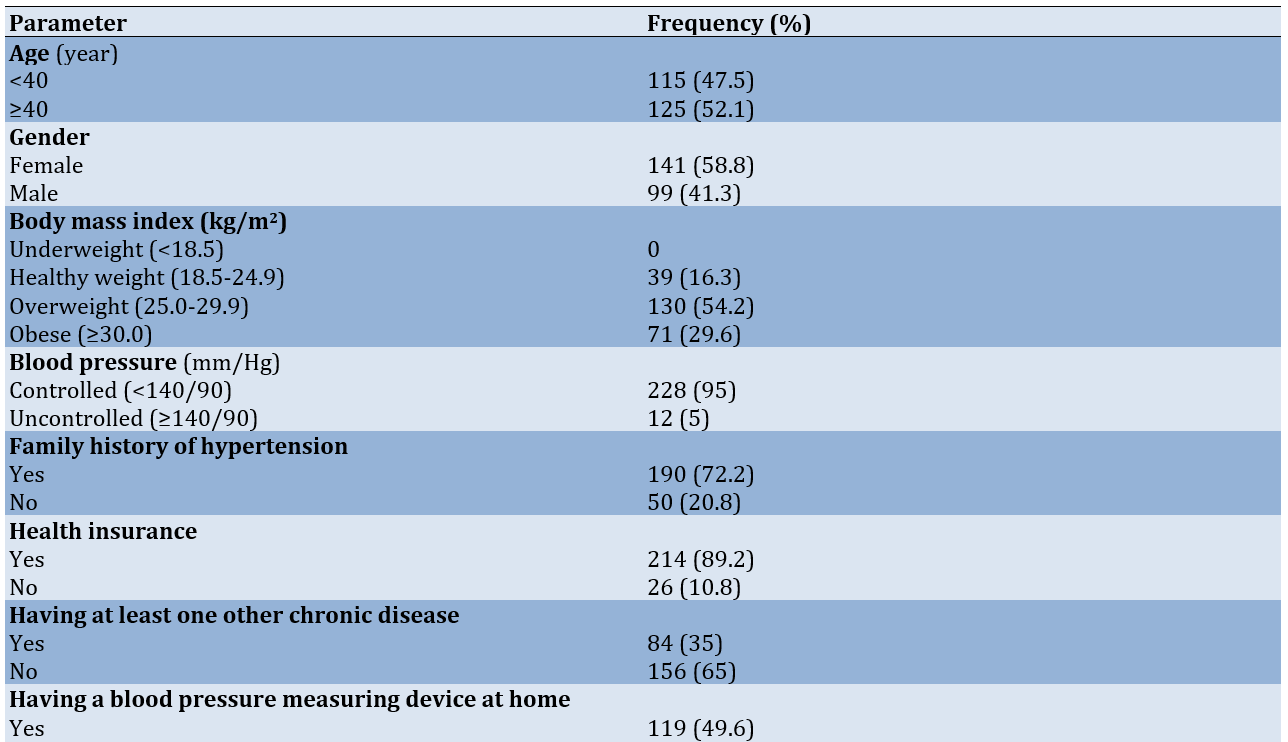
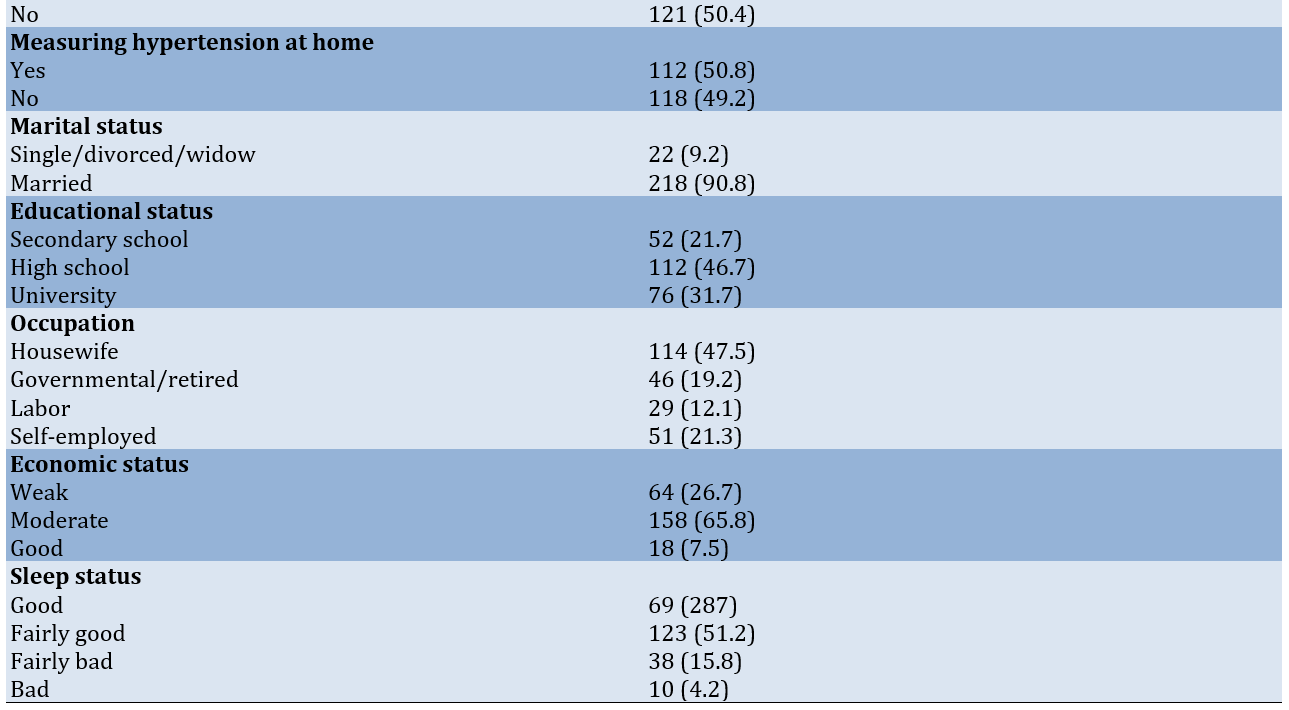
The mean e-health literacy score was 21.3±6.6. A significant portion of the participants, 179 (74.6%), exhibited low e-health literacy, while 61 case (25.4%) showed high e-health literacy.
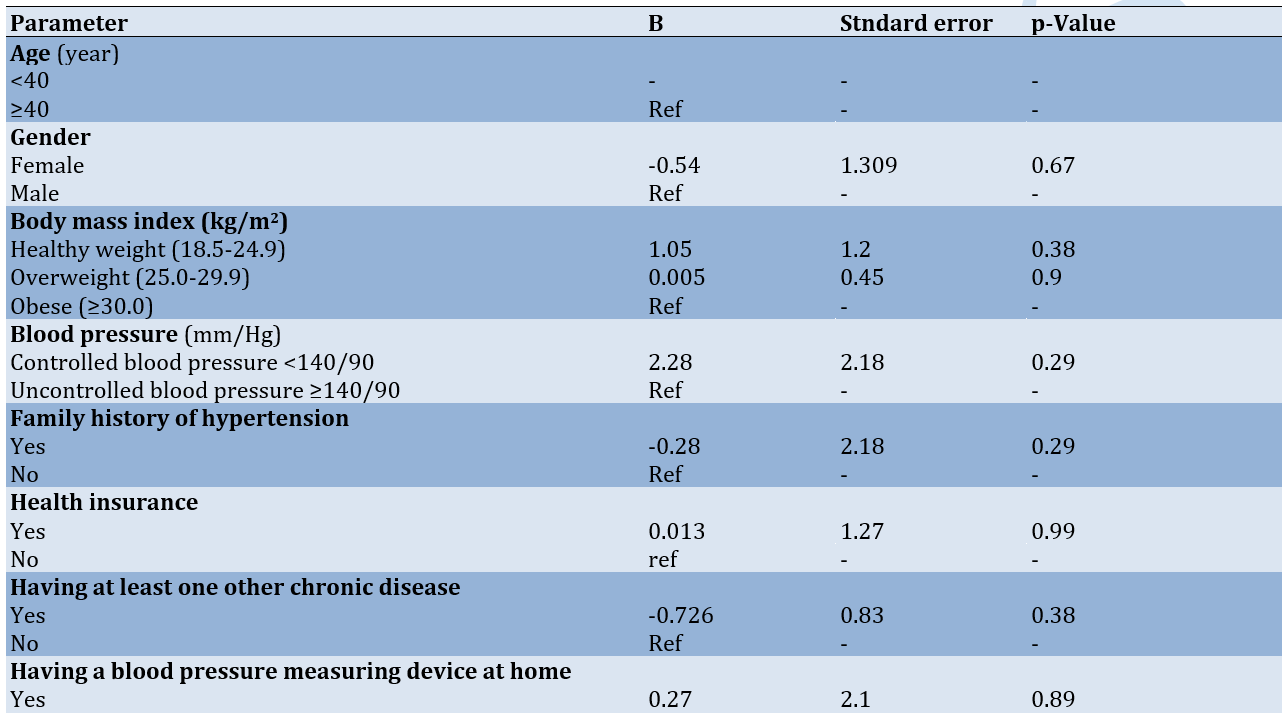
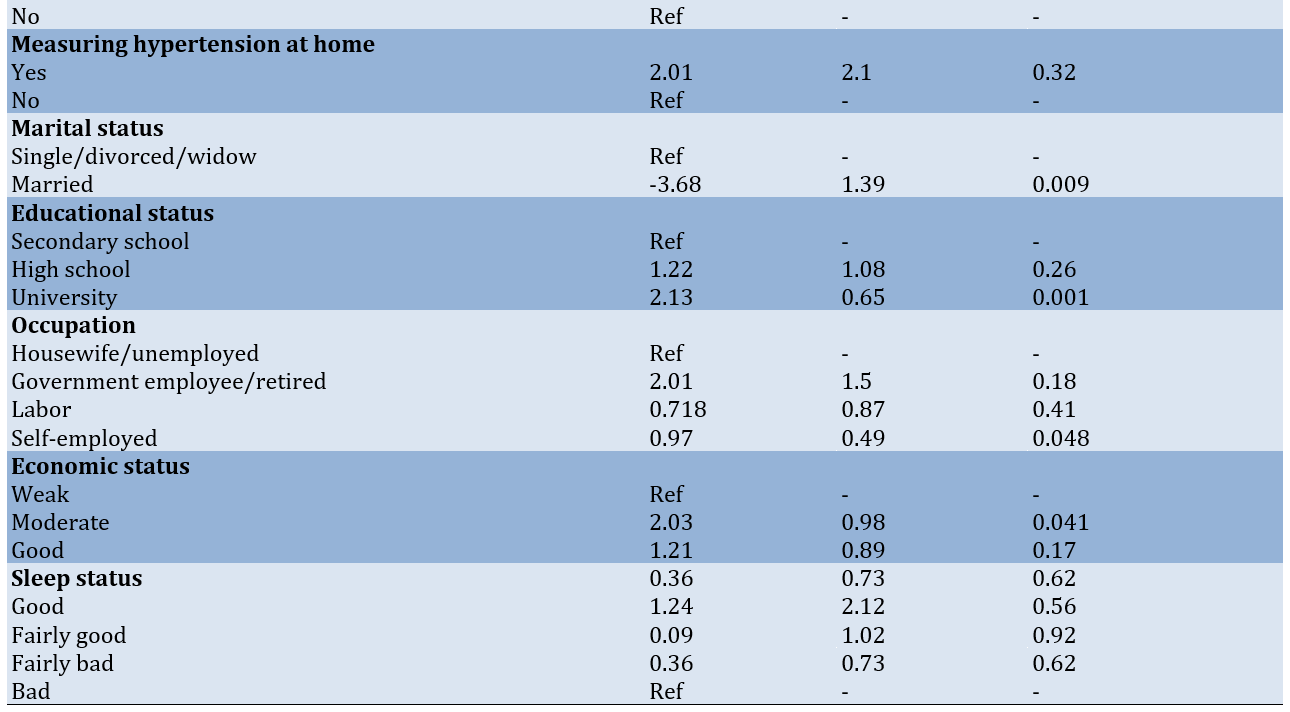
Educational level, marital status, economic status, and occupation were significant independent predictors of e-health literacy (p<0.05; Table 2).
Table 2. Predictors of e-health liSteracy in hypertensive patients (n=240)
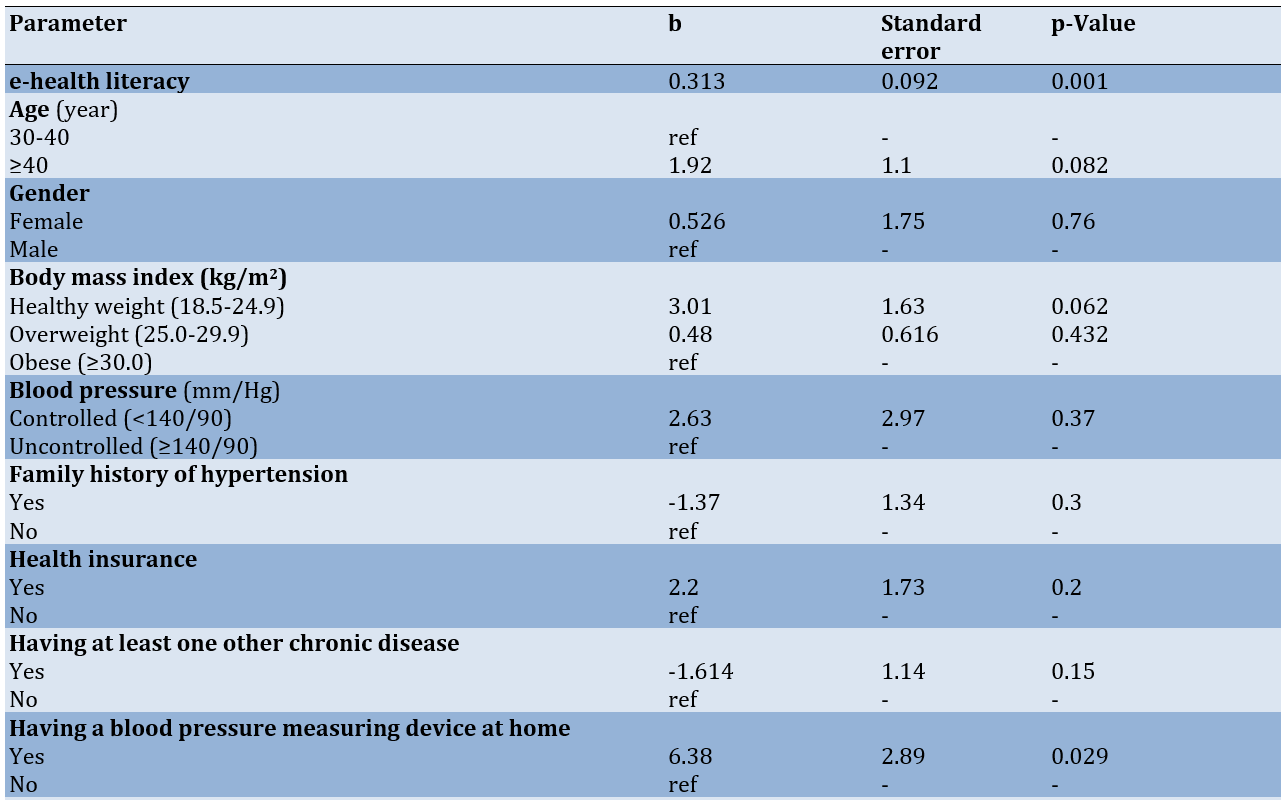
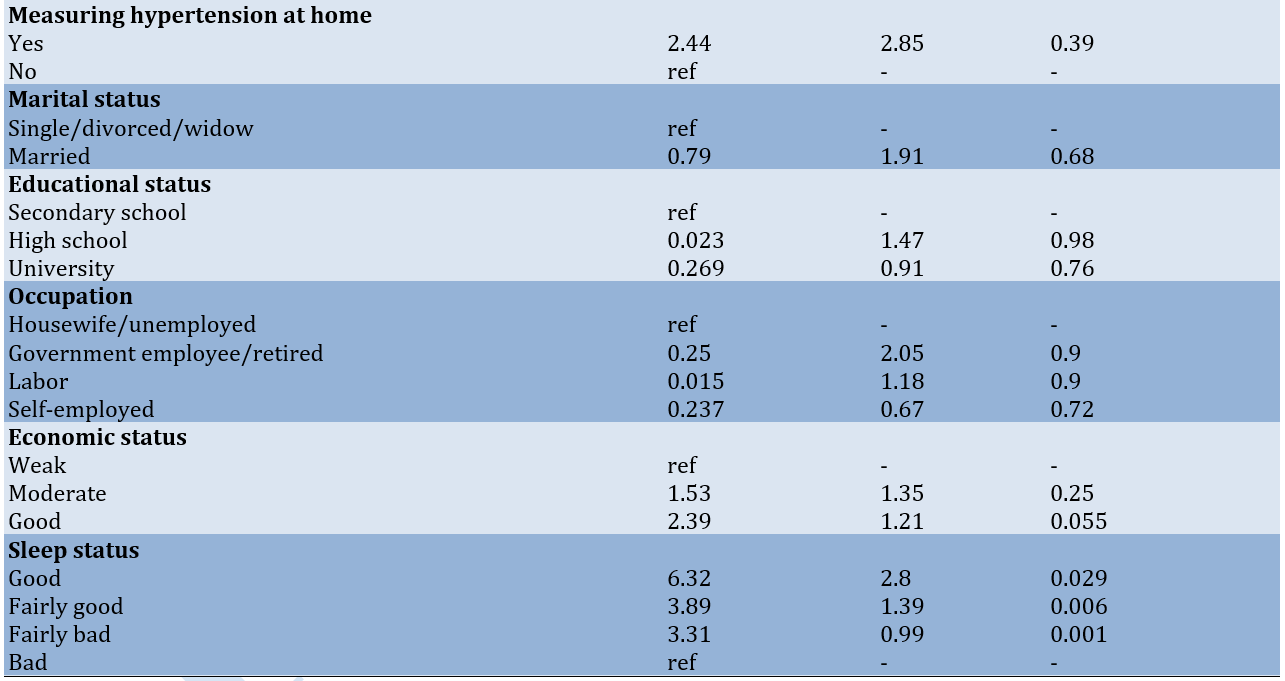
After adjusting for the presence of a home blood pressure measuring device and sleep status, the regression model demonstrated that e-health literacy (B=0.313, SE=0.092, p<0.05) was a statistically significant independent factor associated with self-care activities in hypertensive patients (Table 3).
Table 3. Adjusted predictors of self-care activities in hypertensive patients (n=240)
Discussion
This study aimed to investigate e-health literacy and its relationship with self-care behaviors among Iranian hypertensive patients. A significant positive correlation was found between e-health literacy and hypertension self-care behaviors in these patients. Self-care behaviors, including regular blood pressure monitoring, dietary regulation, consistent physical activity, and adherence to prescribed medications, are essential for effectively managing blood pressure [31, 32]. Higher levels of electronic health literacy are positively associated with these self-care behaviors in hypertensive patients. Enhanced health literacy empowers patients to better understand their condition and adopt effective self-care practices, such as medication adherence and lifestyle modifications [33]. Electronic health literacy facilitates a deeper comprehension of health conditions and available treatment options, thereby promoting informed decision-making [34]. Additionally, digital platforms offer timely access to health information, which is critical for hypertension management [35].
Despite the importance of electronic health literacy, disparities in technological access and health education can impede its effectiveness. Certain populations may face challenges in utilizing digital tools, potentially widening health inequalities in the management of hypertension.
Hypertensive patients possessing home blood pressure monitoring devices exhibited better self-care behaviors compared to those without such devices. This finding aligns with previous research. A study conducted in Turkey indicated that the use of a home blood pressure monitor is associated with reductions in both systolic and diastolic blood pressure [36]. Gebresilase et al. report that patients with a personal blood pressure monitor are five times more likely to engage in self-care activities than those without [37]. Similarly, a study in Ethiopia found that patients lacking a blood pressure measuring device are more prone to poor self-care [38]. Ajani et al. also establish a significant association between home blood pressure monitoring and self-care behaviors [39].
Our results suggest that individuals with personal blood pressure monitoring devices tend to monitor their blood pressure more regularly. This consistent feedback on their condition likely enhances their engagement and leads to better disease management. Self-monitoring of blood pressure allows for timely adjustments to self-care behaviors.
There was also a significant positive relationship between sleep status and self-care behaviors, where a more favorable sleep status was linked to better self-care practices. The connection between sleep quality and self-care behaviors has been corroborated in other studies [40, 41]. Knafl & Riegel report that patients with heart failure and poor sleep quality also demonstrate poorer medication adherence [40]. Kamrani et al. found that older adults without sleep disorders have higher self-care behavior scores [41].
It can be inferred that poor sleep may diminish self-care capacity, thereby impairing patients’ ability to manage their health effectively. Conversely, some patients might continue to experience sleep issues due to external factors like stress or environmental conditions, potentially necessitating interventions beyond self-care education.
A significant proportion of hypertensive patients, specifically 74.6%, exhibited low e-health literacy. This finding is consistent with previous research, which has also reported relatively low e-health literacy levels among patients [42, 43]. Individuals with low e-health literacy often encounter difficulties in understanding medical advice and treatment options, which can result in inadequate self-management of chronic conditions such as diabetes and hypertension [34, 44]. Furthermore, low e-health literacy may reduce self-efficacy, further impeding effective disease management [25].
The Global Burden of Disease Study estimates that deaths from chronic noncommunicable diseases will reach 52 million by 2030 [45]. Patients with chronic diseases continuously seek information online regarding medication, nutrition, disease management, and prevention strategies. Consequently, e-health interventions tailored for individuals with chronic diseases can significantly enhance self-management and patient engagement in their healthcare [46].
Our findings underscore the necessity of addressing the e-health literacy skill gap among hypertensive patients. Improving this skill set can assist them in locating and critically evaluating relevant online health resources to inform their health-related decisions. Targeted educational interventions aimed at enhancing e-health literacy can empower patients, ultimately leading to better self-management and improved health outcomes.
There was also a positive relationship between e-health literacy and the economic status of hypertensive patients. Individuals with lower incomes often demonstrate reduced e-health literacy, which consequently impacts their capacity for effective health condition management [47, 48]. Economic limitations restrict access to technology, digital devices, and the internet, further impeding the development of e-health literacy [49]. Nevertheless, e-health resources hold the potential to empower low-income individuals, enhance their involvement in healthcare decisions, and ultimately improve health outcomes when utilized effectively [47].
This correlation underscores the influence of socioeconomic disadvantages on e-health literacy within low-income populations. Targeted educational programs can equip individuals with lower incomes to better navigate health information and make more informed decisions. E-health resources can empower low-income individuals, enhancing their engagement in healthcare decisions and improving health outcomes when effectively utilized.
Occupation and education level independently predicted e-health literacy. Specifically, employed individuals and those with higher education levels tended to possess greater e-health literacy. This association between e-health literacy, education level, and employment status has been substantiated by other research [50, 51]. Patients with higher educational attainment generally exhibit better e-health literacy, which facilitates their ability to seek and effectively utilize online health information. They are also more inclined to engage with digital health tools, leading to improved health management and decision-making [52].
Employed individuals typically possess a high level of education, suggesting that their elevated e-health literacy may be associated with their educational attainment. Furthermore, in today’s increasingly digital world, most occupations necessitate internet usage. Consequently, employed individuals generally have greater access to technology and digital devices compared to the unemployed, which can influence their internet utilization and, ultimately, enhance their e-health literacy.
Understanding the connection between education and e-health literacy can guide the development of targeted educational interventions to improve health outcomes, especially for individuals with lower educational backgrounds and unemployed patients. Investing in training for both patients and healthcare professionals can help bridge the digital literacy gap, thereby enhancing healthcare delivery and patient outcomes. Patients who monitored their blood pressure at home using a blood pressure measuring device exhibited higher e-health literacy compared to those who did not engage in home monitoring.
Our study possesses several limitations. Firstly, its cross-sectional design precludes the establishment of causation and does not capture changes over time in the e-health literacy and self-care activities of hypertensive patients. Secondly, as all information was collected via self-reporting, the responses may be subject to socially desirable response bias.
Our results underscore the prevalence of low e-health literacy within this patient group, emphasizing the critical need for educational programs designed to improve e-health literacy among Iranian hypertensive individuals. Particular emphasis should be placed on supporting those with lower educational attainment. Furthermore, it is vital to stress the significance of self-care activities for hypertensive patients, coupled with comprehensive education on adopting a healthy lifestyle to effectively manage the condition and avert potential complications.
Conclusion
There is a correlation between e-health literacy and self-care practices among hypertensive patients.
Acknowledgments: We extend our sincere appreciation for the financial support provided by the Students’ Research Committee (Project No. 170) of Neyshabur University of Medical Sciences, as well as the invaluable participation of all individuals involved in this study.
Ethical Permissions: The study protocol received ethical approval from the Ethics Committee of Neyshabur University of Medical Sciences (ethics code: IR.NUMS.REC.1402.031).
Conflicts of Interests: The authors declared no potential competing interests with respect to the research, authorship, and/or publication of this article.
Authors' Contribution: Shirzadi Sh (First Author), Methodologist/Main Researcher/Discussion Writer/Statistical Analyst (30%); Arab Borzu Z (Second Author), Assistant Researcher/Statistical Analyst (20%); Taziki M (Third Author), Introduction Writer/Methodologist/Assistant Researcher/Discussion Writer/Statistical Analyst (15%); Safari S (Fourth Author), Introduction Writer/Methodologist/Assistant Researcher/Discussion Writer (15%); Golghandashti N (Fifth Author), Introduction Writer/Methodologist/Assistant Researcher/Discussion Writer (15%); Jahanfar Sh (Sixth Author), Introduction Writer/Assistant Researcher/Discussion Writer (5%)
Funding/Support: This research was financially supported by the Students’ Research Committee (Project No. 170) of Neyshabur University of Medical Sciences. The funding body had no involvement in the study’s design, data collection, analysis, interpretation, or the drafting of the manuscript.
Hypertension is a common and increasing disease in society. The number of adults with hypertension increased from 594 million in 1975 to 1.13 billion in 2015, with the increase observed largely in low- and middle-income countries. An estimated 1.28 billion adults aged 30-79 years worldwide have hypertension, with upwards of 1 in 4 men and 1 in 5 women (over a billion people) having the condition [1]. It is estimated that 7.7 to 10.4 million deaths occur annually due to hypertension [2].
Hypertension can lead to serious complications, including an increased risk of left ventricular hypertrophy, atrial fibrillation, aortic valve stenosis, diastolic dysfunction, heart failure and heart disease, chronic kidney disease, and dementia [3-6]. Additionally, healthcare costs related to hypertension are increasing annually and are estimated at around 131 billion dollars [7].
According to the results of a meta-analysis study, the prevalence of hypertension in Iran between 2004 and 2018 was estimated at 25% [8]. Factors such as urbanization, aging, smoking and alcohol consumption, overweight and obesity, and salt consumption are among the causes of the increased incidence of hypertension [9, 10]. An estimated 46% of adults with hypertension are unaware that they have the condition. Less than half of adults (42%) with hypertension are diagnosed and treated. Approximately 1 in 5 adults (21%) with hypertension have it under control [1].
One of the ways to control hypertension and prevent its complications is timely diagnosis and self-care behaviors [11]. Self-care in hypertensive patients includes adhering to medication, refraining from smoking or drinking alcohol, losing weight, eating a low-sodium and low-fat diet, being physically active, reducing stress, and self-monitoring blood pressure [12]. In research conducted among Iranian hypertensive patients, the mean score for self-care behaviors is 48.78±10.66, which is relatively undesirable [13]. In other studies, self-care behaviors have been reported at a moderate level [14, 15].
One of the factors that can influence the improvement of self-care behaviors in patients with hypertension is health literacy [15, 16]. Electronic health literacy (e-health literacy) refers to an individual’s capacity to locate, evaluate, exchange, and use information from health communication technologies for their benefit and the benefit of others [17]. Today, the Internet has become a popular tool for searching for health information resources worldwide, with 50% of Americans searching the Internet for their medical issues [18].
In a study conducted by Aslani et al. in 2012 in Iran, the e-health literacy status of cardiac patients is estimated to be moderate [19]. In another study, patients with heart failure over 50 years of age have low e-health literacy scores [20].
The results of a systematic review and meta-analysis show a positive correlation between e-health literacy and health-related behaviors, indicating that e-health literacy can mediate the process by which health-related information leads to changes in health-related behaviors [21]. In their study, Bakhshayesh et al. determine that e-health literacy and self-care behaviors play an essential role in improving the quality of life of patients with heart failure [20]. In a study conducted on nurses in Turkey, a significant relationship is found between the level of e-health literacy of nurses and their overall health-improving behaviors [22].
Low e-health literacy restricts patients’ ability to interpret medical instructions and health resources, leading to disengagement from their care [23]. Low health literacy is associated with lower medication adherence, impacting overall health outcomes [24]. Furthermore, low e-health literacy correlates with reduced self-efficacy, which is critical for patients to manage their health effectively [25].
Given the increasing prevalence of chronic diseases, including hypertension, the expansion of the electronic world, and the use of electronic resources to obtain information, electronic health literacy is necessary to identify reliable information sources and use them correctly. Therefore, the present study aimed to investigate e-health literacy and examine its relationship with self-care behaviors in Iranian hypertensive patients.
Instrument and Methods
Study design, setting, and participants
This cross-sectional study was conducted from March to June 2024 among 240 hypertensive patients at healthcare centers in Neyshabur City, Iran.
Eligibility criteria included at least six months since the diagnosis of the disease, being literate, having internet access and the ability to use it, and taking antihypertensive medication. Hypertensive patients with physical or mental disabilities and those who withdrew consent during the study were excluded.
The sampling method employed was stratified-cluster sampling. Neyshabur city was divided into four regions (north, south, east, west), with each region considered a stratum. Within each region, there were two healthcare centers. These healthcare centers were considered clusters. One cluster was randomly selected from each stratum, resulting in the selection of four healthcare centers. The sample size within each stratum was determined according to the population residing in that region. Samples were randomly collected from the selected healthcare centers based on health records. Subsequently, the researchers (two public health students) contacted the selected individuals via phone. After providing sufficient and appropriate explanations about the study, they were invited to participate. If the invitation was accepted, participants were scheduled for an appointment at the healthcare centers (response rate=100%). During questionnaire completion, two public health students were present to assist with any questions.
We used primary information from a pilot study with 20 hypertensive patients to determine the sample size. The sample size was estimated using the following formula: α=0.05, β=80% (power), r=0.43 (estimated correlation coefficient), and considering approximately 20% attrition, the final sample size was calculated to be 240.
Procedure
Participants were informed about the study’s aim and assured of the confidentiality of their data. All participants subsequently signed a consent form.
Instrument
Uing the demographic checklist, we collected information on socio-demographic and health-related factors, including age, gender, marital status, body mass index (BMI), occupational status, blood pressure readings, educational status, family history of diabetes, presence of other chronic diseases, ownership of a home blood pressure measuring device, home hypertension monitoring practices, insurance status, sleep status, and economic indicators.
The e-Health Literacy Scale (eHEALS), developed by Norman & Skinner, comprises eight items [26]. We utilized the validated Persian version of the e-HEALS, which has demonstrated a Cronbach’s alpha of 0.88 [27]. The internal consistency of the scale in our study was evaluated using Cronbach’s Alpha, yielding a coefficient of 0.79. It is a self-report measure designed to assess an individual’s knowledge and understanding of various aspects of online health information. This includes awareness of available health information resources on the internet, the ability to locate helpful resources, methods for accessing them, and the capacity to use the internet to address health-related queries. A key focus of the scale is the ability to critically evaluate online health information, differentiating between high-quality and low-quality sources. Responses to the items are recorded on a five-point Likert scale, ranging from 1 (strongly disagree) to 5 (strongly agree). The total score for the scale ranges from 8 to 40, with higher scores indicating a greater level of e-Health Literacy. A score of 24 or above on the e-HEALS is considered indicative of high e-health literacy [28].
The hypertension self-care profile, developed by Han et al., with 20 questions, was used to assess various aspects of hypertension self-care, including diet, physical activity, medication adherence, blood pressure self-monitoring, and smoking cessation [29]. Items are rated on a four-point Likert scale: 1 (never/rarely), 2 (sometimes), 3 (often), and 4 (always). The total score ranges from 20 to 80, with higher scores indicating a greater level of self-care. The validated Persian version of this profile was utilized, yielding a Cronbach’s alpha of 0.86 [30]. In the current study, the estimates of internal consistency, as measured by Cronbach’s alpha, was 0.79.
Data analysis
All analyses were conducted using SPSS 22. Multiple linear regression, t-tests, and one-way analysis of variance were employed to achieve the study’s analytical objectives.
Findings
The mean age of the respondents was 41.01±5.69 years. The sample comprised 141 women (58%). A family history of diabetes was reported by 190 participants (72.2%). The majority of participants, 218 (90.8%), were married and had a diploma-level education, with 112 (46.7%) reporting an average economic situation (Table 1).
Table 1. Demographic/underlying characteristics of hypertensive patients (n=240)
The mean e-health literacy score was 21.3±6.6. A significant portion of the participants, 179 (74.6%), exhibited low e-health literacy, while 61 case (25.4%) showed high e-health literacy.
Educational level, marital status, economic status, and occupation were significant independent predictors of e-health literacy (p<0.05; Table 2).
Table 2. Predictors of e-health liSteracy in hypertensive patients (n=240)
After adjusting for the presence of a home blood pressure measuring device and sleep status, the regression model demonstrated that e-health literacy (B=0.313, SE=0.092, p<0.05) was a statistically significant independent factor associated with self-care activities in hypertensive patients (Table 3).
Table 3. Adjusted predictors of self-care activities in hypertensive patients (n=240)
Discussion
This study aimed to investigate e-health literacy and its relationship with self-care behaviors among Iranian hypertensive patients. A significant positive correlation was found between e-health literacy and hypertension self-care behaviors in these patients. Self-care behaviors, including regular blood pressure monitoring, dietary regulation, consistent physical activity, and adherence to prescribed medications, are essential for effectively managing blood pressure [31, 32]. Higher levels of electronic health literacy are positively associated with these self-care behaviors in hypertensive patients. Enhanced health literacy empowers patients to better understand their condition and adopt effective self-care practices, such as medication adherence and lifestyle modifications [33]. Electronic health literacy facilitates a deeper comprehension of health conditions and available treatment options, thereby promoting informed decision-making [34]. Additionally, digital platforms offer timely access to health information, which is critical for hypertension management [35].
Despite the importance of electronic health literacy, disparities in technological access and health education can impede its effectiveness. Certain populations may face challenges in utilizing digital tools, potentially widening health inequalities in the management of hypertension.
Hypertensive patients possessing home blood pressure monitoring devices exhibited better self-care behaviors compared to those without such devices. This finding aligns with previous research. A study conducted in Turkey indicated that the use of a home blood pressure monitor is associated with reductions in both systolic and diastolic blood pressure [36]. Gebresilase et al. report that patients with a personal blood pressure monitor are five times more likely to engage in self-care activities than those without [37]. Similarly, a study in Ethiopia found that patients lacking a blood pressure measuring device are more prone to poor self-care [38]. Ajani et al. also establish a significant association between home blood pressure monitoring and self-care behaviors [39].
Our results suggest that individuals with personal blood pressure monitoring devices tend to monitor their blood pressure more regularly. This consistent feedback on their condition likely enhances their engagement and leads to better disease management. Self-monitoring of blood pressure allows for timely adjustments to self-care behaviors.
There was also a significant positive relationship between sleep status and self-care behaviors, where a more favorable sleep status was linked to better self-care practices. The connection between sleep quality and self-care behaviors has been corroborated in other studies [40, 41]. Knafl & Riegel report that patients with heart failure and poor sleep quality also demonstrate poorer medication adherence [40]. Kamrani et al. found that older adults without sleep disorders have higher self-care behavior scores [41].
It can be inferred that poor sleep may diminish self-care capacity, thereby impairing patients’ ability to manage their health effectively. Conversely, some patients might continue to experience sleep issues due to external factors like stress or environmental conditions, potentially necessitating interventions beyond self-care education.
A significant proportion of hypertensive patients, specifically 74.6%, exhibited low e-health literacy. This finding is consistent with previous research, which has also reported relatively low e-health literacy levels among patients [42, 43]. Individuals with low e-health literacy often encounter difficulties in understanding medical advice and treatment options, which can result in inadequate self-management of chronic conditions such as diabetes and hypertension [34, 44]. Furthermore, low e-health literacy may reduce self-efficacy, further impeding effective disease management [25].
The Global Burden of Disease Study estimates that deaths from chronic noncommunicable diseases will reach 52 million by 2030 [45]. Patients with chronic diseases continuously seek information online regarding medication, nutrition, disease management, and prevention strategies. Consequently, e-health interventions tailored for individuals with chronic diseases can significantly enhance self-management and patient engagement in their healthcare [46].
Our findings underscore the necessity of addressing the e-health literacy skill gap among hypertensive patients. Improving this skill set can assist them in locating and critically evaluating relevant online health resources to inform their health-related decisions. Targeted educational interventions aimed at enhancing e-health literacy can empower patients, ultimately leading to better self-management and improved health outcomes.
There was also a positive relationship between e-health literacy and the economic status of hypertensive patients. Individuals with lower incomes often demonstrate reduced e-health literacy, which consequently impacts their capacity for effective health condition management [47, 48]. Economic limitations restrict access to technology, digital devices, and the internet, further impeding the development of e-health literacy [49]. Nevertheless, e-health resources hold the potential to empower low-income individuals, enhance their involvement in healthcare decisions, and ultimately improve health outcomes when utilized effectively [47].
This correlation underscores the influence of socioeconomic disadvantages on e-health literacy within low-income populations. Targeted educational programs can equip individuals with lower incomes to better navigate health information and make more informed decisions. E-health resources can empower low-income individuals, enhancing their engagement in healthcare decisions and improving health outcomes when effectively utilized.
Occupation and education level independently predicted e-health literacy. Specifically, employed individuals and those with higher education levels tended to possess greater e-health literacy. This association between e-health literacy, education level, and employment status has been substantiated by other research [50, 51]. Patients with higher educational attainment generally exhibit better e-health literacy, which facilitates their ability to seek and effectively utilize online health information. They are also more inclined to engage with digital health tools, leading to improved health management and decision-making [52].
Employed individuals typically possess a high level of education, suggesting that their elevated e-health literacy may be associated with their educational attainment. Furthermore, in today’s increasingly digital world, most occupations necessitate internet usage. Consequently, employed individuals generally have greater access to technology and digital devices compared to the unemployed, which can influence their internet utilization and, ultimately, enhance their e-health literacy.
Understanding the connection between education and e-health literacy can guide the development of targeted educational interventions to improve health outcomes, especially for individuals with lower educational backgrounds and unemployed patients. Investing in training for both patients and healthcare professionals can help bridge the digital literacy gap, thereby enhancing healthcare delivery and patient outcomes. Patients who monitored their blood pressure at home using a blood pressure measuring device exhibited higher e-health literacy compared to those who did not engage in home monitoring.
Our study possesses several limitations. Firstly, its cross-sectional design precludes the establishment of causation and does not capture changes over time in the e-health literacy and self-care activities of hypertensive patients. Secondly, as all information was collected via self-reporting, the responses may be subject to socially desirable response bias.
Our results underscore the prevalence of low e-health literacy within this patient group, emphasizing the critical need for educational programs designed to improve e-health literacy among Iranian hypertensive individuals. Particular emphasis should be placed on supporting those with lower educational attainment. Furthermore, it is vital to stress the significance of self-care activities for hypertensive patients, coupled with comprehensive education on adopting a healthy lifestyle to effectively manage the condition and avert potential complications.
Conclusion
There is a correlation between e-health literacy and self-care practices among hypertensive patients.
Acknowledgments: We extend our sincere appreciation for the financial support provided by the Students’ Research Committee (Project No. 170) of Neyshabur University of Medical Sciences, as well as the invaluable participation of all individuals involved in this study.
Ethical Permissions: The study protocol received ethical approval from the Ethics Committee of Neyshabur University of Medical Sciences (ethics code: IR.NUMS.REC.1402.031).
Conflicts of Interests: The authors declared no potential competing interests with respect to the research, authorship, and/or publication of this article.
Authors' Contribution: Shirzadi Sh (First Author), Methodologist/Main Researcher/Discussion Writer/Statistical Analyst (30%); Arab Borzu Z (Second Author), Assistant Researcher/Statistical Analyst (20%); Taziki M (Third Author), Introduction Writer/Methodologist/Assistant Researcher/Discussion Writer/Statistical Analyst (15%); Safari S (Fourth Author), Introduction Writer/Methodologist/Assistant Researcher/Discussion Writer (15%); Golghandashti N (Fifth Author), Introduction Writer/Methodologist/Assistant Researcher/Discussion Writer (15%); Jahanfar Sh (Sixth Author), Introduction Writer/Assistant Researcher/Discussion Writer (5%)
Funding/Support: This research was financially supported by the Students’ Research Committee (Project No. 170) of Neyshabur University of Medical Sciences. The funding body had no involvement in the study’s design, data collection, analysis, interpretation, or the drafting of the manuscript.
References
1. WHO. Hypertension [Internet]. Geneva: World Health Organization; 2023 [cited 2023, October 14]. Available from: https://www.who.int/news-room/fact-sheets/detail/hypertension. [Link]
2. Zhou B, Perel P, Mensah GA, Ezzati M. Global epidemiology, health burden and effective interventions for elevated blood pressure and hypertension. Nat Rev Cardiol. 2021;18(11):785-802. [Link] [DOI:10.1038/s41569-021-00559-8]
3. Emdin CA, Anderson SG, Salimi-Khorshidi G, Woodward M, MacMahon S, Dwyer T, et al. Usual blood pressure, atrial fibrillation and vascular risk: Evidence from 4.3 million adults. Int J Epidemiol. 2017;46(1):162-72. [Link] [DOI:10.1093/ije/dyw053]
4. Rahimi K, Mohseni H, Kiran A, Tran J, Nazarzadeh M, Rahimian F, et al. Elevated blood pressure and risk of aortic valve disease: A cohort analysis of 5.4 million UK adults. Eur Heart J. 2018;39(39):3596-603. [Link] [DOI:10.1093/eurheartj/ehy486]
5. Emdin CA, Rothwell PM, Salimi-Khorshidi G, Kiran A, Conrad N, Callender T, et al. Blood pressure and risk of vascular dementia: Evidence from a primary care registry and a cohort study of transient ischemic attack and stroke. Stroke. 2016;47(6):1429-35. [Link] [DOI:10.1161/STROKEAHA.116.012658]
6. Emdin CA, Anderson SG, Woodward M, Rahimi K. Usual blood pressure and risk of new-onset diabetes: Evidence from 4.1 million adults and a meta-analysis of prospective studies. J Am Coll Cardiol. 2015;66(14):1552-62. [Link] [DOI:10.1016/j.jacc.2015.07.059]
7. Kirkland EB, Heincelman M, Bishu KG, Schumann SO, Schreiner A, Axon RN, et al. Trends in healthcare expenditures among US adults with hypertension: National estimates, 2003-2014. J Am Heart Assoc. 2018;7(11):e008731. [Link] [DOI:10.1161/JAHA.118.008731]
8. Oori MJ, Mohammadi F, Norozi K, Fallahi-Khoshknab M, Ebadi A, Gheshlagh RG. Prevalence of HTN in Iran: Meta-analysis of published studies in 2004-2018. Curr Hypertens Rev. 2019;15(2):113-22. [Link] [DOI:10.2174/1573402115666190118142818]
9. Mosha NR, Mahande M, Juma A, Mboya I, Peck R, Urassa M, et al. Prevalence, awareness and factors associated with hypertension in North West Tanzania. Glob Health Action. 2017;10(1):1321279. [Link] [DOI:10.1080/16549716.2017.1321279]
10. Singh S, Shankar R, Singh GP. Prevalence and associated risk factors of hypertension: A cross‐sectional study in urban Varanasi. Int J Hypertens. 2017;2017(1):5491838. [Link] [DOI:10.1155/2017/5491838]
11. Bosworth HB, DuBard CA, Ruppenkamp J, Trygstad T, Hewson DL, Jackson GL. Evaluation of a self-management implementation intervention to improve hypertension control among patients in Medicaid. Transl Behav Med. 2011;1(1):191-9. [Link] [DOI:10.1007/s13142-010-0007-x]
12. Han HR, Lee H, Commodore-Mensah Y, Kim M. Development and validation of the hypertension self-care profile: A practical tool to measure hypertension self-care. J Cardiovasc Nurs. 2014;29(3):E11-20. [Link] [DOI:10.1097/JCN.0b013e3182a3fd46]
13. Asa Kohneforoudi Z, Gholian-Aval M, Tehrani H, Esmaily H. Evaluation of self-care status and its relationship with self-efficacy of patients with hypertension. Iran J Health Educ Health Promot. 2021;8(4):336-47. [Persian] [Link] [DOI:10.29252/ijhehp.8.4.336]
14. Zareban I, Araban M, Rohani MR, Karimy M, Zamani-Alavijeh F, Babanejad M, et al. High blood pressure self-care among hypertensive patients in Iran: A theory-driven study. J Hum Hypertens. 2022;36(5):445-52. [Link] [DOI:10.1038/s41371-020-00429-9]
15. Barati M, Bayat F, Asadi ZA, Moshir FA, Afshari M. Relationship between health literacy and self-care behaviors in hypertensive patients. J Educ Community Health. 2020;7(2):89-96. [Persian] [Link] [DOI:10.29252/jech.7.2.89]
16. Mansouri F, Darvishpour A, Mansour-Ghanaei R. The relationship between health literacy and self-care behaviors in the elderly with hypertension admitted to cardiac intensive care units: A correlational study. J Crit Care Nurse. 2022;15(1):34-44. [Persian] [Link]
17. Norman CD, Skinner HA. eHealth literacy: Essential skills for consumer health in a networked world. J Med Internet Res. 2006;8(2):e9. [Link] [DOI:10.2196/jmir.8.2.e9]
18. Zhao Y, Zhang J. Consumer health information seeking in social media: A literature review. Health Inf Libr J. 2017;34(4):268-83. [Link] [DOI:10.1111/hir.12192]
19. Aslani N, Garavand A, Lazem M, Davoodi F, Asadi H, Afsharifard P. Assessing the e-health literacy level and its predictors in heart patients: A case study in a heart hospital center in Iran. J Educ Health Promot. 2024;12(1):436. [Link] [DOI:10.4103/jehp.jehp_1763_22]
20. Bakhshayesh M, Hojatansari M, Siahkali SR. Investigating the relationship of electronic health literacy and self-care behaviors with life quality in patients with heart failure. Prev Care Nurs Midwifery J. 2023;13(4):30-40. [Link] [DOI:10.61186/pcnm.13.4.30]
21. Kim K, Shin S, Kim S, Lee E. The relation between eHealth literacy and health-related behaviors: Systematic review and meta-analysis. J Med Internet Res. 2023;25:e40778. [Link] [DOI:10.2196/40778]
22. Yoğurtcu H, Ozturk Haney M. The relationship between e-health literacy and health-promoting behaviors of turkish hospital nurses. Glob Health Promot. 2022;29(4):54-62. [Link] [DOI:10.1177/17579759221093389]
23. Mohiuddin AK. Low health literacy (LHL): A conniving opponent of patient treatment compliance. SIASAT. 2023;8(1):33-9. [Link] [DOI:10.33258/siasat.v8i1.141]
24. Ownby RL, Simonson M, Caballero J, Thomas-Purcell K, Davenport R, Purcell D, et al. A mobile app for chronic disease self-management for individuals with low health literacy: A multisite randomized controlled clinical trial. J Ageing Longev. 2024;4(2):51-71. [Link] [DOI:10.3390/jal4020005]
25. Wu Y, Wen J, Wang X, Wang Q, Wang W, Wang X, et al. Associations between e-health literacy and chronic disease self-management in older Chinese patients with chronic noncommunicable diseases: A mediation analysis. BMC Public Health. 2022;22(1):2226. [Link] [DOI:10.1186/s12889-022-14695-4]
26. Norman CD, Skinner HA. eHEALS: The eHealth literacy scale. J Med Internet Res. 2006;8(4):e27. [Link] [DOI:10.2196/jmir.8.4.e27]
27. Bazm S, Mirzaei M, Fallahzadeh H, Bazm R. Validity and reliability of the Iranian version of eHealth literacy scale. J Community Health Res. 2016;5(2):121-30. [Link]
28. Park H, Cormier E, Gordon G, Baeg JH. Identifying health consumers' eHealth literacy to decrease disparities in accessing eHealth information. Comput Inform Nurs. 2016;34(2):71-6. [Link] [DOI:10.1097/CIN.0000000000000205]
29. Han HR, Song HJ, Nguyen T, Kim MT. Measuring self-care in patients with hypertension: A systematic review of literature. J Cardiovasc Nurs. 2014;29(1):55-67. [Link] [DOI:10.1097/JCN.0b013e3182775fd1]
30. Gheshlagh RG, Parizad N, Ghalenoee M, Dalvand S, Farajzadeh M, Ebadi A. Psychometric properties of Persian version of hypertensioself-care profile in patients with high blood pressure. Koomesh. 2019;21(1):e153033. [Persian] [Link]
31. Hany A, Putra KR, Vatmasari RA, Nafis AN, Amalia AT, Khamdani E. Importance of self-management interventions in hypertension patients: A scoping review. Healthc Low Resour Settings. 2024;12(S1). [Link] [DOI:10.4081/hls.2024.13034]
32. Eslamimehr F, Hosseini Z, Aghamolaei T, Nikparvar M, Ghanbarnejad A. Predictors of self-care behaviors in patients with hypertension: The integrated model of theories of "planned behavior" and "protection motivation". J Educ Health Promot. 2024;13(1):213. [Link] [DOI:10.4103/jehp.jehp_592_23]
33. Jiang Y. Impact of community proactive health management application on electronic health literacy and self‐management of hypertensive patients. Public Health Nurs. 2024;41(6):1436-45. [Link] [DOI:10.1111/phn.13424]
34. Kadar K. Enhancing health literacy and self-care abilities among individuals with chronic diseases. Indones Contemp Nurs J. 2024;9(1):3-7. [Link] [DOI:10.20956/icon.v9i1.33038]
35. Rahmah ASN, Tamtomo D, Murti B. Meta analysis the effect of electronic health-based self management in controlling blood pressure in hipertensive patients. J Health Policy Manag. 2023;8(2):105-18. [Link] [DOI:10.26911/thejhpm.2023.08.02.04]
36. Akpolat T, Arici M, Sengul S, Derici U, Ulusoy S, Erturk S, et al. Home sphygmomanometers can help in the control of blood pressure: A nationwide field survey. Hypertens Res. 2018;41(6):460-8. [Link] [DOI:10.1038/s41440-018-0030-8]
37. Gebresilase FG, Bekele YA, Gebremedhin KB, Tolera BD. Knowledge and self-care practice among patients with hypertension in tertiary public hospitals of Addis Ababa, Ethiopia: A multicenter cross-sectional study. Int J Cardiol Cardiovasc Risk Prev. 2024;23:200333. [Link] [DOI:10.1016/j.ijcrp.2024.200333]
38. Getnet M. Magnitude and determinants of poor self-care practices and associated factors among hypertensive patients attending at Debre Berhan Referral Hospital, Amhara Regional State, Ethiopia. Research Square; 2021. [Link] [DOI:10.21203/rs.3.rs-664091/v1]
39. Ajani K, Gowani A, Gul R, Petrucka P. Levels and predictors of self-care among patients with hypertension in Pakistan. Int J Gen Med. 2021;14:1023-32. [Link] [DOI:10.2147/IJGM.S297770]
40. Knafl GJ, Riegel B. What puts heart failure patients at risk for poor medication adherence?. Patient Prefer Adherence. 2014;8:1007-18. [Link] [DOI:10.2147/PPA.S64593]
41. Kamrani A, Foroughan M, Taraghi Z, Yazdani J, Kaldi AR, Ghanei N, et al. Self care behaviors among elderly with chronic heart failure and related factors. Pak J Biol Sci. 2014;17(11):1161-9. [Link] [DOI:10.3923/pjbs.2014.1161.1169]
42. Shiferaw KB, Tilahun BC, Endehabtu BF, Gullslett MK, Mengiste SA. E-health literacy and associated factors among chronic patients in a low-income country: A cross-sectional survey. BMC Med Inform Decis Mak. 2020;20(1):181. [Link] [DOI:10.1186/s12911-020-01202-1]
43. Zhang Y, Xu P, Sun Q, Baral S, Xi L, Wang D. Factors influencing the e-health literacy in cancer patients: A systematic review. J Cancer Surviv. 2023;17(2):425-40. [Link] [DOI:10.1007/s11764-022-01260-6]
44. Altaş ZM, Hıdıroğlu S, Solmaz C, El Qadiri IM, Bolhassani I, Yalçın HD, et al. The association between electronic health literacy and self-care management in adults with type-2 diabetes. Prog Health Sci. 2022;12(2):14-9. [Link] [DOI:10.5604/01.3001.0016.1734]
45. GBD 2017 DALYs and HALE Collaborators. Global, regional, and national disability-adjusted life-years (DALY) for 359 diseases and injuries and health life expectancy (HALE) for 195 countries and territories, 1990-2017: A systematic analysis for the global burden of disease study 2017. Lancet. 2018;392(10159):1859-922. [Link] [DOI:10.1016/S0140-6736(18)32335-3]
46. Mirshekari FM, Maserat E. Designing the requirements of the digital health literacy system focusing on cancer. PAYAVARD SALAMAT. 2024;18(2):106-20. [Persian] [Link]
47. Suri VR, Gonzales A, Singh R. eHealth engages and empowers low-income HIV+ patients: Implications for health literacy practitioners. Proceedings of the 7th European Conference on Information Literacy. New York: Springer; 2021. p. 75-86. [Link] [DOI:10.1007/978-3-030-99885-1_7]
48. Cox J, Yu H, Ravanassa S, Hyde G, Hernandez E, Reisler J, et al. Empowering health literacy in low socioeconomic status populations: A comprehensive approach to addressing heart failure. Research Square; 2024. [Link] [DOI:10.21203/rs.3.rs-4284344/v1]
49. Lubin J, Haynes-Lewis H, Viswanathan S, Xie X, Kamara A, Tang J, et al. Assessment of electronic health literacy among patients in an urban, academic radiation therapy department. Int J Radiat Oncol Biol Phys. 2023;117(2):e39. [Link] [DOI:10.1016/j.ijrobp.2023.06.734]
50. Nikkhoo H, Mohammadi Shahboulaghi F, Nourozi Tabrizi K, Haghi M, Vahedi M. The level of e-health literacy and its related factors among the elderly living in the community of Tehran. Nurs Midwifery J. 2024;22(6):495-507. [Link] [DOI:10.61186/unmf.22.6.495]
51. Aslan G, Kant E. Relationship between medication adherence and e-health literacy levels in patients with hypertension. Turk J Cardiovasc Nurs. 2024;15(36):1-7. [Link]
52. Aggarwal A, Bhasin S, Maheshwari P, Sirivella AMB, Kalra D, Kumar N, et al. IJCM_133A: E-Health literacy and satisfaction regarding medical care among patients attending a tertiary care hospital in Mangalore. Indian J Community Med. 2024;49(Suppl 1):S39. [Link] [DOI:10.4103/ijcm.ijcm_abstract133]
Send email to the article author