

TMU
Owner
Tarbiat Modares University (TMU) is the owner of HEHP.

0.8
Cite Score 2025
Volume 14, Issue 1 (2026)
Health Educ Health Promot 2026, 14(1): 45-51 |
Back to browse issues page
Article Type:




History
Received: 2025/12/23 | Accepted: 2025/12/28 | Published: 2026/01/29
Received: 2025/12/23 | Accepted: 2025/12/28 | Published: 2026/01/29
How to cite this article
Suranto R I, A. Pasinringi S, Rivai F, A. Hamzah H, Irwandy I. Influence of Patient Conditions and Health Service Providers on Indonesian Patients' Experience. Health Educ Health Promot 2026; 14 (1) :45-51
URL: http://hehp.daneshafarand.org/article-4-83061-en.html
URL: http://hehp.daneshafarand.org/article-4-83061-en.html
Download citation:
BibTeX | RIS | EndNote | Medlars | ProCite | Reference Manager | RefWorks
Send citation to:


Rights and permissions
BibTeX | RIS | EndNote | Medlars | ProCite | Reference Manager | RefWorks
Send citation to:

Authors
Riana Ingrid Suranto *1 
 , Syahrir A. Pasinringi , Fridawaty Rivai , Herlina A. Hamzah , Irwandy Irwandy
, Syahrir A. Pasinringi , Fridawaty Rivai , Herlina A. Hamzah , Irwandy Irwandy
Keywords:
| Abstract (HTML) (1234 Views)
Full-Text: (131 Views)
Introduction
Hospitals can be categorized as a form of service because, as explained by Kotler et al. [1], a service is any activity or performance offered by one party to another, which is essentially intangible and does not result in a transfer of ownership. The provision process can be related or unrelated to a physical product. In the healthcare industry, hospitals have socio-economic characteristics, and their operations are not only oriented towards social values but must also consider economic principles. Competition between hospitals in Indonesia has increased since the implementation of the National Social Security System (SJSN), which allows all hospitals, both government-owned and private, to act as service providers for participants of the Social Security Administering Body (BPJS). This condition results in both types of hospitals having the same market segment [2].
Furthermore, the healthcare sector is currently influenced by the rapidly growing tide of globalization. Globalization brings changes in people's lifestyles, including preferences, choices, and healthcare service options. Along with improving economic conditions and public health, the demand for quality hospital services continues to rise [3]. Approaches to healthcare quality can be viewed from various perspectives, including those of healthcare providers, funders, healthcare facility owners, and patients. Among these four perspectives, the patient's perspective is crucial because it provides a direct view of patients' perceptions, experiences, and satisfaction with the services they receive. Understanding the patient's perspective is the basis for hospitals to undertake continuous improvement, so improving healthcare quality must be done consistently and adaptively to changing community needs [4].
Quality healthcare is care that meets patient expectations and needs. The concept of service quality encompasses various aspects such as infrastructure availability, medical personnel competence, efficiency of clinical and administrative service processes, patient safety, trust in healthcare facilities, and ease of access to services [5]. Meanwhile, service quality can also be evaluated from various perspectives, including service providers, funders, facility owners, and patients [6]. Measuring patient experience in hospitals is crucial for objectively and reliably assessing the extent to which services reflect patients' values and needs. These measurements help hospitals, policymakers, and stakeholders understand variations in patient experiences across institutions and how structural factors shape them. In the UK, the National Health Service (NHS) has mandated measuring patient experience as part of its service quality evaluation. This data is used to identify strengths and weaknesses in the care system, support quality improvement efforts, inform decision-makers, and expand patient choice. In addition to assessing safety and clinical efficacy, service providers are evaluated on humanistic dimensions, such as respect for patient dignity, empathy, and patient involvement in decision-making [7].
Another indicator of hospital quality is reflected in accreditation results. The Indonesian Ministry of Health requires all hospitals to undergo accreditation to improve the quality of healthcare services nationwide. Inco Sorowako Hospital is one of the hospitals that received national accreditation from the Hospital Accreditation Commission (KARS) in 2023, earning a Plenary rating. This achievement demonstrates that all aspects of service, from facilities and infrastructure to patient care procedures, have met government-set quality standards [8].
Based on data, the number of patient complaints at Inco Sorowako Hospital remains high compared to RSUD I Lagaligo, a competitor hospital, with a total of 149 complaints in the last three years (2022-2024). Based on the 2024 complaint data from Inco Sorowako Hospital, the most common complaints were long waiting times, incomprehensible staff explanations, and difficult-to-understand administrative procedures. Complaints are an expression of dissatisfaction with the service provided. Complaints should be used as an indicator in assessing organizational performance. Hospitals, as organizations, need to consider the complaints they receive, despite their efforts to provide the best possible service [9]. The complaint data indicate that the majority of patients filing complaints are employees or insurance company employees. Hospital complaints represent dissatisfaction expressed by patients, their families, or visitors with the service they receive. If complaints are not handled effectively, they can decrease customer satisfaction and impact the hospital's reputation. Consequently, this can lead to a decrease in patient numbers and revenue. If this condition persists in the long term, it may threaten the sustainability of hospital operations [10].
Healthcare is a primary and fundamental need for everyone. Therefore, every hospital has a responsibility to provide healthcare services that meet the community's needs [11]. Patient satisfaction is highly subjective, difficult to measure, and subject to change, with numerous interrelated factors spanning many dimensions of human life. This subjectivity can diminish and even become objective if there are enough shared opinions on a particular issue. Patients' perceptions of their interactions with various healthcare elements during a service encounter are subjective influences that shape their awareness of the healthcare system. These are influenced by beliefs, culture, and previous patient experiences (The Beryl Institute, n.d.). Perceptions determine the weight patients place on various elements of their healthcare experience, including patient communication with healthcare providers, facility quality, and waiting times [12].
Customer satisfaction is closely linked to service quality. High-quality products encourage customers to build long-term relationships with providers. This ongoing relationship allows organizations to more deeply understand customer needs and expectations. Thus, companies can increase customer satisfaction by maximizing positive experiences and minimizing, or even eliminating, unpleasant ones. In the context of healthcare, patient satisfaction is a key indicator of the quality of service provided. High patient satisfaction also plays a crucial role in attracting more patients and building loyalty to the hospital [13].
In general, effective complaint handling is a strategic step in resolving problems while maintaining good relations between service institutions and the community.
Anggraeny added that some patients complain because they feel the service provided, particularly by nursing staff, is not optimal in addressing their concerns [3]. Waine et al. explain that patient complaints are a form of feedback or suggestion, whether verbal or written, that identifies discrepancies in medical procedures or treatments received during the hospital service process [14].
One of the important functions of hospitals in the context of service marketing is to implement relationship marketing, an approach that focuses on meeting patient needs through a mutually beneficial relationship between service providers and recipients. In practice, hospital marketing strategies must emphasize creating patient satisfaction and loyalty, making complaint handling a crucial part of maintaining long-term relationships [15].
Beyond marketing aspects, hospital image also plays a strategic role in shaping public perception. This image is formed through patients' comparisons of various hospital attributes and performance. Patients then construct subjective perceptions based on the information and experiences they receive during the service process. Balmer defines organizational image as a complex mental representation of an institution that encompasses the company's reputation, values, and identity [16]. Similarly, Murdyanti & Rachmi state that the hospital image is the public's perception of the hospital's quality, reputation, and performance, both positive and negative [17].
Therefore, patient experience and hospital image are interconnected elements and key indicators of successful healthcare services. When a hospital provides optimal, patient-centered services, it not only enhances patient experiences but also strengthens its image in the public eye. So, the aim of this study was to analyze the influence of patient- and provider-related factors on patient experience at Primaya Inco Sorowako Hospital.
Instrument and Methods
This cross-sectional study was conducted among patients who had completed their visit at Primaya Inco Sorowako Hospital, Indonesia, during 2024 (3771 individuals) and were able to provide informative responses. The sample size was calculated to be 349 respondents (Lameshow formula). Respondents were selected using proportional stratified random sampling to ensure representation across all clinics.
The instrument used was a 74-item Likert-scale questionnaire (Strongly Agree=4; Agree=3; Disagree=2; Strongly Disagree=1). This questionnaire was referred to the journal Barriers and reliability of patient experience evaluation in Ontario: Perspectives of healthcare providers, managers, and policymakers by measuring the components of the Patient Dimension and Healthcare Provision, including Experience of Living with Illness, Subjective Influence, Healthcare Politics, Healthcare Quality, and Healthcare Responsiveness, as well as the overall patient experience.
After obtaining the ethical approval and other required permissions, the questionnaire was administered immediately after outpatient services, with trained data collectors ensuring independent responses.
Data were analyzed using SPSS 21 software and analyzed descriptively and inferentially using linear regression. Simple regression was applied to analyze the effect of each variable on patient experience, while multiple linear regression identified the dominant predictors. Validity and reliability tests had been previously conducted at RSUD I Lagaligo.
Findings
Most respondents (53.58%) reported a poor experience of illness, while 46.42% reported a good experience. The majority of respondents, namely 77.66%, gave a positive assessment, while 22.34% gave a negative assessment. 58.45% of respondents rated the politics of healthcare as good, while 41.55% rated it as poor. 57.88% of respondents rated the quality of healthcare services as good, while 42.12% rated it as poor. 89.11% of respondents rated the responsiveness of services as good, and only 10.88% rating it as poor. All respondents (100%) expressed satisfaction with their healthcare experience.
The lived experience of illness was associated with patient experience in a statistically significant manner. The regression model indicated that this parameter contributed to variations in patient experience. Similarly, subjective influences demonstrated a significant relationship with patient experience, indicating a stronger contribution compared to other patient-related parameters (Table 1).
Table 1. Simple regression test results
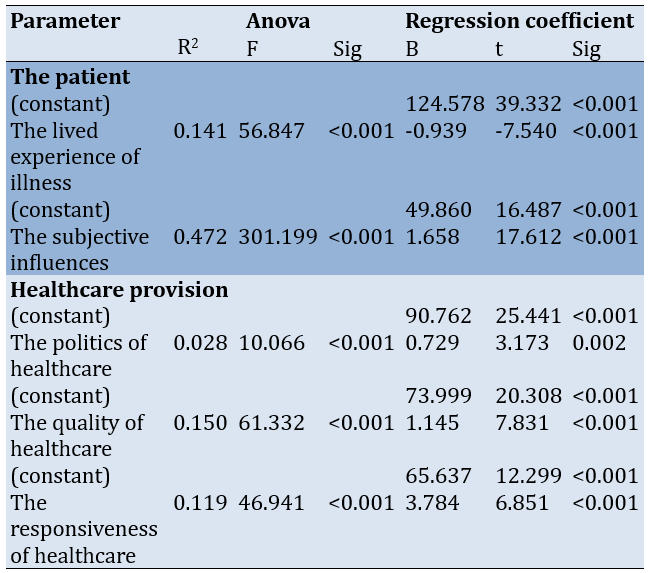
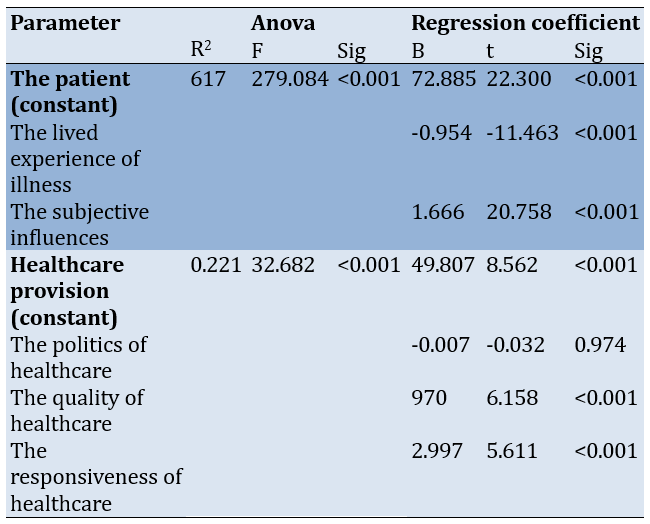
Regarding healthcare provision, the politics of healthcare, quality of healthcare, and responsiveness of healthcare each showed statistically significant associations with patients. The multiple linear regression model for patient-related outcomes was statistically significant. The lived experience of illness and subjective influences each showed a significant association with patient experience when analyzed simultaneously. The multiple linear regression model for healthcare provision was statistically significant. The quality and responsiveness of healthcare were significantly associated with patient experience, whereas the politics of healthcare were not (Table 2).
Table 2. Results of the multiple linear regression test of the patient and healthcare provision on patient experience
Discussion
In general, these findings indicate a relationship between the lived experience of illness (the Lived Experience of Illness) and patient experience (patient experience). However, the direction of the relationship appears to be opposite to initial expectations. In a theoretical context, the Lived Experience of Illness refers to patients' subjective experiences of illness, including perceptions, emotions, meanings, and psychological adaptations formed from their interactions with their health condition [18]. Patients with a positive lived experience are generally expected to have a deeper understanding of the disease process and healthcare services, enabling them to assess services more critically. In contrast, patients with less positive life experiences typically have lower expectations and tend to evaluate services more positively if their basic needs are met, such as empathy and attention from medical personnel.
The results of this study appear to demonstrate the expectation-reality gap phenomenon, as explained by Expectation-Disconfirmation Theory. This theory states that patient satisfaction is formed from a comparison between initial expectations and the reality experienced during care. Patients with positive lived experiences likely have higher expectations for service quality because prior experiences make them more sensitive and set specific standards for evaluating healthcare services. Consequently, even if the service provided is considered good, high expectations can lead to disconfirmation, which lowers satisfaction levels. Conversely, patients with less-than-ideal lived experiences may have lower expectations, so when the service meets or slightly exceeds those expectations, their perceived satisfaction is higher [19].
Furthermore, this phenomenon can be explained by the Adaptation Level Theory, which holds that individuals evaluate new experiences relative to their prior levels of adaptation. Patients who have had a positive experience with illness have adapted to their medical situation and may evaluate their care experience with more rational and critical standards. Conversely, patients with a more severe or less positive experience with illness tend to evaluate hospital care more emotionally and feel more grateful or satisfied when they receive adequate attention, empathy, and care [20].
According to Zakkar [21], the Lived Experience of Illness encompasses the physical, emotional, social, and economic burdens patients and their families face in coping with illness. He explained that a person's lived experience of illness encompasses not only the medical aspects but also involves personal, psychological, social, and existential meanings of their condition. Zakkar said that a patient's experience in coping with their illness will influence how they interact with the healthcare system. Patients who have accepted and understood their illness well typically demonstrate more stable emotional adaptation, making it easier to build positive relationships with healthcare professionals, and are more satisfied with the care provided. Conversely, patients who still experience denial or fear of their illness tend to evaluate care more critically and have less pleasant experiences [21].
These results indicate that the better a patient's subjective influence, the higher their level of satisfaction with the service experience at Inco Sorowako Hospital. Therefore, the better a patient's subjective influence, the more positive their experience with hospital services. In other words, patients' subjective perceptions and assessments of service, encompassing psychological and emotional aspects, as well as perceptions of healthcare workers' attentiveness, play a significant role in shaping their overall level of satisfaction and service experience. Patients who feel valued, cared for, and treated with empathy tend to have positive experiences with healthcare, even when their clinical circumstances are not entirely ideal.
A 2019 study by Fuster-RuizdeApodaca et al. of people living with HIV found that dimensions of patient experience (such as self-management) significantly impacted health-related quality of life (HRQoL) [22]. They used a PLS model and found that the interaction between treatment complexity and patient experience negatively impacted quality of life. In the context of your thesis, the experience of illness (the “lived experience”) can function similarly: Even if someone feels “good” about their disease management, if clinical care is complex or service interactions are inadequate, the patient experience can be less satisfying. The health communication literature, such as Problematic Integration Theory, explains how patients with chronic illness navigate the tension between expectations of control and the reality of uncertainty. This theory supports the interpretation that a “good” experience of illness may not always be positively associated with hospital experiences when expectations are high, and the reality of care does not match them.
This finding is also in line with the results of research conducted by Hakanson & Ohlen, which found that patients with chronic illnesses and more severe illness experiences often show high levels of satisfaction with care, as they value the attention and emotional support from medical personnel as highly significant. The study showed that experiencing a severe illness creates a more realistic perception of the healthcare system and fosters a sense of appreciation for every form of care received. Thus, the study's results at Inco Sorowako Hospital support the view that patients' lived experiences influence how they assess and interpret their healthcare experiences [23].
Toombs also explains the differing perceptions of illness held by patients and physicians. Toombs explains that, for patients, illness is not simply a biological condition but an existential experience that affects identity, the meaning of life, and social relationships. Meanwhile, for physicians, illness is viewed more as a clinical object to be diagnosed and treated. This difference in perspective often leads to gaps in communication and empathy between healthcare professionals and patients. In the context of this research, Toombs' theory reinforces the importance of understanding the lived experience of illness as a key aspect in building a more humane and holistic patient experience [24].
Havi Carel's phenomenology of Illness also explains that illness is not just a biological phenomenon, but also an existential and phenomenological experience that influences how a person understands themselves and their world. Carel emphasizes that when someone falls ill, their body, which was previously "transparent" and unnoticed in everyday life, becomes an "object of attention" due to the emergence of limitations, pain, or loss of control [25].
However, these results differ from those of Alharbi et al., who found that patients with a good understanding and experience of healthcare reported higher levels of satisfaction because they could communicate more effectively with healthcare professionals and more easily adapt to the service system. This difference suggests that social, cultural, and healthcare system contexts play a significant role in mediating the relationship between lived experience and patient experience. At Inco Sorowako Hospital, emotional factors and patient expectations likely play a key role in explaining why patients with less positive lived experiences reported greater satisfaction [26].
These findings align with the Patient-Centered Care theory by Gerteis, which emphasizes that patient experience is a multidimensional construct determined not only by clinical outcomes but also by patients' subjective perceptions of how they are treated during the care process. Factors such as empathy, effective communication, and respect have a strong emotional impact on perceptions of service quality [27].
This theory also aligns with the concept explained by Walt & Gilson that patient experience results from interactions between patients and the healthcare system, including communication with medical personnel, environmental factors, and psychological and social conditions that influence how patients evaluate services. Therefore, the study's results at Inco Sorowako Hospital support the theory that patient experience is influenced not only by perceptions but also by experiences. influenced not only by objective service quality but also by subjective aspects stemming from individual perceptions and expectations [28].
According to Zakkar [21], Subjective Influences are internal psychosocial factors that influence how patients perceive and evaluate healthcare services. This component encompasses the patient's emotions, perceptions, personal values, expectations, and past experiences with healthcare services. Zakkar emphasized that each patient brings a different cognitive and emotional background, making their assessment of service quality highly subjective. Zakkar emphasized that patient satisfaction and experience are shaped through internal perceptual processes. For example, two patients receiving the same medical service may have different experiences: One feels satisfied because of calmness and trust in the hospital system, while the other feels disappointed because of anxiety and higher expectations [21]. This is particularly relevant in the context of the research findings at Inco Sorowako Hospital. Data show that patients with positive subjective influences—positive perceptions, emotional stability, and trust in the hospital system—are more likely to be satisfied with the service. Conversely, patients with negative perceptions or unrealistic expectations tend to be less satisfied.
These findings support Zakkar's theory that subjective influences function as a "lens" that determines how patients assess every aspect of care, from communication with doctors to the condition of the treatment room. In other words, patients' subjective perceptions often have a stronger influence on their experience than the objective quality of care itself. In practice, this means hospitals need to pay attention to managing patients' expectations and emotional states, for example, through open communication, providing clear information, and an empathetic approach from healthcare professionals. When patients feel heard and valued, their subjective perceptions will be more positive, ultimately improving the overall patient experience [21].
This research supports the findings of a study conducted by Al Ramji & Fransiska, which found that patients' subjective perceptions of healthcare professionals' empathy and attention had a positive and significant relationship with patient experience in various hospitals in the UK [29]. The results of this study also align with Pranoto's findings, which indicate that subjective factors, such as perceptions of empathy from healthcare workers, clarity of information, and patient confidence in the treatment process, contribute significantly to patient experiences in hospitals [30].
However, this study also showed that although the majority of patients with positive subjective influence were satisfied (53.9%), 46.1% were still dissatisfied with their service experience. This phenomenon demonstrates that positive subjective influence does not necessarily guarantee overall satisfaction, as patient satisfaction is multidimensional. Patient satisfaction is influenced by three main components: Structure (facilities and resources), process (how services are delivered), and results (service outcomes). Therefore, even if patients' subjective perceptions are favorable, other factors, such as waiting time, facility availability, and service speed, can also influence overall satisfaction.
Conversely, among patients with less favorable subjective perceptions, 31.3% of respondents still expressed satisfaction with their service experience. This can be explained by the service recovery paradox [31], which states that, under certain conditions, even if patients have a negative initial perception, a positive experience of receiving attention or improved service can increase their satisfaction. Therefore, some patients with less favorable subjective perceptions can still feel satisfied if they experience warm interactions, high empathy from healthcare professionals, or satisfactory treatment outcomes.
Compared to previous research, these results align with a study by Al-Abri & Al-Balushi, which states that patients' subjective perceptions of medical staff attitudes, communication, and the hospital environment significantly influence patient satisfaction and loyalty [32]. However, these results differ from those of Liu et al., who found that patient subjective factors did not significantly influence satisfaction, as satisfaction was largely determined by the quality of technical services and medical facilities. This difference may be due to variations in cultural contexts, healthcare systems, and patient characteristics across the study areas.
Overall, the results of this study reinforce the understanding that subjective influences are a crucial factor in improving patient experience and satisfaction. Hospitals need to address patients' psychological, social, and emotional needs, rather than focusing solely on technical aspects of care. Efforts such as empathetic communication training for healthcare workers, enhancing interpersonal interactions, and creating a welcoming, reassuring service environment can strengthen patients' positive subjective experiences of the service. Therefore, continuous improvement in subjective aspects of care will significantly impact patient satisfaction and loyalty to the hospital.
Conclusion
Patient experience at Inco Sorowako Hospital is influenced by factors in both the Patient and Health Provision dimensions.
Acknowledgments: The authors would like to thank the hospital staff who have been willing to participate in this study, as well as the lecturers of the Hospital Administration Study Program, Faculty of Public Health, Hasanuddin University, for their guidance.
Ethical Permissions: this study has obtained ethical clearance and participant approval from the Faculty of Public Health, Hasanuddin University (1391/UN4.14.1/TP.01.02/2025).
Conflicts of Interests: The author declares no conflict of interest.
Authors' Contribution: Suranto RI (First Author), Introduction Writer/Main Researcher/Discussion Writer (35%); Pasinringi SA (Second Author), Methodologist/Discussion Writer (25%); Rivai F (Third Author), Assistant Researcher/Statistical Analyst (15%); Hamzah HA (Fourth Author), Assistant Researcher/Statistical Analyst (15%); Irwandy I (Fifth Author), Introduction Writer/Assistant Researcher (10%).
Funding/Support: All funding was provided independently.
Hospitals can be categorized as a form of service because, as explained by Kotler et al. [1], a service is any activity or performance offered by one party to another, which is essentially intangible and does not result in a transfer of ownership. The provision process can be related or unrelated to a physical product. In the healthcare industry, hospitals have socio-economic characteristics, and their operations are not only oriented towards social values but must also consider economic principles. Competition between hospitals in Indonesia has increased since the implementation of the National Social Security System (SJSN), which allows all hospitals, both government-owned and private, to act as service providers for participants of the Social Security Administering Body (BPJS). This condition results in both types of hospitals having the same market segment [2].
Furthermore, the healthcare sector is currently influenced by the rapidly growing tide of globalization. Globalization brings changes in people's lifestyles, including preferences, choices, and healthcare service options. Along with improving economic conditions and public health, the demand for quality hospital services continues to rise [3]. Approaches to healthcare quality can be viewed from various perspectives, including those of healthcare providers, funders, healthcare facility owners, and patients. Among these four perspectives, the patient's perspective is crucial because it provides a direct view of patients' perceptions, experiences, and satisfaction with the services they receive. Understanding the patient's perspective is the basis for hospitals to undertake continuous improvement, so improving healthcare quality must be done consistently and adaptively to changing community needs [4].
Quality healthcare is care that meets patient expectations and needs. The concept of service quality encompasses various aspects such as infrastructure availability, medical personnel competence, efficiency of clinical and administrative service processes, patient safety, trust in healthcare facilities, and ease of access to services [5]. Meanwhile, service quality can also be evaluated from various perspectives, including service providers, funders, facility owners, and patients [6]. Measuring patient experience in hospitals is crucial for objectively and reliably assessing the extent to which services reflect patients' values and needs. These measurements help hospitals, policymakers, and stakeholders understand variations in patient experiences across institutions and how structural factors shape them. In the UK, the National Health Service (NHS) has mandated measuring patient experience as part of its service quality evaluation. This data is used to identify strengths and weaknesses in the care system, support quality improvement efforts, inform decision-makers, and expand patient choice. In addition to assessing safety and clinical efficacy, service providers are evaluated on humanistic dimensions, such as respect for patient dignity, empathy, and patient involvement in decision-making [7].
Another indicator of hospital quality is reflected in accreditation results. The Indonesian Ministry of Health requires all hospitals to undergo accreditation to improve the quality of healthcare services nationwide. Inco Sorowako Hospital is one of the hospitals that received national accreditation from the Hospital Accreditation Commission (KARS) in 2023, earning a Plenary rating. This achievement demonstrates that all aspects of service, from facilities and infrastructure to patient care procedures, have met government-set quality standards [8].
Based on data, the number of patient complaints at Inco Sorowako Hospital remains high compared to RSUD I Lagaligo, a competitor hospital, with a total of 149 complaints in the last three years (2022-2024). Based on the 2024 complaint data from Inco Sorowako Hospital, the most common complaints were long waiting times, incomprehensible staff explanations, and difficult-to-understand administrative procedures. Complaints are an expression of dissatisfaction with the service provided. Complaints should be used as an indicator in assessing organizational performance. Hospitals, as organizations, need to consider the complaints they receive, despite their efforts to provide the best possible service [9]. The complaint data indicate that the majority of patients filing complaints are employees or insurance company employees. Hospital complaints represent dissatisfaction expressed by patients, their families, or visitors with the service they receive. If complaints are not handled effectively, they can decrease customer satisfaction and impact the hospital's reputation. Consequently, this can lead to a decrease in patient numbers and revenue. If this condition persists in the long term, it may threaten the sustainability of hospital operations [10].
Healthcare is a primary and fundamental need for everyone. Therefore, every hospital has a responsibility to provide healthcare services that meet the community's needs [11]. Patient satisfaction is highly subjective, difficult to measure, and subject to change, with numerous interrelated factors spanning many dimensions of human life. This subjectivity can diminish and even become objective if there are enough shared opinions on a particular issue. Patients' perceptions of their interactions with various healthcare elements during a service encounter are subjective influences that shape their awareness of the healthcare system. These are influenced by beliefs, culture, and previous patient experiences (The Beryl Institute, n.d.). Perceptions determine the weight patients place on various elements of their healthcare experience, including patient communication with healthcare providers, facility quality, and waiting times [12].
Customer satisfaction is closely linked to service quality. High-quality products encourage customers to build long-term relationships with providers. This ongoing relationship allows organizations to more deeply understand customer needs and expectations. Thus, companies can increase customer satisfaction by maximizing positive experiences and minimizing, or even eliminating, unpleasant ones. In the context of healthcare, patient satisfaction is a key indicator of the quality of service provided. High patient satisfaction also plays a crucial role in attracting more patients and building loyalty to the hospital [13].
In general, effective complaint handling is a strategic step in resolving problems while maintaining good relations between service institutions and the community.
Anggraeny added that some patients complain because they feel the service provided, particularly by nursing staff, is not optimal in addressing their concerns [3]. Waine et al. explain that patient complaints are a form of feedback or suggestion, whether verbal or written, that identifies discrepancies in medical procedures or treatments received during the hospital service process [14].
One of the important functions of hospitals in the context of service marketing is to implement relationship marketing, an approach that focuses on meeting patient needs through a mutually beneficial relationship between service providers and recipients. In practice, hospital marketing strategies must emphasize creating patient satisfaction and loyalty, making complaint handling a crucial part of maintaining long-term relationships [15].
Beyond marketing aspects, hospital image also plays a strategic role in shaping public perception. This image is formed through patients' comparisons of various hospital attributes and performance. Patients then construct subjective perceptions based on the information and experiences they receive during the service process. Balmer defines organizational image as a complex mental representation of an institution that encompasses the company's reputation, values, and identity [16]. Similarly, Murdyanti & Rachmi state that the hospital image is the public's perception of the hospital's quality, reputation, and performance, both positive and negative [17].
Therefore, patient experience and hospital image are interconnected elements and key indicators of successful healthcare services. When a hospital provides optimal, patient-centered services, it not only enhances patient experiences but also strengthens its image in the public eye. So, the aim of this study was to analyze the influence of patient- and provider-related factors on patient experience at Primaya Inco Sorowako Hospital.
Instrument and Methods
This cross-sectional study was conducted among patients who had completed their visit at Primaya Inco Sorowako Hospital, Indonesia, during 2024 (3771 individuals) and were able to provide informative responses. The sample size was calculated to be 349 respondents (Lameshow formula). Respondents were selected using proportional stratified random sampling to ensure representation across all clinics.
The instrument used was a 74-item Likert-scale questionnaire (Strongly Agree=4; Agree=3; Disagree=2; Strongly Disagree=1). This questionnaire was referred to the journal Barriers and reliability of patient experience evaluation in Ontario: Perspectives of healthcare providers, managers, and policymakers by measuring the components of the Patient Dimension and Healthcare Provision, including Experience of Living with Illness, Subjective Influence, Healthcare Politics, Healthcare Quality, and Healthcare Responsiveness, as well as the overall patient experience.
After obtaining the ethical approval and other required permissions, the questionnaire was administered immediately after outpatient services, with trained data collectors ensuring independent responses.
Data were analyzed using SPSS 21 software and analyzed descriptively and inferentially using linear regression. Simple regression was applied to analyze the effect of each variable on patient experience, while multiple linear regression identified the dominant predictors. Validity and reliability tests had been previously conducted at RSUD I Lagaligo.
Findings
Most respondents (53.58%) reported a poor experience of illness, while 46.42% reported a good experience. The majority of respondents, namely 77.66%, gave a positive assessment, while 22.34% gave a negative assessment. 58.45% of respondents rated the politics of healthcare as good, while 41.55% rated it as poor. 57.88% of respondents rated the quality of healthcare services as good, while 42.12% rated it as poor. 89.11% of respondents rated the responsiveness of services as good, and only 10.88% rating it as poor. All respondents (100%) expressed satisfaction with their healthcare experience.
The lived experience of illness was associated with patient experience in a statistically significant manner. The regression model indicated that this parameter contributed to variations in patient experience. Similarly, subjective influences demonstrated a significant relationship with patient experience, indicating a stronger contribution compared to other patient-related parameters (Table 1).
Table 1. Simple regression test results
Regarding healthcare provision, the politics of healthcare, quality of healthcare, and responsiveness of healthcare each showed statistically significant associations with patients. The multiple linear regression model for patient-related outcomes was statistically significant. The lived experience of illness and subjective influences each showed a significant association with patient experience when analyzed simultaneously. The multiple linear regression model for healthcare provision was statistically significant. The quality and responsiveness of healthcare were significantly associated with patient experience, whereas the politics of healthcare were not (Table 2).
Table 2. Results of the multiple linear regression test of the patient and healthcare provision on patient experience
Discussion
In general, these findings indicate a relationship between the lived experience of illness (the Lived Experience of Illness) and patient experience (patient experience). However, the direction of the relationship appears to be opposite to initial expectations. In a theoretical context, the Lived Experience of Illness refers to patients' subjective experiences of illness, including perceptions, emotions, meanings, and psychological adaptations formed from their interactions with their health condition [18]. Patients with a positive lived experience are generally expected to have a deeper understanding of the disease process and healthcare services, enabling them to assess services more critically. In contrast, patients with less positive life experiences typically have lower expectations and tend to evaluate services more positively if their basic needs are met, such as empathy and attention from medical personnel.
The results of this study appear to demonstrate the expectation-reality gap phenomenon, as explained by Expectation-Disconfirmation Theory. This theory states that patient satisfaction is formed from a comparison between initial expectations and the reality experienced during care. Patients with positive lived experiences likely have higher expectations for service quality because prior experiences make them more sensitive and set specific standards for evaluating healthcare services. Consequently, even if the service provided is considered good, high expectations can lead to disconfirmation, which lowers satisfaction levels. Conversely, patients with less-than-ideal lived experiences may have lower expectations, so when the service meets or slightly exceeds those expectations, their perceived satisfaction is higher [19].
Furthermore, this phenomenon can be explained by the Adaptation Level Theory, which holds that individuals evaluate new experiences relative to their prior levels of adaptation. Patients who have had a positive experience with illness have adapted to their medical situation and may evaluate their care experience with more rational and critical standards. Conversely, patients with a more severe or less positive experience with illness tend to evaluate hospital care more emotionally and feel more grateful or satisfied when they receive adequate attention, empathy, and care [20].
According to Zakkar [21], the Lived Experience of Illness encompasses the physical, emotional, social, and economic burdens patients and their families face in coping with illness. He explained that a person's lived experience of illness encompasses not only the medical aspects but also involves personal, psychological, social, and existential meanings of their condition. Zakkar said that a patient's experience in coping with their illness will influence how they interact with the healthcare system. Patients who have accepted and understood their illness well typically demonstrate more stable emotional adaptation, making it easier to build positive relationships with healthcare professionals, and are more satisfied with the care provided. Conversely, patients who still experience denial or fear of their illness tend to evaluate care more critically and have less pleasant experiences [21].
These results indicate that the better a patient's subjective influence, the higher their level of satisfaction with the service experience at Inco Sorowako Hospital. Therefore, the better a patient's subjective influence, the more positive their experience with hospital services. In other words, patients' subjective perceptions and assessments of service, encompassing psychological and emotional aspects, as well as perceptions of healthcare workers' attentiveness, play a significant role in shaping their overall level of satisfaction and service experience. Patients who feel valued, cared for, and treated with empathy tend to have positive experiences with healthcare, even when their clinical circumstances are not entirely ideal.
A 2019 study by Fuster-RuizdeApodaca et al. of people living with HIV found that dimensions of patient experience (such as self-management) significantly impacted health-related quality of life (HRQoL) [22]. They used a PLS model and found that the interaction between treatment complexity and patient experience negatively impacted quality of life. In the context of your thesis, the experience of illness (the “lived experience”) can function similarly: Even if someone feels “good” about their disease management, if clinical care is complex or service interactions are inadequate, the patient experience can be less satisfying. The health communication literature, such as Problematic Integration Theory, explains how patients with chronic illness navigate the tension between expectations of control and the reality of uncertainty. This theory supports the interpretation that a “good” experience of illness may not always be positively associated with hospital experiences when expectations are high, and the reality of care does not match them.
This finding is also in line with the results of research conducted by Hakanson & Ohlen, which found that patients with chronic illnesses and more severe illness experiences often show high levels of satisfaction with care, as they value the attention and emotional support from medical personnel as highly significant. The study showed that experiencing a severe illness creates a more realistic perception of the healthcare system and fosters a sense of appreciation for every form of care received. Thus, the study's results at Inco Sorowako Hospital support the view that patients' lived experiences influence how they assess and interpret their healthcare experiences [23].
Toombs also explains the differing perceptions of illness held by patients and physicians. Toombs explains that, for patients, illness is not simply a biological condition but an existential experience that affects identity, the meaning of life, and social relationships. Meanwhile, for physicians, illness is viewed more as a clinical object to be diagnosed and treated. This difference in perspective often leads to gaps in communication and empathy between healthcare professionals and patients. In the context of this research, Toombs' theory reinforces the importance of understanding the lived experience of illness as a key aspect in building a more humane and holistic patient experience [24].
Havi Carel's phenomenology of Illness also explains that illness is not just a biological phenomenon, but also an existential and phenomenological experience that influences how a person understands themselves and their world. Carel emphasizes that when someone falls ill, their body, which was previously "transparent" and unnoticed in everyday life, becomes an "object of attention" due to the emergence of limitations, pain, or loss of control [25].
However, these results differ from those of Alharbi et al., who found that patients with a good understanding and experience of healthcare reported higher levels of satisfaction because they could communicate more effectively with healthcare professionals and more easily adapt to the service system. This difference suggests that social, cultural, and healthcare system contexts play a significant role in mediating the relationship between lived experience and patient experience. At Inco Sorowako Hospital, emotional factors and patient expectations likely play a key role in explaining why patients with less positive lived experiences reported greater satisfaction [26].
These findings align with the Patient-Centered Care theory by Gerteis, which emphasizes that patient experience is a multidimensional construct determined not only by clinical outcomes but also by patients' subjective perceptions of how they are treated during the care process. Factors such as empathy, effective communication, and respect have a strong emotional impact on perceptions of service quality [27].
This theory also aligns with the concept explained by Walt & Gilson that patient experience results from interactions between patients and the healthcare system, including communication with medical personnel, environmental factors, and psychological and social conditions that influence how patients evaluate services. Therefore, the study's results at Inco Sorowako Hospital support the theory that patient experience is influenced not only by perceptions but also by experiences. influenced not only by objective service quality but also by subjective aspects stemming from individual perceptions and expectations [28].
According to Zakkar [21], Subjective Influences are internal psychosocial factors that influence how patients perceive and evaluate healthcare services. This component encompasses the patient's emotions, perceptions, personal values, expectations, and past experiences with healthcare services. Zakkar emphasized that each patient brings a different cognitive and emotional background, making their assessment of service quality highly subjective. Zakkar emphasized that patient satisfaction and experience are shaped through internal perceptual processes. For example, two patients receiving the same medical service may have different experiences: One feels satisfied because of calmness and trust in the hospital system, while the other feels disappointed because of anxiety and higher expectations [21]. This is particularly relevant in the context of the research findings at Inco Sorowako Hospital. Data show that patients with positive subjective influences—positive perceptions, emotional stability, and trust in the hospital system—are more likely to be satisfied with the service. Conversely, patients with negative perceptions or unrealistic expectations tend to be less satisfied.
These findings support Zakkar's theory that subjective influences function as a "lens" that determines how patients assess every aspect of care, from communication with doctors to the condition of the treatment room. In other words, patients' subjective perceptions often have a stronger influence on their experience than the objective quality of care itself. In practice, this means hospitals need to pay attention to managing patients' expectations and emotional states, for example, through open communication, providing clear information, and an empathetic approach from healthcare professionals. When patients feel heard and valued, their subjective perceptions will be more positive, ultimately improving the overall patient experience [21].
This research supports the findings of a study conducted by Al Ramji & Fransiska, which found that patients' subjective perceptions of healthcare professionals' empathy and attention had a positive and significant relationship with patient experience in various hospitals in the UK [29]. The results of this study also align with Pranoto's findings, which indicate that subjective factors, such as perceptions of empathy from healthcare workers, clarity of information, and patient confidence in the treatment process, contribute significantly to patient experiences in hospitals [30].
However, this study also showed that although the majority of patients with positive subjective influence were satisfied (53.9%), 46.1% were still dissatisfied with their service experience. This phenomenon demonstrates that positive subjective influence does not necessarily guarantee overall satisfaction, as patient satisfaction is multidimensional. Patient satisfaction is influenced by three main components: Structure (facilities and resources), process (how services are delivered), and results (service outcomes). Therefore, even if patients' subjective perceptions are favorable, other factors, such as waiting time, facility availability, and service speed, can also influence overall satisfaction.
Conversely, among patients with less favorable subjective perceptions, 31.3% of respondents still expressed satisfaction with their service experience. This can be explained by the service recovery paradox [31], which states that, under certain conditions, even if patients have a negative initial perception, a positive experience of receiving attention or improved service can increase their satisfaction. Therefore, some patients with less favorable subjective perceptions can still feel satisfied if they experience warm interactions, high empathy from healthcare professionals, or satisfactory treatment outcomes.
Compared to previous research, these results align with a study by Al-Abri & Al-Balushi, which states that patients' subjective perceptions of medical staff attitudes, communication, and the hospital environment significantly influence patient satisfaction and loyalty [32]. However, these results differ from those of Liu et al., who found that patient subjective factors did not significantly influence satisfaction, as satisfaction was largely determined by the quality of technical services and medical facilities. This difference may be due to variations in cultural contexts, healthcare systems, and patient characteristics across the study areas.
Overall, the results of this study reinforce the understanding that subjective influences are a crucial factor in improving patient experience and satisfaction. Hospitals need to address patients' psychological, social, and emotional needs, rather than focusing solely on technical aspects of care. Efforts such as empathetic communication training for healthcare workers, enhancing interpersonal interactions, and creating a welcoming, reassuring service environment can strengthen patients' positive subjective experiences of the service. Therefore, continuous improvement in subjective aspects of care will significantly impact patient satisfaction and loyalty to the hospital.
Conclusion
Patient experience at Inco Sorowako Hospital is influenced by factors in both the Patient and Health Provision dimensions.
Acknowledgments: The authors would like to thank the hospital staff who have been willing to participate in this study, as well as the lecturers of the Hospital Administration Study Program, Faculty of Public Health, Hasanuddin University, for their guidance.
Ethical Permissions: this study has obtained ethical clearance and participant approval from the Faculty of Public Health, Hasanuddin University (1391/UN4.14.1/TP.01.02/2025).
Conflicts of Interests: The author declares no conflict of interest.
Authors' Contribution: Suranto RI (First Author), Introduction Writer/Main Researcher/Discussion Writer (35%); Pasinringi SA (Second Author), Methodologist/Discussion Writer (25%); Rivai F (Third Author), Assistant Researcher/Statistical Analyst (15%); Hamzah HA (Fourth Author), Assistant Researcher/Statistical Analyst (15%); Irwandy I (Fifth Author), Introduction Writer/Assistant Researcher (10%).
Funding/Support: All funding was provided independently.
References
1. Kotler P, Shalowitz J, Stevens R. Strategic marketing for health care organizations: Building a customer-driven health system. San Francisco: Jossey-Bass; 2008. p. 85-106. [Link]
2. Pramesti RF, Adhariani D. SWOT analysis of HM Hospital's expansion strategy in terms of financial and non-financial performance. Owner. 2023;7(2):1353-66. [Indonesian] [Link] [DOI:10.33395/owner.v7i2.1384]
3. Anggraeny C. Health service innovation in improving service quality at the Jagir Community Health Center in Surabaya City. KEBIJAKAN DAN MANAJEMEN PUBLIK. 2013;1(1):85-93. [Indonesian] [Link]
4. Sudirman R. Quality management. Depok: Gunadarma University Press; 2023. [Indonesian] [Link]
5. Sepriano S, Suharyanto S, Judijanto L. Service quality in healthcare services. Jakarta: Sonpedia Publishing Indonesia; 2025. [Indonesian] [Link]
6. Nugraha A, Idayanti SI, Rahayu K. Application of the concept of quality of care in health services according to the Health Law. Pancasakti Law J. 2023;1(2):259-66. [Indonesian] [Link]
7. Coombes R. Darzi review: Reward hospitals for improving quality, Lord Darzi says. BMJ. 2008;337(7660):9. [Link] [DOI:10.1136/bmj.a642]
8. Mboi N, Surbakti IM, Trihandini I, Elyazar I, Smith KH, Ali PB, et al. On the road to universal health care in Indonesia, 1990-2016: A systematic analysis for the Global Burden of Disease Study 2016. Lancet. 2018;392(10147):581-91. [Link] [DOI:10.1016/S0140-6736(18)30595-6]
9. Imbaruddin A, Saeni AA. The role of the ombudsman in improving accountability of government public services. Proceedings of the 2nd International Conference on Administration Science 2020 (ICAS 2020). Paris: Atlantis Press; 2021. p. 195-7. [Link] [DOI:10.2991/assehr.k.210629.036]
10. Sissigi D, Darmastuti R. Strategy for handling complaints from marketing and public relations at Panti Rahayu Hospital, Purwodadi, through education with a Javanese cultural approach. JURNAL ILMU KOMUNIKASI UHO. 2023;8(3):458-68. [Indonesian] [Link] [DOI:10.52423/jikuho.v8i3.60]
11. Wiguna IPP, Jati IK. The influence of corporate social responsibility, executive risk preferences, and capital intensity on tax avoidance. E-JURNAL AKUNTANSI UNIVERSITAS UDAYANA. 2017;21(1):418-46. [Indonesian] [Link]
12. Sofaer S, Firminger K. Patient perceptions of the quality of health services. Annu Rev Public Health. 2005;26(1):513-59. [Link] [DOI:10.1146/annurev.publhealth.25.050503.153958]
13. Jafar RMS, Ahmad W, Sun Y. Unfolding the impacts of metaverse aspects on telepresence, product knowledge, and purchase intentions in metaverse stores. Technol Soc. 2023;74:102265. [Link] [DOI:10.1016/j.techsoc.2023.102265]
14. Waine I, Meliala A, Siswianti VDY. The complaints handling in the hospital. JURNAL MANAJEMEN PELAYANAN KESEHATAN. 2020;23(4):127-32. [Indonesian] [Link]
15. Bell SJ, Luddington JA. Coping with customer complaints. J Serv Res. 2006;8(3):221-33. [Link] [DOI:10.1177/1094670505283785]
16. Balmer T. Perineuronal nets enhance the excitability of fast-spiking neurons. eNeuro. 2016;3(4). [Link] [DOI:10.1523/ENEURO.0112-16.2016]
17. Murdyanti DY, Rachmi A. The influence of community health center image and service quality on inpatient satisfaction at Dongko Community Health Center, Trenggalek. JURNAL APLIKASI BISNIS. 2018;4(1): 1-4. [Indonesian] [Link]
18. Wijaya YA, Yudhawati NLPS, Fista KR, Andriana SKI. Classification of nursing theory developed by nursing experts: A literature review. Nurs Sains. 2022;23(2):1-49. [Link] [DOI:10.31219/osf.io/e6w5p]
19. Yuksel A, Yuksel F. The expectancy-disconfirmation paradigm: A critique. J Hosp Tour Res. 2001;25(2):107-31. [Link] [DOI:10.1177/109634800102500201]
20. Helson H. Adaptation-level theory. New York: Harper & Row; 1964. [Link]
21. Zakkar MA, Janes C, Meyer S. Barriers and reliability of patient experience evaluation in Ontario: Perspectives of healthcare providers, managers and policymakers. Int J Health Gov. 2022;27(3):268-81. [Link] [DOI:10.1108/IJHG-08-2021-0083]
22. Fuster-RuizdeApodaca MJ, Sánchez-Vega N, Galindo MJ, Marín-Jimenez I, De Toro J, Orozco-Beltrán D, et al. The influence of patient experience with healthcare on health-related quality of life of people living with HIV: An observational cross-sectional survey. Infect Dis Ther. 2019;8(3):369-82. [Link] [DOI:10.1007/s40121-019-0252-3]
23. Hakanson C, Ohlen J. Illness narratives of people who are homeless. Int J Qual Stud Health Well-being. 2016;11(1):32924. [Link] [DOI:10.3402/qhw.v11.32924]
24. Toombs SK. The meaning of illness: A phenomenological account of the different perspectives of physician and patient. Dordrecht: Springer; 1992. [Link] [DOI:10.1007/978-94-011-2630-4]
25. Carel H. Phenomenology of illness. Oxford: Oxford University Press; 2016. [Link] [DOI:10.1093/acprof:oso/9780199669653.001.0001]
26. Alharbi HF, Alzahrani NS, Almarwani AM, Asiri SA, Alhowaymel FM. Patients' satisfaction with nursing care quality and associated factors: A cross-sectional study. Nurs Open. 2022;10(5):3253-62. [Link] [DOI:10.1002/nop2.1577]
27. Gerteis M. Coordinating care and integrating services. In: Through the patient's eyes: Understanding and promoting patient-centered care. San Francisco: Jossey-Bass; 1993. p. 45-71. [Link]
28. Walt G, Gilson L. Reforming the health sector in developing countries: The central role of policy analysis. Health Policy Plan. 1994;9(4):353-70. [Link] [DOI:10.1093/heapol/9.4.353]
29. Al Ramji F, Fransiska A. Analysis of satisfaction of outpatient services at Sahabat Keluarga Clinic using the SERVQUAL model. Proc FRIMA. 2025;8(1):2142-52. [Link]
30. Pranoto AS. Patient perceptions of the quality of orthopedic services at Prof. Dr. H. Aloei Saboe Regional General Hospital. J Med Health. 2025;2(2):95-110. [Indonesian] [Link]
31. McCollough MA, Berry LL, Yadav MS. An empirical investigation of customer satisfaction after service failure and recovery. J Serv Res. 2000;3(2):121-37. [Link] [DOI:10.1177/109467050032002]
32. Al-Abri R, Al-Balushi A. Patient satisfaction survey as a tool towards quality improvement. Oman Med J. 2014;29(1):3-7. [Link] [DOI:10.5001/omj.2014.02]
Send email to the article author