

TMU
Owner
Tarbiat Modares University (TMU) is the owner of HEHP.

0.8
Cite Score 2025
Volume 14, Issue 1 (2026)
Health Educ Health Promot 2026, 14(1): 173-180 |
Back to browse issues page
Article Type:




History
Received: 2025/09/21 | Accepted: 2026/02/1 | Published: 2026/02/8
Received: 2025/09/21 | Accepted: 2026/02/1 | Published: 2026/02/8
How to cite this article
Estebsari F, Ghorbanzadeh S, Goodarzi E, Shahsavari A, Mohammadi M, Sheikh Milani A et al . Predicting Medical Students' Safety Practices in Clinical Environment via Protection Motivation Theory. Health Educ Health Promot 2026; 14 (1) :173-180
URL: http://hehp.daneshafarand.org/article-4-85684-en.html
URL: http://hehp.daneshafarand.org/article-4-85684-en.html
Download citation:
BibTeX | RIS | EndNote | Medlars | ProCite | Reference Manager | RefWorks
Send citation to:


Rights and permissions
BibTeX | RIS | EndNote | Medlars | ProCite | Reference Manager | RefWorks
Send citation to:

Authors
F. Estebsari1 
 , S. Ghorbanzadeh2 , E. Goodarzi3 , A. Shahsavari4 , M. Mohammadi5 , A. Sheikh Milani6 , Z. Rahimi Khalifeh Kandi *7
, S. Ghorbanzadeh2 , E. Goodarzi3 , A. Shahsavari4 , M. Mohammadi5 , A. Sheikh Milani6 , Z. Rahimi Khalifeh Kandi *7
1- “Department of Medical Surgical Nursing, Faculty of Nursing and Midwifery” and “Medical Ethics and Law Research Center”, Shahid Beheshti University of Medical Sciences, Tehran, Iran
2- Social Determinants of Health Research Center, Clinical Research Institute, Urmia University of Medical Sciences, Urmia, Iran
3- Student Research Committee, Shahid Beheshti University of Medical Sciences, Tehran, Iran
4- Department of Medical-Surgical Nursing, Aligoudarz School of Nursing, Lorestan University of Medical Sciences, Khorramabad, Iran
5- Department of Public Health, St. John University, York, United Kingdom
6- Department of Community Health Nursing, Faculty of Nursing and Midwifery, Shahid Beheshti University of Medical Sciences, Tehran, Iran
7- Department of Health Education and Promotion, Faculty of Health, Qazvin University of Medical Sciences, Qazvin, Iran
2- Social Determinants of Health Research Center, Clinical Research Institute, Urmia University of Medical Sciences, Urmia, Iran
3- Student Research Committee, Shahid Beheshti University of Medical Sciences, Tehran, Iran
4- Department of Medical-Surgical Nursing, Aligoudarz School of Nursing, Lorestan University of Medical Sciences, Khorramabad, Iran
5- Department of Public Health, St. John University, York, United Kingdom
6- Department of Community Health Nursing, Faculty of Nursing and Midwifery, Shahid Beheshti University of Medical Sciences, Tehran, Iran
7- Department of Health Education and Promotion, Faculty of Health, Qazvin University of Medical Sciences, Qazvin, Iran
Keywords:
| Abstract (HTML) (1091 Views)
Full-Text: (137 Views)
Introduction
Occupational hazards remain a persistent challenge in occupational health and safety, particularly in healthcare, where nearly 44.5% of healthcare workers experience needlestick injuries annually [1]. These hazards pose ongoing challenges, with potential consequences ranging from injuries and illnesses to long-term disability and workforce depletion [2, 3]. Such risks are especially critical in healthcare, where exposure to physical, chemical, biological, ergonomic, and psychosocial hazards is a daily reality for workers [4, 5]. Ensuring safety in these environments is therefore essential for both individual well-being and the sustainability of healthcare systems.
Global statistics emphasize the substantial economic and human burden of occupational hazards. Work-related accidents and diseases are estimated to cost approximately 4% of the global GDP annually [3, 6]. According to the International Labor Organization (ILO), about 330 million occupational accidents occur worldwide each year, with nearly 160 million workers suffering from work-related illnesses, resulting in approximately 2 million deaths [7]. The World Health Organization (WHO) also reports that workplace accidents lead to the loss of nearly 170 million workdays annually, with at least four workers injured every second [8].
These figures highlight the critical need for targeted preventive and protective strategies, particularly in healthcare settings, where workers—including medical students, nurses, and clinical staff—are exposed to a wide spectrum of physical, chemical, biological, ergonomic, and psychosocial hazards [9, 10]. Protecting this workforce requires not only awareness of risks but also the adoption of effective safety practices, making the study of factors that influence protective behaviors highly relevant.
Unsafe behaviors account for the majority of occupational incidents, underscoring the importance of targeting human factors rather than environmental conditions alone [8]. Consequently, analyzing the individual factors affecting healthcare workers is critical for understanding and preventing occupational accidents [11]. However, simply increasing knowledge about occupational hazards is insufficient to guarantee safe practices, as behavior is shaped by multiple psychological and motivational determinants [12, 13]. Therefore, selecting an appropriate model is a crucial step in implementing behavior change processes [14].
The protection motivation theory (PMT) offers a robust framework for this purpose. It explains how individuals assess threats (perceived susceptibility and severity) and evaluate coping options (self-efficacy, response efficacy, and response cost), thereby forming intentions that guide behavior [15–19]. PMT has been effectively applied to predict protective behaviors across domains, such as cancer prevention, HIV risk reduction, and workplace safety [20-22].
Medical students, as future healthcare providers, represent a unique high-risk group. Their limited clinical experience, combined with frequent exposure to invasive procedures and insufficient training in occupational safety, makes them especially vulnerable [23]. For instance, occupational injury rates among Australian nursing students were reported at 13.9%, with needles and standard syringes accounting for 37% of injuries [24]. Similarly, a systematic review highlights a high incidence of occupational contact dermatitis in certain groups of healthcare workers [25]. Another systematic review reports the high prevalence of needlestick injuries among healthcare personnel [1, 25, 26]. In Iran, a study declares that 71.1% of medical, dental, nursing, and midwifery students have experienced needlestick injuries—considerably higher than rates reported in other countries [26].
These observations highlight a critical need to investigate the psychological and motivational determinants of protective behaviors in medical students. Specifically, examining constructs such as self-efficacy, intention, and protection motivation within the PMT framework can provide insights into why students adopt—or fail to adopt—safety practices in clinical settings.
Accordingly, the present study aimed to identify predictors of protective behaviors among medical students facing occupational hazards, using PMT as the guiding framework to inform the design of targeted educational interventions that strengthen students’ self-efficacy and motivation, ultimately promoting safer clinical practices and improving healthcare quality.
Instrument and Methods
Design and participants
This descriptive-analytical study was conducted in 2025 among students at Shahid Beheshti University of Medical Sciences, Tehran, Iran. Using a 95% confidence level, an expected proportion of 0.5, and a margin of error of 0.05, the initial sample size was calculated as 400 participants. To account for a potential 5% nonresponse rate, the final sample size was increased to 420 students.
To ensure representation across the university’s 13 faculties, 35 students were allocated to each faculty. Within each faculty, students from different departments were included, and participants were selected via systematic random sampling by choosing every 10th student from departmental lists. Participants were eligible if they had successfully completed at least one academic term and one clinical course in a hospital setting.
Instrument
A demographic information questionnaire collected data on participants’ age, gender, field of study, educational level, marital status, and employment status.
Protective behaviors were assessed using the Protection Motivation Theory (PMT)-Based Questionnaire, adapted for the Iranian context [27]. This comprehensive instrument measures key constructs of the theory, including perceived susceptibility, perceived severity, self-efficacy, response efficacy, response cost, protection motivation, intention, and action.
Perceived susceptibility evaluates the extent to which individuals perceive themselves as vulnerable to occupational illnesses. It consists of five items, namely “Anyone may contract illnesses resulting from working in a hospital.” Responses are recorded on a 5-point Likert scale from strongly disagree (1) to strongly agree (5), yielding scores ranging from 5 to 25.
Perceived severity assesses participants’ understanding of the seriousness of health risks and potential consequences. It includes six items, such as “Contracting an illness would impact my ability to perform tasks and lead to disability.” Responses use the same 5-point Likert scale, with a scoring range of 6 to 30. Response cost examines perceived barriers to performing protective behaviors. Five items are included, for instance: “Using personal protective equipment at work or in public places to prevent illness is time-consuming for me”. Scores range from 5 to 25 on a 5-point Likert scale. Response cost examines perceived barriers to performing protective behaviors. Five items are included, for instance: “Using personal protective equipment at work or in public places to prevent illness is time-consuming for me.” Scores range from 5 to 25 on a 5-point Likert scale. Response efficacy measures the perceived effectiveness of protective behaviors in mitigating health risks. Five items assess this construct, e.g., “Following protective recommendations and adhering to prevention principles can save my family money.” Responses are recorded on a 5-point Likert scale, ranging from 5 to 25. Self-efficacy evaluates confidence in one’s ability to adopt and maintain protective behaviors. Five items are included, such as “I am confident that I can prevent illness.” Scoring is conducted on the same 5-point Likert scale, ranging from 5 to 25. Protection motivation comprises four items assessing determination to adopt protective measures, e.g., “I intend to wash my hands with soap and water after every healthcare service.” Responses are rated on a 5-point Likert scale from strongly disagree (1) to strongly agree (5), with scores ranging from 4 to 20. Action assesses actual protective behaviors through five items, such as “Do you use personal protective equipment in the workplace?” Responses range from never (1) to always (5), with total scores ranging from 5 to 25.
The instrument’s quantitative content validity was evaluated using the content validity ratio (CVR) to assess item necessity and the content validity index (CVI) to examine relevance, clarity, and simplicity. Feedback from ten experts across health promotion, instrument design, nursing, and medical education guided necessary qualitative and quantitative revisions. Additionally, the impact score (IS) was calculated to confirm the final approval of all questionnaire items.
To assess internal consistency, Cronbach’s alpha coefficients were calculated. A pilot test with 30 participants, who were not part of the main study, was conducted. Cronbach’s alpha values for the constructs were as follows: self-efficacy, 0.97; response efficacy, 0.89; perceived susceptibility, 0.93; perceived severity, 0.96; perceived costs, 0.93; intention, 0.92; protection motivation, 0.96; and action, 0.89, indicating excellent internal reliability and confirming the instrument’s validity and reliability for assessing the intended constructs.
Procedure
Prior to data collection, the study's objectives were clearly explained, and participants were assured that their responses would be kept confidential. Written informed consent was obtained from all participants. The questionnaires were administered face-to-face and were anonymous to ensure confidentiality. All procedures were conducted in accordance with the ethical standards of the institutional committee on human experimentation and the Declaration of Helsinki (1975, revised in 2000). Questionnaires were administered face-to-face. Following ethical approval and receipt of the study’s ethics code, researchers visited the university faculties to recruit participants in accordance with the predefined inclusion criteria.
Data analysis
Data were analyzed using SPSS 18. The normality of the data was evaluated using the Kolmogorov-Smirnov test. Analytical statistics examined relationships among constructs using Pearson’s correlation coefficients and identified predictors of protective behavior and motivation through linear regression. No missing data were reported for any study parameters; therefore, no imputation procedures were required.
Findings
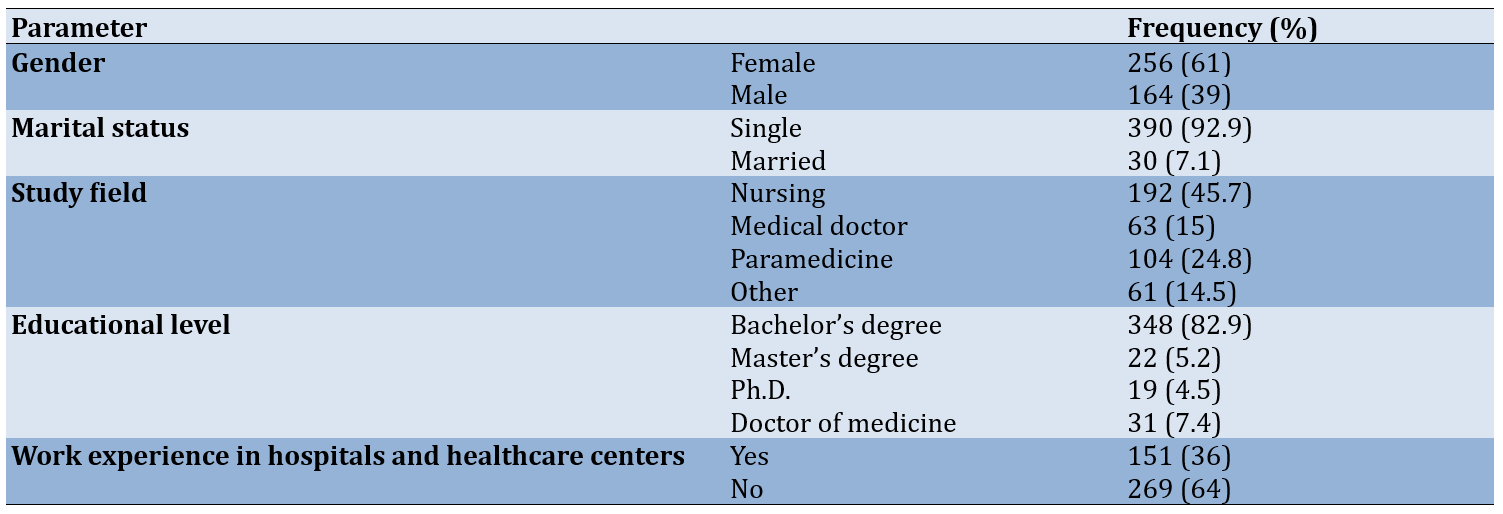
A total of 420 medical students with a mean age of 22.45±3.90 years participated, of whom 61% were female and 39% were male. All students who were approached agreed to participate, resulting in a 100% response rate (Table 1).
Table 1. Participants’ demographic information (n=420)
The highest mean score for PMT constructs was observed for perceived severity (23.76±3.70), followed by perceived susceptibility (22.11±2.40). Other constructs demonstrated the following mean scores: response efficacy (21.35±2.50), behavior (21.14±2.80), intention (19.32±3.40), self-efficacy (17.43±3.20), protection motivation (16.74±2.60), and perceived cost (15.07±4.10). No missing data were observed for any of the parameters included in the descriptive analysis, and all participants provided complete responses for every item.
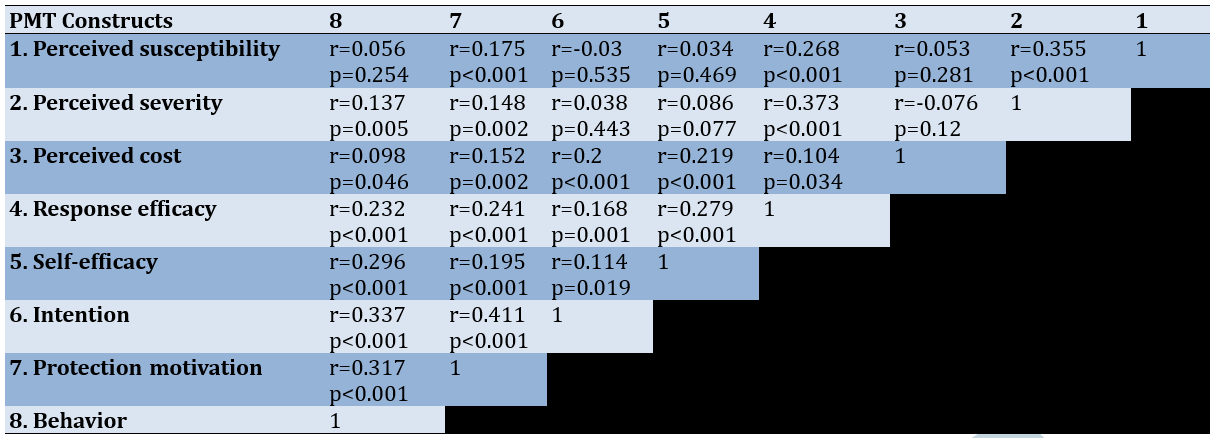
There was a significant positive relationship between intention and protection motivation (Table 2).
Table 2. Correlations of protection motivation theory (PMT) constructs
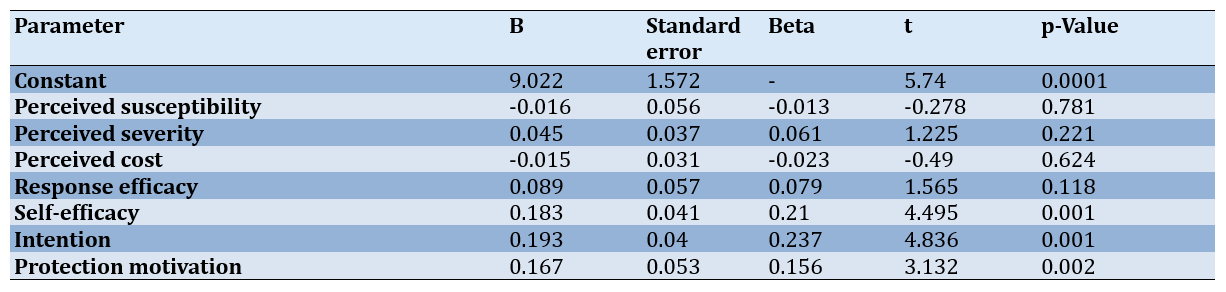
Self-efficacy, intention, and protection motivation were significant predictors of protective behavior in the context of occupational hazards (Table 3).
Table 3. Predictors of behavior based on the protection motivation theory (PMT) constructs
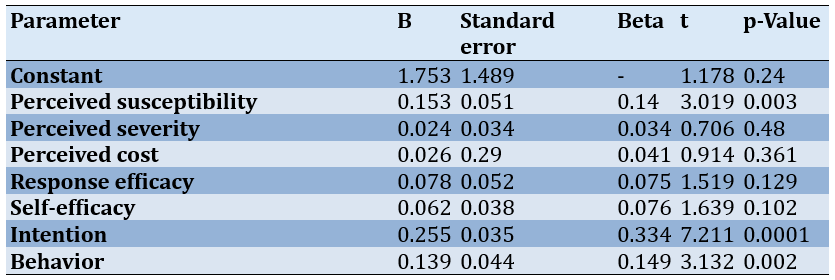
Perceived susceptibility, intention, and behavior were significant predictors of protection motivation among students exposed to occupational hazards (Table 4).
Table 4. Predictors of protection motivation based on protection motivation theory (PMT) constructs
Discussion
This study applied PMT to identify key determinants of protective behaviors among medical students. Healthcare systems, like other high-risk occupational settings, profoundly affect the well-being of their workforce. For medical students who combine academic study with direct patient care, safety concerns are especially pressing. International evidence shows that trainees are frequently exposed to hazards—ranging from slippery floors and poor lighting to excessive noise [28] and needlestick injuries [29]—that jeopardize both their safety and learning. Such risks highlight students’ vulnerability during clinical placements and emphasize the need to integrate preventive and protective behaviors into medical and nursing curricula. Promoting these behaviors not only safeguards students’ health but also fosters resilient professionals capable of maintaining high standards in future practice.
The PMT is one of the most influential frameworks for understanding preventive and protective health behaviors [3]. It has been applied in diverse areas, including smoking cessation [4], cancer prevention [6], HIV risk reduction [7], physical activity [8], and healthy dietary practices [9]. Its strength lies in emphasizing cognitive processes—such as threat and coping appraisal—that drive individuals’ motivation to adopt self-protective behaviors [10]. Drawing on this framework, the present study applied PMT to examine medical students’ protective behaviors against occupational hazards, thereby extending its use to academic and clinical training contexts where young professionals encounter unique risks.
Among the PMT constructs, perceived severity had the highest mean score among medical students, reflecting their strong awareness of occupational hazards. This perception is likely shaped by both extensive media coverage and clinical training, which sensitize students to the inherent risks of their profession [30, 31]. Consistent with previous findings, medical students generally acknowledge occupational risks in clinical environments, and this awareness facilitates preventive behaviors [32]. Media reports highlighting the challenges faced by healthcare professionals may further strengthen professional identity and motivate students to adopt protective measures [30, 31]. These observations point to the need for targeted interventions by health authorities and educators that not only provide information about risks but also leverage risk perception as a driver for preventive behavior, ultimately fostering safer clinical environments.
There was a significant positive association between intention and protection motivation, suggesting that students who feel more vulnerable to occupational hazards are more likely to form stronger protective intentions and engage in preventive behaviors. This finding is consistent with previous studies, which show that protection motivation directly influences the intention to adopt safety measures [33] and is linked to greater preventive action, as reported in research on rural women and skin cancer prevention [34]. Despite differences in context, the evidence collectively supports the premise that perceived vulnerability and protection motivation are central drivers of preventive behavior. These findings highlight that fostering protection motivation and risk perception is not merely an educational necessity but a strategic investment in shaping resilient future professionals. By embedding such approaches within medical curricula, institutions can cultivate a culture of safety that extends beyond individual students to the broader healthcare system, ultimately contributing to sustainable improvements in clinical practice and patient care.
Self-efficacy, intention, and protection motivation were key predictors of protective behaviors, consistent with findings from Okuhara et al. and Bashirian et al. [35, 36]. The strong positive correlation between self-efficacy and behavioral intention highlights the pivotal role of individuals’ confidence in performing preventive actions: the more they trust their ability to carry out protective measures, the more likely they are to translate intentions into actual behavior. These insights underscore the value of interventions that build self-efficacy among medical students. Through practical training, constructive feedback, and reinforcement, educators can foster confidence, strengthen motivation, and increase adherence to protective practices. Embedding protection motivation concepts within curricula may further ensure that both intention formation and behavioral performance are systematically supported in clinical environments.
Among the predictors examined, self-efficacy emerged as the strongest and most consistent determinant of protective behaviors. This suggests that students who both recognize their vulnerability to occupational hazards and feel confident in their ability to act are substantially more likely to translate intentions into preventive practices. These findings align with recent evidence underscoring the central role of self-efficacy in health-related behaviors. For example, Kusol & Kaewpawong report that higher perceived self-efficacy significantly increases nursing students’ adoption of preventive measures during the COVID-19 pandemic [37]. Likewise, Dębska Janus et al. demonstrate that self-efficacy, together with optimism, can strongly influence health behaviors among Polish health sciences students [38]. Thus, strengthening self-efficacy is a cornerstone of effective interventions to promote protective behaviors in medical education.
Building on this evidence, enhancing self-efficacy through targeted educational and psychological strategies should be considered a priority. Practical training, guided simulations, constructive feedback, and reinforcement approaches can all foster students’ confidence and increase their adherence to protective measures in both clinical and workplace environments. Ultimately, embedding self-efficacy as a core component of training curricula not only improves individual compliance but also helps cultivate a culture of safety that minimizes occupational risks over the long term.
Perceived vulnerability, intention, and behavior were key predictors of protection motivation among medical students. The greater the students’ perceived susceptibility to occupational hazards, the stronger their protection motivation, which subsequently drives preventive behaviors. Interestingly, Bashirian et al. report that self-efficacy, rather than perceived vulnerability, has the strongest association with protection motivation [36]. Such discrepancies may reflect differences in students’ awareness of occupational risks, the quality of workplace training, or cultural and contextual factors, highlighting the multifactorial nature of protection motivation. Both cognitive factors (e.g., perceived vulnerability) and personal resources (e.g., self-efficacy) appear to jointly influence protective behaviors.
These observations emphasize the need for comprehensive educational interventions that enhance both awareness and confidence. By simultaneously addressing perceived risks and self-efficacy, training programs can effectively strengthen students’ protection motivation and encourage adherence to preventive practices in clinical and workplace settings. In high-stress hospital environments, where occupational hazards are inherent, higher perceived severity is closely linked to vulnerability, shaping intentions and behaviors. This aligns with previous research demonstrating that heightened risk perception promotes adherence to safety measures, including protocols and personal protective equipment [39]. Overall, these results support the use of the PMT as a framework for designing interventions that enhance awareness, self-efficacy, and safe practices in clinical training.
Despite its strengths, several limitations should be considered. First, the study was conducted at a single university, which may restrict the generalizability of the findings to other medical schools with different educational environments or cultural contexts. Second, reliance on self-reported data may introduce recall and social desirability biases, as participants may overreport behaviors perceived as favorable. Finally, although key constructs of the PMT were assessed, other potential factors influencing protective behaviors—such as peer influence, institutional safety culture, and prior clinical experience—were not evaluated.
Several practical and educational strategies can be implemented to enhance protective behaviors among medical students. Structured educational sessions and interactive discussions can help students accurately perceive the severity and potential consequences of occupational hazards, thereby increasing their motivation to adopt protective measures. In parallel, practical simulations, guided exercises, and feedback mechanisms can strengthen students’ confidence in their ability to perform protective behaviors effectively. Integrating reflective activities, scenario-based training, and reinforcement strategies can further help students translate their intentions into consistent protective practices in clinical settings. For future research, multi-center studies with larger and more diverse student populations are recommended to improve the generalizability of the findings. Additionally, longitudinal and mixed-method approaches could provide deeper insights into the dynamic relationships between perceived risk, self-efficacy, and protective behaviors over time.
These findings indicate a need for training institutions and teaching hospitals to strengthen institutional safety systems that support medical students’ protective behaviors during clinical placements. Hospital safety officers, clinical supervisors, and training coordinators can play a critical role in enhancing students’ self-efficacy and intention to adhere to protective practices by ensuring access to personal protective equipment, structured supervision, and clear safety protocols. The integration of PMT-based strategies, such as hands-on safety training, supervised performance of protective procedures, and feedback-driven skill reinforcement, can improve students’ confidence and compliance with occupational safety measures. Implementing these approaches in clinical training environments may reduce occupational risks, such as sharp injuries, infection, and exposure to hazardous conditions. Strengthening institutional responsibility for student safety during clinical training contributes to safer learning environments and supports broader occupational health and safety goals within healthcare settings.
Conclusion
Self-efficacy, intention, and protection motivation are strong predictors of protective behaviors among medical students facing occupational hazards.
Acknowledgments: We would like to express our gratitude to the student :union: council and the nursing student representatives for their cooperation in implementing this project.
Ethical Permissions: This study was approved by the Ethics Committee of Shahid Beheshti University of Medical Sciences (Ethical code: IR.SBMU.PHARMACY.1399.151).
Conflicts of Interest: The authors reported conflicts of interest.
Authors' Contribution: Estebsari F (First Author), Introduction Writer/Methodologist/Main Researcher (20%); Ghorbanzadeh S (Second Author), Introduction Writer/Methodologist/Assistant Researcher/Discussion Writer/Statistical Analyst (12%); Goodarzi E (Third Author), Introduction Writer/Methodologist/Assistant Researcher (12%); Shahsavari A (Fourth Author), Introduction Writer/Methodologist/Assistant Researcher/Discussion Writer (12%); Mohammadi M (Fifth Author), Assistant Researcher/Statistical Analyst (12%); Sheikh Milani A (Sixth Author), Assistant Researcher/Discussion Writer (12%); Rahimi Khalifeh Kandi Z (Seventh Author), Introduction Writer/Methodologist/Assistant Researcher/Discussion Writer/Statistical Analyst (20%)
Funding/Support: This research did not receive any specific grant from funding agencies in the public, commercial, or not-for-profit sectors.
Occupational hazards remain a persistent challenge in occupational health and safety, particularly in healthcare, where nearly 44.5% of healthcare workers experience needlestick injuries annually [1]. These hazards pose ongoing challenges, with potential consequences ranging from injuries and illnesses to long-term disability and workforce depletion [2, 3]. Such risks are especially critical in healthcare, where exposure to physical, chemical, biological, ergonomic, and psychosocial hazards is a daily reality for workers [4, 5]. Ensuring safety in these environments is therefore essential for both individual well-being and the sustainability of healthcare systems.
Global statistics emphasize the substantial economic and human burden of occupational hazards. Work-related accidents and diseases are estimated to cost approximately 4% of the global GDP annually [3, 6]. According to the International Labor Organization (ILO), about 330 million occupational accidents occur worldwide each year, with nearly 160 million workers suffering from work-related illnesses, resulting in approximately 2 million deaths [7]. The World Health Organization (WHO) also reports that workplace accidents lead to the loss of nearly 170 million workdays annually, with at least four workers injured every second [8].
These figures highlight the critical need for targeted preventive and protective strategies, particularly in healthcare settings, where workers—including medical students, nurses, and clinical staff—are exposed to a wide spectrum of physical, chemical, biological, ergonomic, and psychosocial hazards [9, 10]. Protecting this workforce requires not only awareness of risks but also the adoption of effective safety practices, making the study of factors that influence protective behaviors highly relevant.
Unsafe behaviors account for the majority of occupational incidents, underscoring the importance of targeting human factors rather than environmental conditions alone [8]. Consequently, analyzing the individual factors affecting healthcare workers is critical for understanding and preventing occupational accidents [11]. However, simply increasing knowledge about occupational hazards is insufficient to guarantee safe practices, as behavior is shaped by multiple psychological and motivational determinants [12, 13]. Therefore, selecting an appropriate model is a crucial step in implementing behavior change processes [14].
The protection motivation theory (PMT) offers a robust framework for this purpose. It explains how individuals assess threats (perceived susceptibility and severity) and evaluate coping options (self-efficacy, response efficacy, and response cost), thereby forming intentions that guide behavior [15–19]. PMT has been effectively applied to predict protective behaviors across domains, such as cancer prevention, HIV risk reduction, and workplace safety [20-22].
Medical students, as future healthcare providers, represent a unique high-risk group. Their limited clinical experience, combined with frequent exposure to invasive procedures and insufficient training in occupational safety, makes them especially vulnerable [23]. For instance, occupational injury rates among Australian nursing students were reported at 13.9%, with needles and standard syringes accounting for 37% of injuries [24]. Similarly, a systematic review highlights a high incidence of occupational contact dermatitis in certain groups of healthcare workers [25]. Another systematic review reports the high prevalence of needlestick injuries among healthcare personnel [1, 25, 26]. In Iran, a study declares that 71.1% of medical, dental, nursing, and midwifery students have experienced needlestick injuries—considerably higher than rates reported in other countries [26].
These observations highlight a critical need to investigate the psychological and motivational determinants of protective behaviors in medical students. Specifically, examining constructs such as self-efficacy, intention, and protection motivation within the PMT framework can provide insights into why students adopt—or fail to adopt—safety practices in clinical settings.
Accordingly, the present study aimed to identify predictors of protective behaviors among medical students facing occupational hazards, using PMT as the guiding framework to inform the design of targeted educational interventions that strengthen students’ self-efficacy and motivation, ultimately promoting safer clinical practices and improving healthcare quality.
Instrument and Methods
Design and participants
This descriptive-analytical study was conducted in 2025 among students at Shahid Beheshti University of Medical Sciences, Tehran, Iran. Using a 95% confidence level, an expected proportion of 0.5, and a margin of error of 0.05, the initial sample size was calculated as 400 participants. To account for a potential 5% nonresponse rate, the final sample size was increased to 420 students.
To ensure representation across the university’s 13 faculties, 35 students were allocated to each faculty. Within each faculty, students from different departments were included, and participants were selected via systematic random sampling by choosing every 10th student from departmental lists. Participants were eligible if they had successfully completed at least one academic term and one clinical course in a hospital setting.
Instrument
A demographic information questionnaire collected data on participants’ age, gender, field of study, educational level, marital status, and employment status.
Protective behaviors were assessed using the Protection Motivation Theory (PMT)-Based Questionnaire, adapted for the Iranian context [27]. This comprehensive instrument measures key constructs of the theory, including perceived susceptibility, perceived severity, self-efficacy, response efficacy, response cost, protection motivation, intention, and action.
Perceived susceptibility evaluates the extent to which individuals perceive themselves as vulnerable to occupational illnesses. It consists of five items, namely “Anyone may contract illnesses resulting from working in a hospital.” Responses are recorded on a 5-point Likert scale from strongly disagree (1) to strongly agree (5), yielding scores ranging from 5 to 25.
Perceived severity assesses participants’ understanding of the seriousness of health risks and potential consequences. It includes six items, such as “Contracting an illness would impact my ability to perform tasks and lead to disability.” Responses use the same 5-point Likert scale, with a scoring range of 6 to 30. Response cost examines perceived barriers to performing protective behaviors. Five items are included, for instance: “Using personal protective equipment at work or in public places to prevent illness is time-consuming for me”. Scores range from 5 to 25 on a 5-point Likert scale. Response cost examines perceived barriers to performing protective behaviors. Five items are included, for instance: “Using personal protective equipment at work or in public places to prevent illness is time-consuming for me.” Scores range from 5 to 25 on a 5-point Likert scale. Response efficacy measures the perceived effectiveness of protective behaviors in mitigating health risks. Five items assess this construct, e.g., “Following protective recommendations and adhering to prevention principles can save my family money.” Responses are recorded on a 5-point Likert scale, ranging from 5 to 25. Self-efficacy evaluates confidence in one’s ability to adopt and maintain protective behaviors. Five items are included, such as “I am confident that I can prevent illness.” Scoring is conducted on the same 5-point Likert scale, ranging from 5 to 25. Protection motivation comprises four items assessing determination to adopt protective measures, e.g., “I intend to wash my hands with soap and water after every healthcare service.” Responses are rated on a 5-point Likert scale from strongly disagree (1) to strongly agree (5), with scores ranging from 4 to 20. Action assesses actual protective behaviors through five items, such as “Do you use personal protective equipment in the workplace?” Responses range from never (1) to always (5), with total scores ranging from 5 to 25.
The instrument’s quantitative content validity was evaluated using the content validity ratio (CVR) to assess item necessity and the content validity index (CVI) to examine relevance, clarity, and simplicity. Feedback from ten experts across health promotion, instrument design, nursing, and medical education guided necessary qualitative and quantitative revisions. Additionally, the impact score (IS) was calculated to confirm the final approval of all questionnaire items.
To assess internal consistency, Cronbach’s alpha coefficients were calculated. A pilot test with 30 participants, who were not part of the main study, was conducted. Cronbach’s alpha values for the constructs were as follows: self-efficacy, 0.97; response efficacy, 0.89; perceived susceptibility, 0.93; perceived severity, 0.96; perceived costs, 0.93; intention, 0.92; protection motivation, 0.96; and action, 0.89, indicating excellent internal reliability and confirming the instrument’s validity and reliability for assessing the intended constructs.
Procedure
Prior to data collection, the study's objectives were clearly explained, and participants were assured that their responses would be kept confidential. Written informed consent was obtained from all participants. The questionnaires were administered face-to-face and were anonymous to ensure confidentiality. All procedures were conducted in accordance with the ethical standards of the institutional committee on human experimentation and the Declaration of Helsinki (1975, revised in 2000). Questionnaires were administered face-to-face. Following ethical approval and receipt of the study’s ethics code, researchers visited the university faculties to recruit participants in accordance with the predefined inclusion criteria.
Data analysis
Data were analyzed using SPSS 18. The normality of the data was evaluated using the Kolmogorov-Smirnov test. Analytical statistics examined relationships among constructs using Pearson’s correlation coefficients and identified predictors of protective behavior and motivation through linear regression. No missing data were reported for any study parameters; therefore, no imputation procedures were required.
Findings
A total of 420 medical students with a mean age of 22.45±3.90 years participated, of whom 61% were female and 39% were male. All students who were approached agreed to participate, resulting in a 100% response rate (Table 1).
Table 1. Participants’ demographic information (n=420)
The highest mean score for PMT constructs was observed for perceived severity (23.76±3.70), followed by perceived susceptibility (22.11±2.40). Other constructs demonstrated the following mean scores: response efficacy (21.35±2.50), behavior (21.14±2.80), intention (19.32±3.40), self-efficacy (17.43±3.20), protection motivation (16.74±2.60), and perceived cost (15.07±4.10). No missing data were observed for any of the parameters included in the descriptive analysis, and all participants provided complete responses for every item.
There was a significant positive relationship between intention and protection motivation (Table 2).
Table 2. Correlations of protection motivation theory (PMT) constructs
Self-efficacy, intention, and protection motivation were significant predictors of protective behavior in the context of occupational hazards (Table 3).
Table 3. Predictors of behavior based on the protection motivation theory (PMT) constructs
Perceived susceptibility, intention, and behavior were significant predictors of protection motivation among students exposed to occupational hazards (Table 4).
Table 4. Predictors of protection motivation based on protection motivation theory (PMT) constructs
Discussion
This study applied PMT to identify key determinants of protective behaviors among medical students. Healthcare systems, like other high-risk occupational settings, profoundly affect the well-being of their workforce. For medical students who combine academic study with direct patient care, safety concerns are especially pressing. International evidence shows that trainees are frequently exposed to hazards—ranging from slippery floors and poor lighting to excessive noise [28] and needlestick injuries [29]—that jeopardize both their safety and learning. Such risks highlight students’ vulnerability during clinical placements and emphasize the need to integrate preventive and protective behaviors into medical and nursing curricula. Promoting these behaviors not only safeguards students’ health but also fosters resilient professionals capable of maintaining high standards in future practice.
The PMT is one of the most influential frameworks for understanding preventive and protective health behaviors [3]. It has been applied in diverse areas, including smoking cessation [4], cancer prevention [6], HIV risk reduction [7], physical activity [8], and healthy dietary practices [9]. Its strength lies in emphasizing cognitive processes—such as threat and coping appraisal—that drive individuals’ motivation to adopt self-protective behaviors [10]. Drawing on this framework, the present study applied PMT to examine medical students’ protective behaviors against occupational hazards, thereby extending its use to academic and clinical training contexts where young professionals encounter unique risks.
Among the PMT constructs, perceived severity had the highest mean score among medical students, reflecting their strong awareness of occupational hazards. This perception is likely shaped by both extensive media coverage and clinical training, which sensitize students to the inherent risks of their profession [30, 31]. Consistent with previous findings, medical students generally acknowledge occupational risks in clinical environments, and this awareness facilitates preventive behaviors [32]. Media reports highlighting the challenges faced by healthcare professionals may further strengthen professional identity and motivate students to adopt protective measures [30, 31]. These observations point to the need for targeted interventions by health authorities and educators that not only provide information about risks but also leverage risk perception as a driver for preventive behavior, ultimately fostering safer clinical environments.
There was a significant positive association between intention and protection motivation, suggesting that students who feel more vulnerable to occupational hazards are more likely to form stronger protective intentions and engage in preventive behaviors. This finding is consistent with previous studies, which show that protection motivation directly influences the intention to adopt safety measures [33] and is linked to greater preventive action, as reported in research on rural women and skin cancer prevention [34]. Despite differences in context, the evidence collectively supports the premise that perceived vulnerability and protection motivation are central drivers of preventive behavior. These findings highlight that fostering protection motivation and risk perception is not merely an educational necessity but a strategic investment in shaping resilient future professionals. By embedding such approaches within medical curricula, institutions can cultivate a culture of safety that extends beyond individual students to the broader healthcare system, ultimately contributing to sustainable improvements in clinical practice and patient care.
Self-efficacy, intention, and protection motivation were key predictors of protective behaviors, consistent with findings from Okuhara et al. and Bashirian et al. [35, 36]. The strong positive correlation between self-efficacy and behavioral intention highlights the pivotal role of individuals’ confidence in performing preventive actions: the more they trust their ability to carry out protective measures, the more likely they are to translate intentions into actual behavior. These insights underscore the value of interventions that build self-efficacy among medical students. Through practical training, constructive feedback, and reinforcement, educators can foster confidence, strengthen motivation, and increase adherence to protective practices. Embedding protection motivation concepts within curricula may further ensure that both intention formation and behavioral performance are systematically supported in clinical environments.
Among the predictors examined, self-efficacy emerged as the strongest and most consistent determinant of protective behaviors. This suggests that students who both recognize their vulnerability to occupational hazards and feel confident in their ability to act are substantially more likely to translate intentions into preventive practices. These findings align with recent evidence underscoring the central role of self-efficacy in health-related behaviors. For example, Kusol & Kaewpawong report that higher perceived self-efficacy significantly increases nursing students’ adoption of preventive measures during the COVID-19 pandemic [37]. Likewise, Dębska Janus et al. demonstrate that self-efficacy, together with optimism, can strongly influence health behaviors among Polish health sciences students [38]. Thus, strengthening self-efficacy is a cornerstone of effective interventions to promote protective behaviors in medical education.
Building on this evidence, enhancing self-efficacy through targeted educational and psychological strategies should be considered a priority. Practical training, guided simulations, constructive feedback, and reinforcement approaches can all foster students’ confidence and increase their adherence to protective measures in both clinical and workplace environments. Ultimately, embedding self-efficacy as a core component of training curricula not only improves individual compliance but also helps cultivate a culture of safety that minimizes occupational risks over the long term.
Perceived vulnerability, intention, and behavior were key predictors of protection motivation among medical students. The greater the students’ perceived susceptibility to occupational hazards, the stronger their protection motivation, which subsequently drives preventive behaviors. Interestingly, Bashirian et al. report that self-efficacy, rather than perceived vulnerability, has the strongest association with protection motivation [36]. Such discrepancies may reflect differences in students’ awareness of occupational risks, the quality of workplace training, or cultural and contextual factors, highlighting the multifactorial nature of protection motivation. Both cognitive factors (e.g., perceived vulnerability) and personal resources (e.g., self-efficacy) appear to jointly influence protective behaviors.
These observations emphasize the need for comprehensive educational interventions that enhance both awareness and confidence. By simultaneously addressing perceived risks and self-efficacy, training programs can effectively strengthen students’ protection motivation and encourage adherence to preventive practices in clinical and workplace settings. In high-stress hospital environments, where occupational hazards are inherent, higher perceived severity is closely linked to vulnerability, shaping intentions and behaviors. This aligns with previous research demonstrating that heightened risk perception promotes adherence to safety measures, including protocols and personal protective equipment [39]. Overall, these results support the use of the PMT as a framework for designing interventions that enhance awareness, self-efficacy, and safe practices in clinical training.
Despite its strengths, several limitations should be considered. First, the study was conducted at a single university, which may restrict the generalizability of the findings to other medical schools with different educational environments or cultural contexts. Second, reliance on self-reported data may introduce recall and social desirability biases, as participants may overreport behaviors perceived as favorable. Finally, although key constructs of the PMT were assessed, other potential factors influencing protective behaviors—such as peer influence, institutional safety culture, and prior clinical experience—were not evaluated.
Several practical and educational strategies can be implemented to enhance protective behaviors among medical students. Structured educational sessions and interactive discussions can help students accurately perceive the severity and potential consequences of occupational hazards, thereby increasing their motivation to adopt protective measures. In parallel, practical simulations, guided exercises, and feedback mechanisms can strengthen students’ confidence in their ability to perform protective behaviors effectively. Integrating reflective activities, scenario-based training, and reinforcement strategies can further help students translate their intentions into consistent protective practices in clinical settings. For future research, multi-center studies with larger and more diverse student populations are recommended to improve the generalizability of the findings. Additionally, longitudinal and mixed-method approaches could provide deeper insights into the dynamic relationships between perceived risk, self-efficacy, and protective behaviors over time.
These findings indicate a need for training institutions and teaching hospitals to strengthen institutional safety systems that support medical students’ protective behaviors during clinical placements. Hospital safety officers, clinical supervisors, and training coordinators can play a critical role in enhancing students’ self-efficacy and intention to adhere to protective practices by ensuring access to personal protective equipment, structured supervision, and clear safety protocols. The integration of PMT-based strategies, such as hands-on safety training, supervised performance of protective procedures, and feedback-driven skill reinforcement, can improve students’ confidence and compliance with occupational safety measures. Implementing these approaches in clinical training environments may reduce occupational risks, such as sharp injuries, infection, and exposure to hazardous conditions. Strengthening institutional responsibility for student safety during clinical training contributes to safer learning environments and supports broader occupational health and safety goals within healthcare settings.
Conclusion
Self-efficacy, intention, and protection motivation are strong predictors of protective behaviors among medical students facing occupational hazards.
Acknowledgments: We would like to express our gratitude to the student :union: council and the nursing student representatives for their cooperation in implementing this project.
Ethical Permissions: This study was approved by the Ethics Committee of Shahid Beheshti University of Medical Sciences (Ethical code: IR.SBMU.PHARMACY.1399.151).
Conflicts of Interest: The authors reported conflicts of interest.
Authors' Contribution: Estebsari F (First Author), Introduction Writer/Methodologist/Main Researcher (20%); Ghorbanzadeh S (Second Author), Introduction Writer/Methodologist/Assistant Researcher/Discussion Writer/Statistical Analyst (12%); Goodarzi E (Third Author), Introduction Writer/Methodologist/Assistant Researcher (12%); Shahsavari A (Fourth Author), Introduction Writer/Methodologist/Assistant Researcher/Discussion Writer (12%); Mohammadi M (Fifth Author), Assistant Researcher/Statistical Analyst (12%); Sheikh Milani A (Sixth Author), Assistant Researcher/Discussion Writer (12%); Rahimi Khalifeh Kandi Z (Seventh Author), Introduction Writer/Methodologist/Assistant Researcher/Discussion Writer/Statistical Analyst (20%)
Funding/Support: This research did not receive any specific grant from funding agencies in the public, commercial, or not-for-profit sectors.
References
1. Bouya S, Balouchi A, Rafiemanesh H, Amirshahi M, Dastres M, Moghadam MP, et al. Global prevalence and device-related causes of needle stick injuries among health care workers: A systematic review and meta-analysis. Ann Glob Health. 2020;86(1):35. [Link] [DOI:10.5334/aogh.2698]
2. Baig NN, Aleem SA. Occupational hazards among dental surgeons in Karachi. J Coll Physicians Surg Pak. 2016;26(4):320-2. [Link]
3. Shahabinejad M, Ghiasi A, Ghaffari M, Barkhordar A, Soltani Poorsheikh S. Identify occupational hazards of each of the occupational groups in a military hospital. J Nurse Physician War. 2017;5(15):31-7. [Persian] [Link]
4. Somville FJ, De Gucht V, Maes S. The impact of occupational hazards and traumatic events among Belgian emergency physicians. Scand J Trauma Resusc Emerg Med. 2016;24(1):59. [Link] [DOI:10.1186/s13049-016-0249-9]
5. Gebrezgiabher BB, Tetemke D, Yetum T. Awareness of occupational hazards and utilization of safety measures among welders in Aksum and Adwa towns, Tigray Region, Ethiopia, 2013. J Environ Public Health. 2019;2019:4174085. [Link] [DOI:10.1155/2019/4174085]
6. Tompa E, Mofidi A, Van Den Heuvel S, Van Bree T, Michaelsen F, Jung Y, et al. Economic burden of work injuries and diseases: A framework and application in five European :union: countries. BMC Public Health. 2021;21(1):49. [Link] [DOI:10.1186/s12889-020-10050-7]
7. Berhane K, Kumie A, Samet J. Health effects of environmental exposures, occupational hazards, and climate change in Ethiopia: Synthesis of situational analysis, needs assessment, and the way forward. Ethiop J Health Dev. 2016;30(1 Spec Iss):50-6. [Link]
8. Vahedian Shahroodi M, Mohammadi F, Tehrani H. A review of studies in the field of knowledge and safe behaviours of workers in Iran. J Health Lit. 2016;1(1):25-38. [Persian] [Link]
9. Opoku SY, Yeboah C, Ampon Wireko S, Hinneh RK. Occupational health and safety hazards experienced by healthcare workers at two hospitals in Suyani, Bono Region, Ghana. Occup Dis Environ Med. 2023;11(2):122-36. [Link] [DOI:10.4236/odem.2023.112008]
10. Naithani M, Khapre M, Kathrotia R, Gupta PK, Dhingra VK, Rao S. Evaluation of sensitization program on occupational health hazards for nursing and allied health care workers in a tertiary health care setting. Front Public Health. 2021;9:669179. [Link] [DOI:10.3389/fpubh.2021.669179]
11. Yaghoti H, Tol A, Sadeghi R, Mazloumi A, Rahimi Foroushani A, Ghaderi A. Assessing predictive factors of awareness in personal protective equipment use (PPEs) among workers employed at Iran Aluminium Company (IRALCO): Application of social cognitive theory. J Health Saf Work. 2021;11(1):13-25. [Persian] [Link]
12. Akbari Somar N, Mohebbi B, Sadeghi R, Tol A, Yaseri M. Assessing the predictive factors of self care, public knowledge, and general belief in rational use of antibiotics, based on social cognitive theory. J Health Syst Res. 2018;13(4):507-14. [Persian] [Link]
13. Rezaei MS, Golbabaei F, Behzadi MH. Assessing the healthcare workers' knowledge, attitude, and practice toward health, safety, and environment in an educational hospital affiliated with Iran University of Medical Sciences (2012-2013). J Environ Sci Technol. 2017;19(1):347-55. [Persian] [Link]
14. Ivari TK, Heshmati H, Faryabi R, Goudarzian Z, Ghodrati A, Najafi F, et al. Effect of health belief model-based education on nutritional behaviors of pregnant women referred to health centers in Torbat-e-Heydariyeh City. J Health Field. 2016;3(4):23-31. [Persian] [Link]
15. Taheri AM, Mohebi S, Gharlipour Z. Effect of educational program based protection motivation theory on preventive behaviors of skin cancer among farmers in Kashan. Int J Cancer Manag. 2019;12(3):e85944. [Link]
16. Abadi SSH, Mehri A, Rastaghi S, Hashemian M, Joveini H, Rakhshani MH, et al. Effectiveness of educational intervention based on Protection Motivation Theory to promotion of preventive behaviors from brucellosis among ranchers of farmer. J Educ Community Health. 2021;8(1):11-9. [Link] [DOI:10.52547/jech.8.1.11]
17. Jahani Eftekhari M, Peyman N. Effect of educational intervention based on Protection Motivation Theory on promoting pediculosis preventive behaviors among elementary school girls in Neyshabur. J Educ Community Health. 2018;5(2):1-7. [Persian] [Link] [DOI:10.21859/jech.5.2.1]
18. Li Q, Liu Q, Chen X, Tan X, Zhang M, Tuo J, et al. Protection motivation theory in predicting cervical cancer screening participation: A longitudinal study in rural Chinese women. Psychooncology. 2020;29(3):564-71. [Link] [DOI:10.1002/pon.5307]
19. Malmir S, Barati M, Jeihooni AK, Bashirian S, Hazavehei SMM. Effect of an educational intervention based on Protection Motivation Theory on preventing cervical cancer among marginalized women in West Iran. Asian Pac J Cancer Prev. 2018;19(3):755-61. [Link]
20. Babazadeh T, Nadrian H, Banayejeddi M, Rezapour B. Determinants of skin cancer preventive behaviors among rural farmers in Iran: An application of Protection Motivation Theory. J Cancer Educ. 2017;32(3):604-12. [Link] [DOI:10.1007/s13187-016-1004-7]
21. Hosseini Zijoud SS, Rahaei Z, Hekmatimoghaddam S, Zarei S, Sadeghian HA. Effect of education based on the protection motivation theory on the promotion of protective behaviors in medical laboratories' staff in Yazd, Iran. Int Arch Health Sci. 2023;10(4):171-6. [Link]
22. Kothe EJ, Ling M, North M, Klas A, Mullan BA, Novoradovskaya L. Protection motivation theory and pro-environmental behaviour: A systematic mapping review. Aust J Psychol. 2019;71(4):411-32. [Link] [DOI:10.1111/ajpy.12271]
23. Güllü M, Türkkan A. Frequency and characteristics of occupational injuries and infections in senior medical students: A 5-year retrospective study. Discov Public Health. 2025;22(1):239. [Link] [DOI:10.1186/s12982-025-00638-y]
24. Larese Filon F, Pesce M, Paulo MS, Loney T, Modenese A, John SM, et al. Incidence of occupational contact dermatitis in healthcare workers: A systematic review. J Eur Acad Dermatol Venereol. 2021;35(6):1285-9. [Link] [DOI:10.1111/jdv.17096]
25. Mengistu DA, Tolera ST, Demmu YM. Worldwide prevalence of occupational exposure to needle stick injury among healthcare workers: A systematic review and meta-analysis. Can J Infect Dis Med Microbiol. 2021;2021:9019534. [Link] [DOI:10.1155/2021/9019534]
26. Karimi M, Khoramaki Z, Faradonbeh MR, Ghaedi M, Ashoori F, Asadollahi A. Predictors of hospital nursing staff's adherence to safe injection guidelines: Application of the Protection Motivation Theory in Fars Province, Iran. BMC Nurs. 2024;23(1):25. [Link] [DOI:10.1186/s12912-023-01687-x]
27. Nouri M, Ghasemi S, Dabaghi S, Sarbakhsh P. The effects of an educational intervention based on the protection motivation theory on the protective behaviors of emergency ward nurses against occupational hazards: A quasi-experimental study. BMC Nurs. 2024;23(1):409. [Link] [DOI:10.1186/s12912-024-02053-1]
28. Amare TG, Tesfaye TT, Girmay B, Gebreagziabher TT. Exposure to occupational health hazards among nursing and midwifery students during clinical practice. Risk Manag Healthc Policy. 2021;14:2211-20. [Link] [DOI:10.2147/RMHP.S280555]
29. Keicher F, Zirkel J, Leutritz T, König S. Combatting the occurrence of needle stick injuries in a medical school: Why is it still an issue?. BMC Med Educ. 2024;24(1):312. [Link] [DOI:10.1186/s12909-024-05309-1]
30. Wu M, Yan J, Yan C. Do media stories about medical workers' arduousness scare medical students? Insights from a cross-sectional study. BMC Public Health. 2025;25(1):641. [Link] [DOI:10.1186/s12889-025-21859-5]
31. Wu M, Yan J, Qiao C, Yan C. Impact of concurrent media exposure on professional identity: Cross-sectional study of 1087 medical students during long COVID. J Med Internet Res. 2024;26:e50057. [Link] [DOI:10.2196/50057]
32. Güngördü N, Kurtul S. Knowledge and attitudes of medical students towards occupational diseases. J Harran Univ Med Fac. 2022;19(1):198-207. [Link] [DOI:10.35440/hutfd.1074631]
33. Vasli P, Zahedinia S, Hosseini M, Nasiri M. A protection motivation theory-based empowerment intervention for promoting health behaviors in women with human papillomavirus: An experimental study. Sex Transm Dis. 2023;50(11):e34-6. [Link] [DOI:10.1097/OLQ.0000000000001864]
34. Roozbahani N, Kaviani A H, Khorsandi M. Path analysis of skin cancer preventive behavior among rural women based on protection motivation theory. BMC Womens Health. 2020;20(1):121. [Link] [DOI:10.1186/s12905-020-00978-8]
35. Okuhara T, Okada H, Kiuchi T. Predictors of staying at home during the COVID-19 pandemic and social lockdown based on Protection Motivation Theory: A cross-sectional study in Japan. Healthcare. 2020;8(4):475. [Link] [DOI:10.3390/healthcare8040475]
36. Bashirian S, Jenabi E, Khazaei S, Barati M, Karimi Shahanjarini A, Zareian S, et al. Factors associated with preventive behaviours of COVID-19 among hospital staff in Iran in 2020: An application of the Protection Motivation Theory. J Hosp Infect. 2020;105(3):430-3. [Link] [DOI:10.1016/j.jhin.2020.04.035]
37. Kusol K, Kaewpawong P. Perceived self-efficacy, preventive health behaviors, and quality of life among nursing students in Nakhon Si Thammarat Province, Thailand, during the COVID-19 pandemic. Patient Prefer Adherence. 2023;17:1989-97. [Link] [DOI:10.2147/PPA.S424611]
38. Dębska Janus M, Rozpara M, Muchacka Cymerman A, Dębski P, Tomik R. Health behaviors in the context of optimism and self-efficacy-the role of gender differences: A cross-sectional study in Polish health sciences students. Behav Sci. 2025;15(5):626. [Link] [DOI:10.3390/bs15050626]
39. Noroozi Masir M, Tarrahi MJ, Fathian Dastgerdi Z, Rahimi M. Investigating the factors related to protective behaviors against COVID-19 in healthcare workers: Application of the extended parallel process model. Health Sci Rep. 2023;6(12):e1778. [Link] [DOI:10.1002/hsr2.1778]