

TMU
Owner
Tarbiat Modares University (TMU) is the owner of HEHP.

0.8
Cite Score 2025
Volume 14, Issue 1 (2026)
Health Educ Health Promot 2026, 14(1): 147-155 |
Back to browse issues page
Article Type:




History
Received: 2026/05/13 | Accepted: 2026/01/29 | Published: 2026/01/29
Received: 2026/05/13 | Accepted: 2026/01/29 | Published: 2026/01/29
How to cite this article
Mahdy R, Abdel-Gawwad E, Fayad M, Mohammed S. Dental Prosthetic Status, Needs, and Oral Frailty in Egyptian Aging Population. Health Educ Health Promot 2026; 14 (1) :147-155
URL: http://hehp.daneshafarand.org/article-4-85681-en.html
URL: http://hehp.daneshafarand.org/article-4-85681-en.html
Download citation:
BibTeX | RIS | EndNote | Medlars | ProCite | Reference Manager | RefWorks
Send citation to:


Rights and permissions
BibTeX | RIS | EndNote | Medlars | ProCite | Reference Manager | RefWorks
Send citation to:


1- Department of Gerontological Nursing, Faculty of Nursing, Zagazig University, Zagazig, Egypt
2- Department of Removable Prosthodontics, Faculty of Dental Medicine, Al-Azhar University, Cairo, Egypt, Department of Removable Prosthodontics, Faculty of Dental Medicine, Al-Azhar University, Almokhyam Aldaem Street, Nasr Road, 11884 Nasr City, Cairo, Egypt. Postal Code: 11884 (esmailesmail.209@azhar.edu.eg)
3- Department of Substitutive Dental Science, College of Dentistry, Taibah University, Madinah, Saudi Arabia
2- Department of Removable Prosthodontics, Faculty of Dental Medicine, Al-Azhar University, Cairo, Egypt, Department of Removable Prosthodontics, Faculty of Dental Medicine, Al-Azhar University, Almokhyam Aldaem Street, Nasr Road, 11884 Nasr City, Cairo, Egypt. Postal Code: 11884 (esmailesmail.209@azhar.edu.eg)
3- Department of Substitutive Dental Science, College of Dentistry, Taibah University, Madinah, Saudi Arabia
Keywords:
| Abstract (HTML) (933 Views)
Full-Text: (147 Views)
Introduction
Oral health status critically influences overall well-being in older populations, yet its deterioration poses a notable public health challenge with cascading effects on nutrition and systemic health [1]. The World Health Organization (WHO) underscores the essential role of oral health as a fundamental component of overall health, highlighting the urgent need to improve access to dental care for elderly individuals [2]. Older adults commonly suffer from conditions such as periodontitis, oral infections, and tooth loss, which can lead to chewing difficulties, increased risk of malnutrition, and aggravation of systemic illnesses such as diabetes and cardiovascular diseases [3]. Furthermore, poor oral health is increasingly linked to physical frailty, reduced social participation, and higher mortality risk, underscoring the necessity of comprehensive geriatric dental care programs [4].
In developing countries, especially in the Middle East and North Africa (MENA) region, the challenge of maintaining oral health among older populations is particularly pronounced [5]. A convergence of systemic obstacles—including a shortage of specialized geriatric dental programs, substantial economic and geographical barriers to care, and low public health literacy—collectively impedes timely and effective prosthetic rehabilitation for this vulnerable demographic [6]. Studies on the relationship between frailty and oral health decline in this region remain sparse, with a significant gap in research focusing on preventive measures and therapeutic interventions [1].
One critical way in which poor oral health affects overall well-being is by contributing to oral frailty. This clinical syndrome denotes a decline in oral function, such as reduced chewing ability and swallowing difficulties, and is not merely a localized condition but a strong predictor of broader physical frailty, sarcopenia, and increased mortality risk [7]. Prosthetic rehabilitation is therefore the primary clinical response to this issue, being crucial for restoring oral function, preventing malnutrition, and improving psychological well-being. Nevertheless, many older adults either lack access to prosthetic care or contend with ill-fitting dentures, which exacerbate their health challenges [8]. Factors such as socioeconomic status, awareness of proper prosthetic maintenance, and the availability of dental services are significant determinants of prosthetic needs among elderly individuals [9].
In Egypt, as in many developing nations, geriatric oral health remains understudied and frequently neglected despite its profound impact on overall health [10]. Restricted access to cost-effective prosthetic care and a lack of comprehensive geriatric dental services contribute to high rates of untreated edentulism and oral frailty. Studies of Egypt’s older populations have documented substantial deficiencies in oral healthcare, widespread poor hygiene practices, and low utilization of dental services, leading to a progressive decline in oral health [1]. The high cost of treatment, along with cultural perceptions and the absence of structured geriatric dental programs, further exacerbates these challenges [6].
Another critical factor influencing oral health in older adults is nutritional status. Malnutrition, which is common in aging populations, often stems from poor dentition, chewing difficulties, and inadequate intake of essential nutrients [3]. The intricate link between insufficient nutrient intake and deteriorating oral health underscores the need for integrated dietary and oral healthcare strategies [11]. By addressing oral frailty through early prosthetic intervention and improving access to dental care, it is possible to significantly enhance nutritional intake, physical health, and overall quality of life [8].
Nurses play a pivotal role in promoting oral healthcare among older adults. Through health education, they encourage patients to use and maintain dentures properly, thereby supporting both oral and general health. Nursing staff should offer individualized guidance on denture care, demonstrate correct usage, reinforce maintenance routines, and encourage regular assessments of oral and denture conditions. Additionally, nurses are well-positioned to monitor early signs of oral frailty in the community and to initiate timely, targeted interventions to prevent its onset and progression [12].
This study aimed to evaluate prosthetic status, treatment needs, and oral frailty among community-dwelling older adults in the Al-Sharkia Governorate of Egypt. It determined the prevalence of existing prostheses, identified unmet needs for prosthetic treatment, and examined the association between these prosthetic factors and oral frailty.
Instrument and Methods
Design and sample
This cross-sectional study was conducted from November 2023 to August 2024 and involved 258 community-dwelling older adults residing in Al-Sharkia Governorate, Egypt. Participants were recruited through consecutive sampling from residential homes. To ensure diverse representation, recruitment included individuals from both rural and urban areas.
Individuals were selected for enrollment if they met the following criteria, including being adults aged 60 years or older, willing and capable of providing informed consent, not having cognitive impairment that would hinder their participation, not being bedridden, and not having severe medical conditions that could impact oral health, such as those undergoing active cancer treatment.
According to Kumar et al. [13], reporting a correlation coefficient of 0.315 between prosthetic status in the maxillary arch and oral frailty, the sample size was calculated using G*Power 3.1.9.4. With a 95% power and an α of 0.05, the sample size was determined to be 258 participants.
Instrument
A researcher-developed questionnaire was used to assess demographic information (age, sex, education, marital status, and income level), case history, and oral hygiene.
Prosthetic needs and status were assessed using sections of the World Health Organization (WHO) Oral Health Assessment Form, which provides a reliable framework for evaluating participants' prosthetic needs and current prosthetic status. The assessment categorized prosthetic needs and status for both the maxillary and mandibular arches.
Oral frailty was assessed using the validated Oral Frailty Index-8 (OFI-8), an eight-item screening questionnaire that evaluates oral health-related behaviors and indicators of oral frailty [14]. Items 1, 2, and 3 were weighted as two points each, while the remaining items were weighted as one point each. To emphasize the most critical indicators of oral frailty, the scores for tooth loss, subjective chewing difficulty, and subjective swallowing difficulty were doubled. The resulting OFI-8 score ranges from 0 to 11, where higher scores denote poorer oral health. Risk assessment for oral frailty was determined based on the OFI-8 score, with scores ≤3 indicating low to moderate risk, while scores ≥4 signified a high risk of oral frailty.
Procedure
The nature and objectives of the study were fully disclosed to all participants before enrollment, and individuals were included only after providing signed informed consent. Participant data were anonymized and securely stored to ensure confidentiality, with access limited to authorized research personnel only. The investigators conducted interviews with the participants in a quiet, private setting to ensure confidentiality. Subsequently, each participant underwent a clinical oral examination performed by a licensed dentist to obtain objective data regarding their oral health status. The examination utilized a standardized armamentarium, including mouth mirrors, dental probes, and a headlight, ensuring consistency in assessment. The investigators were thoroughly trained, standardized, and calibrated in administering and recording the research questionnaire to ensure the consistency and reliability of the data collected.
Statistical analysis
Data analysis was conducted using SPSS 20. Chi-square tests, t-tests, or Mann-Whitney U tests were used to compare prosthetic status, prosthetic need, and oral frailty across demographic groups, while ANOVA or Kruskal-Wallis tests were used to examine differences in continuous variables. Multiple regression analysis was conducted to identify predictors of oral frailty while controlling for age, gender, socioeconomic status, and health history.
Findings
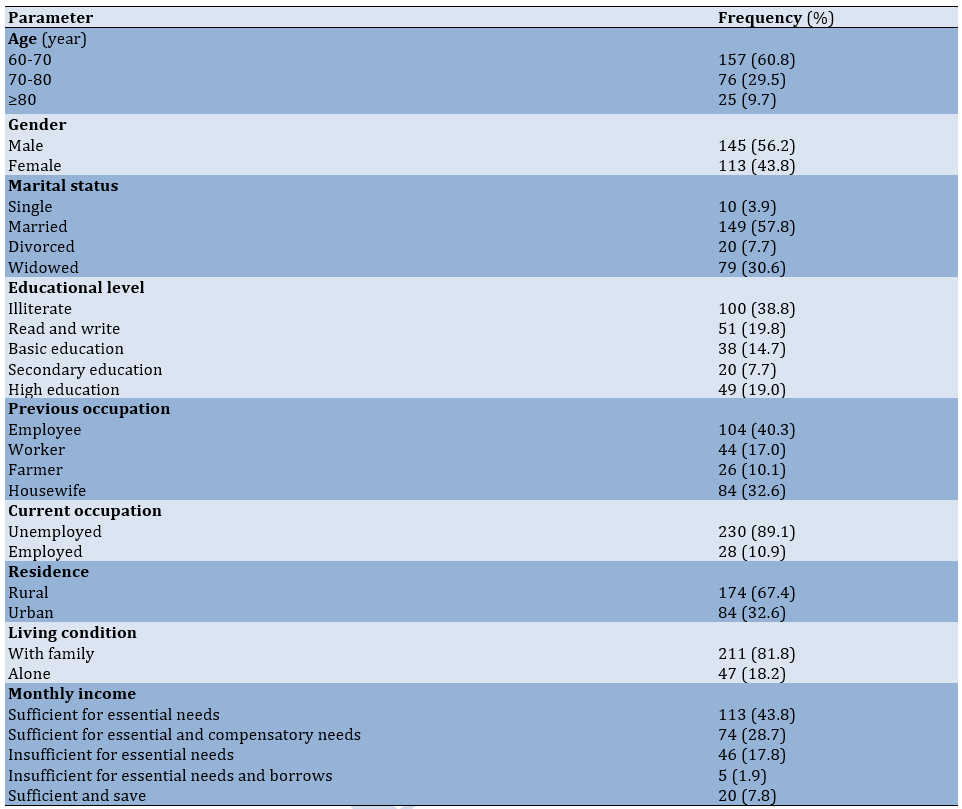
The study comprised 258 older adults, with a mean age of 68.80±8.03 years. Of the participants, 60.8% were between 60 and 70 years of age, 56.2% were male, and 57.8% were married. Regarding educational background, 38.8% were illiterate. Although 40.3% of participants reported having been previously employed, 89.1% were not currently employed. The majority (67.4%) resided in rural areas, and 81.8% lived with their families. Regarding economic status, 43.8% stated that their income was sufficient to meet essential needs (Table 1).
Table 1. Frequency of participants’ demographic characteristics (n=258)
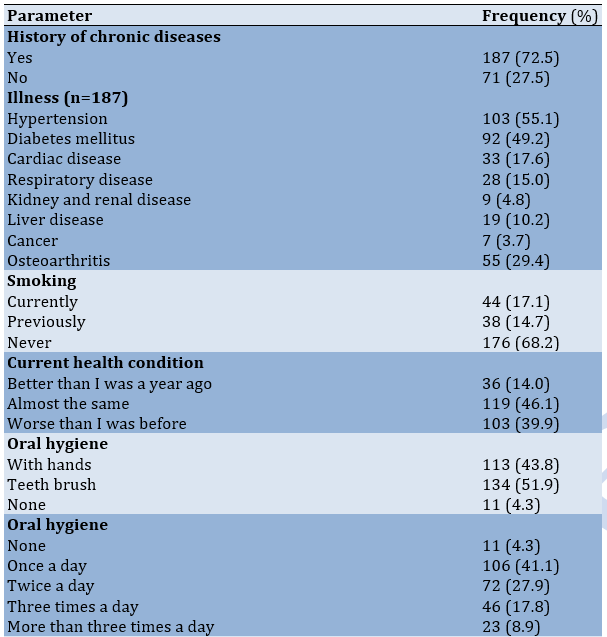
Also, 72.5% of participants had chronic diseases, with hypertension (55.1%) and diabetes mellitus (49.2%) being the most prevalent conditions. Regarding smoking status, 68.2% had no history of smoking, while 17.1% were current smokers and 14.7% were former smokers. Participants used both hands (43.8%) and toothbrushes (51.9%) for oral cleaning, with 41.1% reporting cleaning their teeth once daily.
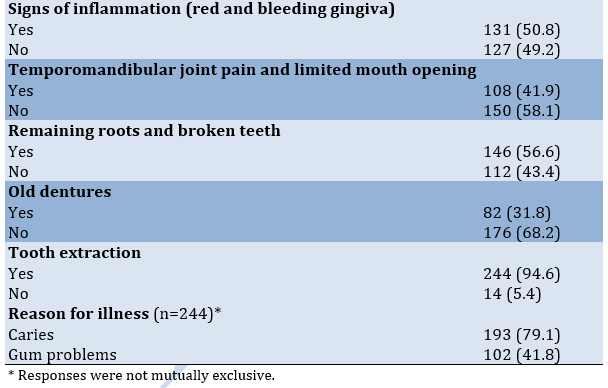
According to the oral health examination, 50.8% of participants exhibited signs of gingival inflammation and bleeding. Additionally, 58.1% reported temporomandibular joint pain, 56.6% had remaining roots and broken teeth, and 68.2% had old dentures or dental implants. A significant proportion (94.6%) had experienced tooth extractions, with dental caries being the primary cause in 79.1% of cases (Table 2).
Table 2. Frequency of participants by medical history, dental history, and oral hygiene practices (n=258)
Just under half of the participants (45.3%) had no prosthetic needs. Among the remainder, 24.4% required single-unit prostheses, 22.9% needed multiple-unit prostheses, and 7.0% required a combination of types. Only 0.4% needed complete prosthetic rehabilitation. Most of the subjects (51.9%) had no prosthetic needs in their lower jaw. The needs were distributed as follows: single-unit (21.3%), multiple-unit (17.4%), and combination-type prostheses (8.5%). Only 0.8% of the population needed complete rehabilitation. A significant majority (67.8%) had no prosthetic appliances. Among those who did, 11.2% used fixed dental prostheses (bridges), 7.4% had complete removable dentures, 6.6% used a combination of fixed and removable prostheses, and 2.7% used only partial removable dentures. Concerning the mandibular arch, 68.6% of the geriatric subjects had no prosthetic appliances. Among those with prosthetics, 7.8% used complete removable dentures, 7.0% had partial removable dentures, and 5.8% had multiple fixed prostheses. The remaining distribution included 4.3% with multiple fixed prostheses and 2.7% with partial removable prostheses (Figure 1).
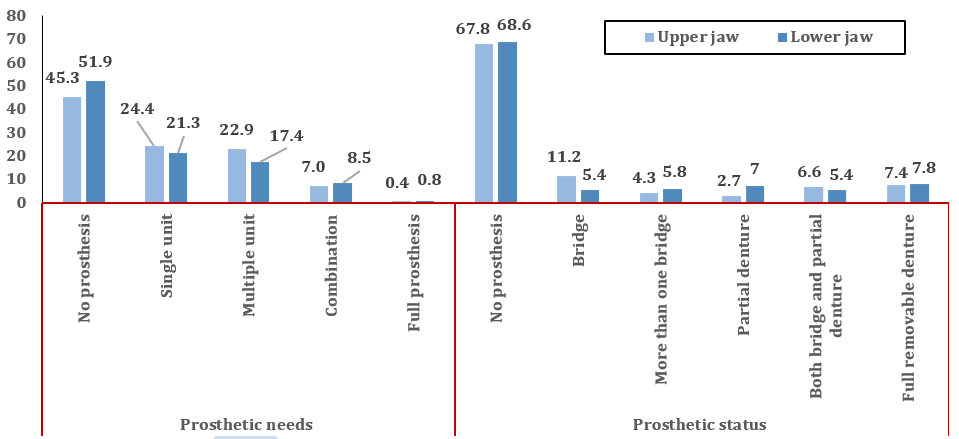
Figure 1. Prosthetic needs and status of the participants by prosthesis type (n=258).
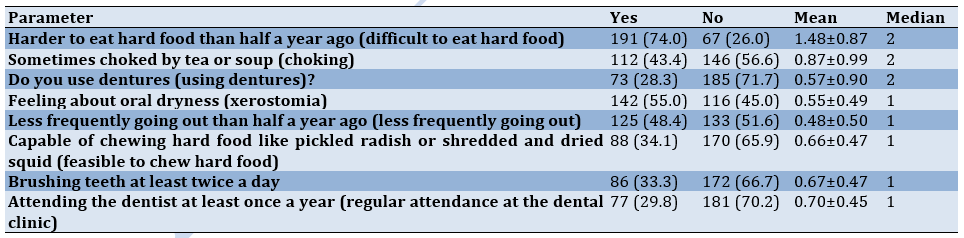
The mean total score on the OFI was 5.97±2.47, with 79.8% of participants classified as high risk and 20.2% as low-to-moderate risk. Regarding individual indicators, difficulty eating hard food reported the highest mean score (1.48±0.87) and the highest affirmative response rate (74%). This was followed by choking (0.87±0.99; 43.4%), regular dental clinic attendance (0.70±0.45; 29.8%), and brushing teeth at least twice daily (0.67±0.47; 33.3%). Additionally, the ability to chew hard food (0.66 ±0.47), denture use (0.57±0.90), and xerostomia (0.55±0.49) were reported by 34.1%, 28.3%, and 55.0% of participants, respectively. Finally, 48.4% of respondents reported less frequent social outings (0.48±0.50; Table 3).
Table 3. Frequency of the oral frailty index responses among participants (n=258)
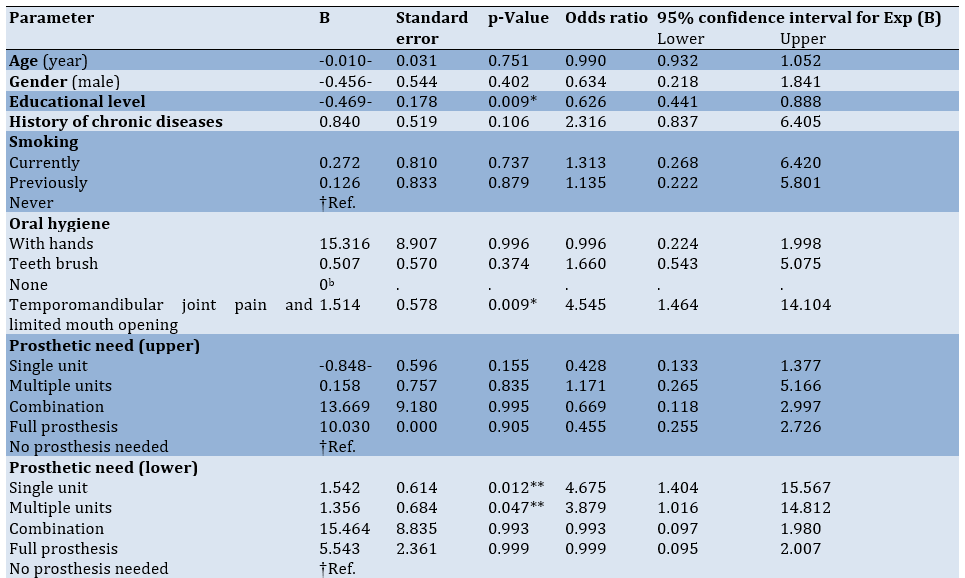
Illiteracy was associated with a 0.626-fold decrease in the risk of oral frailty (p=0.009). Additionally, temporomandibular joint pain and limited mouth opening were associated with a 4.545-fold increase in the risk of oral frailty (p=0.009). Moreover, the risk of developing oral frailty was found to be 4.675 and 3.879 times higher in patients requiring single and multiple units in the mandible, respectively (p=0.012 and p=0.047; Table 4).
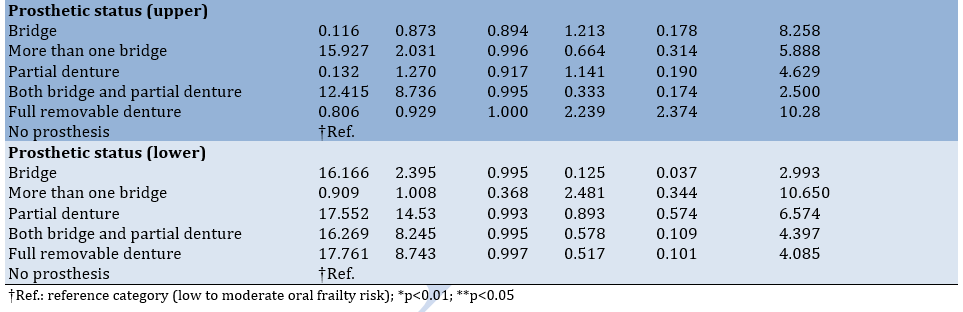
Table 4. Multinomial logistic regression analysis
Discussion
This study evaluated prosthetic status, prosthetic needs, and oral frailty among older adults in Al-Sharkia Governorate, Egypt. There were notable patterns in prosthetic need and current prosthetic status, and in their relationship with oral frailty.
The WHO Oral Health Assessment Form was employed because of its standardized methodology and proven reliability in assessing prosthetic status and needs in older populations. This comprehensive instrument provides clear criteria for evaluating prosthetic conditions and requirements, ensuring consistent data collection across diverse populations.
We employed the OFI-8, a validated assessment tool for oral frailty. Developed in consultation with geriatric dental and public health experts, the OFI-8 consists of eight structured questions assessing key components of oral frailty, such as chewing ability, swallowing function, oral dryness, and denture use. The OFI-8 is widely recognized for detecting early signs of oral function decline and facilitating timely preventive interventions [14].
There was a high prevalence of unmet prosthetic needs among the geriatric population in Al-Sharkia Governorate: 67.8% of participants lacked maxillary prostheses, and 68.6% lacked mandibular prostheses, despite requiring intervention. These results are consistent with those of other regions. For example, Chhabra et al. [15] report that 73.64% of older adults in Wardha, Central India, lack prosthetic devices, and Soh et al. [16] found that 78% of institutionalized edentulous elders in Singapore lack dentures. This consistency across different populations underscores a global pattern of unmet prosthetic needs among older adults.
Among participants who had prosthetic devices, notable variations were observed. Fixed bridges were the most common prostheses in the maxillary arch (11.2%), whereas complete removable dentures predominated in the mandibular arch (7.8%). These findings contrast with those of Sharma et al. [17], who note gender-related differences in prosthetic status patterns. Such differences may reflect variations in healthcare delivery systems, practitioner preferences, and financial accessibility across regions.
Also, 54.7% of participants needed prosthetic intervention in the maxillary arch and 48.1% in the mandibular arch. These proportions are considerably lower than the 79.99% reported by Chhabra et al. [15], suggesting possible differences in population characteristics, oral health education, and access to preventive dental care. Moreover, the proportion of participants requiring complete prosthetic rehabilitation was very low (0.4% for the maxillary arch and 0.8% for the mandibular arch) compared to 51.82% reported in the Central Indian population [15]. This substantial discrepancy may be due to variations in tooth retention patterns, extraction practices, or the effectiveness of preventive oral healthcare initiatives in different regions.
There was a strong association between prosthetic needs, oral frailty, and overall health outcomes in older adults, reinforcing previous research on aging populations [18]. The high prevalence of missing teeth, inadequate prosthetic rehabilitation, and oral frailty underscores the demand for comprehensive geriatric oral health strategies to mitigate the functional and nutritional consequences of poor oral health [19]. Egypt’s aging population remains at high risk for many oral diseases, including dental caries, periodontal disease, and oral infections, which can detrimentally affect their general health, nutrition, and self-esteem [20].
Over half of the participants required some form of prosthetic intervention, with single-unit and multiple-unit prostheses being the most commonly needed. The limited prosthetic coverage observed may be largely attributed to financial constraints. Supporting this, El-Lassy [1] in Damanhour City, Egypt, reports that 46.7% of older residents in care homes face barriers to accessing dental services, with the majority (88.6%) citing financial difficulties as the primary obstacle. Additional barriers to accessing dental care for older adults in Egypt include a shortage of qualified practitioners, limited awareness of available dental services, and various mental, physical, or medication-related conditions that can significantly challenge oral health maintenance [21].
Chronic diseases, such as diabetes mellitus, cardiovascular disease, and hypertension, often lead to significant oral health challenges, including periodontal disease and tooth loss. A significant relationship has been identified between prosthetic needs and oral hygiene methods [22]. These findings align with those of a previous study [3] in Assiut City, Egypt, reporting that chronic illnesses, including diabetes, hypertension, and cardiovascular diseases, are strongly associated with poor oral health and increased prosthetic needs. When considering changes over the past year, 46.1% of participants reported stable health, 39.9% reported a decline, and only 14.0% reported an improvement. This highlights a significant challenge in promoting health and well-being within the aging population.
There was a significant relationship between the prosthetic needs of the studied older adults and factors such as age, history of chronic diseases, smoking habits, and oral hygiene practices. These results are in line with those of Sharma et al. [23], reporting age, chronic illnesses, and oral hygiene habits as key determinants of prosthetic status and needs. Additionally, evidence from cross-sectional and cohort studies indicates that smokers tend to have more severe and extensive periodontitis due to smoking [24]. The causal link between smoking and tooth loss is well established [25], as smoking is widely recognized to significantly increase the risk of periodontitis-associated tooth loss [26].
As people age, multiple systemic conditions and their treatments become more common, which can impair overall health and oral health, thereby affecting older individuals’ quality of life [27]. Older adults often underutilize dental services due to factors such as limited awareness, financial constraints, physical or cognitive impairments, and reduced mobility. A reduced concern for aesthetics may also contribute to this underuse. Living in a care facility further reinforces their dependence on external support, which aligns with the high rates of unmet prosthetic needs observed. The presence and continued use of dentures also depend on an individual’s ability to adapt, which tends to decline with age [23].
However, differences in prosthetic needs between males and females were not statistically significant for either the upper or lower arches. This finding aligns with the observations of AlZarea [28], whereas Shah et al. [29] report that males have higher prosthetic needs than females.
There was no significant association between the need for dental prosthetics and socioeconomic markers, such as monthly income or place of residence. This contrasts with a substantial body of literature, including other studies in Egypt, that identify financial constraints as a primary barrier to accessing dental services [21, 30]. The results from this specific governorate suggest that a complex interplay of non-financial barriers may be more influential. These could include the inequitable distribution of the dental workforce, transportation challenges, and low levels of oral health literacy, which have been documented as significant impediments to healthcare access in the region [31].
This interpretation aligns with international research highlighting the impact of systemic factors. For instance, studies in Brazil have shown that the implementation of a national oral health policy and other health system factors can be more powerful determinants of access to prosthetic services than an individual’s financial capacity alone [32]. This suggests that in contexts where such systemic and non-financial barriers are pervasive, they can diminish the relative importance of income as a differentiating factor in the utilization of dental care.
There was a high prevalence of oral frailty (79.8%), consistent with Li et al. [7], who also report that oral frailty is common among older adults and influenced by many parameters. Physical frailty has been significantly associated with oral frailty subdomains, such as difficulty eating hard foods, choking, denture use, and inability to chew hard foods [33]. Additionally, a study of Brazilian community-dwelling elders found that edentulous individuals are significantly more likely to be frail, further supporting the link between tooth loss, prosthetic needs, and frailty risk [32].
It is suggested that addressing prosthetic deficiencies may be a critical strategy for preventing oral frailty in older adults. Evidence suggests that prosthetic rehabilitation enhances chewing efficiency, nutritional intake, and overall quality of life [8, 34]. Moreover, maintaining proper prosthesis hygiene and ensuring an optimal fit are essential, as poorly fitting dentures have been associated with lower dietary quality. Poorly fitting dentures may lead individuals to remove them during meals, potentially compromising nutrient intake and overall health [35].
Our results highlight the urgent need for improved geriatric dental care programs in Egypt, especially in underserved communities where access to oral healthcare is limited. Numerous global studies have shown that community-based oral health promotion initiatives increase community engagement and improve knowledge, attitudes, and behaviors related to oral health. These initiatives have also been effective in sustaining community involvement in promoting long-term oral health [36]. Moreover, integrating oral frailty screening into routine geriatric health assessments could enhance early detection and intervention. Regular evaluations by healthcare professionals would allow the timely identification of oral health deterioration, enabling preventive measures before conditions worsen. This approach aligns with recommendations from previous studies [37, 38], which advocate a multidisciplinary approach to frailty management that includes both oral and systemic health factors.
This study has several limitations to consider. First, the cross-sectional design inherently precludes establishing causal relationships between prosthetic status, prosthetic needs, and oral frailty. Furthermore, because the study population was confined to older adults in Egypt, the generalizability of our findings to other demographic or cultural contexts may be limited. Another limitation is that prosthetic status was evaluated solely through clinical examination, without including patient-reported outcomes such as patient satisfaction or the functional adequacy of existing prostheses.
The clinical implications of this study are significant. The high prevalence of unmet prosthetic needs across diverse populations reveals a substantial gap in geriatric dental care, necessitating targeted interventions and policy reform. This issue highlights the critical need to integrate oral healthcare into comprehensive geriatric assessment. Furthermore, the strong association between prosthetic needs and oral frailty underscores the role of prosthetic rehabilitation as an integral component of geriatric care. Consequently, effective prosthetic interventions are vital not only for preserving oral function but also for mitigating the systemic risks of frailty and enhancing the overall quality of life in older adults.
Future research should build upon these findings by examining the effectiveness of prosthetic interventions in mitigating oral frailty and improving patient-reported outcomes. Longitudinal studies are essential to assess the progression of prosthetic needs and their temporal relationship with oral frailty, providing critical insights to refine clinical guidelines and optimize rehabilitation strategies for aging populations. Additionally, investigations must consider the complex psychosocial, behavioral, and healthcare system factors that influence prosthetic needs. Understanding these multifaceted barriers is crucial for developing interventions that effectively dismantle obstacles to dental care among older adults.
Conclusion
There is a high prevalence of oral frailty and substantial unmet prosthetic needs among older adults in Egypt.
Acknowledgments: The authors would like to express their sincere gratitude to all the participants for their time and willingness to take part in this study.
Ethical Permissions: This study received approval from the Research Ethics Committee of the Faculty of Nursing, Zagazig University, Egypt (Reference No. Zu.Nur.REC#:0037).
Conflicts of Interest: The authors declared no conflicts of interest.
Authors' Contribution: Mahdy RAA (First Author), Main Researcher/Statistical Analyst/Introduction Writer (30%); Abdel-Gawwad EA (Second Author), Methodologist/Assistant Researcher/Discussion Writer (20%); Fayad MI (Third Author), Assistant Researcher/Statistical Analyst (20%); Mohammed SG (Fourth Author), Main Researcher/Discussion Writer/Introduction Writer (30%)
Funding/Support: No funding was received for this research.
Oral health status critically influences overall well-being in older populations, yet its deterioration poses a notable public health challenge with cascading effects on nutrition and systemic health [1]. The World Health Organization (WHO) underscores the essential role of oral health as a fundamental component of overall health, highlighting the urgent need to improve access to dental care for elderly individuals [2]. Older adults commonly suffer from conditions such as periodontitis, oral infections, and tooth loss, which can lead to chewing difficulties, increased risk of malnutrition, and aggravation of systemic illnesses such as diabetes and cardiovascular diseases [3]. Furthermore, poor oral health is increasingly linked to physical frailty, reduced social participation, and higher mortality risk, underscoring the necessity of comprehensive geriatric dental care programs [4].
In developing countries, especially in the Middle East and North Africa (MENA) region, the challenge of maintaining oral health among older populations is particularly pronounced [5]. A convergence of systemic obstacles—including a shortage of specialized geriatric dental programs, substantial economic and geographical barriers to care, and low public health literacy—collectively impedes timely and effective prosthetic rehabilitation for this vulnerable demographic [6]. Studies on the relationship between frailty and oral health decline in this region remain sparse, with a significant gap in research focusing on preventive measures and therapeutic interventions [1].
One critical way in which poor oral health affects overall well-being is by contributing to oral frailty. This clinical syndrome denotes a decline in oral function, such as reduced chewing ability and swallowing difficulties, and is not merely a localized condition but a strong predictor of broader physical frailty, sarcopenia, and increased mortality risk [7]. Prosthetic rehabilitation is therefore the primary clinical response to this issue, being crucial for restoring oral function, preventing malnutrition, and improving psychological well-being. Nevertheless, many older adults either lack access to prosthetic care or contend with ill-fitting dentures, which exacerbate their health challenges [8]. Factors such as socioeconomic status, awareness of proper prosthetic maintenance, and the availability of dental services are significant determinants of prosthetic needs among elderly individuals [9].
In Egypt, as in many developing nations, geriatric oral health remains understudied and frequently neglected despite its profound impact on overall health [10]. Restricted access to cost-effective prosthetic care and a lack of comprehensive geriatric dental services contribute to high rates of untreated edentulism and oral frailty. Studies of Egypt’s older populations have documented substantial deficiencies in oral healthcare, widespread poor hygiene practices, and low utilization of dental services, leading to a progressive decline in oral health [1]. The high cost of treatment, along with cultural perceptions and the absence of structured geriatric dental programs, further exacerbates these challenges [6].
Another critical factor influencing oral health in older adults is nutritional status. Malnutrition, which is common in aging populations, often stems from poor dentition, chewing difficulties, and inadequate intake of essential nutrients [3]. The intricate link between insufficient nutrient intake and deteriorating oral health underscores the need for integrated dietary and oral healthcare strategies [11]. By addressing oral frailty through early prosthetic intervention and improving access to dental care, it is possible to significantly enhance nutritional intake, physical health, and overall quality of life [8].
Nurses play a pivotal role in promoting oral healthcare among older adults. Through health education, they encourage patients to use and maintain dentures properly, thereby supporting both oral and general health. Nursing staff should offer individualized guidance on denture care, demonstrate correct usage, reinforce maintenance routines, and encourage regular assessments of oral and denture conditions. Additionally, nurses are well-positioned to monitor early signs of oral frailty in the community and to initiate timely, targeted interventions to prevent its onset and progression [12].
This study aimed to evaluate prosthetic status, treatment needs, and oral frailty among community-dwelling older adults in the Al-Sharkia Governorate of Egypt. It determined the prevalence of existing prostheses, identified unmet needs for prosthetic treatment, and examined the association between these prosthetic factors and oral frailty.
Instrument and Methods
Design and sample
This cross-sectional study was conducted from November 2023 to August 2024 and involved 258 community-dwelling older adults residing in Al-Sharkia Governorate, Egypt. Participants were recruited through consecutive sampling from residential homes. To ensure diverse representation, recruitment included individuals from both rural and urban areas.
Individuals were selected for enrollment if they met the following criteria, including being adults aged 60 years or older, willing and capable of providing informed consent, not having cognitive impairment that would hinder their participation, not being bedridden, and not having severe medical conditions that could impact oral health, such as those undergoing active cancer treatment.
According to Kumar et al. [13], reporting a correlation coefficient of 0.315 between prosthetic status in the maxillary arch and oral frailty, the sample size was calculated using G*Power 3.1.9.4. With a 95% power and an α of 0.05, the sample size was determined to be 258 participants.
Instrument
A researcher-developed questionnaire was used to assess demographic information (age, sex, education, marital status, and income level), case history, and oral hygiene.
Prosthetic needs and status were assessed using sections of the World Health Organization (WHO) Oral Health Assessment Form, which provides a reliable framework for evaluating participants' prosthetic needs and current prosthetic status. The assessment categorized prosthetic needs and status for both the maxillary and mandibular arches.
Oral frailty was assessed using the validated Oral Frailty Index-8 (OFI-8), an eight-item screening questionnaire that evaluates oral health-related behaviors and indicators of oral frailty [14]. Items 1, 2, and 3 were weighted as two points each, while the remaining items were weighted as one point each. To emphasize the most critical indicators of oral frailty, the scores for tooth loss, subjective chewing difficulty, and subjective swallowing difficulty were doubled. The resulting OFI-8 score ranges from 0 to 11, where higher scores denote poorer oral health. Risk assessment for oral frailty was determined based on the OFI-8 score, with scores ≤3 indicating low to moderate risk, while scores ≥4 signified a high risk of oral frailty.
Procedure
The nature and objectives of the study were fully disclosed to all participants before enrollment, and individuals were included only after providing signed informed consent. Participant data were anonymized and securely stored to ensure confidentiality, with access limited to authorized research personnel only. The investigators conducted interviews with the participants in a quiet, private setting to ensure confidentiality. Subsequently, each participant underwent a clinical oral examination performed by a licensed dentist to obtain objective data regarding their oral health status. The examination utilized a standardized armamentarium, including mouth mirrors, dental probes, and a headlight, ensuring consistency in assessment. The investigators were thoroughly trained, standardized, and calibrated in administering and recording the research questionnaire to ensure the consistency and reliability of the data collected.
Statistical analysis
Data analysis was conducted using SPSS 20. Chi-square tests, t-tests, or Mann-Whitney U tests were used to compare prosthetic status, prosthetic need, and oral frailty across demographic groups, while ANOVA or Kruskal-Wallis tests were used to examine differences in continuous variables. Multiple regression analysis was conducted to identify predictors of oral frailty while controlling for age, gender, socioeconomic status, and health history.
Findings
The study comprised 258 older adults, with a mean age of 68.80±8.03 years. Of the participants, 60.8% were between 60 and 70 years of age, 56.2% were male, and 57.8% were married. Regarding educational background, 38.8% were illiterate. Although 40.3% of participants reported having been previously employed, 89.1% were not currently employed. The majority (67.4%) resided in rural areas, and 81.8% lived with their families. Regarding economic status, 43.8% stated that their income was sufficient to meet essential needs (Table 1).
Table 1. Frequency of participants’ demographic characteristics (n=258)
Also, 72.5% of participants had chronic diseases, with hypertension (55.1%) and diabetes mellitus (49.2%) being the most prevalent conditions. Regarding smoking status, 68.2% had no history of smoking, while 17.1% were current smokers and 14.7% were former smokers. Participants used both hands (43.8%) and toothbrushes (51.9%) for oral cleaning, with 41.1% reporting cleaning their teeth once daily.
According to the oral health examination, 50.8% of participants exhibited signs of gingival inflammation and bleeding. Additionally, 58.1% reported temporomandibular joint pain, 56.6% had remaining roots and broken teeth, and 68.2% had old dentures or dental implants. A significant proportion (94.6%) had experienced tooth extractions, with dental caries being the primary cause in 79.1% of cases (Table 2).
Table 2. Frequency of participants by medical history, dental history, and oral hygiene practices (n=258)
Just under half of the participants (45.3%) had no prosthetic needs. Among the remainder, 24.4% required single-unit prostheses, 22.9% needed multiple-unit prostheses, and 7.0% required a combination of types. Only 0.4% needed complete prosthetic rehabilitation. Most of the subjects (51.9%) had no prosthetic needs in their lower jaw. The needs were distributed as follows: single-unit (21.3%), multiple-unit (17.4%), and combination-type prostheses (8.5%). Only 0.8% of the population needed complete rehabilitation. A significant majority (67.8%) had no prosthetic appliances. Among those who did, 11.2% used fixed dental prostheses (bridges), 7.4% had complete removable dentures, 6.6% used a combination of fixed and removable prostheses, and 2.7% used only partial removable dentures. Concerning the mandibular arch, 68.6% of the geriatric subjects had no prosthetic appliances. Among those with prosthetics, 7.8% used complete removable dentures, 7.0% had partial removable dentures, and 5.8% had multiple fixed prostheses. The remaining distribution included 4.3% with multiple fixed prostheses and 2.7% with partial removable prostheses (Figure 1).
Figure 1. Prosthetic needs and status of the participants by prosthesis type (n=258).
The mean total score on the OFI was 5.97±2.47, with 79.8% of participants classified as high risk and 20.2% as low-to-moderate risk. Regarding individual indicators, difficulty eating hard food reported the highest mean score (1.48±0.87) and the highest affirmative response rate (74%). This was followed by choking (0.87±0.99; 43.4%), regular dental clinic attendance (0.70±0.45; 29.8%), and brushing teeth at least twice daily (0.67±0.47; 33.3%). Additionally, the ability to chew hard food (0.66 ±0.47), denture use (0.57±0.90), and xerostomia (0.55±0.49) were reported by 34.1%, 28.3%, and 55.0% of participants, respectively. Finally, 48.4% of respondents reported less frequent social outings (0.48±0.50; Table 3).
Table 3. Frequency of the oral frailty index responses among participants (n=258)
Illiteracy was associated with a 0.626-fold decrease in the risk of oral frailty (p=0.009). Additionally, temporomandibular joint pain and limited mouth opening were associated with a 4.545-fold increase in the risk of oral frailty (p=0.009). Moreover, the risk of developing oral frailty was found to be 4.675 and 3.879 times higher in patients requiring single and multiple units in the mandible, respectively (p=0.012 and p=0.047; Table 4).
Table 4. Multinomial logistic regression analysis
Discussion
This study evaluated prosthetic status, prosthetic needs, and oral frailty among older adults in Al-Sharkia Governorate, Egypt. There were notable patterns in prosthetic need and current prosthetic status, and in their relationship with oral frailty.
The WHO Oral Health Assessment Form was employed because of its standardized methodology and proven reliability in assessing prosthetic status and needs in older populations. This comprehensive instrument provides clear criteria for evaluating prosthetic conditions and requirements, ensuring consistent data collection across diverse populations.
We employed the OFI-8, a validated assessment tool for oral frailty. Developed in consultation with geriatric dental and public health experts, the OFI-8 consists of eight structured questions assessing key components of oral frailty, such as chewing ability, swallowing function, oral dryness, and denture use. The OFI-8 is widely recognized for detecting early signs of oral function decline and facilitating timely preventive interventions [14].
There was a high prevalence of unmet prosthetic needs among the geriatric population in Al-Sharkia Governorate: 67.8% of participants lacked maxillary prostheses, and 68.6% lacked mandibular prostheses, despite requiring intervention. These results are consistent with those of other regions. For example, Chhabra et al. [15] report that 73.64% of older adults in Wardha, Central India, lack prosthetic devices, and Soh et al. [16] found that 78% of institutionalized edentulous elders in Singapore lack dentures. This consistency across different populations underscores a global pattern of unmet prosthetic needs among older adults.
Among participants who had prosthetic devices, notable variations were observed. Fixed bridges were the most common prostheses in the maxillary arch (11.2%), whereas complete removable dentures predominated in the mandibular arch (7.8%). These findings contrast with those of Sharma et al. [17], who note gender-related differences in prosthetic status patterns. Such differences may reflect variations in healthcare delivery systems, practitioner preferences, and financial accessibility across regions.
Also, 54.7% of participants needed prosthetic intervention in the maxillary arch and 48.1% in the mandibular arch. These proportions are considerably lower than the 79.99% reported by Chhabra et al. [15], suggesting possible differences in population characteristics, oral health education, and access to preventive dental care. Moreover, the proportion of participants requiring complete prosthetic rehabilitation was very low (0.4% for the maxillary arch and 0.8% for the mandibular arch) compared to 51.82% reported in the Central Indian population [15]. This substantial discrepancy may be due to variations in tooth retention patterns, extraction practices, or the effectiveness of preventive oral healthcare initiatives in different regions.
There was a strong association between prosthetic needs, oral frailty, and overall health outcomes in older adults, reinforcing previous research on aging populations [18]. The high prevalence of missing teeth, inadequate prosthetic rehabilitation, and oral frailty underscores the demand for comprehensive geriatric oral health strategies to mitigate the functional and nutritional consequences of poor oral health [19]. Egypt’s aging population remains at high risk for many oral diseases, including dental caries, periodontal disease, and oral infections, which can detrimentally affect their general health, nutrition, and self-esteem [20].
Over half of the participants required some form of prosthetic intervention, with single-unit and multiple-unit prostheses being the most commonly needed. The limited prosthetic coverage observed may be largely attributed to financial constraints. Supporting this, El-Lassy [1] in Damanhour City, Egypt, reports that 46.7% of older residents in care homes face barriers to accessing dental services, with the majority (88.6%) citing financial difficulties as the primary obstacle. Additional barriers to accessing dental care for older adults in Egypt include a shortage of qualified practitioners, limited awareness of available dental services, and various mental, physical, or medication-related conditions that can significantly challenge oral health maintenance [21].
Chronic diseases, such as diabetes mellitus, cardiovascular disease, and hypertension, often lead to significant oral health challenges, including periodontal disease and tooth loss. A significant relationship has been identified between prosthetic needs and oral hygiene methods [22]. These findings align with those of a previous study [3] in Assiut City, Egypt, reporting that chronic illnesses, including diabetes, hypertension, and cardiovascular diseases, are strongly associated with poor oral health and increased prosthetic needs. When considering changes over the past year, 46.1% of participants reported stable health, 39.9% reported a decline, and only 14.0% reported an improvement. This highlights a significant challenge in promoting health and well-being within the aging population.
There was a significant relationship between the prosthetic needs of the studied older adults and factors such as age, history of chronic diseases, smoking habits, and oral hygiene practices. These results are in line with those of Sharma et al. [23], reporting age, chronic illnesses, and oral hygiene habits as key determinants of prosthetic status and needs. Additionally, evidence from cross-sectional and cohort studies indicates that smokers tend to have more severe and extensive periodontitis due to smoking [24]. The causal link between smoking and tooth loss is well established [25], as smoking is widely recognized to significantly increase the risk of periodontitis-associated tooth loss [26].
As people age, multiple systemic conditions and their treatments become more common, which can impair overall health and oral health, thereby affecting older individuals’ quality of life [27]. Older adults often underutilize dental services due to factors such as limited awareness, financial constraints, physical or cognitive impairments, and reduced mobility. A reduced concern for aesthetics may also contribute to this underuse. Living in a care facility further reinforces their dependence on external support, which aligns with the high rates of unmet prosthetic needs observed. The presence and continued use of dentures also depend on an individual’s ability to adapt, which tends to decline with age [23].
However, differences in prosthetic needs between males and females were not statistically significant for either the upper or lower arches. This finding aligns with the observations of AlZarea [28], whereas Shah et al. [29] report that males have higher prosthetic needs than females.
There was no significant association between the need for dental prosthetics and socioeconomic markers, such as monthly income or place of residence. This contrasts with a substantial body of literature, including other studies in Egypt, that identify financial constraints as a primary barrier to accessing dental services [21, 30]. The results from this specific governorate suggest that a complex interplay of non-financial barriers may be more influential. These could include the inequitable distribution of the dental workforce, transportation challenges, and low levels of oral health literacy, which have been documented as significant impediments to healthcare access in the region [31].
This interpretation aligns with international research highlighting the impact of systemic factors. For instance, studies in Brazil have shown that the implementation of a national oral health policy and other health system factors can be more powerful determinants of access to prosthetic services than an individual’s financial capacity alone [32]. This suggests that in contexts where such systemic and non-financial barriers are pervasive, they can diminish the relative importance of income as a differentiating factor in the utilization of dental care.
There was a high prevalence of oral frailty (79.8%), consistent with Li et al. [7], who also report that oral frailty is common among older adults and influenced by many parameters. Physical frailty has been significantly associated with oral frailty subdomains, such as difficulty eating hard foods, choking, denture use, and inability to chew hard foods [33]. Additionally, a study of Brazilian community-dwelling elders found that edentulous individuals are significantly more likely to be frail, further supporting the link between tooth loss, prosthetic needs, and frailty risk [32].
It is suggested that addressing prosthetic deficiencies may be a critical strategy for preventing oral frailty in older adults. Evidence suggests that prosthetic rehabilitation enhances chewing efficiency, nutritional intake, and overall quality of life [8, 34]. Moreover, maintaining proper prosthesis hygiene and ensuring an optimal fit are essential, as poorly fitting dentures have been associated with lower dietary quality. Poorly fitting dentures may lead individuals to remove them during meals, potentially compromising nutrient intake and overall health [35].
Our results highlight the urgent need for improved geriatric dental care programs in Egypt, especially in underserved communities where access to oral healthcare is limited. Numerous global studies have shown that community-based oral health promotion initiatives increase community engagement and improve knowledge, attitudes, and behaviors related to oral health. These initiatives have also been effective in sustaining community involvement in promoting long-term oral health [36]. Moreover, integrating oral frailty screening into routine geriatric health assessments could enhance early detection and intervention. Regular evaluations by healthcare professionals would allow the timely identification of oral health deterioration, enabling preventive measures before conditions worsen. This approach aligns with recommendations from previous studies [37, 38], which advocate a multidisciplinary approach to frailty management that includes both oral and systemic health factors.
This study has several limitations to consider. First, the cross-sectional design inherently precludes establishing causal relationships between prosthetic status, prosthetic needs, and oral frailty. Furthermore, because the study population was confined to older adults in Egypt, the generalizability of our findings to other demographic or cultural contexts may be limited. Another limitation is that prosthetic status was evaluated solely through clinical examination, without including patient-reported outcomes such as patient satisfaction or the functional adequacy of existing prostheses.
The clinical implications of this study are significant. The high prevalence of unmet prosthetic needs across diverse populations reveals a substantial gap in geriatric dental care, necessitating targeted interventions and policy reform. This issue highlights the critical need to integrate oral healthcare into comprehensive geriatric assessment. Furthermore, the strong association between prosthetic needs and oral frailty underscores the role of prosthetic rehabilitation as an integral component of geriatric care. Consequently, effective prosthetic interventions are vital not only for preserving oral function but also for mitigating the systemic risks of frailty and enhancing the overall quality of life in older adults.
Future research should build upon these findings by examining the effectiveness of prosthetic interventions in mitigating oral frailty and improving patient-reported outcomes. Longitudinal studies are essential to assess the progression of prosthetic needs and their temporal relationship with oral frailty, providing critical insights to refine clinical guidelines and optimize rehabilitation strategies for aging populations. Additionally, investigations must consider the complex psychosocial, behavioral, and healthcare system factors that influence prosthetic needs. Understanding these multifaceted barriers is crucial for developing interventions that effectively dismantle obstacles to dental care among older adults.
Conclusion
There is a high prevalence of oral frailty and substantial unmet prosthetic needs among older adults in Egypt.
Acknowledgments: The authors would like to express their sincere gratitude to all the participants for their time and willingness to take part in this study.
Ethical Permissions: This study received approval from the Research Ethics Committee of the Faculty of Nursing, Zagazig University, Egypt (Reference No. Zu.Nur.REC#:0037).
Conflicts of Interest: The authors declared no conflicts of interest.
Authors' Contribution: Mahdy RAA (First Author), Main Researcher/Statistical Analyst/Introduction Writer (30%); Abdel-Gawwad EA (Second Author), Methodologist/Assistant Researcher/Discussion Writer (20%); Fayad MI (Third Author), Assistant Researcher/Statistical Analyst (20%); Mohammed SG (Fourth Author), Main Researcher/Discussion Writer/Introduction Writer (30%)
Funding/Support: No funding was received for this research.
References
1. El-Lassy RB. Oral health status of elderly living in residential homes at Damanhour City, Egypt. Alex Sci Nurs J. 2014;16:93-122. [Link] [DOI:10.21608/asalexu.2014.205580]
2. Fisher J, Berman R, Buse K, Doll B, Glick M, Metzl J, et al. Achieving oral health for all through public health approaches, interprofessional, and transdisciplinary education. NAM Perspect. 2023;2023:10. [Link] [DOI:10.31478/202302b]
3. Aly SE, Abd Elhameed S, Hassan Abd-Elfatah S, Saad Abd El-aty N. Relation between nutritional status and chronic diseases among elderly at Assiut City. Assiut Sci Nurs J. 2020;8:1-14. [Link] [DOI:10.21608/asnj.2020.27915.1008]
4. Iwasaki M, Watanabe Y, Motokawa K, Shirobe M, Inagaki H, Motohashi Y, et al. Oral frailty and gait performance in community-dwelling older adults: Findings from the Takashimadaira study. J Prosthodont Res. 2021;65(4):467-73. [Link] [DOI:10.2186/jpr.JPR_D_20_00129]
5. Williams DM, Sheiham A, Honkala E. Addressing oral health inequalities in the Africa and middle east region. J Dent Res. 2015;94(7):875-7. [Link] [DOI:10.1177/0022034515576194]
6. Buser AA, Bedane A, Mekonen KA, Kebede T, Mohammed SH. The state of radiology research in Ethiopia: A scoping review. Ethiop J Health Sci. 2024;34(Spec Iss 1):53-66. [Link] [DOI:10.4314/ejhs.v34i1.9s]
7. Li T, Shen Y, Leng Y, Zeng Y, Li L, Yang Z, et al. The prevalence of oral frailty among older adults: A systematic review and meta‑analysis. Eur Geriatr Med. 2024;15(3):645-55. [Link] [DOI:10.1007/s41999-023-00930-7]
8. Techapiroontong S, Limpuangthip N, Tumrasvin W, Sirotamarat J. The impact of poor dental status and removable dental prosthesis quality on body composition, masticatory performance and oral health-related quality of life: A cross-sectional study in older adults. BMC Oral Health. 2022;22(1):147. [Link] [DOI:10.1186/s12903-022-02103-7]
9. Vieira BLC, Morais LP, Vargas-Ferreira F, Guimarães MRC, Mattos FF, Vargas AMD. Use and need of removable dental prostheses in an institutionalized Brazilian elderly population: A cross-sectional study. Braz Oral Res. 2021;35:e134. [Link] [DOI:10.1590/1807-3107bor-2021.vol35.0134]
10. Hall MA, Ashmawy R, Karawia I, Ghazy RM. How dentists in Egypt perceive their knowledge, attitudes, and barriers they face in providing oral healthcare to geriatric patients: A cross-sectional study. BMC Oral Health. 2023;23(1):947. [Link] [DOI:10.1186/s12903-023-03690-9]
11. Hung M, Blazejewski A, Lee S, Lu J, Soto A, Schwartz C, et al. Nutritional deficiencies and associated oral health in adolescents: A comprehensive scoping review. Children. 2024;11(7):869. [Link] [DOI:10.3390/children11070869]
12. Hu S, Li X. An analysis of influencing factors of oral frailty in the elderly in the community. BMC Oral Health. 2024;24(1):260. [Link] [DOI:10.1186/s12903-024-03946-y]
13. Kumar G, Dash P, Jena S. Assessment of prosthetic status and oral frailty among the geriatric population residing in old age homes of Bhubaneswar City-a cross sectional study. J Health Sci Med Res. 2023;41:2023941. [Link] [DOI:10.31584/jhsmr.2023941]
14. Tanaka T, Hirano H, Ohara Y, Nishimoto M, Iijima K. Oral frailty index-8 in the risk assessment of new-onset oral frailty and functional disability among community-dwelling older adults. Arch Gerontol Geriatr. 2021;94:104340. [Link] [DOI:10.1016/j.archger.2021.104340]
15. Chhabra G, Belkhode V, Nimonkar S, Rao Y, Raghotham K, Khandagale T. To evaluate the status and need for dental prosthesis among the geriatric population of Central India reporting to the dental colleges. J Family Med Prim Care. 2020;9(7):3429-32. [Link] [DOI:10.4103/jfmpc.jfmpc_316_20]
16. Soh G, Chong YH, Ong G. Dental prosthetic status and needs of an elderly population living in long-term care facilities in Singapore. J Community Health. 1992;17(3):175-81. [Link] [DOI:10.1007/BF01324406]
17. Sharma A, Arjun PB, Siwach A, Shivani, Bahl R, Bharathesh S. Prosthetic status and prosthetic needs of geriatric population of Meerut-a cross-sectional study. Int J Sci Study. 2024;12(4):63-9. [Link]
18. Bastos RS, Sá LM, Velasco SRM, Teixeira DF, Paino LS, Vettore MV. Frailty and oral health-related quality of life in community-dwelling older adults: A cross-sectional study. Braz Oral Res. 2021;35:e139. [Link] [DOI:10.1590/1807-3107bor-2021.vol35.0139]
19. Shwe PS, Thein PM, Marwaha P, Taege K, Shankumar R, Junckerstorff R. Anticholinergic burden and poor oral health are associated with frailty in geriatric patients undergoing inpatient rehabilitation: A cross-sectional study. Gerodontology. 2023;40(2):213-9. [Link] [DOI:10.1111/ger.12635]
20. Lipsky MS, Singh T, Zakeri G, Hung M. Oral health and older adults: A narrative review. Dent J. 2024;12(2):30. [Link] [DOI:10.3390/dj12020030]
21. Saleh NM, Elashri NI, Mohamed HAEA, El-Gilany AH. Barriers affecting the utilization of dental health services among community dwelling older adults. Alex Sci Nurs J. 2018;20:103-18. [Link] [DOI:10.21608/asalexu.2018.207750]
22. Öçbe M, Çelebi E, Öçbe ÇB. An overlooked connection: oral health status in patients with chronic diseases. BMC Oral Health. 2025;25(1):314. [Link] [DOI:10.1186/s12903-025-05673-4]
23. Sharma A, Thomas S, Dagli R, Solanki J, Arora G, Hans R. Prosthetic status and prosthetic needs of institutionalized elderly people in Jodhpur City, Rajasthan, India. J Adv Oral Res. 2015;6:13-9. [Link] [DOI:10.1177/2229411220150103]
24. Souto MLS, Rovai ES, Villar CC, Braga MM, Pannuti CM. Effect of smoking cessation on tooth loss: A systematic review with meta-analysis. BMC Oral Health. 2019;19(1):245. [Link] [DOI:10.1186/s12903-019-0930-2]
25. Dietrich T, Walter C, Oluwagbemigun K, Bergmann M, Pischon T, Pischon N, et al. Smoking, smoking cessation, and risk of tooth loss: The EPIC-Potsdam study. J Dent Res. 2015;94(10):1369-75. [Link] [DOI:10.1177/0022034515598961]
26. Gürlek Ö, Gümüş P, Buduneli N. Smokers have a higher risk of inflammatory peri-implant disease than non-smokers. Oral Dis. 2018;24(1-2):30-2. [Link] [DOI:10.1111/odi.12730]
27. Ghezzi EM, Ship JA. Systemic diseases and their treatments in the elderly: Impact on oral health. J Public Health Dent. 2000;60(4):289-96. [Link] [DOI:10.1111/j.1752-7325.2000.tb03337.x]
28. AlZarea BK. Dental prosthetic status and prosthetic needs of geriatric patients attending the College of Dentistry, Al Jouf University, Kingdom of Saudi Arabia. Eur J Dent. 2017;11(4):526-30. [Link] [DOI:10.4103/ejd.ejd_69_17]
29. Shah VR, Shah DN, Parmar CH. Prosthetic status and prosthetic need among the patients attending various dental institutes of Ahmedabad and Gandhinagar district, Gujarat. J Indian Prosthodont Soc. 2012;12(3):161-7. [Link] [DOI:10.1007/s13191-012-0126-9]
30. Alwadi MA, AlJameel AH, Baker SR, Owens J. Access to oral health care services for children with disabilities: A mixed methods systematic review. BMC Oral Health. 2024;24(1):1002. [Link] [DOI:10.1186/s12903-024-04767-9]
31. Badran A, Keraa K, Farghaly MM. The impact of oral health literacy on dental anxiety and utilization of oral health services among dental patients: A cross sectional study. BMC Oral Health. 2023;23(1):146. [Link] [DOI:10.1186/s12903-023-02840-3]
32. De Andrade FB, Lebrão ML, Santos JL, Duarte YA. Relationship between oral health and frailty in community-dwelling elderly individuals in Brazil. J Am Geriatr Soc. 2013;61(5):809-14. [Link] [DOI:10.1111/jgs.12221]
33. Kuo YW, Lee JD. Association between oral frailty and physical frailty among rural middle-old community-dwelling people with cognitive decline in Taiwan: A cross-sectional study. Int J Environ Res Public Health. 2022;19(5):2884. [Link] [DOI:10.3390/ijerph19052884]
34. Cifuentes-Suazo G, Alarcón-Apablaza J, Jarpa-Parra M, Venegas C, Marinelli F, Fuentes R. Dietary Counseling: An option to malnutrition and masticatory deficiency in patients with total protheses? A scoping review. Nutrients. 2024;17(1):141. [Link] [DOI:10.3390/nu17010141]
35. Savoca MR, Arcury TA, Leng X, Chen H, Bell RA, Anderson AM, et al. Impact of denture usage patterns on dietary quality and food avoidance among older adults. J Nutr Gerontol Geriatr. 2011;30(1):86-102. [Link] [DOI:10.1080/01639366.2011.545043]
36. Nghayo HA, Palanyandi CE, Ramphoma KJ, Maart R. Oral health community engagement programs for rural communities: A scoping review. PLoS One. 2024;19(2):e0297546. [Link] [DOI:10.1371/journal.pone.0297546]
37. Shyu SW, Lin CF, Yang SH, Chu WM, Hsu CY, Lin SY, et al. Association of oral health with geriatric syndromes and clinical outcomes in hospitalized older adults. J Nutr Health Aging. 2024;28(11):100385. [Link] [DOI:10.1016/j.jnha.2024.100385]
38. Zhou Y, Zhou L, Zhang W, Chen Y, She K, Zhang H, et al. Prevalence and influencing factors of oral frailty in older adults: A systematic review and meta-analysis. Front Public Health. 2024;12:1457187. [Link] [DOI:10.3389/fpubh.2024.1457187]