

TMU
Owner
Tarbiat Modares University (TMU) is the owner of HEHP.

0.8
Cite Score 2025
Volume 14, Issue 1 (2026)
Health Educ Health Promot 2026, 14(1): 91-98 |
Back to browse issues page
Article Type:




History
Received: 2025/12/24 | Accepted: 2026/01/27 | Published: 2026/01/29
Received: 2025/12/24 | Accepted: 2026/01/27 | Published: 2026/01/29
How to cite this article
Rostami Varnousfaderani M, Khoshnazar Z, Mohammadjani F, Fotovvati F, Ghafori F, Hosseini K et al . Relationship between Fertility Knowledge, General Health Literacy, and Reproductive Health Literacy among Iranian Medical Students. Health Educ Health Promot 2026; 14 (1) :91-98
URL: http://hehp.daneshafarand.org/article-4-83067-en.html
URL: http://hehp.daneshafarand.org/article-4-83067-en.html
Download citation:
BibTeX | RIS | EndNote | Medlars | ProCite | Reference Manager | RefWorks
Send citation to:


Rights and permissions
BibTeX | RIS | EndNote | Medlars | ProCite | Reference Manager | RefWorks
Send citation to:

Authors
M. Rostami Varnousfaderani 
 , Z. Khoshnazar , F. Mohammadjani , F. Fotovvati , F. Ghafori , K. Hosseini , P. Hosseini Koukamari *1
, Z. Khoshnazar , F. Mohammadjani , F. Fotovvati , F. Ghafori , K. Hosseini , P. Hosseini Koukamari *1
Keywords:
| Abstract (HTML) (590 Views)
Full-Text: (29 Views)
Introduction
Fertility knowledge is recognized as one of the key components in promoting sexual and reproductive health [1]. It refers to an individual’s awareness regarding the reproductive system, pregnancy, contraceptive methods, and risks associated with unintended pregnancies [2]. Those with adequate fertility knowledge are more capable of making informed decisions concerning their sexual and reproductive health [3] and are consequently less exposed to adverse outcomes such as unplanned pregnancies and sexually transmitted infections [4]. Studies have shown that insufficient knowledge of the menstrual cycle, conception, and preventive methods, particularly among adolescents and young adults, can lead to high-risk sexual behaviors and early pregnancies [5, 6].
General health literacy is a fundamental concept referring to an individual’s ability to access, understand, evaluate, and apply health-related information across various domains, including prevention, treatment, and health promotion [7]. Beyond mere knowledge acquisition, health literacy emphasizes empowering individuals to make informed decisions regarding their personal health [8]. Health literacy is commonly categorized into three dimensions: functional, interactive, and critical. Functional health literacy includes basic reading and comprehension skills necessary for understanding health information in daily life [9]. Interactive health literacy involves communication skills and the ability to use information effectively in various social contexts. Critical health literacy refers to advanced cognitive skills needed to analyze and evaluate health information and make informed decisions to better control one’s life circumstances [9-11]. Numerous studies have linked low health literacy with unfavorable health outcomes, including reduced use of healthcare services, higher prevalence of chronic diseases, increased hospitalization rates, unhealthy dietary patterns, obesity, engagement in risky behaviors, and a higher incidence of medication errors [12-14].
Reproductive health literacy, a specialized subset of health literacy, focuses on individuals’ ability to understand and use information related to sexual and reproductive health [15]. Contrary to common perception, reproductive health literacy encompasses more than basic knowledge, such as naming contraceptive methods. It includes skills in evaluating information sources, critical thinking, and making informed decisions regarding sexual and reproductive health [16]. A growing body of evidence indicates that low levels of sexual and reproductive health literacy among adolescents and young adults are associated with outcomes such as high-risk sexual behavior [17], unintended pregnancies [18], unsafe abortions [2], higher rates of sexually transmitted infections, and substance misuse [19].
Globally, studies indicate that despite its importance, sexual and reproductive health literacy remains inadequate or moderate in many countries. For example, in low-income African and Asian countries, adolescent and youth sexual health literacy levels have been found to be particularly low, contributing to high-risk sexual behaviors [4]. In Asia, the sexual health literacy of adolescents and youth is frequently reported as low, largely due to limited access to educational resources and cultural taboos [4, 20]. In Sri Lanka, 47.4% of adolescents have limited sexual health literacy, and over half scored poorly in health promotion skills [21]. Similarly, in Thailand, the average sexual health literacy among girls aged 15-19 is moderate, but access to information and services receives the lowest score (54.72%) [22].
In Iran, recent studies have reported mixed results. In a study conducted in Kerman, the mean sexual health literacy score among couples is 68.76 out of 100; however, factors, such as feelings of shame and the ability to differentiate reliable information sources are influential [23]. Another study in Qazvin province among women attending healthcare centers reports a mean score of 76.90±18.32, with approximately 50% of participants demonstrating adequate literacy and 32% categorized as having excellent literacy [24]. In rural areas of southern Iran, about 82.5% of women exhibit a favorable level of sexual health literacy, although improvements are needed in access and analytical skills [25].
Given that youth is a critical and formative stage in life for the development of sustainable health behaviors, enhancing health literacy, particularly in the domain of sexual and reproductive health, can have long-term implications for both individual and public health. Despite several studies independently examining fertility knowledge, general health literacy, or reproductive health literacy, there remains a lack of research that integrates these three components within youth populations. Accordingly, the present study aimed to investigate the relationship between fertility knowledge, general health literacy, and reproductive health literacy among young people.
Instrument and Methods
Design and sample
This descriptive-analytical cross-sectional study was conducted among female students at Saveh University of Medical Sciences in 2025. The study population consisted of 208 female students who met the inclusion criteria, including being married, willingness to participate, completion of informed consent, age between 18 and 35 years, and current enrollment at Saveh University of Medical Sciences.
The required sample size was calculated using the following formula.
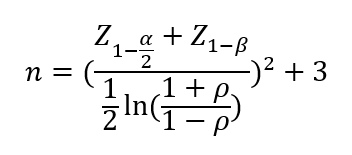
Given the limited number of previous studies in Iran on the association between fertility knowledge and both general and reproductive health literacy, the expected correlation coefficient (ρ) was set at 0.20. A type I error (α) of 0.05 and statistical power (1-β) of 0.80 were assumed. Based on these parameters, the required sample size was estimated at 193 participants. To account for potential attrition, a total of 208 students were ultimately enrolled in the study.
Procedure
Participants were selected using a stratified sampling method based on academic departments. First, the number of female students in each department was determined, and then the required number of students was randomly selected from the attendance lists. Data collection was conducted from April to June 2025. All ethical principles of research were strictly adhered to, including providing participants with complete information about the study’s objectives, methods, and rationale; ensuring confidentiality of the collected data; and obtaining written informed consent from all participants.
Instrument
Demographic Questionnaire
This questionnaire collected participants’ demographic information, including age, occupation, economic status, history of chronic illness, smoking status, and other relevant characteristics.
Short-Form Health Literacy for Iranian Adults (HELIA-SF)
This questionnaire was developed and psychometrically validated in 2022 by Tavousi et al. [26], demonstrating validity and reliability coefficients of 0.91 and 0.81, respectively. The questionnaire consists of 9 items assessing both basic and decision-making skills in the target population. These items measure five dimensions of health literacy: access, reading, comprehension, evaluation, and decision-making/behavior. Items 1 to 5 use a 5-point Likert scale ranging from 1=“Very difficult” to 5=“Very easy”. Items 6 to 9 are rated on a 5-point Likert scale ranging from 1=“Never” to 5=“Always". We found its internal consistency to be 0.90 assessed using Cronbach’s alpha.
Reproductive Health Literacy Questionnaire
This tool was developed by Kawata et al. in 2014 to assess women’s reproductive health literacy. The instrument has demonstrated satisfactory reliability, with a Cronbach’s alpha of 0.80 and a correlation coefficient of 0.71. It includes 21 items rated on a 4-point Likert scale ranging from 1=“Not true at all” to 4=“Completely true”. The total score ranges from 21 to 84, with higher scores indicating higher reproductive health literacy [27]. We found an internal consistency of 0.94 assessed using Cronbach’s alpha for this scale.
Cardiff Fertility Knowledge Scale (CFKS)
The CFKS validated in Iran by Mirghafourvand et al. [28] in 2024 [28, 29], consists of 13 items evaluating fertility knowledge across three domains: a) factors contributing to reduced fertility, b) misconceptions about fertility, and c) basic facts regarding infertility. Items are rated using a 3-point scale (true, false, don’t know). Correct answers are scored as 1, while incorrect or “Don’t know” responses receive a score of 0. Total scores are summed, divided by the number of items, and multiplied by 100. The original version reported a Cronbach’s alpha of 0.79, while the Persian version demonstrated internal consistency and validity coefficients of 0.85 and 0.95, respectively. We found an internal consistency of 0.66 for this scale assessed using Cronbach’s alpha.
Data analysis
Data were analyzed using SPSS 24. Due to non-normal data distribution, assessed using the Kolmogorov-Smirnov test, Spearman’s correlation coefficient was employed to examine associations between parameters. Linear regression analysis was also performed to evaluate predictive relationships.
Findings
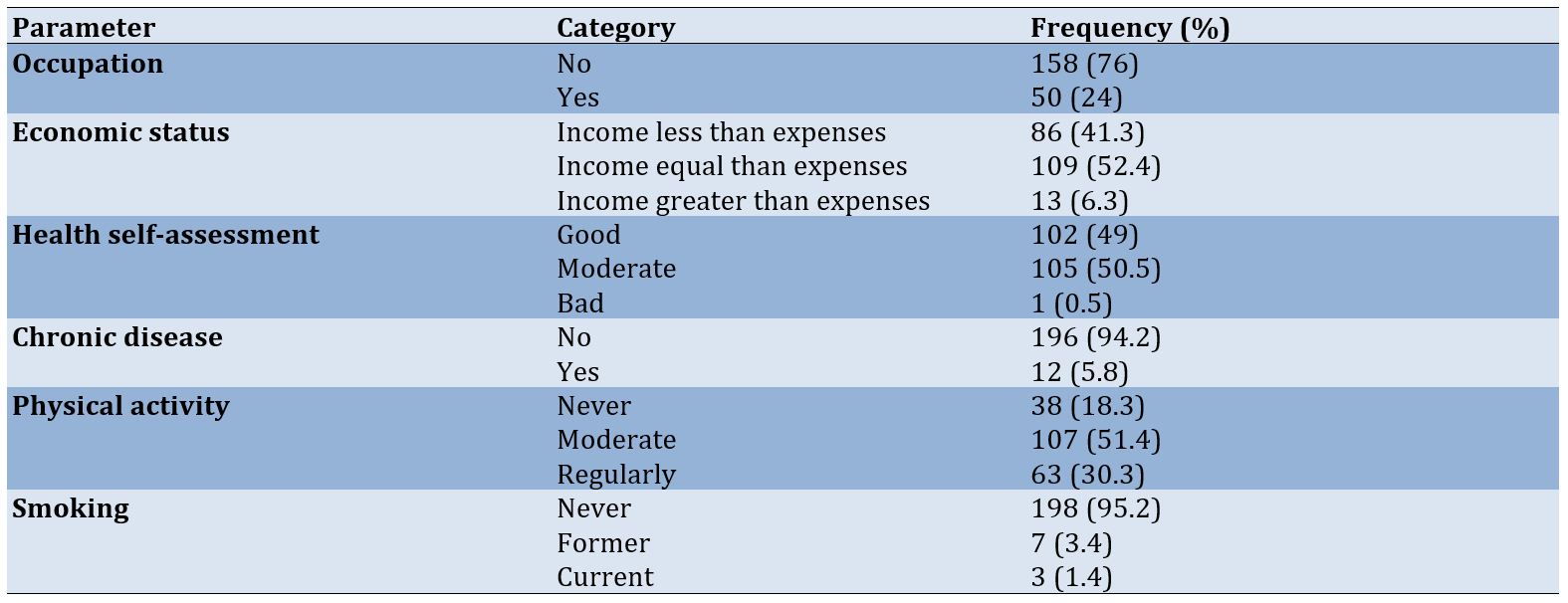
The mean age of the participants was 22.34±3.27 years. Among the 208 students, fewer than 5% reported smoking. Twelve participants had a history of chronic illness, and 30% reported engaging in regular physical activity (Table 1).
Table 1. Demographic characteristics of participants
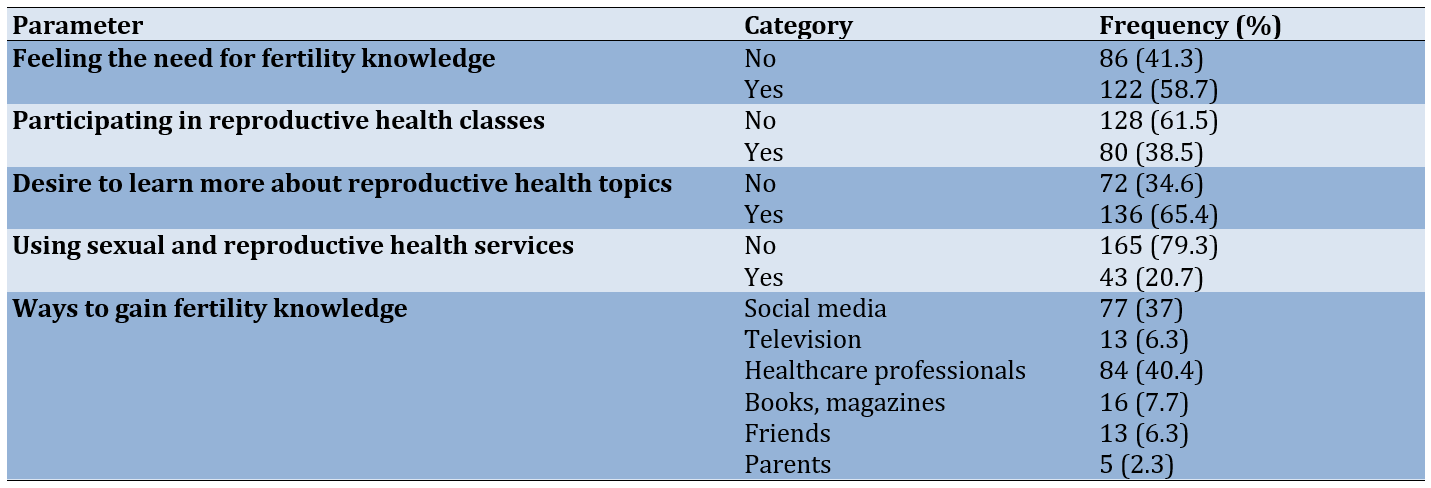
More than 61% of participants had not attended any educational sessions on fertility knowledge and lacked the necessary information in this area. Consequently, the majority (122 individuals) expressed a need for education on fertility-related topics and showed a willingness to learn more in this field. Among the various sources of fertility knowledge, healthcare professionals were identified as the primary source, followed by social media platforms, which also played a significant role (Table 2).
Table 2. Participants’ fertility knowledge, learning preferences, and information sources
The mean score of fertility knowledge (13 items) among participants was 7.68±2.56, with scores ranging from 0 to 12. The mean general health literacy score (9 items) was 74.07±18.76 (range: 3.13-100). Additionally, the mean reproductive health literacy score (21 items) was 73.54±9.91, with observed values ranging from 39 to 84.
Spearman correlation analysis revealed a significant positive correlation between fertility knowledge and general health literacy (p<0.001). Similarly, fertility knowledge was positively and significantly correlated with reproductive health literacy (correlation coefficient=0.386, p<0.001). Moreover, a strong and significant positive correlation was observed between general health literacy and reproductive health literacy (Figure 1 and Table 3).
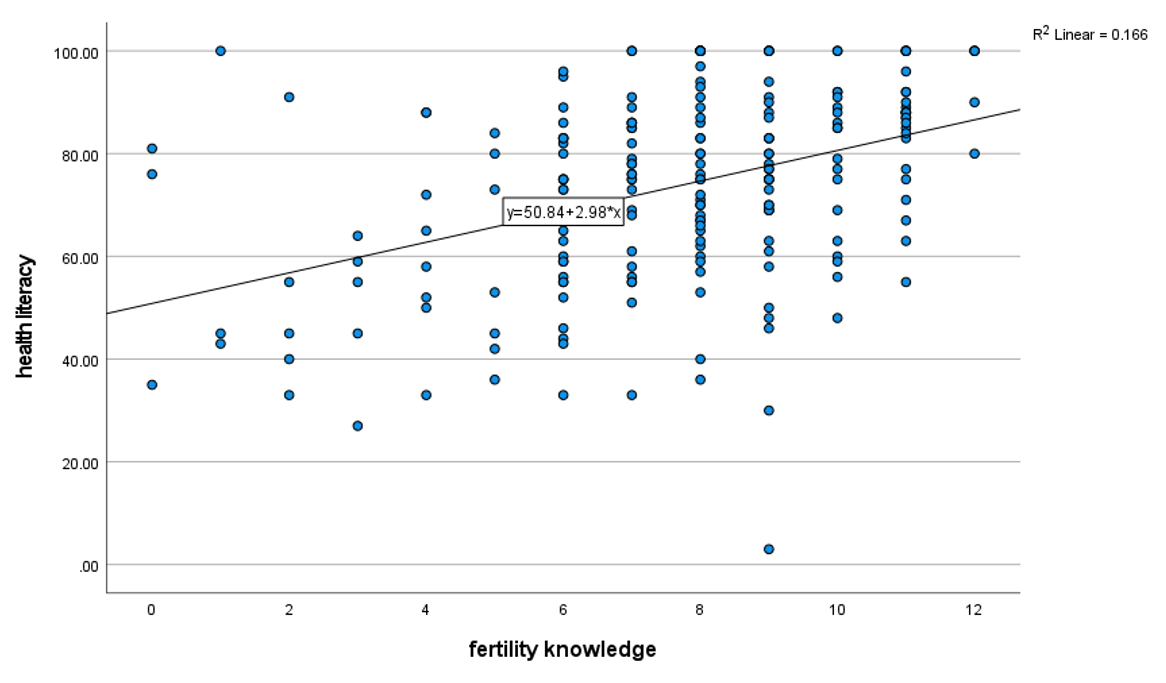
Figure 1. Scatter plots illustrating the correlations between fertility knowledge, general health literacy, and reproductive health literacy among participants
Table 3. Correlation between fertility knowledge, general health literacy, and reproductive health literacy (all cases p<0.001)

The results of the linear regression analysis using the backward elimination method indicated that both general health literacy and reproductive health literacy were significant positive predictors of fertility knowledge scores. Specifically, general health literacy was positively and significantly associated with fertility knowledge (p=0.003), and reproductive health literacy also positively predicted fertility knowledge (p=0.007).
Additionally, economic status showed a significant negative association with fertility knowledge (p=0.045). Although age had a positive association with fertility knowledge, this relationship was borderline in terms of statistical significance (p=0.058; Table 4).
Table 4. Linear regression analysis of fertility knowledge

Discussion
This study aimed to examine the relationship between fertility knowledge, general health literacy, and reproductive health literacy among young Iranian women. The mean level of fertility knowledge was moderate. There was a significant positive relationship between fertility knowledge and both general health literacy and reproductive health literacy, with both parameters serving as significant predictors of fertility knowledge. Furthermore, a strong correlation was observed between general health literacy and reproductive health literacy. In contrast, socioeconomic status showed a significant inverse relationship with fertility knowledge, while age demonstrated a positive, albeit marginally significant, association.
The average general health literacy score among the female students was 74.07, which falls within the “adequate” range. Several other studies have similarly assessed health literacy levels among Iranian students and women, with most findings aligning with the current study [24, 29-32]. International studies have also corroborated these results [33, 34]. However, Khajouei & Salehi report that only 29% of high school students possess adequate health literacy [35], a finding further supported by a systematic review [36], which contrasts with the present study. This discrepancy may stem from differences in the measurement tools used and the varying age groups of participants.
The mean fertility knowledge score was moderate, while the mean reproductive health literacy score was high. Similar results have been reported in previous research. For example, a study on married students at Mazandaran University of Medical Sciences reports adequate sexual health literacy [37], and another study found that reproductive health literacy among young Iranian couples (average age 32) is at a desirable level [23]. Jamali et al. also report that only 23.3% of Iranian women have limited health literacy [38], while Dehghankar et al. assess Iranian women’s reproductive and sexual health literacy as favorable [39]. Other studies have shown that nearly half of women aged 18-49 possess adequate health literacy [40] and that fertility and sexual knowledge among men and women aged 15-49 in Tehran is at an acceptable level [41]. These findings are consistent with a study by Kohan et al., employing a similar measurement tool and reporting that 91% of women in Isfahan have adequate reproductive health literacy [42]. Similar findings are also presented in the study by Panahi et al. [43]. Sayadi & Ahmadipour report high reproductive health literacy levels among women in Chabahar [44], and a study in Amol indicated that only one-fourth of women have inadequate sexual health literacy [45]. Nonetheless, some studies have reported differing results. For instance, two studies in Iran found that more than half of the women have moderate reproductive health literacy, with only 3.9% demonstrating adequate literacy. These differences may be attributed to sociocultural and economic variations in the studied populations [46, 47]. Additionally, a study of 400 young individuals attending a premarital counseling center in Bandar Abbas reveals suboptimal sexual and reproductive health literacy, possibly due to the use of a researcher-developed tool [48]. Some international studies support the current findings [49, 50]. However, a study conducted in Lao PDR among adolescents aged 15-19 reports that 65% have inadequate sexual and reproductive health literacy [16], likely influenced by the country’s low level of economic development. This aligns with the present study’s finding that economic status is a key determinant of sexual health literacy.
Spearman correlation coefficients indicated significant positive correlations between fertility knowledge, general health literacy, and reproductive health literacy. This was further confirmed by linear regression analysis, which identified both general and reproductive health literacy as positive predictors of fertility knowledge. A significant positive correlation was also found between general health literacy and reproductive health literacy. These findings are consistent with previous research, suggesting that health literacy is closely linked to reproductive health knowledge and may influence various aspects of reproductive health [46, 51-54].
There was also a significant inverse relationship between economic status and fertility knowledge. This finding is consistent with research by Nematzadeh et al., demonstrating that students with lower economic status are less likely to have adequate sexual health literacy [55]. Other studies have also confirmed the positive association between socioeconomic conditions and health literacy, including those by Sayadi & Ahmadipour [44], Abedian Kasgari et al. at Mazandaran University of Medical Sciences [37], and studies by Vakili et al. [56] and Small et al. [57]. This negative association may result from financial constraints that limit access to educational and informational resources related to reproductive and sexual health.
There was also a positive relationship between age and fertility knowledge, indicating that older participants possessed greater awareness of fertility-related issues. This is consistent with findings from Kohan et al. [42, 58], Sayadi & Ahmadipour [44], and other national [41] and international studies [59, 60]. In contrast, some studies have found that younger individuals exhibit higher levels of sexual health literacy [38, 61], which may be due to those studies’ focus on adolescents. Increased Internet use among adolescents, targeted reproductive health education in schools, and sociocultural shifts associated with modernization in Iran may explain these divergent findings. In particular, generational differences in attitudes toward sexuality—between those born in the 1960s and the 1990s—may have significantly influenced these trends [38].
While fertility knowledge among female university students was moderate, their general and reproductive health literacy levels were relatively favorable. A significant positive association was observed between health literacy and fertility knowledge, underscoring their crucial role in enhancing fertility awareness. Poor economic status was inversely associated with fertility knowledge, while age showed a marginally significant positive correlation. These findings highlight the importance of promoting health literacy, particularly among economically disadvantaged groups. Overall, strengthening formal and targeted reproductive health education for students appears essential.
One of the key strengths of this study is the use of stratified random sampling, which enhances the representativeness of the sample and reduces selection bias. However, the study also has several limitations. First, due to the cross-sectional design, causal relationships between variables cannot be established. Future research using longitudinal or interventional designs is recommended to address this limitation. Second, although validated tools were used, all data were collected through self-report, which may be subject to information bias. Incorporating observational or mixed-method data in future studies could enhance reliability. Third, most participants were medical students, which may limit the generalizability of the findings. Future studies should aim to include more diverse geographic and demographic samples.
Conclusion
Fertility knowledge among female university students is moderate and significantly influenced by both general and reproductive health literacy.
Acknowledgments: The authors extend their sincere appreciation to the Student Research Committee of Saveh University of Medical Sciences for its valuable financial and academic support, which enabled the implementation of this study. We are especially grateful to the young women who participated with enthusiasm and exemplary commitment, contributing meaningfully to the success of this research.
Ethical Permissions: This study was approved by the Ethics Committee for Biomedical Research at Saveh University of Medical Sciences, Iran (Ethics Code: IR.SAVEHUMS.REC.1403.067).
Conflicts of Interests: The authors declared no conflicts of interests.
Authors' Contribution: Varnousfaderani M (First Author), Introduction Writer/Methodologist/Main Researcher/Statistical Analyst (30%); Khoshnazar Z (Second Author), Methodologist/Assistant Researcher/Discussion Writer (15%); Mohammadjani F (Third Author), Introduction Writer/Assistant Researcher (10%); Fotovvati F (Fourth Author), Introduction Writer/Assistant Researcher (5%); Ghafori F (Fifth Author), Assistant Researcher/Discussion Writer (5%); Hosseini K (Sixth Author), Introduction Writer/Assistant Researcher (5%); Hosseini Koukamari P (Seventh Author), Methodologist/Discussion Writer (30%)
Funding/Support: This research was financially supported by the Vice Chancellor for Research and Technology at Saveh University of Medical Sciences.
Fertility knowledge is recognized as one of the key components in promoting sexual and reproductive health [1]. It refers to an individual’s awareness regarding the reproductive system, pregnancy, contraceptive methods, and risks associated with unintended pregnancies [2]. Those with adequate fertility knowledge are more capable of making informed decisions concerning their sexual and reproductive health [3] and are consequently less exposed to adverse outcomes such as unplanned pregnancies and sexually transmitted infections [4]. Studies have shown that insufficient knowledge of the menstrual cycle, conception, and preventive methods, particularly among adolescents and young adults, can lead to high-risk sexual behaviors and early pregnancies [5, 6].
General health literacy is a fundamental concept referring to an individual’s ability to access, understand, evaluate, and apply health-related information across various domains, including prevention, treatment, and health promotion [7]. Beyond mere knowledge acquisition, health literacy emphasizes empowering individuals to make informed decisions regarding their personal health [8]. Health literacy is commonly categorized into three dimensions: functional, interactive, and critical. Functional health literacy includes basic reading and comprehension skills necessary for understanding health information in daily life [9]. Interactive health literacy involves communication skills and the ability to use information effectively in various social contexts. Critical health literacy refers to advanced cognitive skills needed to analyze and evaluate health information and make informed decisions to better control one’s life circumstances [9-11]. Numerous studies have linked low health literacy with unfavorable health outcomes, including reduced use of healthcare services, higher prevalence of chronic diseases, increased hospitalization rates, unhealthy dietary patterns, obesity, engagement in risky behaviors, and a higher incidence of medication errors [12-14].
Reproductive health literacy, a specialized subset of health literacy, focuses on individuals’ ability to understand and use information related to sexual and reproductive health [15]. Contrary to common perception, reproductive health literacy encompasses more than basic knowledge, such as naming contraceptive methods. It includes skills in evaluating information sources, critical thinking, and making informed decisions regarding sexual and reproductive health [16]. A growing body of evidence indicates that low levels of sexual and reproductive health literacy among adolescents and young adults are associated with outcomes such as high-risk sexual behavior [17], unintended pregnancies [18], unsafe abortions [2], higher rates of sexually transmitted infections, and substance misuse [19].
Globally, studies indicate that despite its importance, sexual and reproductive health literacy remains inadequate or moderate in many countries. For example, in low-income African and Asian countries, adolescent and youth sexual health literacy levels have been found to be particularly low, contributing to high-risk sexual behaviors [4]. In Asia, the sexual health literacy of adolescents and youth is frequently reported as low, largely due to limited access to educational resources and cultural taboos [4, 20]. In Sri Lanka, 47.4% of adolescents have limited sexual health literacy, and over half scored poorly in health promotion skills [21]. Similarly, in Thailand, the average sexual health literacy among girls aged 15-19 is moderate, but access to information and services receives the lowest score (54.72%) [22].
In Iran, recent studies have reported mixed results. In a study conducted in Kerman, the mean sexual health literacy score among couples is 68.76 out of 100; however, factors, such as feelings of shame and the ability to differentiate reliable information sources are influential [23]. Another study in Qazvin province among women attending healthcare centers reports a mean score of 76.90±18.32, with approximately 50% of participants demonstrating adequate literacy and 32% categorized as having excellent literacy [24]. In rural areas of southern Iran, about 82.5% of women exhibit a favorable level of sexual health literacy, although improvements are needed in access and analytical skills [25].
Given that youth is a critical and formative stage in life for the development of sustainable health behaviors, enhancing health literacy, particularly in the domain of sexual and reproductive health, can have long-term implications for both individual and public health. Despite several studies independently examining fertility knowledge, general health literacy, or reproductive health literacy, there remains a lack of research that integrates these three components within youth populations. Accordingly, the present study aimed to investigate the relationship between fertility knowledge, general health literacy, and reproductive health literacy among young people.
Instrument and Methods
Design and sample
This descriptive-analytical cross-sectional study was conducted among female students at Saveh University of Medical Sciences in 2025. The study population consisted of 208 female students who met the inclusion criteria, including being married, willingness to participate, completion of informed consent, age between 18 and 35 years, and current enrollment at Saveh University of Medical Sciences.
The required sample size was calculated using the following formula.
Given the limited number of previous studies in Iran on the association between fertility knowledge and both general and reproductive health literacy, the expected correlation coefficient (ρ) was set at 0.20. A type I error (α) of 0.05 and statistical power (1-β) of 0.80 were assumed. Based on these parameters, the required sample size was estimated at 193 participants. To account for potential attrition, a total of 208 students were ultimately enrolled in the study.
Procedure
Participants were selected using a stratified sampling method based on academic departments. First, the number of female students in each department was determined, and then the required number of students was randomly selected from the attendance lists. Data collection was conducted from April to June 2025. All ethical principles of research were strictly adhered to, including providing participants with complete information about the study’s objectives, methods, and rationale; ensuring confidentiality of the collected data; and obtaining written informed consent from all participants.
Instrument
Demographic Questionnaire
This questionnaire collected participants’ demographic information, including age, occupation, economic status, history of chronic illness, smoking status, and other relevant characteristics.
Short-Form Health Literacy for Iranian Adults (HELIA-SF)
This questionnaire was developed and psychometrically validated in 2022 by Tavousi et al. [26], demonstrating validity and reliability coefficients of 0.91 and 0.81, respectively. The questionnaire consists of 9 items assessing both basic and decision-making skills in the target population. These items measure five dimensions of health literacy: access, reading, comprehension, evaluation, and decision-making/behavior. Items 1 to 5 use a 5-point Likert scale ranging from 1=“Very difficult” to 5=“Very easy”. Items 6 to 9 are rated on a 5-point Likert scale ranging from 1=“Never” to 5=“Always". We found its internal consistency to be 0.90 assessed using Cronbach’s alpha.
Reproductive Health Literacy Questionnaire
This tool was developed by Kawata et al. in 2014 to assess women’s reproductive health literacy. The instrument has demonstrated satisfactory reliability, with a Cronbach’s alpha of 0.80 and a correlation coefficient of 0.71. It includes 21 items rated on a 4-point Likert scale ranging from 1=“Not true at all” to 4=“Completely true”. The total score ranges from 21 to 84, with higher scores indicating higher reproductive health literacy [27]. We found an internal consistency of 0.94 assessed using Cronbach’s alpha for this scale.
Cardiff Fertility Knowledge Scale (CFKS)
The CFKS validated in Iran by Mirghafourvand et al. [28] in 2024 [28, 29], consists of 13 items evaluating fertility knowledge across three domains: a) factors contributing to reduced fertility, b) misconceptions about fertility, and c) basic facts regarding infertility. Items are rated using a 3-point scale (true, false, don’t know). Correct answers are scored as 1, while incorrect or “Don’t know” responses receive a score of 0. Total scores are summed, divided by the number of items, and multiplied by 100. The original version reported a Cronbach’s alpha of 0.79, while the Persian version demonstrated internal consistency and validity coefficients of 0.85 and 0.95, respectively. We found an internal consistency of 0.66 for this scale assessed using Cronbach’s alpha.
Data analysis
Data were analyzed using SPSS 24. Due to non-normal data distribution, assessed using the Kolmogorov-Smirnov test, Spearman’s correlation coefficient was employed to examine associations between parameters. Linear regression analysis was also performed to evaluate predictive relationships.
Findings
The mean age of the participants was 22.34±3.27 years. Among the 208 students, fewer than 5% reported smoking. Twelve participants had a history of chronic illness, and 30% reported engaging in regular physical activity (Table 1).
Table 1. Demographic characteristics of participants
More than 61% of participants had not attended any educational sessions on fertility knowledge and lacked the necessary information in this area. Consequently, the majority (122 individuals) expressed a need for education on fertility-related topics and showed a willingness to learn more in this field. Among the various sources of fertility knowledge, healthcare professionals were identified as the primary source, followed by social media platforms, which also played a significant role (Table 2).
Table 2. Participants’ fertility knowledge, learning preferences, and information sources
The mean score of fertility knowledge (13 items) among participants was 7.68±2.56, with scores ranging from 0 to 12. The mean general health literacy score (9 items) was 74.07±18.76 (range: 3.13-100). Additionally, the mean reproductive health literacy score (21 items) was 73.54±9.91, with observed values ranging from 39 to 84.
Spearman correlation analysis revealed a significant positive correlation between fertility knowledge and general health literacy (p<0.001). Similarly, fertility knowledge was positively and significantly correlated with reproductive health literacy (correlation coefficient=0.386, p<0.001). Moreover, a strong and significant positive correlation was observed between general health literacy and reproductive health literacy (Figure 1 and Table 3).
Figure 1. Scatter plots illustrating the correlations between fertility knowledge, general health literacy, and reproductive health literacy among participants
Table 3. Correlation between fertility knowledge, general health literacy, and reproductive health literacy (all cases p<0.001)
The results of the linear regression analysis using the backward elimination method indicated that both general health literacy and reproductive health literacy were significant positive predictors of fertility knowledge scores. Specifically, general health literacy was positively and significantly associated with fertility knowledge (p=0.003), and reproductive health literacy also positively predicted fertility knowledge (p=0.007).
Additionally, economic status showed a significant negative association with fertility knowledge (p=0.045). Although age had a positive association with fertility knowledge, this relationship was borderline in terms of statistical significance (p=0.058; Table 4).
Table 4. Linear regression analysis of fertility knowledge
Discussion
This study aimed to examine the relationship between fertility knowledge, general health literacy, and reproductive health literacy among young Iranian women. The mean level of fertility knowledge was moderate. There was a significant positive relationship between fertility knowledge and both general health literacy and reproductive health literacy, with both parameters serving as significant predictors of fertility knowledge. Furthermore, a strong correlation was observed between general health literacy and reproductive health literacy. In contrast, socioeconomic status showed a significant inverse relationship with fertility knowledge, while age demonstrated a positive, albeit marginally significant, association.
The average general health literacy score among the female students was 74.07, which falls within the “adequate” range. Several other studies have similarly assessed health literacy levels among Iranian students and women, with most findings aligning with the current study [24, 29-32]. International studies have also corroborated these results [33, 34]. However, Khajouei & Salehi report that only 29% of high school students possess adequate health literacy [35], a finding further supported by a systematic review [36], which contrasts with the present study. This discrepancy may stem from differences in the measurement tools used and the varying age groups of participants.
The mean fertility knowledge score was moderate, while the mean reproductive health literacy score was high. Similar results have been reported in previous research. For example, a study on married students at Mazandaran University of Medical Sciences reports adequate sexual health literacy [37], and another study found that reproductive health literacy among young Iranian couples (average age 32) is at a desirable level [23]. Jamali et al. also report that only 23.3% of Iranian women have limited health literacy [38], while Dehghankar et al. assess Iranian women’s reproductive and sexual health literacy as favorable [39]. Other studies have shown that nearly half of women aged 18-49 possess adequate health literacy [40] and that fertility and sexual knowledge among men and women aged 15-49 in Tehran is at an acceptable level [41]. These findings are consistent with a study by Kohan et al., employing a similar measurement tool and reporting that 91% of women in Isfahan have adequate reproductive health literacy [42]. Similar findings are also presented in the study by Panahi et al. [43]. Sayadi & Ahmadipour report high reproductive health literacy levels among women in Chabahar [44], and a study in Amol indicated that only one-fourth of women have inadequate sexual health literacy [45]. Nonetheless, some studies have reported differing results. For instance, two studies in Iran found that more than half of the women have moderate reproductive health literacy, with only 3.9% demonstrating adequate literacy. These differences may be attributed to sociocultural and economic variations in the studied populations [46, 47]. Additionally, a study of 400 young individuals attending a premarital counseling center in Bandar Abbas reveals suboptimal sexual and reproductive health literacy, possibly due to the use of a researcher-developed tool [48]. Some international studies support the current findings [49, 50]. However, a study conducted in Lao PDR among adolescents aged 15-19 reports that 65% have inadequate sexual and reproductive health literacy [16], likely influenced by the country’s low level of economic development. This aligns with the present study’s finding that economic status is a key determinant of sexual health literacy.
Spearman correlation coefficients indicated significant positive correlations between fertility knowledge, general health literacy, and reproductive health literacy. This was further confirmed by linear regression analysis, which identified both general and reproductive health literacy as positive predictors of fertility knowledge. A significant positive correlation was also found between general health literacy and reproductive health literacy. These findings are consistent with previous research, suggesting that health literacy is closely linked to reproductive health knowledge and may influence various aspects of reproductive health [46, 51-54].
There was also a significant inverse relationship between economic status and fertility knowledge. This finding is consistent with research by Nematzadeh et al., demonstrating that students with lower economic status are less likely to have adequate sexual health literacy [55]. Other studies have also confirmed the positive association between socioeconomic conditions and health literacy, including those by Sayadi & Ahmadipour [44], Abedian Kasgari et al. at Mazandaran University of Medical Sciences [37], and studies by Vakili et al. [56] and Small et al. [57]. This negative association may result from financial constraints that limit access to educational and informational resources related to reproductive and sexual health.
There was also a positive relationship between age and fertility knowledge, indicating that older participants possessed greater awareness of fertility-related issues. This is consistent with findings from Kohan et al. [42, 58], Sayadi & Ahmadipour [44], and other national [41] and international studies [59, 60]. In contrast, some studies have found that younger individuals exhibit higher levels of sexual health literacy [38, 61], which may be due to those studies’ focus on adolescents. Increased Internet use among adolescents, targeted reproductive health education in schools, and sociocultural shifts associated with modernization in Iran may explain these divergent findings. In particular, generational differences in attitudes toward sexuality—between those born in the 1960s and the 1990s—may have significantly influenced these trends [38].
While fertility knowledge among female university students was moderate, their general and reproductive health literacy levels were relatively favorable. A significant positive association was observed between health literacy and fertility knowledge, underscoring their crucial role in enhancing fertility awareness. Poor economic status was inversely associated with fertility knowledge, while age showed a marginally significant positive correlation. These findings highlight the importance of promoting health literacy, particularly among economically disadvantaged groups. Overall, strengthening formal and targeted reproductive health education for students appears essential.
One of the key strengths of this study is the use of stratified random sampling, which enhances the representativeness of the sample and reduces selection bias. However, the study also has several limitations. First, due to the cross-sectional design, causal relationships between variables cannot be established. Future research using longitudinal or interventional designs is recommended to address this limitation. Second, although validated tools were used, all data were collected through self-report, which may be subject to information bias. Incorporating observational or mixed-method data in future studies could enhance reliability. Third, most participants were medical students, which may limit the generalizability of the findings. Future studies should aim to include more diverse geographic and demographic samples.
Conclusion
Fertility knowledge among female university students is moderate and significantly influenced by both general and reproductive health literacy.
Acknowledgments: The authors extend their sincere appreciation to the Student Research Committee of Saveh University of Medical Sciences for its valuable financial and academic support, which enabled the implementation of this study. We are especially grateful to the young women who participated with enthusiasm and exemplary commitment, contributing meaningfully to the success of this research.
Ethical Permissions: This study was approved by the Ethics Committee for Biomedical Research at Saveh University of Medical Sciences, Iran (Ethics Code: IR.SAVEHUMS.REC.1403.067).
Conflicts of Interests: The authors declared no conflicts of interests.
Authors' Contribution: Varnousfaderani M (First Author), Introduction Writer/Methodologist/Main Researcher/Statistical Analyst (30%); Khoshnazar Z (Second Author), Methodologist/Assistant Researcher/Discussion Writer (15%); Mohammadjani F (Third Author), Introduction Writer/Assistant Researcher (10%); Fotovvati F (Fourth Author), Introduction Writer/Assistant Researcher (5%); Ghafori F (Fifth Author), Assistant Researcher/Discussion Writer (5%); Hosseini K (Sixth Author), Introduction Writer/Assistant Researcher (5%); Hosseini Koukamari P (Seventh Author), Methodologist/Discussion Writer (30%)
Funding/Support: This research was financially supported by the Vice Chancellor for Research and Technology at Saveh University of Medical Sciences.
References
1. Fowler CI, Koo HP, Richmond AD, Creel D, Asman K. US women's knowledge of reproductive biology. Womens Health Issues. 2023;33(1):54-66. [Link] [DOI:10.1016/j.whi.2022.05.004]
2. Liu R, Dong X, Ji X, Chen S, Yuan Q, Tao Y, et al. Associations between sexual and reproductive health knowledge, attitude and practice of partners and the occurrence of unintended pregnancy. Front Public Health. 2022;10:1042879. [Link] [DOI:10.3389/fpubh.2022.1042879]
3. Iyanda AE, Dinkins BJ, Osayomi T, Adeusi TJ, Lu Y, Oppong JR. Fertility knowledge, contraceptive use and unintentional pregnancy in 29 African countries: A cross-sectional study. Int J Public Health. 2020;65(4):445-55. [Link] [DOI:10.1007/s00038-020-01356-9]
4. Amanu A, Birhanu Z, Godesso A. Sexual and reproductive health literacy among young people in Sub-Saharan Africa: evidence synthesis and implications. Glob Health Action. 2023;16(1):2279841. [Link] [DOI:10.1080/16549716.2023.2279841]
5. Bosire EN, Chiseri K, Comeau DL, Richter L, Stein AD, Norris SA. A qualitative study of risks and protective factors against pregnancy among sexually-active adolescents in Soweto, South Africa. PLOS Glob Public Health. 2021;1(11):e0000044. [Link] [DOI:10.1371/journal.pgph.0000044]
6. Yared A, Sahile Z, Mekuria M. Sexual and reproductive health experience, knowledge and problems among university students in Ambo, central Ethiopia. Reprod Health. 2017;14(1):41. [Link] [DOI:10.1186/s12978-017-0302-9]
7. Ma X, Yang Y, Wei Q, Jiang H, Shi H. Development and validation of the reproductive health literacy questionnaire for Chinese unmarried youth. Reprod Health. 2021;18(1):226. [Link] [DOI:10.1186/s12978-021-01278-6]
8. Santana S, Brach C, Harris L, Ochiai E, Blakey C, Bevington F, et al. Updating health literacy for healthy people 2030: Defining its importance for a new decade in public health. J Public Health Manag Pract. 2021;27(Suppl 6):S258-S64. [Link] [DOI:10.1097/PHH.0000000000001324]
9. Lin CC, Kuo CT, Tsai MR. Association of functional, interactive, and critical health literacy with good self-rated health among Taiwanese community-dwelling older adults. Geriatr Nurs. 2022;43:91-6. [Link] [DOI:10.1016/j.gerinurse.2021.11.007]
10. Nutbeam D. Health literacy as a public health goal: A challenge for contemporary health education and communication strategies into the 21st century. Health Promot Int. 2000;15(3):259-67. [Link] [DOI:10.1093/heapro/15.3.259]
11. Nutbeam D. The evolving concept of health literacy. Soc Sci Med. 2008;67(12):2072-8. [Link] [DOI:10.1016/j.socscimed.2008.09.050]
12. Liu L, Qian X, Chen Z, He T. Health literacy and its effect on chronic disease prevention: Evidence from China's data. BMC Public Health. 2020;20(1):690. [Link] [DOI:10.1186/s12889-020-08804-4]
13. Suen K, Shrestha S, Osman S, Paudyal V. Association between patient race/ethnicity, health literacy, socio-economic status, and incidence of medication errors: A systematic review. J Racial Ethn Health Disparities. 2025. [Link] [DOI:10.1007/s40615-025-02407-8]
14. Jafari A, Tavakoly Sany SB, Peyman N. The status of health literacy in students aged 6 to 18 old years: A systematic review study. Iran J Public Health. 2021;50(3):448-58. [Link] [DOI:10.18502/ijph.v50i3.5584]
15. Oskenbek S, Omar M, Umarova R, Seysenbay S. Population literacy about reproductive health as measured by the Cardiff Fertility Knowledge Scale (CFKS). Reprod Med. 2021;2(47):11-22. [Link]
16. Vongxay V, Albers F, Thongmixay S, Thongsombath M, Broerse JE, Sychareun V, et al. Sexual and reproductive health literacy of school adolescents in Lao PDR. PLoS One. 2019;14(1):e0209675. [Link] [DOI:10.1371/journal.pone.0209675]
17. Debella A, Tamire A, Bogale K, Berhanu B, Mohammed H, Deressa A, et al. Sexual and reproductive health literacy and its associated factors among adolescents in Harar town public high schools, Harari, Ethiopia, 2023: A multicenter cross-sectional study. Front Reprod Health. 2024;6:1358884. [Link] [DOI:10.3389/frph.2024.1358884]
18. Mashayekh-Amiri S, Molaie B, Aliasghari F, Rashidi F, Hemati E, Mirghafourvand M. Fertility knowledge, desire, and associated factors among Iranian couples: A cross-sectional study in Northwest Iran. BMC Public Health. 2025;25(1):1160. [Link] [DOI:10.1186/s12889-025-22347-6]
19. Zenouzi A, Rezaei E, Behboodi Moghadam Z, Montazeri A, Maani S, Vasegh Rahimparvar SF. Reproductive health concerns of women with high risk sexual behaviors. SAGE Open Nurs. 2021;7:23779608211017779. [Link] [DOI:10.1177/23779608211017779]
20. Albury K, Mannix S. From digital health literacy to a digital and data capabilities approach to sexual health. Sex Res Soc Policy. 2025. [Link] [DOI:10.1007/s13178-025-01110-x]
21. Wickramaarachchi H, Perera S, Wijesekara T, Wickramaarachchi WU, Tennakoon S. Sexual health literacy level and associated sociodemographic factors among Sri Lankan adolescents: A cross-sectional analysis of selected urban and rural areas in Kandy District. Asian J Soc Health Behav. 2024;7(1):44-50. [Link] [DOI:10.4103/shb.shb_370_23]
22. Narkbubpha R, Sriyasak A, Sarakshetrin A, Thungthin P. Assessing sexual health literacy among Thai female adolescents in non-formal education: A mixed-methods study. Belitung Nurs J. 2025;11(3):340-8. [Link] [DOI:10.33546/bnj.3744]
23. Shahrahmani H, Kariman N, Keshavarz Z, Ahmadi A, Nasiri M. Sexual health literacy and its related factors among couples: A population-based study in Iran. PLoS One. 2023;18(11):e0293279. [Link] [DOI:10.1371/journal.pone.0293279]
24. Panahi R, Ramezankhani A, Tavousi M, Osmani F, Ghazanfari E, Niknami S. Evaluation of health literacy and its influencing factors on dormitory students of Shahid Beheshti University of Medical Sciences in Tehran. J Educ Community Health. 2016;3(3):30-6. [Persian] [Link] [DOI:10.21859/jech-03035]
25. Bahrampour B, Shahali S, Lamyian M, Rasekhi A. Sexual health literacy among rural women in Southern Iran. Sci Rep. 2024;14(1):17377. [Link] [DOI:10.1038/s41598-024-68444-1]
26. Tavousi M, Haeri-Mehrizi AA, Sedighi J, Montazeri A, Mohammadi S, Ardestani MS, et al. Health literacy instrument for adults-short form (HELIA-SF): Development and psychometric properties. PAYESH. 2022;21(3):309-19. [Persian] [Link]
27. Kawata S, Hatashita H, Kinjo Y. Development of a health literacy scale for women of reproductive age: An examination of reliability and validity in a study of female workers. Jpn J Public Health. 2014;61(4):186-96. [Japanese] [Link]
28. Mirghafourvand M, Asghari Jafarabadi M, Gharacheh M, Maeda E, Haghani S, Ranjbar F. Psychometric properties of persian version of the cardiff fertility knowledge scale (CFKS-P). Heliyon. 2024;10(9):e30534. [Link] [DOI:10.1016/j.heliyon.2024.e30534]
29. Afra A, Bachari SS, Hassanabad VR, Rouhandeh R. The study of the relationship between quality of life and health literacy among Students of Abadan Faculty of Medical Sciences. J Nurs Educ. 2019;8(1):54-60. [Persian] [Link]
30. Khaleghi M, Amin Shokravi F, Peyman N. The relationship between health literacy and health-related quality of life in students. Iran J Health Educ Health Promot. 2019;7(1):66-73. [Persian] [Link] [DOI:10.30699/ijhehp.7.1.66]
31. Charoghchian Khorasani E, Tavakoly Sany SB, Orooji A, Ferns G, Peyman N. Health literacy in Iranian women: A systematic review and meta-analysis. Iran J Public Health. 2020;49(5):860-74. [Link] [DOI:10.18502/ijph.v49i5.3203]
32. Alinejad-Tilaki A, Omidvar S, Kheirkhah F, Bakhtiari A, Gholinia H. Health literacy and its relationship with mental health and quality of life in freshmen students. BMC Public Health. 2025;25(1):106. [Link] [DOI:10.1186/s12889-024-21202-4]
33. Butler LM, Devraj R, Santanello C. Design and evaluation of health literacy instructional video for pharmacy students. Innov Pharm. 2013;4(1). [Link] [DOI:10.24926/iip.v4i1.282]
34. Kühn L, Bachert P, Hildebrand C, Kunkel J, Reitermayer J, Wäsche H, et al. Health literacy among university students: a systematic review of cross-sectional studies. Front Public Health. 2022;9:680999. [Link] [DOI:10.3389/fpubh.2021.680999]
35. Khajouei R, Salehi F. Health literacy among Iranian high school students. Am J Health Behav. 2017;41(2):215-22. [Link] [DOI:10.5993/AJHB.41.2.13]
36. Olyani S, Peyman N. Health literacy and health outcomes in Iranian adolescents: A systematic review. J Health Lit. 2021;6(3):78-85. [Link]
37. Abedian Kasgari K, Sadati M, Nikbakht R, Hosseini Tabaghdehi M, Shahhosseini Z. The relationship between parent-adolescent sexual health dialogue and sexual health literacy: A cross-sectional study among students at Mazandaran University of Medical Sciences. J Mazandaran Univ Med Sci. 2025;35(246):118-27. [Persian] [Link]
38. Jamali B, Maasoumi R, Tavousi M, Haeri Mehrizi AA. Women's sexual health literacy and related factors: A population-based study from Iran. Int J Sex Health. 2020;32(4):433-42. [Link] [DOI:10.1080/19317611.2020.1841056]
39. Dehghankar L, Panahi R, Khatooni M, Fallah S, Moafi F, Anbari M, et al. The association between sexual health literacy and sexual function of women in Iran. J Educ Health Promot. 2022;11(1):11. [Link] [DOI:10.4103/jehp.jehp_414_21]
40. Hamzehgardeshi Z, Ahmadian M, Rezaei M, Alizadeh K, Shahhosseini Z, Hamzehgardeshi L, et al. Comparison of reproductive health literacy and related factors in urban and rural women of reproductive age in Iran 2023. Research Square [Preprint]. 2025 [cited 2025 May 5]. Available from: https://www.researchsquare.com/article/rs-5763987/v1. [Link] [DOI:10.21203/rs.3.rs-5763987/v1]
41. Rahimi-Naghani S, Merghati-Khoei E, Shahbazi M, Khalajabadi Farahani F, Motamedi M, Salehi M, et al. Sexual and reproductive health knowledge among men and women aged 15 to 49 years in metropolitan Tehran. J Sex Res. 2016;53(9):1153-64. [Link] [DOI:10.1080/00224499.2016.1148110]
42. Kohan S, Mohammadi F, Yazdi M, Dadkhah A. Evaluation of relationship between reproductive health literacy and demographic factors in women. J Health Lit. 2018;3(1):20-9. [Link]
43. Panahi R, Namdar P, Nayebi N, Anbari M, Yekefallah L, Dehghankar L. Sexual health literacy and the related factors among women in Qazvin, Iran. J Educ Community Health. 2021;8(4):265-70. [Link] [DOI:10.52547/jech.8.4.265]
44. Sayadi Z, Ahmadipour H. Reproductive health literacy and its related factors in women of reproductive age referring to comprehensive healthcare centers in Chabahar in 2021. Health Dev J. 2022;11(1):24-8. [Link] [DOI:10.34172/jhad.2022.92067]
45. Jamali B, Massomie R, Tavousi M, Mehrizi AAH, Zarei F. The status of sexual health literacy in Iranian women: A cross-sectional study. J Nurs Midwifery Sci. 2022;9(2):e140607. [Link] [DOI:10.4103/jnms.jnms_87_21]
46. Ghavami B, Sohrabi Z, RaisiDehkordi Z, Mohammadi F. Relationship between reproductive health literacy and components of healthy fertility in women of the reproductive age. J Educ Health Promot. 2024;13(1):105. [Link] [DOI:10.4103/jehp.jehp_132_23]
47. Akbarinejad F, Soleymani MR, Shahrzadi L. The relationship between media literacy and health literacy among pregnant women in health centers of Isfahan. J Educ Health Promot. 2017;6(1):17. [Link] [DOI:10.4103/2277-9531.204749]
48. Dabiri F, Hajian S, Ebadi A, Zayeri F, Abedini S. Sexual and reproductive health literacy of the youth in Bandar Abbas. AIMS Med Sci. 2019;6(4):318-25. [Link] [DOI:10.3934/medsci.2019.4.318]
49. Martin SP. Young people's sexual health literacy: Seeking, understanding, and evaluating online sexual health information [dissertation]. Glasgow: University of Glasgow; 2017. [Link]
50. Vamos CA, Thompson EL, Logan RG, Griner SB, Perrin KM, Merrell LK, et al. Exploring college students' sexual and reproductive health literacy. J Am Coll Health. 2020;68(1):79-88. [Link] [DOI:10.1080/07448481.2018.1515757]
51. Maricic M, Stojanovic G, Pazun V, Stepović M, Djordjevic O, Macuzic IZ, et al. Relationship between socio-demographic characteristics, reproductive health behaviors, and health literacy of women in Serbia. Front Public Health. 2021;9:629051. [Link] [DOI:10.3389/fpubh.2021.629051]
52. Maricic M, Curuvija Amanovic R, Stepovic M. Health literacy in female-association with socioeconomic factors and effects on reproductive health. Serbian J Exp Clin Res. 2020;21(2). [Link] [DOI:10.2478/sjecr-2018-0055]
53. Haerian A, Moghaddam MHB, Ehrampoush MH, Bazm S, Bahsoun MH. Health literacy among adults in Yazd, Iran. J Educ Health Promot. 2015;4(1):91. [Link] [DOI:10.4103/2277-9531.171805]
54. Kilfoyle KA, Vitko M, O'Conor R, Bailey SC. Health literacy and women's reproductive health: A systematic review. J Womens Health. 2016;25(12):1237-55. [Link] [DOI:10.1089/jwh.2016.5810]
55. Nematzadeh S, Shahhosseini Z, Moosazadeh M, Hamzehgardeshi Z. Sexual health literacy level and its related factors among married medical sciences college students in an Iranian setting: A web‑based cross‑sectional study. Reprod Health. 2024;21(1):53. [Link] [DOI:10.1186/s12978-024-01756-7]
56. Vakili F, Nasiri M, Hamzehgardeshi Z, Jahanfar S, Mahmoodi Z, Alamolhoda SH. Casual association between social determinants of health and sexual health literacy in reproductive-aged women: A WHO model analysis. BMC Public Health. 2025;25(1):789. [Link] [DOI:10.1186/s12889-025-21896-0]
57. Small E, Nikolova SP, Keyes LL, Robinson SR. Sexual health literacy, parental education, and risky sexual behavior among college students in Sierra Leone. Cogent Soc Sci. 2023;9(2):2279352. [Link] [DOI:10.1080/23311886.2023.2279352]
58. Aslani A, Khosravi A. Investigating Health Belief model component about sexual and reproductive health in college female students. J Health Lit. 2016;1(1):39-45. [Link]
59. Simpson S, Clifford C, Ross K, Sefton N, Owen L, Blizzard L, et al. Sexual health literacy of the student population of the University of Tasmania: Results of the RUSSL Study. Sex Health. 2015;12(3):207-16. [Link] [DOI:10.1071/SH14223]
60. Glover R, editor. Barbie's to birth control: Using focus groups with adolescent females to identify the barriers to understanding reproductive and sexual health. Proceedings of the 2015 APHA Annual Meeting & Expo (Oct 31-Nov 4, 2015). Washington, DC: APHA; 2015. [Link]
61. Moghasemi S, Ozgoli G, Ahmadi F, Simbar M. Sexual health care utilization in married middle aged women; A cross-sectional study. J Isfahan Med Sch. 2018;35(455):1640-7. [Persian] [Link]
Send email to the article author