

TMU
Owner
Tarbiat Modares University (TMU) is the owner of HEHP.

0.8
Cite Score 2025
Volume 13, Issue 4 (2025)
Health Educ Health Promot 2025, 13(4): 727-734 |
Back to browse issues page
Article Type:




History
Received: 2025/10/17 | Accepted: 2025/11/23 | Published: 2025/11/26
Received: 2025/10/17 | Accepted: 2025/11/23 | Published: 2025/11/26
How to cite this article
Ebrahimnejad M, Raoofi S, Alavinasab M, vahidi Y, Salajegheh M, Alikhah H. Performance Evaluation of Integrated Health System from the Viewpoint of Health Center Staff. Health Educ Health Promot 2025; 13 (4) :727-734
URL: http://hehp.daneshafarand.org/article-4-83029-en.html
URL: http://hehp.daneshafarand.org/article-4-83029-en.html
Download citation:
BibTeX | RIS | EndNote | Medlars | ProCite | Reference Manager | RefWorks
Send citation to:


Rights and permissions
BibTeX | RIS | EndNote | Medlars | ProCite | Reference Manager | RefWorks
Send citation to:

Authors
Mozhgan Ebrahimnejad 
 , Samira Raoofi , Meysam Alavinasab , Yasna Vahidi , Mina Salajegheh , Hossein Alikhah *1
, Samira Raoofi , Meysam Alavinasab , Yasna Vahidi , Mina Salajegheh , Hossein Alikhah *1
Keywords:
| Abstract (HTML) (1041 Views)
Full-Text: (106 Views)
Introduction
In the current era, advancements in management knowledge have made evaluation systems essential in organizations. Every organization requires assessment to understand the quality of its activities, particularly in complex and dynamic environments. Without such systems, implementing the necessary improvements for organizational growth and development would be impossible, which could result in inefficiency and potential organizational failure [1].
Performance is a central topic in all organizational analyses, and attention to organizational performance contributes to the development of organizational theory. Evaluating and measuring performance enhances system intelligence and motivates individuals toward desirable behaviors, playing a key role in formulating and implementing organizational policies [2]. Performance measurement is one of the main management processes, conducted to analyze performance and examine its alignment with organizational goals, thereby facilitating informed decision-making. In recent years, the health and medical situation in many countries, particularly regarding infectious diseases, has improved. This improvement is reflected in indicators, such as life expectancy at birth, disability-adjusted life expectancy, and reduced mortality due to healthcare interventions [3, 4].
However, these improvements have been accompanied by persistent concerns, including the rising prevalence of chronic diseases, inequalities in access to healthcare services, health disparities within and between countries, changes in care quality and safety, mismatches between human resources and healthcare needs, and discrepancies between rising healthcare costs and changes in public expectations [3]. Recent financial and economic crises have heightened concerns about the performance of the healthcare system and the sustainability of its financing, underscoring the government’s crucial role in maintaining social cohesion and improving public health [5].
Health information systems are computer-based systems designed to facilitate the management of health and medical information, thereby improving care quality and reducing costs. These systems serve as infrastructure for decision-making and play a crucial role in cost management, quality improvement, and research expansion [6]. Healthcare information systems are designed and implemented to process data, generate information, and create knowledge in primary healthcare. They form the backbone of paperless health service systems and play a key role in integrating service delivery across all providers and consumers [7].
The common objective of health information systems is to meet user needs, conduct epidemiological research, manage health information, and improve care quality. The integrated health system (SIB), as per notification No. 100/298 dated June 26, 2016, by the Ministry of Health, has been deployed in most medical universities and was launched in early October 2016 across the majority of medical sciences universities [8, 9]. This system was established to create a national electronic health record for nearly the entire population, to be used in health centers under all medical universities, supporting primary healthcare, maternal and child health, non-communicable disease risk factors, screening, and patient follow-up. It aims to improve problem-solving, decision-making, and the horizontal and vertical integration of services, enabling the monitoring of primary healthcare system performance and the implementation of health reforms [10-12].
The SIB system collects and records household information and required healthcare services at centers and health bases. These services are provided by over 125,000 users across more than 32,000 service delivery centers. Information systems play a crucial role in optimizing and integrating individual health data, as exemplified by electronic health records [13]. Electronic health systems can play a crucial role in addressing health challenges, enhancing individual health, and reducing mortality by recording health data and histories [14]. Studies in the United Kingdom, the United States, and Canada have demonstrated that investing in electronic health systems, combined with meticulous attention to their processes, can enhance patient outcomes and significantly contribute to managing chronic diseases [15].
A study conducted by the Department of Surgery at the Icahn School of Medicine in New York showed that electronic health systems can significantly reduce hospital mortality rates from hospital-acquired infections, such as bloodstream infections in surgical intensive care units, by enhancing coordination for patient-centered care [16]. The World Health Organization (WHO) defined e-health in 2019 as the cost-effective and secure use of information and communication technologies to support health and related fields, including healthcare services, health monitoring, health literature, education, knowledge, and health-related research [3]. Multiple studies have indicated that electronic health records are among the factors that strengthen and improve the quality of healthcare services, increasing accuracy, reducing costs, and promoting efficiency. One such system in Iran is the SIB electronic health record. Several studies have examined the SIB system, offering strategies for enhancing its performance [17].
The success of health information systems depends on accurate evaluation, as the quality, efficiency, and effectiveness of healthcare provision rely entirely on it [18]. For these systems to succeed, human factors, costs, and time must be taken into consideration. Success means actual system use and creation of added value for users and managers. It is achieved when the system operates effectively according to planned objectives, and both the project team and users are satisfied with the outcomes [18-20]. Given the complexity of information systems, both success and failure can be observed in various contexts [21]. Approximately 4.6% of healthcare company budgets are allocated to health information systems, and their failure can hurt patients and staff [4]. This study evaluates the performance of the integrated health system (SIB) from the perspective of community health workers and healthcare providers.
Participants and Methods
This qualitative study was conducted on 26 participants, including health workers, healthcare providers, and key informants selected using purposive sampling during 2024 in selected health centers affiliated with Maragheh University of Medical Sciences. Eligibility criteria required participants to have at least two years of work experience and be willing to participate.
Data were gathered through semi-structured interviews guided by an interview protocol developed and validated by supervisors and advisors. Three pilot interviews were conducted to confirm the guide’s validity. The interview guide focused on the primary objective of the study: evaluating the performance of the integrated health system (SIB) from the perspective of community health workers and healthcare providers. Its content included demographic information (age, gender, educational degree, work experience, occupation) and questions regarding the advantages and disadvantages of the SIB system, its impact on monitoring, the challenges of the system, and the factors contributing to these challenges.
Interviews were conducted individually and face-to-face after obtaining ethical approval (IR.MARAGHEHPHC.REC.1403.024) and informed consent. Participants were informed about the study objectives and gave verbal consent for audio recording and note-taking. Interviews were scheduled at convenient times and locations for participants. Participation was voluntary, with the right to withdraw at any time. Interviews lasted an average of 45 minutes (range: 30-60 minutes) and continued until data saturation was reached, resulting in a total of 26 interviews.
To ensure rigor, Lincoln and Guba’s criteria of credibility, dependability, confirmability, and transferability were applied [19]. Measures to enhance trustworthiness included pilot interviews, appropriate interview duration, continuous comparison of data during analysis, member checking, and peer debriefing. Summaries of findings were shared with participants for validation, and an external expert reviewed the credibility of the data. Interviews were conducted in calm, comfortable environments to facilitate open and honest communication.
Interview recordings were transcribed verbatim and analyzed using conventional qualitative content analysis with the assistance of MAXQDA 10 software. Two researchers independently transcribed and coded the data. Transcripts were repeatedly reviewed to ensure thorough understanding. Codes were extracted line-by-line and grouped into main themes and subthemes. Discrepancies were resolved through consensus during team discussions.
Findings
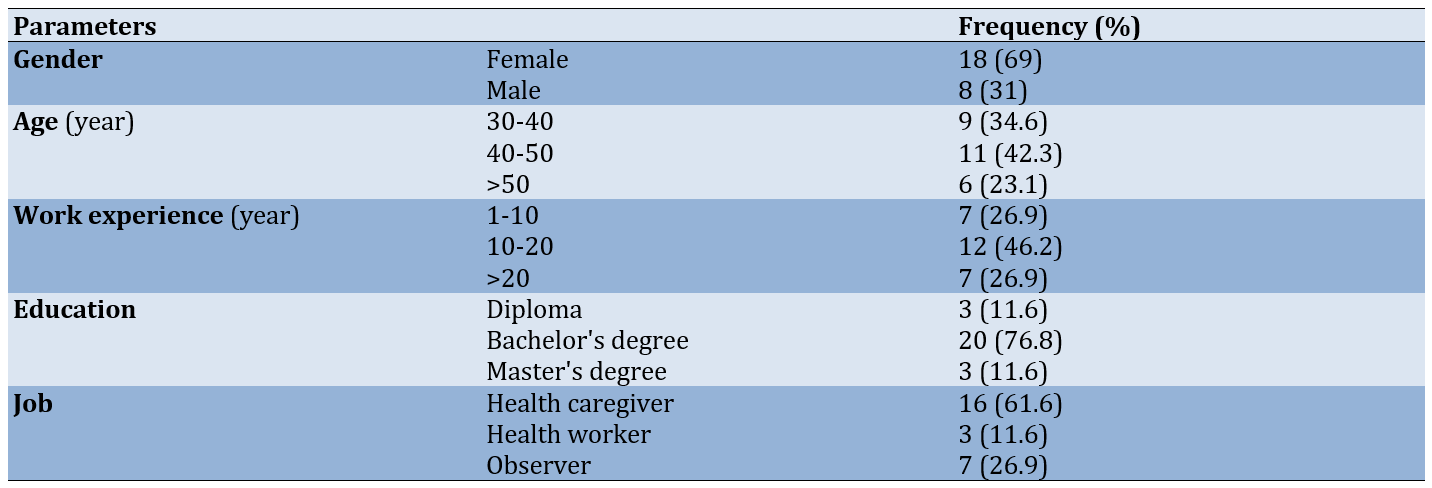
A total of 26 participants contributed to the study (Table 1). A total of 74 initial codes were extracted from the interview transcripts. After merging conceptually similar codes, 19 secondary codes were developed.
Table 1. Demographic information of the participants (n=26)
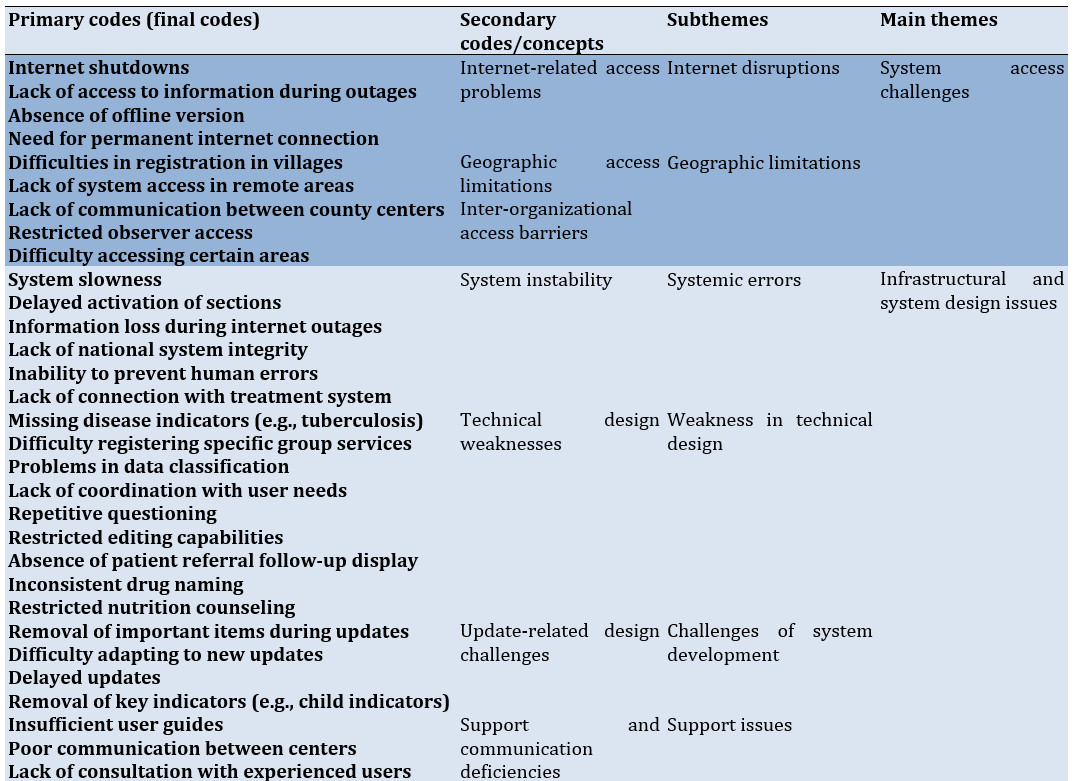
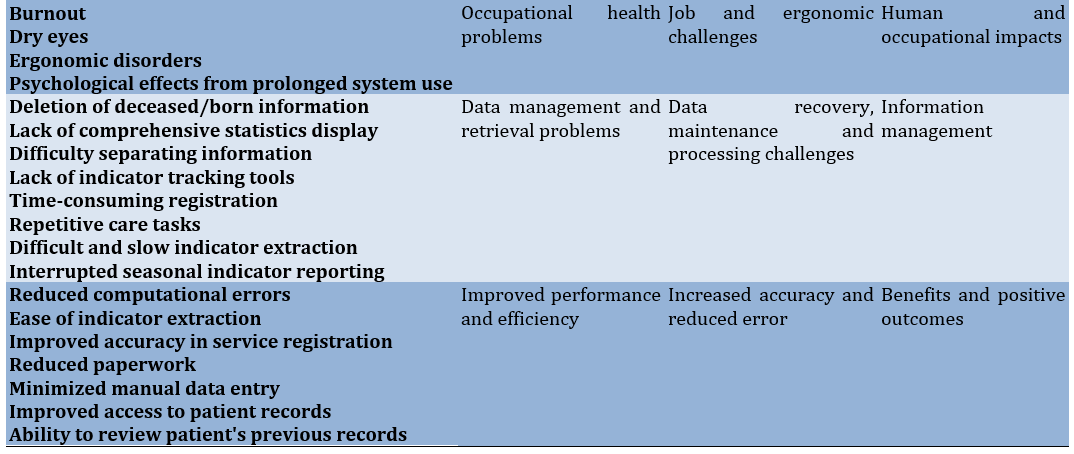
Results from qualitative analysis were categorized into five main themes and nine subthemes, including system access challenges (Internet disruptions, geographic limitations), infrastructural and system design issues (systemic errors, weaknesses in technical design, challenges of system development, support issues), human and occupational impacts (job and ergonomic challenges; Information management (data recovery, maintenance and processing challenges), and benefits and positive outcomes (increased accuracy and reduced errors) (Table 2).
Table 2. Challenges of working with the integrated health system from the perspective of health workers
1. System access challenges
One of the primary obstacles in the effective use of the integrated health system (SIB) identified by participants was Internet connectivity disruptions. The system’s complete dependence on a stable internet connection created significant difficulties, particularly when the network was slow or intermittently unavailable. For instance, a participant explained:
"When the internet is unstable, we are forced to revert to manual paper-based recording and later duplicate the data entry into the system, which is time-consuming and raises the risk of errors." (P.5)
Geographic challenges were also highlighted. Participants based in remote rural areas noted limited or altogether absent internet access, severely restricting their ability to utilize the system efficiently:
"In some remote villages, we have virtually no internet access, rendering the system unusable and making our job extremely difficult." (P.1)
Another participant remarked:
"Communication between different city centers is weak, hindering timely updates and coordination of patient information." (P.2)
2. Infrastructure and system design issues
Several system-related barriers surfaced throughout interviews. System performance issues, such as slow operation and lagging response times, were commonly cited:
"The system frequently slows down to a point where data entry becomes impractical during busy hours, causing long queues and patient dissatisfaction." (P.4)
Furthermore, participants reported technical glitches and errors, especially following software updates that sometimes removed or altered key system components:
"Important health indicators, such as those related to tuberculosis tracking, were inexplicably removed after recent updates, complicating our reporting tasks." (P.7)
Concerns about insufficient technical support were widespread, with participants complaining about the lack of comprehensive manuals and slow response times from support teams:
"There is no detailed guide covering all system functionalities, and whenever we face problems, getting help can take too long." (P.14)
3. Human and occupational impacts
The extended use of the system had noticeable effects on staff well-being. Many reported increased workload pressures leading to stress and burnout:
"The demand for exhaustive data entry has increased our workload significantly, resulting in job dissatisfaction and fatigue." (P.20)
Ergonomic issues also emerged as a significant concern, with users suffering from physical strain due to prolonged computer use:
"Prolonged hours of working with the system have caused eye strain and musculoskeletal discomfort among us." (P.18)
4. Data and information management
Managing data efficiently posed various challenges. Participants described experiences of accidental deletion of important data with little to no recourse for recovery:
"Sometimes, critical patient data is lost due to accidental deletion, and the system does not allow us easy options to restore or edit this information." (P.23)
Additionally, extracting health indicators and generating reports was criticized as a cumbersome and slow process:
"Preparing quarterly reports often takes excessive time because the tools for data extraction are not user-friendly or efficient." (P.19)
5. Benefits and positive outcomes
Despite the problems, the SIB system offered several key advantages that were recognized by participants. There was a general consensus about improved accuracy in health data recording:
"The system helps reduce human errors in calculations and ensures more reliable data entry." (P.9)
Moreover, participants appreciated that the system contributed to reducing paperwork and improving access to patient records, streamlining many administrative processes:
"Thanks to the system, we spend less time on paperwork and can effortlessly access patients’ medical histories, aiding better continuity of care." (P.11)
Discussion
The present study aimed to evaluate the performance of the SIB system from the perspective of healthcare workers in health centers. The integrated health system (SIB) is a nationally implemented electronic health record system in Iran, developed to optimize health information management and improve the delivery of healthcare services. The findings were organized into five main themes, including system access challenges, infrastructural and design-related challenges, human and occupational impacts, information management issues, and the potential benefits of the system.
One of the significant challenges associated with the SIB system was the inadequate national Internet infrastructure and difficulties in accessing the system, which represent substantial barriers to the electronic delivery of health services [10, 22]. Similar findings are reported by Jafari et al., who report low Internet speed, frequent disconnections, and delays in sending tracking codes via SMS as key challenges [22]. In their study on factors affecting the establishment of electronic health systems in Iran, deficiencies in communication infrastructure—such as insufficient telecommunication coverage in certain regions, particularly rural areas, and low internet speed—are identified as significant obstacles to e-health development [23]. Mirani et al. also report slow data transmission and the time-consuming nature of information systems as critical problems affecting system performance [24].
Infrastructural challenges related to the design of the SIB system were identified as another primary concern. The system should be designed to encourage user engagement and facilitate routine use. Naseri et al. reported that the main usability challenges of the SIB system included dependence on specialized and experienced personnel for system setup and troubleshooting, system complexity, extensive initial learning requirements, and cumbersome usability. These findings are consistent with our results [25]. In general, a more usable system is characterized by transparent, simple, familiar, and intuitive design features, enabling professional users to operate it accurately and efficiently without requiring extensive training [26].
Another frequently reported issue was the time-consuming nature of system use due to the high volume of activities and repetitive questions. In the study by Torabian et al. [27], more than three-quarters of participants state that completing electronic health records required a substantial amount of time. Similarly, Sadoughi et al. [28] refer to the collection of unnecessary data, and Kabir et al. [29] report that the lowest levels of satisfaction among both physicians and health workers are related to the appropriateness of data volume and redundancy within the SIB system. Our findings further confirm these concerns.
Another critical challenge related to system support and development was insufficient attention to user feedback during the system design process. When end users are excluded from system development, the resulting system may not align with their real operational needs, leading to ineffective interaction and reduced system success [28]. Tavakoli et al. emphasize that despite the vital role of the referral system in healthcare delivery and the necessity of its implementation at all levels, the family physician program has not yet been fully implemented nationwide, resulting in weak integration between different levels of healthcare services. Consequently, many individuals bypass primary care and seek higher-level services directly. This issue is consistent with our findings, as incomplete referral processes and failure to adhere to initial care pathways undermine the effectiveness of the SIB system [30].
The use of the SIB system may require users to spend prolonged periods working with computer systems, which can lead to ergonomic problems, occupational burnout, and adverse psychological effects. In their qualitative study, Imani et al. identify physical issues associated with electronic health systems, including wrist, eye, and back injuries, as significant challenges. These findings align with those of the present study [31].
Despite the challenges identified, the SIB system offers several potential benefits, including increased accuracy, reduced human error, easier extraction of health indicators, reduced paperwork, and improved accessibility to health records. Jafari et al. categorize these benefits into three main domains: managerial (human resources management, reporting, organizational communication, and planning), technical (visibility, accessibility, and editability), and content-related (data durability, confidentiality, and transferability) [22].
Additionally, reported advantages included improved communication between departments, enhanced managerial supervision of staff, the elimination of traditional paper-based systems, support for disease diagnosis and treatment, and reductions in resource waste and costs. The speed and accuracy of such systems play a crucial role in enhancing the quality of healthcare services [32].
Integrated health information systems can improve healthcare delivery by organizing, collecting, processing, and sharing electronic information within organizations. By reducing the time required to collect essential information and making it readily available to healthcare professionals, these systems can reduce clinical errors, support healthcare providers, improve information management, and enhance patient access to healthcare services. These findings are consistent with the results of previous studies evaluating the integrated health system [33-36].
The findings of qualitative studies are primarily dependent on the researchers’ interpretations and perspectives, which may influence the results. Common challenges associated with this type of research include researcher bias, difficulties in data collection and analysis, limited generalizability of findings, greater time and resource requirements compared with quantitative studies, and ethical considerations related to participant privacy and informed consent.
One specific limitation of the present study was the limited availability of participants’ time for interviews. However, by emphasizing the importance of the study topic and ensuring appropriate coordination, this challenge was managed and mitigated.
The evaluation of the performance of the integrated health system (SIB) from the perspective of community health workers and healthcare providers indicated that the system has played a significant role in improving the quality of healthcare services through enhanced information management and integration of health-related data. Nevertheless, challenges, such as technical complexity, infrastructural limitations, and the need for further training remain major barriers to achieving optimal system efficiency. While users acknowledged the benefits of the system, they emphasized the necessity of addressing these challenges to improve overall performance.
To enhance the effectiveness of the SIB system, strengthening technical infrastructure, providing continuous training, obtaining regular user feedback, and revising system design are essential. Improvements such as reducing redundant and repetitive steps, simplifying processes, and harmonizing different system components can facilitate system use. In addition, system design should improve color and light contrast, provide appropriate system messages, and enhance the validation and display of input and output data. The availability of a comprehensive and efficient user guide for different system components is also of considerable importance.
Ultimately, aligning the system with national programs and strategic objectives, incorporating intelligent features to reduce errors and increase processing speed, and utilizing feedback from frontline users are key strategies that can contribute to improving the performance and productivity of the SIB system.
Conclusion
The integrated health system (SIB) plays a significant role in improving the quality of healthcare services through enhanced information management and integration of health-related data.
Acknowledgments: The authors would like to thank the Vice Chancellor of Health of Maragheh Faculty of Medical Sciences and its sub-units for their cooperation in data collection.
Ethical Permissions: This study received the ethics code IR.MARAGHEHPHC.REC.1403.024.
Conflicts of Interests: The authors reported no conflicts of interests.
Authors' Contribution: Ebrahimnejad M (First Author), Introduction Writer (20%); Raoofi S (Second Author), Assistant Researcher (25%); Alavi Nasab M (Third Author), Discussion Writer (10%); Vahidi Y (Fourth Author), Discussion Writer (10%); Salajeghe M (Fifth Author), Methodologist/Statistical Analyst (10%); Alikhah H (Sixth Author), Main Researcher (25%)
Funding/Support: No funding was received.
In the current era, advancements in management knowledge have made evaluation systems essential in organizations. Every organization requires assessment to understand the quality of its activities, particularly in complex and dynamic environments. Without such systems, implementing the necessary improvements for organizational growth and development would be impossible, which could result in inefficiency and potential organizational failure [1].
Performance is a central topic in all organizational analyses, and attention to organizational performance contributes to the development of organizational theory. Evaluating and measuring performance enhances system intelligence and motivates individuals toward desirable behaviors, playing a key role in formulating and implementing organizational policies [2]. Performance measurement is one of the main management processes, conducted to analyze performance and examine its alignment with organizational goals, thereby facilitating informed decision-making. In recent years, the health and medical situation in many countries, particularly regarding infectious diseases, has improved. This improvement is reflected in indicators, such as life expectancy at birth, disability-adjusted life expectancy, and reduced mortality due to healthcare interventions [3, 4].
However, these improvements have been accompanied by persistent concerns, including the rising prevalence of chronic diseases, inequalities in access to healthcare services, health disparities within and between countries, changes in care quality and safety, mismatches between human resources and healthcare needs, and discrepancies between rising healthcare costs and changes in public expectations [3]. Recent financial and economic crises have heightened concerns about the performance of the healthcare system and the sustainability of its financing, underscoring the government’s crucial role in maintaining social cohesion and improving public health [5].
Health information systems are computer-based systems designed to facilitate the management of health and medical information, thereby improving care quality and reducing costs. These systems serve as infrastructure for decision-making and play a crucial role in cost management, quality improvement, and research expansion [6]. Healthcare information systems are designed and implemented to process data, generate information, and create knowledge in primary healthcare. They form the backbone of paperless health service systems and play a key role in integrating service delivery across all providers and consumers [7].
The common objective of health information systems is to meet user needs, conduct epidemiological research, manage health information, and improve care quality. The integrated health system (SIB), as per notification No. 100/298 dated June 26, 2016, by the Ministry of Health, has been deployed in most medical universities and was launched in early October 2016 across the majority of medical sciences universities [8, 9]. This system was established to create a national electronic health record for nearly the entire population, to be used in health centers under all medical universities, supporting primary healthcare, maternal and child health, non-communicable disease risk factors, screening, and patient follow-up. It aims to improve problem-solving, decision-making, and the horizontal and vertical integration of services, enabling the monitoring of primary healthcare system performance and the implementation of health reforms [10-12].
The SIB system collects and records household information and required healthcare services at centers and health bases. These services are provided by over 125,000 users across more than 32,000 service delivery centers. Information systems play a crucial role in optimizing and integrating individual health data, as exemplified by electronic health records [13]. Electronic health systems can play a crucial role in addressing health challenges, enhancing individual health, and reducing mortality by recording health data and histories [14]. Studies in the United Kingdom, the United States, and Canada have demonstrated that investing in electronic health systems, combined with meticulous attention to their processes, can enhance patient outcomes and significantly contribute to managing chronic diseases [15].
A study conducted by the Department of Surgery at the Icahn School of Medicine in New York showed that electronic health systems can significantly reduce hospital mortality rates from hospital-acquired infections, such as bloodstream infections in surgical intensive care units, by enhancing coordination for patient-centered care [16]. The World Health Organization (WHO) defined e-health in 2019 as the cost-effective and secure use of information and communication technologies to support health and related fields, including healthcare services, health monitoring, health literature, education, knowledge, and health-related research [3]. Multiple studies have indicated that electronic health records are among the factors that strengthen and improve the quality of healthcare services, increasing accuracy, reducing costs, and promoting efficiency. One such system in Iran is the SIB electronic health record. Several studies have examined the SIB system, offering strategies for enhancing its performance [17].
The success of health information systems depends on accurate evaluation, as the quality, efficiency, and effectiveness of healthcare provision rely entirely on it [18]. For these systems to succeed, human factors, costs, and time must be taken into consideration. Success means actual system use and creation of added value for users and managers. It is achieved when the system operates effectively according to planned objectives, and both the project team and users are satisfied with the outcomes [18-20]. Given the complexity of information systems, both success and failure can be observed in various contexts [21]. Approximately 4.6% of healthcare company budgets are allocated to health information systems, and their failure can hurt patients and staff [4]. This study evaluates the performance of the integrated health system (SIB) from the perspective of community health workers and healthcare providers.
Participants and Methods
This qualitative study was conducted on 26 participants, including health workers, healthcare providers, and key informants selected using purposive sampling during 2024 in selected health centers affiliated with Maragheh University of Medical Sciences. Eligibility criteria required participants to have at least two years of work experience and be willing to participate.
Data were gathered through semi-structured interviews guided by an interview protocol developed and validated by supervisors and advisors. Three pilot interviews were conducted to confirm the guide’s validity. The interview guide focused on the primary objective of the study: evaluating the performance of the integrated health system (SIB) from the perspective of community health workers and healthcare providers. Its content included demographic information (age, gender, educational degree, work experience, occupation) and questions regarding the advantages and disadvantages of the SIB system, its impact on monitoring, the challenges of the system, and the factors contributing to these challenges.
Interviews were conducted individually and face-to-face after obtaining ethical approval (IR.MARAGHEHPHC.REC.1403.024) and informed consent. Participants were informed about the study objectives and gave verbal consent for audio recording and note-taking. Interviews were scheduled at convenient times and locations for participants. Participation was voluntary, with the right to withdraw at any time. Interviews lasted an average of 45 minutes (range: 30-60 minutes) and continued until data saturation was reached, resulting in a total of 26 interviews.
To ensure rigor, Lincoln and Guba’s criteria of credibility, dependability, confirmability, and transferability were applied [19]. Measures to enhance trustworthiness included pilot interviews, appropriate interview duration, continuous comparison of data during analysis, member checking, and peer debriefing. Summaries of findings were shared with participants for validation, and an external expert reviewed the credibility of the data. Interviews were conducted in calm, comfortable environments to facilitate open and honest communication.
Interview recordings were transcribed verbatim and analyzed using conventional qualitative content analysis with the assistance of MAXQDA 10 software. Two researchers independently transcribed and coded the data. Transcripts were repeatedly reviewed to ensure thorough understanding. Codes were extracted line-by-line and grouped into main themes and subthemes. Discrepancies were resolved through consensus during team discussions.
Findings
A total of 26 participants contributed to the study (Table 1). A total of 74 initial codes were extracted from the interview transcripts. After merging conceptually similar codes, 19 secondary codes were developed.
Table 1. Demographic information of the participants (n=26)
Results from qualitative analysis were categorized into five main themes and nine subthemes, including system access challenges (Internet disruptions, geographic limitations), infrastructural and system design issues (systemic errors, weaknesses in technical design, challenges of system development, support issues), human and occupational impacts (job and ergonomic challenges; Information management (data recovery, maintenance and processing challenges), and benefits and positive outcomes (increased accuracy and reduced errors) (Table 2).
Table 2. Challenges of working with the integrated health system from the perspective of health workers
1. System access challenges
One of the primary obstacles in the effective use of the integrated health system (SIB) identified by participants was Internet connectivity disruptions. The system’s complete dependence on a stable internet connection created significant difficulties, particularly when the network was slow or intermittently unavailable. For instance, a participant explained:
"When the internet is unstable, we are forced to revert to manual paper-based recording and later duplicate the data entry into the system, which is time-consuming and raises the risk of errors." (P.5)
Geographic challenges were also highlighted. Participants based in remote rural areas noted limited or altogether absent internet access, severely restricting their ability to utilize the system efficiently:
"In some remote villages, we have virtually no internet access, rendering the system unusable and making our job extremely difficult." (P.1)
Another participant remarked:
"Communication between different city centers is weak, hindering timely updates and coordination of patient information." (P.2)
2. Infrastructure and system design issues
Several system-related barriers surfaced throughout interviews. System performance issues, such as slow operation and lagging response times, were commonly cited:
"The system frequently slows down to a point where data entry becomes impractical during busy hours, causing long queues and patient dissatisfaction." (P.4)
Furthermore, participants reported technical glitches and errors, especially following software updates that sometimes removed or altered key system components:
"Important health indicators, such as those related to tuberculosis tracking, were inexplicably removed after recent updates, complicating our reporting tasks." (P.7)
Concerns about insufficient technical support were widespread, with participants complaining about the lack of comprehensive manuals and slow response times from support teams:
"There is no detailed guide covering all system functionalities, and whenever we face problems, getting help can take too long." (P.14)
3. Human and occupational impacts
The extended use of the system had noticeable effects on staff well-being. Many reported increased workload pressures leading to stress and burnout:
"The demand for exhaustive data entry has increased our workload significantly, resulting in job dissatisfaction and fatigue." (P.20)
Ergonomic issues also emerged as a significant concern, with users suffering from physical strain due to prolonged computer use:
"Prolonged hours of working with the system have caused eye strain and musculoskeletal discomfort among us." (P.18)
4. Data and information management
Managing data efficiently posed various challenges. Participants described experiences of accidental deletion of important data with little to no recourse for recovery:
"Sometimes, critical patient data is lost due to accidental deletion, and the system does not allow us easy options to restore or edit this information." (P.23)
Additionally, extracting health indicators and generating reports was criticized as a cumbersome and slow process:
"Preparing quarterly reports often takes excessive time because the tools for data extraction are not user-friendly or efficient." (P.19)
5. Benefits and positive outcomes
Despite the problems, the SIB system offered several key advantages that were recognized by participants. There was a general consensus about improved accuracy in health data recording:
"The system helps reduce human errors in calculations and ensures more reliable data entry." (P.9)
Moreover, participants appreciated that the system contributed to reducing paperwork and improving access to patient records, streamlining many administrative processes:
"Thanks to the system, we spend less time on paperwork and can effortlessly access patients’ medical histories, aiding better continuity of care." (P.11)
Discussion
The present study aimed to evaluate the performance of the SIB system from the perspective of healthcare workers in health centers. The integrated health system (SIB) is a nationally implemented electronic health record system in Iran, developed to optimize health information management and improve the delivery of healthcare services. The findings were organized into five main themes, including system access challenges, infrastructural and design-related challenges, human and occupational impacts, information management issues, and the potential benefits of the system.
One of the significant challenges associated with the SIB system was the inadequate national Internet infrastructure and difficulties in accessing the system, which represent substantial barriers to the electronic delivery of health services [10, 22]. Similar findings are reported by Jafari et al., who report low Internet speed, frequent disconnections, and delays in sending tracking codes via SMS as key challenges [22]. In their study on factors affecting the establishment of electronic health systems in Iran, deficiencies in communication infrastructure—such as insufficient telecommunication coverage in certain regions, particularly rural areas, and low internet speed—are identified as significant obstacles to e-health development [23]. Mirani et al. also report slow data transmission and the time-consuming nature of information systems as critical problems affecting system performance [24].
Infrastructural challenges related to the design of the SIB system were identified as another primary concern. The system should be designed to encourage user engagement and facilitate routine use. Naseri et al. reported that the main usability challenges of the SIB system included dependence on specialized and experienced personnel for system setup and troubleshooting, system complexity, extensive initial learning requirements, and cumbersome usability. These findings are consistent with our results [25]. In general, a more usable system is characterized by transparent, simple, familiar, and intuitive design features, enabling professional users to operate it accurately and efficiently without requiring extensive training [26].
Another frequently reported issue was the time-consuming nature of system use due to the high volume of activities and repetitive questions. In the study by Torabian et al. [27], more than three-quarters of participants state that completing electronic health records required a substantial amount of time. Similarly, Sadoughi et al. [28] refer to the collection of unnecessary data, and Kabir et al. [29] report that the lowest levels of satisfaction among both physicians and health workers are related to the appropriateness of data volume and redundancy within the SIB system. Our findings further confirm these concerns.
Another critical challenge related to system support and development was insufficient attention to user feedback during the system design process. When end users are excluded from system development, the resulting system may not align with their real operational needs, leading to ineffective interaction and reduced system success [28]. Tavakoli et al. emphasize that despite the vital role of the referral system in healthcare delivery and the necessity of its implementation at all levels, the family physician program has not yet been fully implemented nationwide, resulting in weak integration between different levels of healthcare services. Consequently, many individuals bypass primary care and seek higher-level services directly. This issue is consistent with our findings, as incomplete referral processes and failure to adhere to initial care pathways undermine the effectiveness of the SIB system [30].
The use of the SIB system may require users to spend prolonged periods working with computer systems, which can lead to ergonomic problems, occupational burnout, and adverse psychological effects. In their qualitative study, Imani et al. identify physical issues associated with electronic health systems, including wrist, eye, and back injuries, as significant challenges. These findings align with those of the present study [31].
Despite the challenges identified, the SIB system offers several potential benefits, including increased accuracy, reduced human error, easier extraction of health indicators, reduced paperwork, and improved accessibility to health records. Jafari et al. categorize these benefits into three main domains: managerial (human resources management, reporting, organizational communication, and planning), technical (visibility, accessibility, and editability), and content-related (data durability, confidentiality, and transferability) [22].
Additionally, reported advantages included improved communication between departments, enhanced managerial supervision of staff, the elimination of traditional paper-based systems, support for disease diagnosis and treatment, and reductions in resource waste and costs. The speed and accuracy of such systems play a crucial role in enhancing the quality of healthcare services [32].
Integrated health information systems can improve healthcare delivery by organizing, collecting, processing, and sharing electronic information within organizations. By reducing the time required to collect essential information and making it readily available to healthcare professionals, these systems can reduce clinical errors, support healthcare providers, improve information management, and enhance patient access to healthcare services. These findings are consistent with the results of previous studies evaluating the integrated health system [33-36].
The findings of qualitative studies are primarily dependent on the researchers’ interpretations and perspectives, which may influence the results. Common challenges associated with this type of research include researcher bias, difficulties in data collection and analysis, limited generalizability of findings, greater time and resource requirements compared with quantitative studies, and ethical considerations related to participant privacy and informed consent.
One specific limitation of the present study was the limited availability of participants’ time for interviews. However, by emphasizing the importance of the study topic and ensuring appropriate coordination, this challenge was managed and mitigated.
The evaluation of the performance of the integrated health system (SIB) from the perspective of community health workers and healthcare providers indicated that the system has played a significant role in improving the quality of healthcare services through enhanced information management and integration of health-related data. Nevertheless, challenges, such as technical complexity, infrastructural limitations, and the need for further training remain major barriers to achieving optimal system efficiency. While users acknowledged the benefits of the system, they emphasized the necessity of addressing these challenges to improve overall performance.
To enhance the effectiveness of the SIB system, strengthening technical infrastructure, providing continuous training, obtaining regular user feedback, and revising system design are essential. Improvements such as reducing redundant and repetitive steps, simplifying processes, and harmonizing different system components can facilitate system use. In addition, system design should improve color and light contrast, provide appropriate system messages, and enhance the validation and display of input and output data. The availability of a comprehensive and efficient user guide for different system components is also of considerable importance.
Ultimately, aligning the system with national programs and strategic objectives, incorporating intelligent features to reduce errors and increase processing speed, and utilizing feedback from frontline users are key strategies that can contribute to improving the performance and productivity of the SIB system.
Conclusion
The integrated health system (SIB) plays a significant role in improving the quality of healthcare services through enhanced information management and integration of health-related data.
Acknowledgments: The authors would like to thank the Vice Chancellor of Health of Maragheh Faculty of Medical Sciences and its sub-units for their cooperation in data collection.
Ethical Permissions: This study received the ethics code IR.MARAGHEHPHC.REC.1403.024.
Conflicts of Interests: The authors reported no conflicts of interests.
Authors' Contribution: Ebrahimnejad M (First Author), Introduction Writer (20%); Raoofi S (Second Author), Assistant Researcher (25%); Alavi Nasab M (Third Author), Discussion Writer (10%); Vahidi Y (Fourth Author), Discussion Writer (10%); Salajeghe M (Fifth Author), Methodologist/Statistical Analyst (10%); Alikhah H (Sixth Author), Main Researcher (25%)
Funding/Support: No funding was received.
References
1. Shirvani S, Maleki M, Motlagh M, Kavosi Z, Tofighi S, Gohari M. Self assessment of Iran universities of medical sciences based on European foundation for quality management (EFQM) and Iran excellence model. World Appl Sci J. 2011;15(10):1391-7. [Link]
2. Al-Rawajfah O, Tubaishat A. Barriers and facilitators to using electronic healthcare records in Jordanian hospitals from the nurses' perspective: A national survey. Inform Health Soc Care. 2019;44(1):1-11. [Link] [DOI:10.1080/17538157.2017.1353998]
3. WHO. Pandemic influenza preparedness and response: A WHO guidance document. Geneva: World Health Organization; 2009. [Link]
4. Ammenwerth E, Gräber S, Herrmann G, Bürkle T, König J. Evaluation of health information systems-problems and challenges. Int J Med Inform. 2003;71(2-3):125-35. [Link] [DOI:10.1016/S1386-5056(03)00131-X]
5. Barzekar H, Safdari R, Eshraghiyan MR, Dargahi H. The study of organizational factors affecting the application of information technology by middle managers in TUMS hospitals. PAYAVARD SALAMAT. 2013;7(2):123-32. [Persian] [Link]
6. Shahmoradi L, Ahmadi M, Haghani H. Defining evaluation indicators of health information systemsand a Model Presentation. J Health Adm. 2007;10(28):15-24. [Persian] [Link]
7. Asadi F, Hosseini A, Moghaddasi H, Nasr Haydarabadi N. Primary health care information systems in health centers of Tehran, Iran. Health Inf Manag. 2012;9(1). [Persian] [Link]
8. Khammarnia M, Setoodehzadeh F, Peyvand M, Setayesh AH, Rezaei K, KordTamini A, et al. Evaluation of integrated health system technology acceptance among the users of health centers of Zahedan University of Medical Sciences; Iran. Evid Based Health Policy Manag Econ. 2019;3(3):154-61. [Link] [DOI:10.18502/jebhpme.v3i3.1503]
9. Paré G, Raymond L, De Guinea AO, Poba-Nzaou P, Trudel MC, Marsan J, et al. Barriers to organizational adoption of EMR systems in family physician practices: A mixed-methods study in Canada. Int J Med Inform. 2014;83(8):548-58. [Link] [DOI:10.1016/j.ijmedinf.2014.06.003]
10. Kalkhajeh SG, Aghajari A, Dindamal B, Shahvali-Kuhshuri Z, Faraji-Khiavi F. The integrated electronic health system in Iranian health centers: Benefits and challenges. BMC Prim Care. 2023;24(1):53. [Link] [DOI:10.1186/s12875-023-02011-x]
11. Bitaraf S, Janani L, Hajebi A, Motevalian SA. Information system success of the Iranian integrated health record system based on the clinical information system success model. Med J Islam Repub Iran. 2022;36:25. [Link] [DOI:10.47176/mjiri.36.25]
12. Rezapour R, Dorosti AA, Farahbakhsh M, Azami-Aghdash S, Iranzad I. The impact of the Covid-19 pandemic on primary health care utilization: An experience from Iran. BMC Health Serv Res. 2022;22(1):404. [Link] [DOI:10.1186/s12913-022-07753-5]
13. Gu D, Li T, Wang X, Yang X, Yu Z. Visualizing the intellectual structure and evolution of electronic health and telemedicine research. Int J Med Inform. 2019;130:103947. [Link] [DOI:10.1016/j.ijmedinf.2019.08.007]
14. Jebraeili M, Ahmadi M, Hajavi A, Gouhari MR, Sedghi JM, Zare Z. Electronic health records: Personnel readiness assessment. J Health Adm. 2010;13(39):17-24. [Persian] [Link]
15. Valaitis R, Martin-Misener R, Wong ST, MacDonald M, Meagher-Stewart D, Austin P, et al. Methods, strategies and technologies used to conduct a scoping literature review of collaboration between primary care and public health. Prim Health Care Res Dev. 2012;13(3):219-36. [Link] [DOI:10.1017/S1463423611000594]
16. Flatow V, Ibragimova N, Divino C, Eshak D, Twohig B, Bassily-Marcus A, et al. Quality outcomes in the surgical intensive care unit after electronic health record implementation. Appl Clin Inform. 2015;6(4):611-8. [Link] [DOI:10.4338/ACI-2015-04-RA-0044]
17. Mohammadi AM, Saeed S. Evaluating the performance of the integrated health system in the quality of health care delivery from the viewpoint of health workers and health care providers throughout iran in 2020. J Health Biomed Inform. 2021;8(2):184-92. [Persian] [Link]
18. Sadoughi F, Aminpour F. How to evaluate health information systems: Evaluation stages. Iran J Med Educ. 2011;10(5):950-63. [Persian] [Link]
19. Kimiafar K. Designing a model for assessing the success and failure of hospital information systems in Iran [MA Thesis]. Tehran: Iran University of Medical Sciences; 2013. [Persian] [Link]
20. Fortune J, Peters G. Information systems: Achieving success by avoiding failure. Hoboken: Wiley; 2005. [Link]
21. Alipour J, Karimi A, Ebrahimi S, Ansari F, Mehdipour Y. Success or failure of hospital information systems of public hospitals affiliated with Zahedan University of Medical Sciences: A cross sectional study in the Southeast of Iran. Int J Med Inform. 2017;108:49-54. [Link] [DOI:10.1016/j.ijmedinf.2017.10.005]
22. Jafari H, Ranjbar M, Amini-Rarani M, Hashemi F, Bidoki SS. Experiences and views of users about delivering services through the integrated health system: A qualitative study. TOLOOEBEHDASHT. 2020;19(2):57-71. [Persian] [Link] [DOI:10.18502/tbj.v19i2.3396]
23. Yazdanpanah A, Eatemadololama H, Hessam S. Investigating the obstacles of implementing health information systems from viewpoint of personnel of Mehriz healthcare system in 2017. 2018;3(1):74-8. [Link] [DOI:10.22270/ujpr.v3i1.R13]
24. Mirani N, Ayatollahi H, Haghani H. A survey on barriers to the development and adoption of electronic health records in Iran. J Health Adm. 2013;15(50):65-75. [Persian] [Link]
25. Naseri S, Saremi M, Namdari M, Pouyakian M. Usability of the integrated health system (SIB) among public health and midwifery users. J Health Adm. 2022;25(3):87-107. [Persian] [Link]
26. Taheri F, Kavousi A, Faghihnia TY, Farshad AA, Saremi M. Validity and reliability assessment of Persian version of system usability scale (sus) for traffic signs. Iran Occup Health. 2017;14(1):12-22. [Persian] [Link]
27. Torabian S, Damari B, Cheraghi MA. 'Rural Insurance': Family physicians' satisfaction. PAYESH. 2014;13(5):561-73. [Persian] [Link]
28. Sadoughi F, Ahmadi M, Shahi M, Davari Dolatabadi N. Minimum data set for elderly health: A comparison of selected countries. J Health Biomed Inform. 2016;2(4):248-56. [Persian] [Link]
29. Kabir MJ, Ashrafian AH, Rabiee SM, Keshavarzi A, Hosseini S, Nasrollahpour SSD. Satisfaction of urban family physicians and health care providers in Fars and Mazandaran provinces from integrated health system. J Health Biomed Inform. 2018;4(4):244-52. [Persian] [Link]
30. Tavakoli F, Nasiripour A, Reyahi L, Mahmoodi M. The effect of health policy and structure of health insurance on referral system in the urban family physician program in Iran. J Health Manag. 2017;8(3):85-93. [Persian] [Link]
31. Imani E, Khademi Z, Yousefi P, Bahrami Z, Nagizadeh F. Experiences of nursing managers about hospital information system: A qualitative study. Hormozgan Med J. 2014;16(3):223-32. [Link]
32. Lasloom AAA, Alsharari YS, Alsharari TS, Alazmi AM, Aljabbab BM, Alkhaibari MI, et al. Comprehensive analysis of integrated healthcare systems: Health administration, social services, health insurance, medical secretarial work, and health informatics. J Ecohumanism. 2024;3(8). [Link] [DOI:10.62754/joe.v3i8.5640]
33. Stylianides A, Mantas J, Roupa Z, Yamasaki EN. Development of an evaluation framework for health information systems (DIPSA). Acta Inform Med. 2018;26(4):230-4. [Link] [DOI:10.5455/aim.2018.26.230-234]
34. Khudoba O, Yukalo M. Management aspects of the integration of medical statistics and information systems for effective resource planning in the healthcare system. Econ Scope. 2025. [Link] [DOI:10.30838/EP.196.123-127]
35. Tham TY, Tran TL, Prueksaritanond S, Isidro JS, Setia S, Welluppillai V. Integrated health care systems in Asia: An urgent necessity. Clin Interv Aging. 2018;13:2527-38. [Link] [DOI:10.2147/CIA.S185048]
36. Veillard J, Cowling K, Bitton A, Ratcliffe H, Kimball M, Barkley S, et al. Better measurement for performance improvement in low‐and middle‐income countries: The primary health care performance initiative (PHCPI) experience of conceptual framework development and indicator selection. Milbank Q. 2017;95(4):836-83. [Link] [DOI:10.1111/1468-0009.12301]
Send email to the article author