

TMU
Owner
Tarbiat Modares University (TMU) is the owner of HEHP.

0.8
Cite Score 2025
Volume 13, Issue 4 (2025)
Health Educ Health Promot 2025, 13(4): 695-701 |
Back to browse issues page
Article Type:




History
Received: 2025/09/2 | Accepted: 2025/11/12 | Published: 2025/11/22
Received: 2025/09/2 | Accepted: 2025/11/12 | Published: 2025/11/22
How to cite this article
Panahi R, Ghorbani S, Sarvari M, Amjadian M. Relationship Between Health Literacy and Quality of Life in Patients with Hypertension. Health Educ Health Promot 2025; 13 (4) :695-701
URL: http://hehp.daneshafarand.org/article-4-83011-en.html
URL: http://hehp.daneshafarand.org/article-4-83011-en.html
Download citation:
BibTeX | RIS | EndNote | Medlars | ProCite | Reference Manager | RefWorks
Send citation to:


Rights and permissions
BibTeX | RIS | EndNote | Medlars | ProCite | Reference Manager | RefWorks
Send citation to:


Keywords:
| Abstract (HTML) (819 Views)
Full-Text: (112 Views)
Introduction
Chronic diseases cause 60% of deaths worldwide. Hypertension is one of these chronic diseases, known as a silent killer that often has no symptoms, and it is considered a global problem [1]. According to the Seventh Report of the Joint National Committee, hypertension is defined as a systolic blood pressure of less than 140mmHg or a diastolic blood pressure of less than 90mmHg [2]. Hypertension is a major risk factor for cardiovascular disease, ischemic stroke, hemorrhagic stroke, and chronic kidney disease [3].
Research by the Global Poverty Study Group showed that hypertension is the most important factor among 67 risk factors, and is the leading cause of death (4.9 million people worldwide) compared to other risk factors, and is responsible for about 7% of disability-adjusted life years (DALYs) and more than half of deaths from ischemic heart disease [4]. The prevalence of hypertension in Iran, similar to many countries around the world, is increasing due to rapid social changes such as urbanization, changes in lifestyle, and the increase in life expectancy of patients due to advances in medical knowledge [5]. According to statistics, about 7.5 million deaths, or 12.8% of all annual deaths worldwide, occur due to hypertension [6]. This is expected to increase to 1.56 billion due to hypertension by 2025. In Iran, the number of adults with hypertension has increased from 1.8 million (882,000 in women) in 1990 to 13.6 million (2.7 million in women) in 2016 [7], and by 2021, we have witnessed an upward trend in the prevalence of hypertension in rural and urban areas [8].
Chronic hypertension requires specific self-care behaviors, including adherence to treatment, a low-salt diet, regular physical activity, weight management, regular blood pressure measurement, avoiding smoking, and lifelong alcohol abstinence [9]. One of the factors in accessing health-related information and awareness of health issues, and consequently better self-care, is health literacy [10]. Health literacy can be defined as the ability to access, understand, evaluate, and communicate information to promote, maintain, and improve health in various areas of life [11]. An acceptable level of health literacy enables people to interpret and analyze health-related issues appropriately and to better protect themselves and those around them from pathogens [12]. People with low levels of health literacy tend to have poorer health and a higher prevalence of chronic diseases. In addition, they tend to use preventive and screening services less and incur higher medical costs [13]. According to Kim et al., patients with hypertension are at greater risk of adverse effects associated with low health literacy [14]. In the study by Dehvan et al., the health literacy of patients with hypertension is at an average level [15]. In the study by Vazifeh et al., 49.5% of patients with hypertension have inadequate and not very adequate health literacy [16]. Also, according to Radhi & Balat, 67.8% of patients with hypertension suffer from a low level of health literacy [17].
Health literacy affects health-related quality of life [18-20]. The World Health Organization defines quality of life as an individual’s perception of their position in life within the context of the culture and value systems in which they live, and regarding their goals, expectations, standards, and concerns [21]. Limited studies have been conducted on the level of quality of life among patients with hypertension. Middle-aged people with high blood pressure have lower quality of life scores [22]. In Masror Roudsari et al.'s study, the average quality of life among people with high blood pressure is 54.64%, accounting for almost half of the quality of life score [23]. Also, Arvin et al. found that high blood pressure reduces quality of life in the physical, psychological, and social domains [24].
Some studies have shown that low health literacy is associated with poor quality of life, which may be due to reduced access to medical care, increased stress from daily life challenges, poor self-management of the disease, and reduced self-efficacy, i.e., the ability to exert control over one’s life and environment [19, 25].
Considering the increasing prevalence of hypertension in Iran [5], the adverse effects of this disease on the quality of life of individuals, and the role of health literacy in promoting personal responsibility for maintaining one’s health [26], and given the contradictory results of studies conducted on estimating the level of health literacy [15-17] and quality of life among these patients [22-24], the present study aimed to determine the relationship between health literacy and quality of life among patients with hypertension.
Instrument and Methods
This cross-sectional descriptive-analytical study was conducted among 200 patients with hypertension referred to health centers in Qaen in 2024. Sampling used a one-stage cluster approach. First, a list of all health treatment centers in Qaen was prepared and then, from these centers, four centers were randomly selected, and all patients referring to the selected centers were included in the study.
Inclusion criteria were having a health record in health service centers, having hypertension, willingness to cooperate, ages 30 to 65 years, and Iranian nationality. Exclusion criteria included refusal to continue participation and incomplete questionnaires.
To estimate the sample size, based on a pilot study among 30 patients and assuming r=0.15 for the correlation between health literacy and quality of life, and using the sample size table for correlational studies, the minimum required sample size was estimated to be 175 participants [27]. Then, with a design effect of 1.1, the sample size was estimated to be 192 participants. Finally, accounting for an expected 5% dropout rate, 200 participants were enrolled in the study.
We used a questionnaire with three parts. The first part was a checklist of demographic and contextual parameters that included items about age, gender, education level, spouse’s education, employment status, marital status, economic status, family history of hypertension, duration of hypertension, being under medical supervision, history of other diseases, nutritional status, body mass index, and weekly physical activity.
The second part was the short version of the Health Literacy for Adults-Short Form (HELIA-SF) Questionnaire to measure health literacy. The HELIA-SF consists of 9 items and two domains of basic skills and decision-making skills. This version is suitable for measuring health literacy levels in different urban and rural population groups due to its short and concise nature and, as a result, its faster completion than the original version. The short version of the HELIA-SF is a reliable and valid instrument, and Cronbach’s alpha and ICC coefficients were found to be acceptable for each of the two dimensions (0.84 and 0.81 for basic skills; 0.85 and 0.82 for decision-making skills) and for all items (0.91 and 0.81, respectively). The content validity of the questionnaire items was also found to be qualitatively satisfactory [28]. Before the study began, the reliability of this questionnaire was again assessed using Cronbach’s alpha coefficient among 30 patients during a pilot study. The Cronbach’s alpha coefficient of this instrument was 0.86, indicating good internal consistency.
To measure health-related quality of life, the 12-item Quality of Life Questionnaire (SF-12), which is a shortened form of the SF-36, was used. This questionnaire is widely used in various studies [29]. Montazeri et al. in 2009 examined the validity and reliability of this questionnaire in Iran. The reliability of the 12 items of the physical and mental components was reported to be 0.73 and 0.72, respectively. This questionnaire has eight subscales, including general health perception, physical performance, physical health, physical pain, emotional problems, social performance, vitality and energy, and mental health, of which the first four subscales constitute the physical component and the second four subscales constitute the mental component of quality of life. The scoring method is as follows: If the scores obtained are 12-24, the overall quality of life is considered poor, if they are 25-36, the overall quality of life is considered moderate, and if they are 37-48, the overall quality of life is considered good [30].
This study was approved by the Vice-Chancellor for Research and Technology of Birjand University of Medical Sciences (ethics code IR.BUMS.REC.1403.172). The purpose of the study was also explained to the participants, and their written consent was obtained. In addition, the questionnaires were completed in a self-administered manner, with all patients asked to answer the questions with complete honesty. They were also assured that all information requested in the questionnaire would be kept confidential.
The data were then entered into SPSS version 23 and analyzed using descriptive statistics and a logistic regression analysis. The significance level was set at p<0.05.
Findings
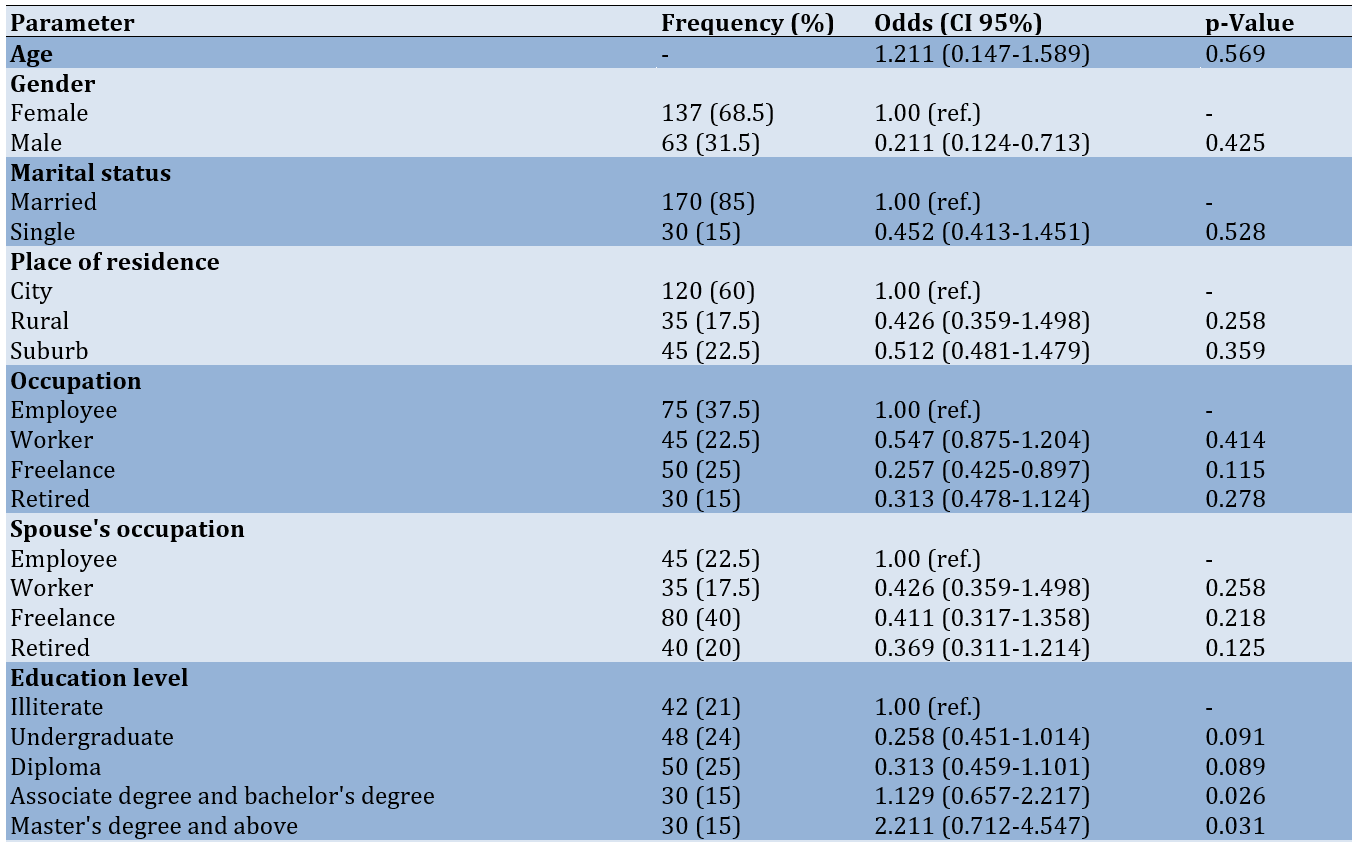
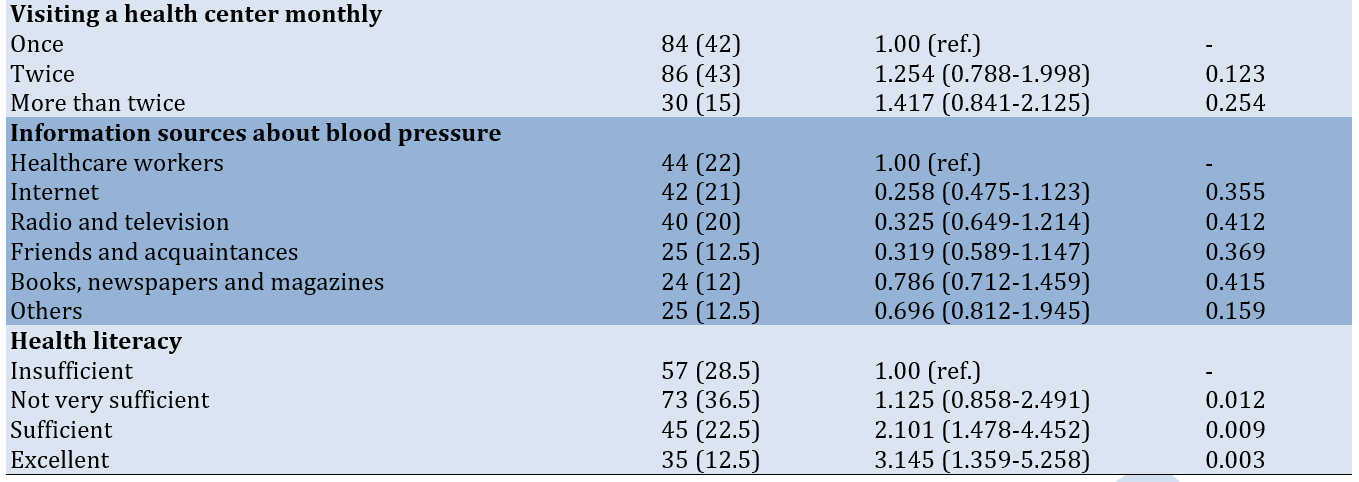
Two hundred patients were studied (response rate: 100%). Among them, 68.5% (137) of the sample were female, 85% (170) were married, and 60% (120) were urban residents. The mean age of the participating patients was 258.410±3.547 years. The mean quality of life score was 589.240±3.587 out of 48, which was at an unfavorable level. The mean health literacy score was 37.550±3.147 out of 100, which was at an unfavorable level. Also, 28.5% (57 cases) had insufficient health literacy, 36.5% (73 cases) had not very sufficient health literacy, 22.5% (45 cases) had sufficient health literacy, and 12.5% (25 cases) had excellent health literacy.
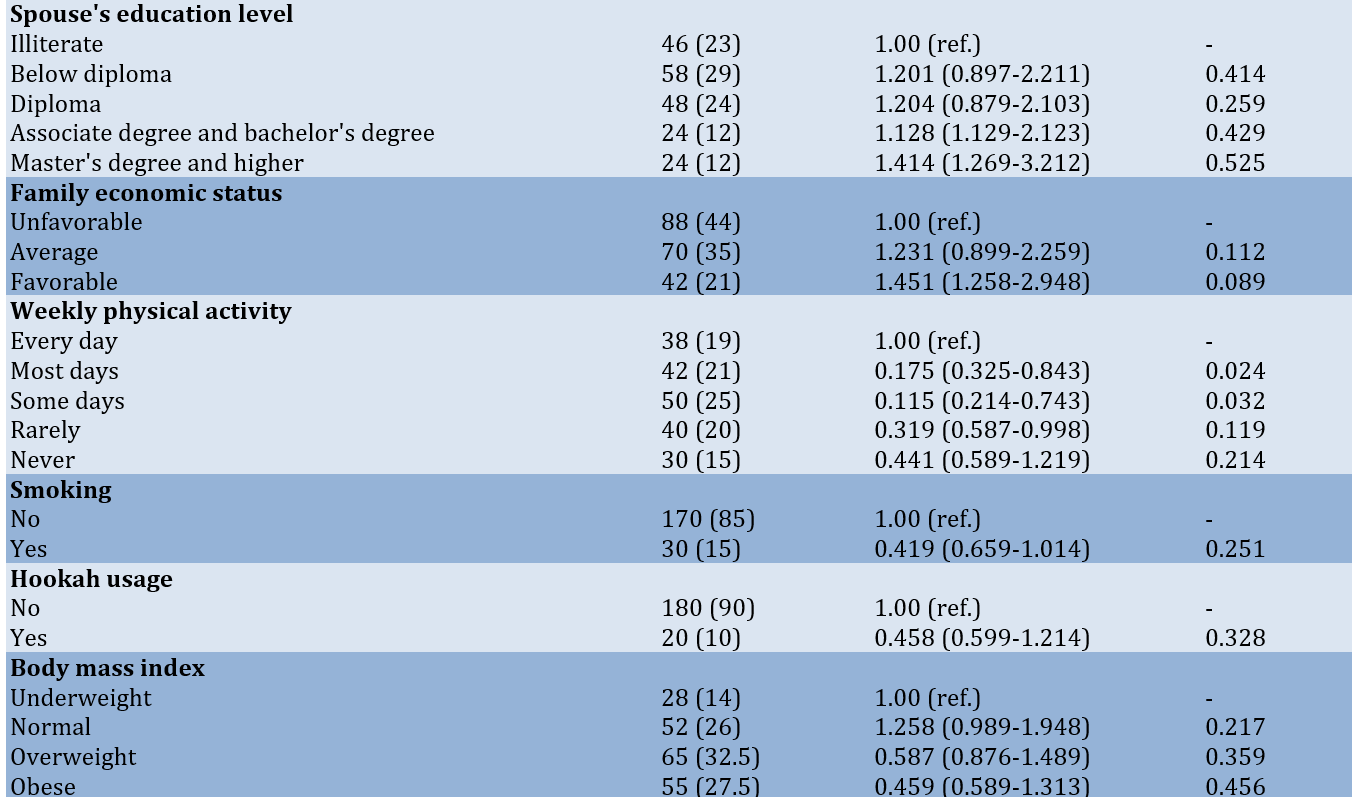
Education level, weekly physical activity, and health literacy were among the factors affecting having a desirable quality of life. The odds of having a desirable quality of life among patients with “high school diploma or bachelor’s degree” and “master’s degree and higher” were 1.129 and 2.211 times higher than those of illiterate patients, respectively. Also, the odds of having a desirable quality of life among patients with physical activity “most days” and “some days” were 0.175 and 0.115 times higher than those of patients with physical activity “daily,” respectively. The odds of having a desirable quality of life among patients with insufficient, sufficient, and excellent health literacy were 1.125, 2.101, and 3.145 times higher than that of patients with insufficient health literacy, respectively. Meanwhile, other demographic and contextual parameters had no effect on having a desirable quality of life (p<0.05; Table 1).
Table 1. Frequency of the research parameters and the results of logistic regression to determine the factors affecting the quality of life among the patients
Discussion
This study aimed to determine the relationship between health literacy and quality of life among patients with hypertension. The results showed that health literacy was at an undesirable level among the participants. The reason for the low health literacy could be due to their low level of education, because the level of education affects the level of health literacy of individuals [16, 19, 31]. Considering the effect of economic status on the level of health literacy of individuals [16], it can be said that another reason could be due to the economic status of the individuals studied, because only 21% of the individuals in the present study had a favorable economic status. This finding was consistent with the results of Vazifeh et al. [16], Radhi & Balat [17], and Kilic & Dag [32]. In addition, this finding was not consistent with the results of Dehvan et al. [15]. The possible reason for this discrepancy is the difference between the two studies in terms of health literacy measurement tools, because Dehvan et al.’s study used the Iranian health literacy tool. Another possible reason could be the difference between the two in terms of location, because location can affect the level of health literacy of individuals [33]. Also, 40% of our samples were living in non-urban areas, but in the mentioned study, 10.8% reported living in rural areas.
Also, the quality of life among the participants was at an undesirable level. It could be because low health literacy was associated with poor quality of life [18-20]. Therefore, considering the undesirable level of health literacy, it was expected that the quality of life would also be at an undesirable level. In addition, high blood pressure in affected individuals reduces the quality of life in physical, psychological, and social areas [24], which is consistent with the results of Masror Roudsari et al. [23] and Xu et al. [22], in which the quality of life among patients with hypertension is at an undesirable level.
Education level was one of the factors affecting quality of life. Science and knowledge contribute to the intellectual development of individuals. It also affects the way people behave, especially regarding health-related issues. Therefore, it can increase the quality of life for patients. Furthermore, education level may affect improvements in quality of life by increasing health literacy [19, 31]. These results are consistent with findings from various studies [20, 34, 35].
Moreover, physical activity was one of the factors affecting quality of life. It can be argued that one of the most important self-care behaviors among patients with hypertension is physical activity. Physical activity among patients with hypertension can have a major impact on lowering and maintaining desirable blood pressure and a higher quality of life in these individuals [36, 37]. This finding is consistent with the results of Niazi et al. [37].
In addition, health literacy was one of the factors affecting quality of life. In fact, health literacy is a set of skills, capabilities, and capacities in various dimensions of health. These skills and capacities can manifest in accessing health-related information, reading it, understanding it, evaluating and analyzing it, and applying this information [20, 38, 39], and in these ways they affect individuals’ quality of life [20]. Another reason could be the role of health literacy in controlling stress levels, disease self-management, and self-efficacy of individuals [19, 25]. This finding is consistent with the results of Panahi et al. [19, 20], Kooshyar et al. [40], Wang et al. [18], and Song et al. [41].
To our knowledge, this is the first study to assess the relationship between health literacy and quality of life among patients with hypertension in Qaynat. Among the limitations of the present study, we can mention self-reported responses by participants when completing the questionnaire, which might not have provided the research team with accurate information. In addition, the small sample size and limited access to patients who do not attend health centers were other limitations of the study. Other limitations include ignoring other dimensions related to health literacy, such as self-efficacy, communication, calculation, speaking, listening, and individuals’ background and cultural knowledge; had these dimensions been considered, a broader and more comprehensive study of health literacy would have been possible. Given that the present study was conducted only among patients with hypertension referring to health centers in Qaynat, the results cannot be generalized to all patients in other parts of the country. Therefore, it is recommended to conduct this study on a larger scale with patients in other parts of the country.
Conclusion
Quality of life is lower among illiterate hypertensive patients, those with lower levels of physical activity, and those with insufficient health literacy.
Acknowledgments: The authors would like to thank and acknowledge all the officials who assisted the researchers with this study.
Ethical Permissions: This study was conducted in accordance with the Declaration of Helsinki and was approved by the Research Ethics Committee of Birjand University of Medical Sciences (IR.BUMS.REC.1403.172).
Conflicts of Interests: The authors declared that they have no competing interests.
Authors' Contribution: Panahi R (First Author), Methodologist/Main Researcher/Discussion Writer/Statistical Analyst (40%); Ghorbani S (Second Author), Assistant Researcher/Statistical Analyst (20%); Sarvari MH (Third Author), Introduction Writer/Assistant Researcher (10%); Amjadian M (Fourth Author), Methodologist/Assistant Researcher/Discussion Writer/Statistical Analyst (30%)
Funding/Support: No financial support was received for this study.
Chronic diseases cause 60% of deaths worldwide. Hypertension is one of these chronic diseases, known as a silent killer that often has no symptoms, and it is considered a global problem [1]. According to the Seventh Report of the Joint National Committee, hypertension is defined as a systolic blood pressure of less than 140mmHg or a diastolic blood pressure of less than 90mmHg [2]. Hypertension is a major risk factor for cardiovascular disease, ischemic stroke, hemorrhagic stroke, and chronic kidney disease [3].
Research by the Global Poverty Study Group showed that hypertension is the most important factor among 67 risk factors, and is the leading cause of death (4.9 million people worldwide) compared to other risk factors, and is responsible for about 7% of disability-adjusted life years (DALYs) and more than half of deaths from ischemic heart disease [4]. The prevalence of hypertension in Iran, similar to many countries around the world, is increasing due to rapid social changes such as urbanization, changes in lifestyle, and the increase in life expectancy of patients due to advances in medical knowledge [5]. According to statistics, about 7.5 million deaths, or 12.8% of all annual deaths worldwide, occur due to hypertension [6]. This is expected to increase to 1.56 billion due to hypertension by 2025. In Iran, the number of adults with hypertension has increased from 1.8 million (882,000 in women) in 1990 to 13.6 million (2.7 million in women) in 2016 [7], and by 2021, we have witnessed an upward trend in the prevalence of hypertension in rural and urban areas [8].
Chronic hypertension requires specific self-care behaviors, including adherence to treatment, a low-salt diet, regular physical activity, weight management, regular blood pressure measurement, avoiding smoking, and lifelong alcohol abstinence [9]. One of the factors in accessing health-related information and awareness of health issues, and consequently better self-care, is health literacy [10]. Health literacy can be defined as the ability to access, understand, evaluate, and communicate information to promote, maintain, and improve health in various areas of life [11]. An acceptable level of health literacy enables people to interpret and analyze health-related issues appropriately and to better protect themselves and those around them from pathogens [12]. People with low levels of health literacy tend to have poorer health and a higher prevalence of chronic diseases. In addition, they tend to use preventive and screening services less and incur higher medical costs [13]. According to Kim et al., patients with hypertension are at greater risk of adverse effects associated with low health literacy [14]. In the study by Dehvan et al., the health literacy of patients with hypertension is at an average level [15]. In the study by Vazifeh et al., 49.5% of patients with hypertension have inadequate and not very adequate health literacy [16]. Also, according to Radhi & Balat, 67.8% of patients with hypertension suffer from a low level of health literacy [17].
Health literacy affects health-related quality of life [18-20]. The World Health Organization defines quality of life as an individual’s perception of their position in life within the context of the culture and value systems in which they live, and regarding their goals, expectations, standards, and concerns [21]. Limited studies have been conducted on the level of quality of life among patients with hypertension. Middle-aged people with high blood pressure have lower quality of life scores [22]. In Masror Roudsari et al.'s study, the average quality of life among people with high blood pressure is 54.64%, accounting for almost half of the quality of life score [23]. Also, Arvin et al. found that high blood pressure reduces quality of life in the physical, psychological, and social domains [24].
Some studies have shown that low health literacy is associated with poor quality of life, which may be due to reduced access to medical care, increased stress from daily life challenges, poor self-management of the disease, and reduced self-efficacy, i.e., the ability to exert control over one’s life and environment [19, 25].
Considering the increasing prevalence of hypertension in Iran [5], the adverse effects of this disease on the quality of life of individuals, and the role of health literacy in promoting personal responsibility for maintaining one’s health [26], and given the contradictory results of studies conducted on estimating the level of health literacy [15-17] and quality of life among these patients [22-24], the present study aimed to determine the relationship between health literacy and quality of life among patients with hypertension.
Instrument and Methods
This cross-sectional descriptive-analytical study was conducted among 200 patients with hypertension referred to health centers in Qaen in 2024. Sampling used a one-stage cluster approach. First, a list of all health treatment centers in Qaen was prepared and then, from these centers, four centers were randomly selected, and all patients referring to the selected centers were included in the study.
Inclusion criteria were having a health record in health service centers, having hypertension, willingness to cooperate, ages 30 to 65 years, and Iranian nationality. Exclusion criteria included refusal to continue participation and incomplete questionnaires.
To estimate the sample size, based on a pilot study among 30 patients and assuming r=0.15 for the correlation between health literacy and quality of life, and using the sample size table for correlational studies, the minimum required sample size was estimated to be 175 participants [27]. Then, with a design effect of 1.1, the sample size was estimated to be 192 participants. Finally, accounting for an expected 5% dropout rate, 200 participants were enrolled in the study.
We used a questionnaire with three parts. The first part was a checklist of demographic and contextual parameters that included items about age, gender, education level, spouse’s education, employment status, marital status, economic status, family history of hypertension, duration of hypertension, being under medical supervision, history of other diseases, nutritional status, body mass index, and weekly physical activity.
The second part was the short version of the Health Literacy for Adults-Short Form (HELIA-SF) Questionnaire to measure health literacy. The HELIA-SF consists of 9 items and two domains of basic skills and decision-making skills. This version is suitable for measuring health literacy levels in different urban and rural population groups due to its short and concise nature and, as a result, its faster completion than the original version. The short version of the HELIA-SF is a reliable and valid instrument, and Cronbach’s alpha and ICC coefficients were found to be acceptable for each of the two dimensions (0.84 and 0.81 for basic skills; 0.85 and 0.82 for decision-making skills) and for all items (0.91 and 0.81, respectively). The content validity of the questionnaire items was also found to be qualitatively satisfactory [28]. Before the study began, the reliability of this questionnaire was again assessed using Cronbach’s alpha coefficient among 30 patients during a pilot study. The Cronbach’s alpha coefficient of this instrument was 0.86, indicating good internal consistency.
To measure health-related quality of life, the 12-item Quality of Life Questionnaire (SF-12), which is a shortened form of the SF-36, was used. This questionnaire is widely used in various studies [29]. Montazeri et al. in 2009 examined the validity and reliability of this questionnaire in Iran. The reliability of the 12 items of the physical and mental components was reported to be 0.73 and 0.72, respectively. This questionnaire has eight subscales, including general health perception, physical performance, physical health, physical pain, emotional problems, social performance, vitality and energy, and mental health, of which the first four subscales constitute the physical component and the second four subscales constitute the mental component of quality of life. The scoring method is as follows: If the scores obtained are 12-24, the overall quality of life is considered poor, if they are 25-36, the overall quality of life is considered moderate, and if they are 37-48, the overall quality of life is considered good [30].
This study was approved by the Vice-Chancellor for Research and Technology of Birjand University of Medical Sciences (ethics code IR.BUMS.REC.1403.172). The purpose of the study was also explained to the participants, and their written consent was obtained. In addition, the questionnaires were completed in a self-administered manner, with all patients asked to answer the questions with complete honesty. They were also assured that all information requested in the questionnaire would be kept confidential.
The data were then entered into SPSS version 23 and analyzed using descriptive statistics and a logistic regression analysis. The significance level was set at p<0.05.
Findings
Two hundred patients were studied (response rate: 100%). Among them, 68.5% (137) of the sample were female, 85% (170) were married, and 60% (120) were urban residents. The mean age of the participating patients was 258.410±3.547 years. The mean quality of life score was 589.240±3.587 out of 48, which was at an unfavorable level. The mean health literacy score was 37.550±3.147 out of 100, which was at an unfavorable level. Also, 28.5% (57 cases) had insufficient health literacy, 36.5% (73 cases) had not very sufficient health literacy, 22.5% (45 cases) had sufficient health literacy, and 12.5% (25 cases) had excellent health literacy.
Education level, weekly physical activity, and health literacy were among the factors affecting having a desirable quality of life. The odds of having a desirable quality of life among patients with “high school diploma or bachelor’s degree” and “master’s degree and higher” were 1.129 and 2.211 times higher than those of illiterate patients, respectively. Also, the odds of having a desirable quality of life among patients with physical activity “most days” and “some days” were 0.175 and 0.115 times higher than those of patients with physical activity “daily,” respectively. The odds of having a desirable quality of life among patients with insufficient, sufficient, and excellent health literacy were 1.125, 2.101, and 3.145 times higher than that of patients with insufficient health literacy, respectively. Meanwhile, other demographic and contextual parameters had no effect on having a desirable quality of life (p<0.05; Table 1).
Table 1. Frequency of the research parameters and the results of logistic regression to determine the factors affecting the quality of life among the patients
Discussion
This study aimed to determine the relationship between health literacy and quality of life among patients with hypertension. The results showed that health literacy was at an undesirable level among the participants. The reason for the low health literacy could be due to their low level of education, because the level of education affects the level of health literacy of individuals [16, 19, 31]. Considering the effect of economic status on the level of health literacy of individuals [16], it can be said that another reason could be due to the economic status of the individuals studied, because only 21% of the individuals in the present study had a favorable economic status. This finding was consistent with the results of Vazifeh et al. [16], Radhi & Balat [17], and Kilic & Dag [32]. In addition, this finding was not consistent with the results of Dehvan et al. [15]. The possible reason for this discrepancy is the difference between the two studies in terms of health literacy measurement tools, because Dehvan et al.’s study used the Iranian health literacy tool. Another possible reason could be the difference between the two in terms of location, because location can affect the level of health literacy of individuals [33]. Also, 40% of our samples were living in non-urban areas, but in the mentioned study, 10.8% reported living in rural areas.
Also, the quality of life among the participants was at an undesirable level. It could be because low health literacy was associated with poor quality of life [18-20]. Therefore, considering the undesirable level of health literacy, it was expected that the quality of life would also be at an undesirable level. In addition, high blood pressure in affected individuals reduces the quality of life in physical, psychological, and social areas [24], which is consistent with the results of Masror Roudsari et al. [23] and Xu et al. [22], in which the quality of life among patients with hypertension is at an undesirable level.
Education level was one of the factors affecting quality of life. Science and knowledge contribute to the intellectual development of individuals. It also affects the way people behave, especially regarding health-related issues. Therefore, it can increase the quality of life for patients. Furthermore, education level may affect improvements in quality of life by increasing health literacy [19, 31]. These results are consistent with findings from various studies [20, 34, 35].
Moreover, physical activity was one of the factors affecting quality of life. It can be argued that one of the most important self-care behaviors among patients with hypertension is physical activity. Physical activity among patients with hypertension can have a major impact on lowering and maintaining desirable blood pressure and a higher quality of life in these individuals [36, 37]. This finding is consistent with the results of Niazi et al. [37].
In addition, health literacy was one of the factors affecting quality of life. In fact, health literacy is a set of skills, capabilities, and capacities in various dimensions of health. These skills and capacities can manifest in accessing health-related information, reading it, understanding it, evaluating and analyzing it, and applying this information [20, 38, 39], and in these ways they affect individuals’ quality of life [20]. Another reason could be the role of health literacy in controlling stress levels, disease self-management, and self-efficacy of individuals [19, 25]. This finding is consistent with the results of Panahi et al. [19, 20], Kooshyar et al. [40], Wang et al. [18], and Song et al. [41].
To our knowledge, this is the first study to assess the relationship between health literacy and quality of life among patients with hypertension in Qaynat. Among the limitations of the present study, we can mention self-reported responses by participants when completing the questionnaire, which might not have provided the research team with accurate information. In addition, the small sample size and limited access to patients who do not attend health centers were other limitations of the study. Other limitations include ignoring other dimensions related to health literacy, such as self-efficacy, communication, calculation, speaking, listening, and individuals’ background and cultural knowledge; had these dimensions been considered, a broader and more comprehensive study of health literacy would have been possible. Given that the present study was conducted only among patients with hypertension referring to health centers in Qaynat, the results cannot be generalized to all patients in other parts of the country. Therefore, it is recommended to conduct this study on a larger scale with patients in other parts of the country.
Conclusion
Quality of life is lower among illiterate hypertensive patients, those with lower levels of physical activity, and those with insufficient health literacy.
Acknowledgments: The authors would like to thank and acknowledge all the officials who assisted the researchers with this study.
Ethical Permissions: This study was conducted in accordance with the Declaration of Helsinki and was approved by the Research Ethics Committee of Birjand University of Medical Sciences (IR.BUMS.REC.1403.172).
Conflicts of Interests: The authors declared that they have no competing interests.
Authors' Contribution: Panahi R (First Author), Methodologist/Main Researcher/Discussion Writer/Statistical Analyst (40%); Ghorbani S (Second Author), Assistant Researcher/Statistical Analyst (20%); Sarvari MH (Third Author), Introduction Writer/Assistant Researcher (10%); Amjadian M (Fourth Author), Methodologist/Assistant Researcher/Discussion Writer/Statistical Analyst (30%)
Funding/Support: No financial support was received for this study.
References
1. Asa Kohne Forody Z, Gholian Aval M, Tehrani H, Esmaily H. The effect of self-efficacy education based on self-care behaviors in self-help hypertensive groups. J TOLOOEBEHDASHT. 2021;20(4):14-28. [Persian] [Link] [DOI:10.18502/tbj.v20i4.7813]
2. Oliveros E, Patel H, Kyung S, Fugar S, Goldberg A, Madan N, et al. Hypertension in older adults: Assessment, management, and challenges. Clin Cardiol. 2020;43(2):99-107. [Link] [DOI:10.1002/clc.23303]
3. Levy PD, Cline D. Asymptomatic hypertension in the emergency department: A matter of critical public health importance. Acad Emerg Med. 2009;16(11):1251-7. [Link] [DOI:10.1111/j.1553-2712.2009.00512.x]
4. James PA, Oparil S, Carter BL, Cushman WC, Dennison-Himmelfarb C, Handler J, et al. 2014 evidence-based guideline for the management of high blood pressure in adults: Report from the panel members appointed to the Eighth Joint National Committee (JNC 8). JAMA. 2014;311(5):507-20. [Link] [DOI:10.1001/jama.2013.284427]
5. Wang Y, Wang QJ. The prevalence of prehypertension and hypertension among US adults according to the new joint national committee guidelines: New challenges of the old problem. Arch Intern Med. 2004;164(19):2126-34. [Link] [DOI:10.1001/archinte.164.19.2126]
6. Forouzanfar MH, Liu P, Roth GA, Ng M, Biryukov S, Marczak L, et al. Global burden of hypertension and systolic blood pressure of at least 110 to 115 mm Hg, 1990-2015. JAMA. 2017;317(2):165-82. [Link] [DOI:10.1001/jama.2016.19043]
7. Sepanlou SG, Mehdipour P, Ghanbari A, Djalalinia S, Peykari N, Kasaeian A, et al. Levels and trends of hypertension at national and subnational scale in Iran from 1990 to 2016: A systematic review and pooled analysis. Arch Iran Med. 2021;24(4):306-16. [Link] [DOI:10.34172/aim.2021.43]
8. Rezaianzadeh A, Jafari F, Sadeghi SE, Rahimikazerooni S. The prevalence and predictors of pre-hypertension and hypertension in Kherameh cohort study: A population based study on 10,663 persons in south of Iran. J Hum Hypertens. 2021;35(3):257-64. [Link] [DOI:10.1038/s41371-020-0330-8]
9. Sima Peyman T, Pirzadeh A, Hasanzadeh A, Mostafavi F. The relationship of self-care behaviors and health literacy in patients with hypertension in Isfahan City, Iran, in 2015-2016. J Health Syst Res. 2017;13(3):381-7. [Persian] [Link]
10. Mohammadpour M, Zarifinezhad E, Armand R. A study of correlation between applied health literacy and self-care behaviors in hypertensive patients of Gachsaran City, 2016 (Iran). Qom Univ Med Sci J. 2018;12(10):55-65. [Persian] [Link] [DOI:10.29252/qums.12.10.55]
11. Panahi R, Ramezankhani A, Tavousi M, Haeri Mehrizi A, Niknami S. The psychometric properties of Health Literacy for Iranian Adults (HELIA) in medical sciences students. J Res Health. 2020;10(1):53-8. [Persian] [Link] [DOI:10.32598/JRH.10.1.53]
12. Paakkari L, Okan O. COVID-19: Health literacy is an underestimated problem. Lancet Public Health. 2020;5(5):e249-50. [Link] [DOI:10.1016/S2468-2667(20)30086-4]
13. Dehghankar L, Panahi R, Hasannia E, Hemmati F, Samiei Siboni F. The effect of an educational intervention on health literacy and the adoption of nutritional preventive behaviors related to osteoporosis among Iranian health volunteers. J Prev Med Public Health. 2021;54(6):404-11. [Link] [DOI:10.3961/jpmph.21.183]
14. Kim MT, Song HJ, Han HR, Song Y, Nam S, Nguyen TH, et al. Development and validation of the high blood pressure-focused health literacy scale. Patient Educ Couns. 2012;87(2):165-70. [Link] [DOI:10.1016/j.pec.2011.09.005]
15. Dehvan F, Moradi B, Rouhi M, Ghanel Gheshlagh R. The relationship between health literacy and self-care ability in patients with hypertension. J Health Adm. 2023;25(4):144-58. [Persian] [Link]
16. Vazifeh S, Jafari N, Mehdizadeh S, Ahmadi F. Health literacy of hypertensive patients and its correlates: A cross sectional study. PAYESH. 2023;22(5):639-48. [Persian] [Link] [DOI:10.61186/payesh.22.5.639]
17. Radhi MM, Balat KZ. Health Literacy and its association with medication adherence in patients with hypertension: A modating role of social support. Iran Rehabil J. 2024;22(1):117-28. [Link] [DOI:10.32598/irj.22.1.1989.1]
18. Wang C, Kane RL, Xu D, Meng Q. Health literacy as a moderator of health-related quality of life responses to chronic disease among Chinese rural women. BMC Womens Health. 2015;15:34. [Link] [DOI:10.1186/s12905-015-0190-5]
19. Panahi R, Osmani F, Sahraei M, Ebrahimi S, Shamsinejad Gashti M, Javanmardi E. Relationship of health literacy and quality of life in adults residing in Karaj, Iran. J Educ Community Health. 2018;4(4):13-9. [Persian] [Link] [DOI:10.21859/jech.4.4.13]
20. Panahi R, Kheiri M, Abolhasani Daronkolaei Z, Arjeini Z, Taherpour M, Dehghankar L, et al. The effect of sexual health literacy on the sexual life quality of women referring to healthcare centers in Qazvin, Iran. J Educ Health Promot. 2021;10:391. [Link] [DOI:10.4103/jehp.jehp_1484_20]
21. Nogueira AR. Factors associated with quality of life in patients with systemic arterial hypertension. Int J Cardiovasc Sci. 2020;33(2):131-2. [Link]
22. Xu X, Rao Y, Shi Z, Liu L, Chen C, Zhao Y. Hypertension impact on health-related quality of life: A cross-sectional survey among middle-aged adults in Chongqing China. Int J Hypertens. 2016;2016:7404957. [Link] [DOI:10.1155/2016/7404957]
23. Masror Roudsari DR, Dabiri Golchin M, Parsa Yekta Z, Haghani H. Health related quality of life among patients with hypertension. Adv Nurs Midwifery. 2014;23(83):11-20. [Persian] [Link]
24. Arvin M, Rasouli H, Ashuri R, Safarzadeh Z. The relationship between quality of life and sleep disorders in patients with hypertension. Med J Mashhad Univ Med Sci. 2019;62(5):34-42. [Persian] [Link]
25. Skevington SM, Lotfy M, O'Connell KA, WHOQOL Group. The World Health Organization's WHOQOL-BREF quality of life assessment: Psychometric properties and results of the international field trial: A report from the WHOQOL group. Qual Life Res. 2004;13(2):299-310. [Link] [DOI:10.1023/B:QURE.0000018486.91360.00]
26. Panahi R, Ebrahimi GH, Kazemi SS, Tavousi M. Health literacy: An effective component to overcome perceived barriers to adoption of preventive behaviors in the health belief model. J Educ Community Health. 2018;5(3):1-3. [Persian] [Link] [DOI:10.21859/jech.5.3.1]
27. Sharifi Rad G, Bagiani Moghadam M, Shamsi M, Rezaiyan M. Research in health education. Tehran: Soban Publications; 2009. [Persian] [Link]
28. Tavousi M, Haeri-Mehrizi A, Sedighi J, Montazeri A, Mohammadi S, Ardestani M S, et al. Health literacy instrument for adults-short form (HELIA-SF): Development and psychometric properties. PAYESH. 2022;21(3):309-19. [Persian] [Link]
29. Kontodimopoulos N, Pappa E, Niakas D, Tountas Y. Validity of SF-12 summary scores in a Greek general population. Health Qual Life Outcomes. 2007;5:55. [Link] [DOI:10.1186/1477-7525-5-55]
30. Montazeri A, Vahdaninia M, Mousavi SJ, Omidvari S. The Iranian version of 12-item Short Form Health Survey (SF-12): Factor structure, internal consistency and construct validity. BMC Public Health. 2009;9:341. [Link] [DOI:10.1186/1471-2458-9-341]
31. Barati M, Bayat F, Asadi ZA, Moshir FA, Afshari M. Relationship between health literacy and self-care behaviors in hypertensive patients. J Educ Community Health. 2020;7(2):89-96. [Persian] [Link] [DOI:10.29252/jech.7.2.89]
32. Kilic HF, Dag S. The relationship between health literacy and medication adherence in a hypertensive patient population. Int J Caring Sci. 2020;13(1):101-7. [Link]
33. Paasche-Orlow MK, Parker RM, Gazmararian JA, Nielsen-Bohlman LT, Rudd RR. The prevalence of limited health literacy. J Gen Intern Med. 2005;20(2):175-84. [Link] [DOI:10.1111/j.1525-1497.2005.40245.x]
34. Panahi R, Anbari M, Javanmardi E, Jahangasht Ghoozlu KH, Dehghankar L. The effect of women's sexual functioning on quality of their sexual life. J Prev Med Hyg. 2021;62(3):E776-81. [Link]
35. Kim JS, Kang S. A study on body image, sexual quality of life, depression, and quality of life in middle-aged adults. Asian Nurs Res. 2015;9(2):96-103. [Link] [DOI:10.1016/j.anr.2014.12.001]
36. Sherwood A, Smith PJ, Hinderliter AL, Georgiades A, Blumenthal JA. Effects of exercise and stress management training on nighttime blood pressure dipping in patients with coronary heart disease: A randomized, controlled trial. Am Heart J. 2017;183:85-90. [Link] [DOI:10.1016/j.ahj.2016.10.011]
37. Niazi M, Malekyian Fini E, Shafaiei Moghadam E. Physical activity and quality of life of the elderly. Iran J Cult Health Promot. 2022;6(3):457-63. [Persian] [Link]
38. Panahi R, Ghorbanpour Z, Moradi B, Eidy F, Amjadian M. The relationship between health literacy and the adoption of COVID-19 preventive behaviors: A cross-sectional study in Iran. PLoS One. 2024;19(5):e0299007. [Link] [DOI:10.1371/journal.pone.0299007]
39. Panahi R, Dehghankar L, Abdollahi F, Anbari M, Hosseini N. Health literacy and breast cancer preventive behaviors among students. PAYESH. 2019;18(6):547-57. [Persian] [Link]
40. Kooshyar H, Shoorvazi M, Dalir Z, Hosseini M. Health literacy and its relationship with medical adherence and health-related quality of life in diabetic community-residing elderly. J Mazandaran Univ Med Sci. 2013;22(1):134-43. [Persian] [Link]
41. Song L, Mishel M, Bensen JT, Chen RC, Knafl GJ, Blackard B, et al. How does health literacy affect quality of life among men with newly diagnosed clinically localized prostate cancer? Findings from the North Carolina-Louisiana Prostate Cancer Project (PCaP). Cancer. 2012;118(15):3842-51. [Link] [DOI:10.1002/cncr.26713]
Send email to the article author