

TMU
Owner
Tarbiat Modares University (TMU) is the owner of HEHP.

0.8
Cite Score 2025
Volume 14, Issue 1 (2026)
Health Educ Health Promot 2026, 14(1): 29-35 |
Back to browse issues page
Article Type:




History
Received: 2025/11/16 | Accepted: 2025/12/30 | Published: 2026/01/29
Received: 2025/11/16 | Accepted: 2025/12/30 | Published: 2026/01/29
How to cite this article
Borhaninejad V, Iranpour A, Bahramnejad A, Alizadeh S. Alcohol Misuse Prevention Campaign for Parents of 3-7 Years Old Children in Kerman Province, Iran. Health Educ Health Promot 2026; 14 (1) :29-35
URL: http://hehp.daneshafarand.org/article-4-83001-en.html
URL: http://hehp.daneshafarand.org/article-4-83001-en.html
Download citation:
BibTeX | RIS | EndNote | Medlars | ProCite | Reference Manager | RefWorks
Send citation to:


Rights and permissions
BibTeX | RIS | EndNote | Medlars | ProCite | Reference Manager | RefWorks
Send citation to:


Keywords:
| Abstract (HTML) (1030 Views)
Full-Text: (132 Views)
Introduction
Alcohol (ethanol) is a psychoactive and addictive substance found in various alcoholic beverages such as beer, wine, and spirits. Its consumption can lead to both physical and psychological dependence, as well as adverse health, social, and legal consequences [1]. Despite its harmful effects on public health, alcohol consumption is legally unrestricted in many countries, and little control is exercised over its use [2]. Alcohol consumption patterns in each country are closely tied to cultural, religious, legal, and social contexts. In Muslim-majority countries, alcohol use is strongly influenced by religious beliefs and cultural values [3, 4]. Accordingly, in societies where alcohol consumption is considered unacceptable, the prevalence of alcohol use should be lower than in societies where it is perceived as normal and acceptable [5].
Globally, alcoholic beverages are the most widely consumed psychoactive substances, with an estimated 2.3 billion regular users worldwide [6]. According to the World Health Organization (WHO), the lowest prevalence of alcohol use is observed in the Eastern Mediterranean region, where alcohol-related disability-adjusted life years (DALYs) are also the lowest, likely due to the predominance of Muslim countries in this region [7]. Iran, as a Muslim country, prohibits the production, sale, and consumption of alcohol, making it available only through illicit channels. Consequently, alcohol consumption patterns in Iran differ from those in other countries [8]. A systematic review in Iran in 2020 reported lifetime and past-12-month prevalence rates of alcohol use in the general population as 13% and 12%, respectively; Among youth, these figures were 13% and 15% [9]. Another study across five provinces of Iran found that 28% of adults over 18 years had consumed alcohol in their lifetime, with the highest prevalence in Tehran (37.1%) and Kerman (31.8%) [10].
Adolescents and young adults are considered high-risk groups for alcohol misuse. Factors contributing to their alcohol use include boosting self-confidence, reducing stress, alleviating psychological pressure, and enhancing social enjoyment [11]. In Islamic countries like Iran, due to religious and legal prohibitions, alcohol use is considered taboo and is likely underreported [5, 12]. The widespread belief that alcohol-related harms are minimal, combined with religious and legal restrictions, can contribute to the denial or disregard of this risky behavior and its consequences [5]. Nevertheless, alcohol consumption remains a major public health challenge, causing substantial harm to physical, mental, and social health, as well as to quality of life [13].
Multiple factors influence health-related behaviors, as explained in various health education models. One important framework is the Knowledge, Attitude, and Practice (KAP) model [14]. Knowledge about the consequences of alcohol use can influence individuals’ attitudes toward it. While knowledge alone is not sufficient to change behavior, it remains a crucial component of preventive interventions, particularly in relation to alcohol misuse [12].
Given the increasing prevalence of alcohol use among Iranian adolescents and youth, there is a growing need for effective preventive interventions [15]. In some countries, limiting availability and increasing prices have been shown to reduce alcohol-related harms [16]. One widely used strategy for prevention is the implementation of educational campaigns, which serve as community-based interventions that use multiple channels to deliver messages to a target population [17]. Health campaigns have been employed in diverse areas, including cardiovascular health, substance and alcohol abuse, cancer control, nutrition, family planning, vaccination, mental health, hypertension, and HIV/AIDS [18]. Among these, alcohol prevention campaigns have utilized various strategies such as raising awareness of harmful consequences, using fear-based imagery, and promoting refusal skills [19]. Mass media are commonly employed in these campaigns to deliver cost-effective messages, inform, motivate, and persuade large populations to influence health-related behaviors [20]. Although mass media campaigns have shown effectiveness in improving knowledge, attitudes, and beliefs about alcohol, evidence regarding their ability to reduce actual consumption is limited [16].
Several factors contribute to the limited effectiveness of such campaigns, including their short duration, ineffective messaging, competing media content, lack of diversity in communication channels, and insufficient integration with broader alcohol-control strategies [21]. Targeted campaigns that account for demographic differences across subgroups are generally more effective [19].
Considering the rise of alcohol misuse among Iranian youth and adolescents, community-based educational interventions aimed at improving awareness and attitudes toward alcohol are essential. Childhood is recognized as the most appropriate stage for behavioral interventions, as habits are not yet firmly established. Early interventions can instill healthy lifestyle behaviors and prevent risky behaviors later in life. To the best of our knowledge, no campaign on this issue has been conducted in Kerman Province. Therefore, the present study was designed to evaluate the implementation of a preventive campaign against alcohol misuse among parents of children aged 3-7 years in Kerman.
Instrument and Methods
Study design and campaign implementation
This study employed a quasi-experimental pre-test-post-test design without a control group to evaluate the effectiveness of an alcohol and substance misuse prevention campaign targeting parents of young children. The campaign was implemented over a two-week period, from November 22, 2024, to January 5, 2025, across Kerman Province, Iran. The target population comprised all parents of children aged 3-7 years, representing approximately 550,780 children in the province. Parents were eligible to participate if they could read and write, owned a smartphone, and expressed willingness to participate in the study. Participation was voluntary, and informed consent was obtained electronically prior to data collection.
Instrument
Data were collected using a researcher-developed questionnaire consisting of two sections. The first section assessed demographic characteristics, including gender, age, marital status, educational level, and the child’s gender. The second section measured parents’ knowledge and attitudes toward alcohol and substance misuse prevention. The knowledge subscale comprised 8 items, with scores ranging from 0 to 8, while the attitude subscale included 7 items, with scores ranging from 0 to 7. The total questionnaire score ranged from 0 to 15, with higher scores indicating greater knowledge and more favorable attitudes toward prevention.
Content validity was assessed using both qualitative and quantitative approaches. Initially, the questionnaire was reviewed by 10 experts in health education and promotion, social medicine, and psychology. Based on expert feedback, ambiguous or irrelevant items were removed or revised. Quantitative content validity was evaluated using the Content Validity Ratio (CVR) and Content Validity Index (CVI). According to Lawshe’s table, the minimum acceptable CVR value for 10 experts was 0.62, and all items exceeded this criterion. Additionally, all CVI values were greater than 0.79, confirming acceptable content validity. Reliability was assessed using Cronbach’s alpha, calculated from a pilot study with 30 parents. The resulting alpha value was 0.85, indicating good internal consistency.
Intervention
The intervention was initiated through the development of an educational booklet entitled “How to Vaccinate Our Children Against Substance and Alcohol Use Before Entering School”. The content was developed based on evidence-based principles of substance misuse prevention and parental education. To increase accessibility, the materials were produced in both written and audio formats. The educational content was reviewed and evaluated by a joint expert committee consisting of specialists from Kerman University of Medical Sciences and representatives of the Kerman Department of Education. Following expert review and revision, the booklet was officially approved as the standard educational material for the target population.
At the provincial level, a multi-stage implementation strategy was employed. Initially, focus group discussions were conducted with experts in health education and the social sciences to ensure the campaign strategy was culturally appropriate and effective. Subsequently, the finalized educational booklet was converted into a 28-minute audio file for dissemination through digital platforms. To facilitate coordination, four briefing sessions were held with officials from the provincial Department of Education, during which target populations across 33 educational districts were identified. Parents’ contact information was obtained from selected preschools and kindergartens, and communication groups were established using the domestic messaging application Eitaa. For each district, one liaison officer was appointed and trained through online and in-person sessions. Based on the compiled lists of educational centers, separate Eitaa groups were created for the parents of each school, totaling 109 communication groups.
Within each communication group, the intervention was delivered in a structured and sequential manner. First, an introductory file explaining the objectives and importance of alcohol and substance misuse prevention was shared with participants. The pre-test questionnaire link was then distributed via the Porsline online survey platform and remained accessible for three days. Educational materials were uploaded gradually over a ten-day period, accompanied by reminder messages encouraging parents to review both the written and audio content. Upon completion of the educational phase, the post-test questionnaire link was shared and remained open for three days. Overall, 500 parents were randomly selected and included in the pre-test and post-test analyses.
Statistical analysis
Data analysis was performed using SPSS 22 software. Descriptive statistics were used to summarize demographic variables. To compare demographic characteristics between the pre-test and post-test groups, the Chi-square test was applied for categorical variables. This analysis confirmed the homogeneity of the two groups prior to the intervention. To assess the effect of the intervention on parents’ knowledge, attitudes, and total scores, a paired-samples t-test was used to compare pre- and post-intervention mean scores, as the data were approximately normally distributed. A p-value of less than 0.05 was considered significant.
Findings
The study included 500 participants in the pre-test and 497 in the post-test. The study included participants who completed both the pre-test and post-test assessments. No statistically significant differences were observed between the pre-test and post-test groups in terms of demographic characteristics, indicating that the two groups were homogeneous at baseline (Table 1).
Table 1. Comparing the frequency of demographic characteristics of participants in the pre-test (n=500) and post-test (n=497)
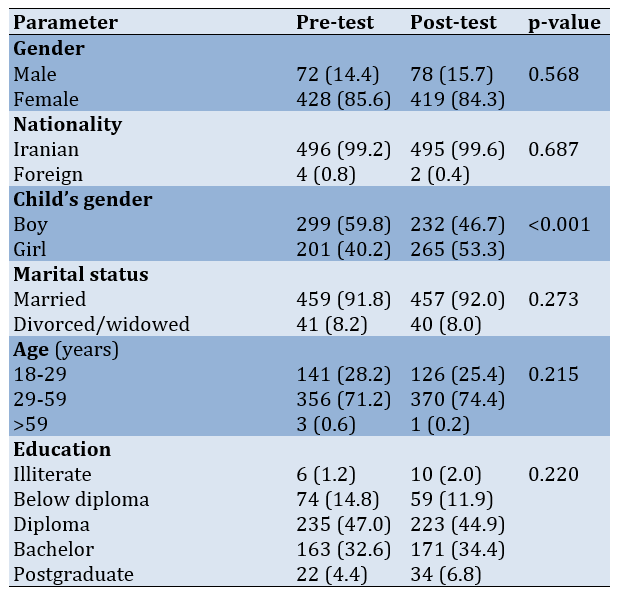
Table 2. Item-level comparison of parents’ knowledge and attitude before and after the intervention
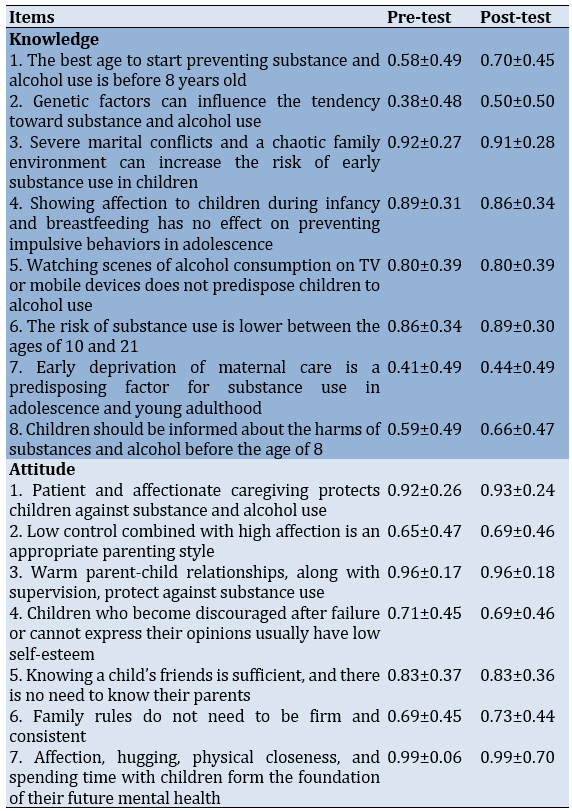
The knowledge score of the samples was increased significantly in post-test (5.80±1.49) compared to the pre-test (5.45±1.48; p<0.001); but the differences of pre-test (5.78±1.25) and post-test (5.86±1.19) of attitude were not significant (p=0.317).
Item-level results for parents’ knowledge and attitudes are presented in Table 2, showing the mean and standard deviation for each item before and after the intervention.
Discussion
The present study examined the impact of an educational campaign on the prevention of substance and alcohol misuse among parents of children aged 3-7 years. The findings demonstrated that the intervention significantly increased parents’ knowledge but did not significantly change their attitudes. These results are consistent with international studies that suggest raising awareness is often the first step toward behavior change [22, 23].
The significant increase in knowledge scores following the intervention underscores the potential of short-term educational programs to enhance parental awareness. Parental knowledge plays a vital role in shaping children’s understanding of substance use. Children learn and internalize behaviors within the family environment, and when lacking guidance, they are influenced by broader social contexts. Nur [24] also emphasized parents’ roles as observers, role models, and guides in preventing substance misuse. Other studies have confirmed that higher levels of parental and child knowledge function as protective factors against substance misuse [25, 26].
Research such as studies by Opara et al. [27] and Bergman et al. [23] has also shown that parental education can directly reduce the likelihood of children’s involvement in substance use. However, when it comes to high-risk behaviors, knowledge alone does not necessarily lead to behavioral change [28, 29]. Parents who are well-informed but lack the practical skills to put this knowledge into practice may be unable to meaningfully influence their children’s behavior [23, 30]. Therefore, future programs should not only increase parental knowledge but also strengthen their practical skills in managing children’s behaviors.
The present study found that parents’ attitudes toward substance misuse did not change significantly after the campaign. One possible explanation is the influence of cultural and social beliefs. Many parents may already hold established views on substance use, and altering these beliefs requires deeper and longer-term interventions. Tael-Öeren et al. [31] highlighted the role of parental attitudes, noting that children of parents with more permissive attitudes toward alcohol use are more likely to start drinking and engage in frequent intoxication.
Contrary to our findings, Sarialioğlu et al. [32]. demonstrated that educational interventions can improve parental attitudes toward rational drug use. Similarly, another study showed that an educational module significantly enhanced parents' knowledge and attitudes toward substance use prevention [25]. Differences in findings may be attributed to variations in the target population (e.g., focusing only on mothers), intervention design, sample size, and assessment methods. Structured educational modules used in other studies may also have contributed to stronger attitude changes, underscoring the importance of tailored and comprehensive intervention design.
Hurley et al. [33] suggested that in societies where substance use is considered deviant behavior, shifting parental attitudes requires long-term educational strategies. The short duration of this intervention may explain the lack of significant attitude change. Gilligan et al. [34] similarly found that family-based alcohol prevention programs for adolescents were more effective when conducted over longer durations compared to short-term efforts.
Overall, long-term, sustained educational programs appear to be more effective at shifting parental attitudes and behaviors. Therefore, future interventions should include continuous training sessions designed not only to increase knowledge but also to foster attitudinal and behavioral changes.
Various strategies have been recommended in the literature to enhance the effectiveness of parental interventions. For instance, Rodríguez et al. [35] found that parents who consistently communicate with their children about substance misuse play a more effective preventive role. Enhancing parents’ knowledge of effective parenting strategies and self-regulation skills can serve as a key component of prevention programs. Greater emphasis on parent-child communication skills is thus necessary in future interventions. Schools can also play an important role by providing resources and staff to implement preventive actions, and emerging technologies such as artificial intelligence may offer additional support [36]. Based on these findings, several recommendations can be made:
- Incorporating interactive educational approaches (e.g., role-playing, educational games, and parent discussion groups) to positively influence attitudes.
- Delivering prevention programs continuously over time to ensure lasting effects.
- Promoting collaboration among schools, counseling centers, and health organizations to provide ongoing support.
- Utilizing digital tools and social media to expand the reach and impact of campaigns.
This study has several noteworthy strengths. First, focusing on parents of children aged 3-7 years is highly valuable, as this developmental stage is particularly sensitive to parental influence. Early interventions can therefore play a critical preventive role. Second, employing a public health-based educational campaign as the intervention method offers advantages such as scalability, accessibility, and adaptability to real-world settings. Third, the relatively large sample size (500 participants) enhances the study's statistical power and increases the generalizability of the findings within the region's cultural context. Fourth, the pre-test-post-test design allowed for direct evaluation of the intervention’s effects. Finally, the use of standardized and validated tools to assess knowledge and attitudes strengthened the internal validity of the results.
Despite its strengths, the study also faced several limitations. The short duration of the intervention may have been insufficient to produce sustainable changes in parental attitudes, especially those shaped by deep-rooted cultural and social beliefs. The absence of follow-up assessments limited the ability to evaluate the long-term sustainability of the observed changes. Although knowledge increased, the study did not examine whether this translated into behavioral changes among parents or reduced risky behaviors among children. Additionally, statistical imbalance in the gender distribution of children between the pre-test and post-test phases may have introduced unwanted variance into the results. The study's restriction to a single province with a specific cultural background also limits the generalizability of its findings to other regions. Finally, the absence of a randomized control group reduced the ability to draw causal inferences from the results.
The most effective prevention programs are those that employ comprehensive, long-term, interactive, and multi-level approaches. Such programs should not only focus on knowledge dissemination but also emphasize communication skills, behavioral management strategies, and enhanced parent-child interaction. Furthermore, cultural considerations, social beliefs, and parenting styles must be integrated into intervention design. Future programs should utilize technological tools, social media platforms, active parental participation, and cross-sectoral collaboration among schools, healthcare institutions, and social organizations to create more targeted, sustainable, and culturally adaptable interventions. Only through such approaches can effective prevention of substance misuse among children and adolescents be achieved.
Conclusion
A short-term educational campaign improves parents’ knowledge regarding substance and alcohol misuse, but doesn’t affect their attitudes.
Acknowledgments: The authors would like to sincerely thank all the parents who participated in this study for their time and cooperation. We also extend our gratitude to the staff of the Kerman University of Medical Sciences for their support and assistance in implementing the campaign.
Ethical Permissions: The Ethics Committee of the Faculty of Medical Sciences of Kerman granted permission under the ethics code IR.KMU.REC.1403.639, related references were provided by Kerman University of Medical Sciences for dialysis centers in Kerman.
Conflicts of Interests: The authors declare that there is no conflict of interest.
Authors' Contribution: Borhaninejad VR (First Author), Introduction Writer/Methodologist (25%); Iranpour A (Second Author), Main Researcher/ Statistical Analyst (15%); Bahramnejad A (Third Author), Introduction Writer/Methodologist (15%); Alizadeh S (Fourth Author), Methodologist/Assistant Researcher/Discussion Writer/Statistical Analyst (45%)
Funding/Support: This study was supported by a grant number 403001142 from the Deputy of Health, Ministry of Health and Medical Education, Kerman, Iran.
Alcohol (ethanol) is a psychoactive and addictive substance found in various alcoholic beverages such as beer, wine, and spirits. Its consumption can lead to both physical and psychological dependence, as well as adverse health, social, and legal consequences [1]. Despite its harmful effects on public health, alcohol consumption is legally unrestricted in many countries, and little control is exercised over its use [2]. Alcohol consumption patterns in each country are closely tied to cultural, religious, legal, and social contexts. In Muslim-majority countries, alcohol use is strongly influenced by religious beliefs and cultural values [3, 4]. Accordingly, in societies where alcohol consumption is considered unacceptable, the prevalence of alcohol use should be lower than in societies where it is perceived as normal and acceptable [5].
Globally, alcoholic beverages are the most widely consumed psychoactive substances, with an estimated 2.3 billion regular users worldwide [6]. According to the World Health Organization (WHO), the lowest prevalence of alcohol use is observed in the Eastern Mediterranean region, where alcohol-related disability-adjusted life years (DALYs) are also the lowest, likely due to the predominance of Muslim countries in this region [7]. Iran, as a Muslim country, prohibits the production, sale, and consumption of alcohol, making it available only through illicit channels. Consequently, alcohol consumption patterns in Iran differ from those in other countries [8]. A systematic review in Iran in 2020 reported lifetime and past-12-month prevalence rates of alcohol use in the general population as 13% and 12%, respectively; Among youth, these figures were 13% and 15% [9]. Another study across five provinces of Iran found that 28% of adults over 18 years had consumed alcohol in their lifetime, with the highest prevalence in Tehran (37.1%) and Kerman (31.8%) [10].
Adolescents and young adults are considered high-risk groups for alcohol misuse. Factors contributing to their alcohol use include boosting self-confidence, reducing stress, alleviating psychological pressure, and enhancing social enjoyment [11]. In Islamic countries like Iran, due to religious and legal prohibitions, alcohol use is considered taboo and is likely underreported [5, 12]. The widespread belief that alcohol-related harms are minimal, combined with religious and legal restrictions, can contribute to the denial or disregard of this risky behavior and its consequences [5]. Nevertheless, alcohol consumption remains a major public health challenge, causing substantial harm to physical, mental, and social health, as well as to quality of life [13].
Multiple factors influence health-related behaviors, as explained in various health education models. One important framework is the Knowledge, Attitude, and Practice (KAP) model [14]. Knowledge about the consequences of alcohol use can influence individuals’ attitudes toward it. While knowledge alone is not sufficient to change behavior, it remains a crucial component of preventive interventions, particularly in relation to alcohol misuse [12].
Given the increasing prevalence of alcohol use among Iranian adolescents and youth, there is a growing need for effective preventive interventions [15]. In some countries, limiting availability and increasing prices have been shown to reduce alcohol-related harms [16]. One widely used strategy for prevention is the implementation of educational campaigns, which serve as community-based interventions that use multiple channels to deliver messages to a target population [17]. Health campaigns have been employed in diverse areas, including cardiovascular health, substance and alcohol abuse, cancer control, nutrition, family planning, vaccination, mental health, hypertension, and HIV/AIDS [18]. Among these, alcohol prevention campaigns have utilized various strategies such as raising awareness of harmful consequences, using fear-based imagery, and promoting refusal skills [19]. Mass media are commonly employed in these campaigns to deliver cost-effective messages, inform, motivate, and persuade large populations to influence health-related behaviors [20]. Although mass media campaigns have shown effectiveness in improving knowledge, attitudes, and beliefs about alcohol, evidence regarding their ability to reduce actual consumption is limited [16].
Several factors contribute to the limited effectiveness of such campaigns, including their short duration, ineffective messaging, competing media content, lack of diversity in communication channels, and insufficient integration with broader alcohol-control strategies [21]. Targeted campaigns that account for demographic differences across subgroups are generally more effective [19].
Considering the rise of alcohol misuse among Iranian youth and adolescents, community-based educational interventions aimed at improving awareness and attitudes toward alcohol are essential. Childhood is recognized as the most appropriate stage for behavioral interventions, as habits are not yet firmly established. Early interventions can instill healthy lifestyle behaviors and prevent risky behaviors later in life. To the best of our knowledge, no campaign on this issue has been conducted in Kerman Province. Therefore, the present study was designed to evaluate the implementation of a preventive campaign against alcohol misuse among parents of children aged 3-7 years in Kerman.
Instrument and Methods
Study design and campaign implementation
This study employed a quasi-experimental pre-test-post-test design without a control group to evaluate the effectiveness of an alcohol and substance misuse prevention campaign targeting parents of young children. The campaign was implemented over a two-week period, from November 22, 2024, to January 5, 2025, across Kerman Province, Iran. The target population comprised all parents of children aged 3-7 years, representing approximately 550,780 children in the province. Parents were eligible to participate if they could read and write, owned a smartphone, and expressed willingness to participate in the study. Participation was voluntary, and informed consent was obtained electronically prior to data collection.
Instrument
Data were collected using a researcher-developed questionnaire consisting of two sections. The first section assessed demographic characteristics, including gender, age, marital status, educational level, and the child’s gender. The second section measured parents’ knowledge and attitudes toward alcohol and substance misuse prevention. The knowledge subscale comprised 8 items, with scores ranging from 0 to 8, while the attitude subscale included 7 items, with scores ranging from 0 to 7. The total questionnaire score ranged from 0 to 15, with higher scores indicating greater knowledge and more favorable attitudes toward prevention.
Content validity was assessed using both qualitative and quantitative approaches. Initially, the questionnaire was reviewed by 10 experts in health education and promotion, social medicine, and psychology. Based on expert feedback, ambiguous or irrelevant items were removed or revised. Quantitative content validity was evaluated using the Content Validity Ratio (CVR) and Content Validity Index (CVI). According to Lawshe’s table, the minimum acceptable CVR value for 10 experts was 0.62, and all items exceeded this criterion. Additionally, all CVI values were greater than 0.79, confirming acceptable content validity. Reliability was assessed using Cronbach’s alpha, calculated from a pilot study with 30 parents. The resulting alpha value was 0.85, indicating good internal consistency.
Intervention
The intervention was initiated through the development of an educational booklet entitled “How to Vaccinate Our Children Against Substance and Alcohol Use Before Entering School”. The content was developed based on evidence-based principles of substance misuse prevention and parental education. To increase accessibility, the materials were produced in both written and audio formats. The educational content was reviewed and evaluated by a joint expert committee consisting of specialists from Kerman University of Medical Sciences and representatives of the Kerman Department of Education. Following expert review and revision, the booklet was officially approved as the standard educational material for the target population.
At the provincial level, a multi-stage implementation strategy was employed. Initially, focus group discussions were conducted with experts in health education and the social sciences to ensure the campaign strategy was culturally appropriate and effective. Subsequently, the finalized educational booklet was converted into a 28-minute audio file for dissemination through digital platforms. To facilitate coordination, four briefing sessions were held with officials from the provincial Department of Education, during which target populations across 33 educational districts were identified. Parents’ contact information was obtained from selected preschools and kindergartens, and communication groups were established using the domestic messaging application Eitaa. For each district, one liaison officer was appointed and trained through online and in-person sessions. Based on the compiled lists of educational centers, separate Eitaa groups were created for the parents of each school, totaling 109 communication groups.
Within each communication group, the intervention was delivered in a structured and sequential manner. First, an introductory file explaining the objectives and importance of alcohol and substance misuse prevention was shared with participants. The pre-test questionnaire link was then distributed via the Porsline online survey platform and remained accessible for three days. Educational materials were uploaded gradually over a ten-day period, accompanied by reminder messages encouraging parents to review both the written and audio content. Upon completion of the educational phase, the post-test questionnaire link was shared and remained open for three days. Overall, 500 parents were randomly selected and included in the pre-test and post-test analyses.
Statistical analysis
Data analysis was performed using SPSS 22 software. Descriptive statistics were used to summarize demographic variables. To compare demographic characteristics between the pre-test and post-test groups, the Chi-square test was applied for categorical variables. This analysis confirmed the homogeneity of the two groups prior to the intervention. To assess the effect of the intervention on parents’ knowledge, attitudes, and total scores, a paired-samples t-test was used to compare pre- and post-intervention mean scores, as the data were approximately normally distributed. A p-value of less than 0.05 was considered significant.
Findings
The study included 500 participants in the pre-test and 497 in the post-test. The study included participants who completed both the pre-test and post-test assessments. No statistically significant differences were observed between the pre-test and post-test groups in terms of demographic characteristics, indicating that the two groups were homogeneous at baseline (Table 1).
Table 1. Comparing the frequency of demographic characteristics of participants in the pre-test (n=500) and post-test (n=497)
Table 2. Item-level comparison of parents’ knowledge and attitude before and after the intervention
The knowledge score of the samples was increased significantly in post-test (5.80±1.49) compared to the pre-test (5.45±1.48; p<0.001); but the differences of pre-test (5.78±1.25) and post-test (5.86±1.19) of attitude were not significant (p=0.317).
Item-level results for parents’ knowledge and attitudes are presented in Table 2, showing the mean and standard deviation for each item before and after the intervention.
Discussion
The present study examined the impact of an educational campaign on the prevention of substance and alcohol misuse among parents of children aged 3-7 years. The findings demonstrated that the intervention significantly increased parents’ knowledge but did not significantly change their attitudes. These results are consistent with international studies that suggest raising awareness is often the first step toward behavior change [22, 23].
The significant increase in knowledge scores following the intervention underscores the potential of short-term educational programs to enhance parental awareness. Parental knowledge plays a vital role in shaping children’s understanding of substance use. Children learn and internalize behaviors within the family environment, and when lacking guidance, they are influenced by broader social contexts. Nur [24] also emphasized parents’ roles as observers, role models, and guides in preventing substance misuse. Other studies have confirmed that higher levels of parental and child knowledge function as protective factors against substance misuse [25, 26].
Research such as studies by Opara et al. [27] and Bergman et al. [23] has also shown that parental education can directly reduce the likelihood of children’s involvement in substance use. However, when it comes to high-risk behaviors, knowledge alone does not necessarily lead to behavioral change [28, 29]. Parents who are well-informed but lack the practical skills to put this knowledge into practice may be unable to meaningfully influence their children’s behavior [23, 30]. Therefore, future programs should not only increase parental knowledge but also strengthen their practical skills in managing children’s behaviors.
The present study found that parents’ attitudes toward substance misuse did not change significantly after the campaign. One possible explanation is the influence of cultural and social beliefs. Many parents may already hold established views on substance use, and altering these beliefs requires deeper and longer-term interventions. Tael-Öeren et al. [31] highlighted the role of parental attitudes, noting that children of parents with more permissive attitudes toward alcohol use are more likely to start drinking and engage in frequent intoxication.
Contrary to our findings, Sarialioğlu et al. [32]. demonstrated that educational interventions can improve parental attitudes toward rational drug use. Similarly, another study showed that an educational module significantly enhanced parents' knowledge and attitudes toward substance use prevention [25]. Differences in findings may be attributed to variations in the target population (e.g., focusing only on mothers), intervention design, sample size, and assessment methods. Structured educational modules used in other studies may also have contributed to stronger attitude changes, underscoring the importance of tailored and comprehensive intervention design.
Hurley et al. [33] suggested that in societies where substance use is considered deviant behavior, shifting parental attitudes requires long-term educational strategies. The short duration of this intervention may explain the lack of significant attitude change. Gilligan et al. [34] similarly found that family-based alcohol prevention programs for adolescents were more effective when conducted over longer durations compared to short-term efforts.
Overall, long-term, sustained educational programs appear to be more effective at shifting parental attitudes and behaviors. Therefore, future interventions should include continuous training sessions designed not only to increase knowledge but also to foster attitudinal and behavioral changes.
Various strategies have been recommended in the literature to enhance the effectiveness of parental interventions. For instance, Rodríguez et al. [35] found that parents who consistently communicate with their children about substance misuse play a more effective preventive role. Enhancing parents’ knowledge of effective parenting strategies and self-regulation skills can serve as a key component of prevention programs. Greater emphasis on parent-child communication skills is thus necessary in future interventions. Schools can also play an important role by providing resources and staff to implement preventive actions, and emerging technologies such as artificial intelligence may offer additional support [36]. Based on these findings, several recommendations can be made:
- Incorporating interactive educational approaches (e.g., role-playing, educational games, and parent discussion groups) to positively influence attitudes.
- Delivering prevention programs continuously over time to ensure lasting effects.
- Promoting collaboration among schools, counseling centers, and health organizations to provide ongoing support.
- Utilizing digital tools and social media to expand the reach and impact of campaigns.
This study has several noteworthy strengths. First, focusing on parents of children aged 3-7 years is highly valuable, as this developmental stage is particularly sensitive to parental influence. Early interventions can therefore play a critical preventive role. Second, employing a public health-based educational campaign as the intervention method offers advantages such as scalability, accessibility, and adaptability to real-world settings. Third, the relatively large sample size (500 participants) enhances the study's statistical power and increases the generalizability of the findings within the region's cultural context. Fourth, the pre-test-post-test design allowed for direct evaluation of the intervention’s effects. Finally, the use of standardized and validated tools to assess knowledge and attitudes strengthened the internal validity of the results.
Despite its strengths, the study also faced several limitations. The short duration of the intervention may have been insufficient to produce sustainable changes in parental attitudes, especially those shaped by deep-rooted cultural and social beliefs. The absence of follow-up assessments limited the ability to evaluate the long-term sustainability of the observed changes. Although knowledge increased, the study did not examine whether this translated into behavioral changes among parents or reduced risky behaviors among children. Additionally, statistical imbalance in the gender distribution of children between the pre-test and post-test phases may have introduced unwanted variance into the results. The study's restriction to a single province with a specific cultural background also limits the generalizability of its findings to other regions. Finally, the absence of a randomized control group reduced the ability to draw causal inferences from the results.
The most effective prevention programs are those that employ comprehensive, long-term, interactive, and multi-level approaches. Such programs should not only focus on knowledge dissemination but also emphasize communication skills, behavioral management strategies, and enhanced parent-child interaction. Furthermore, cultural considerations, social beliefs, and parenting styles must be integrated into intervention design. Future programs should utilize technological tools, social media platforms, active parental participation, and cross-sectoral collaboration among schools, healthcare institutions, and social organizations to create more targeted, sustainable, and culturally adaptable interventions. Only through such approaches can effective prevention of substance misuse among children and adolescents be achieved.
Conclusion
A short-term educational campaign improves parents’ knowledge regarding substance and alcohol misuse, but doesn’t affect their attitudes.
Acknowledgments: The authors would like to sincerely thank all the parents who participated in this study for their time and cooperation. We also extend our gratitude to the staff of the Kerman University of Medical Sciences for their support and assistance in implementing the campaign.
Ethical Permissions: The Ethics Committee of the Faculty of Medical Sciences of Kerman granted permission under the ethics code IR.KMU.REC.1403.639, related references were provided by Kerman University of Medical Sciences for dialysis centers in Kerman.
Conflicts of Interests: The authors declare that there is no conflict of interest.
Authors' Contribution: Borhaninejad VR (First Author), Introduction Writer/Methodologist (25%); Iranpour A (Second Author), Main Researcher/ Statistical Analyst (15%); Bahramnejad A (Third Author), Introduction Writer/Methodologist (15%); Alizadeh S (Fourth Author), Methodologist/Assistant Researcher/Discussion Writer/Statistical Analyst (45%)
Funding/Support: This study was supported by a grant number 403001142 from the Deputy of Health, Ministry of Health and Medical Education, Kerman, Iran.
References
1. Amare T, Getinet W. Alcohol use and associated factors among high school, college and university students in Ethiopia, systematic review, and meta-analysis, 2018. J Ment Health. 2020;29(4):455-63. [Link] [DOI:10.1080/09638237.2019.1677871]
2. Iranpour A, Nakhaee N. A review of alcohol-related harms: A recent update. Addctn Health. 2019;11(2):129-37. [Link]
3. Yassin N, Afifi R, Singh N, Saad R, Ghandour L. "There is zero regulation on the selling of alcohol": The voice of the youth on the context and determinants of alcohol drinking in Lebanon. Qual Health Res. 2018;28(5):733-44. [Link] [DOI:10.1177/1049732317750563]
4. Charfi N, Turki M, Smaoui N, Maâlej Bouali M, Omri S, Zouari L, et al. Alcohol use and associated environmental factors among middle and high school students in Sfax (Tunisia). Int J Ment Health Addctn. 2020;18:658-73. [Link] [DOI:10.1007/s11469-018-9969-6]
5. Amin-Esmaeili M, Rahimi-Movaghar A, Sharifi V, Hajebi A, Mojtabai R, Radgoodarzi R, et al. Alcohol use disorders in Iran: Prevalence, symptoms, correlates, and comorbidity. Drug Alcohol Depend. 2017;176:48-54. [Link] [DOI:10.1016/j.drugalcdep.2017.02.018]
6. Wysokińska M, Kołota A. Assessment of the prevalence of alcoholic beverage consumption and knowledge of the impact of alcohol on health in a group of Polish young adults aged 18-35: A cross-sectional study. Int J Environ Res Public Health. 2022;19(23):15425. [Link] [DOI:10.3390/ijerph192315425]
7. WHO. Global status report on alcohol and health 2018. Geneva: World Health Organization; 2018. [Link]
8. Al-Ansari B, Thow AM, Day CA, Conigrave KM. Extent of alcohol prohibition in civil policy in Muslim majority countries: the impact of globalization. Addiction. 2016;111(10):1703-13. [Link] [DOI:10.1111/add.13159]
9. Chegeni M, Kamel Khodabandeh A, Karamouzian M, Shokoohi M, Abedi L, Khalili M, et al. Alcohol consumption in Iran: A systematic review and meta-analysis of the literature. Drug Alcohol Rev. 2020;39(5):525-38. [Link] [DOI:10.1111/dar.13093]
10. Mehrabi M, Hajebi A, Mohebbi E, Baneshi MR, Khodadost M, Haghdoost AA, et al. Prevalence and Correlates of Lifetime Alcohol Use among Adult Urban Populations in Iran: A Knowledge, Attitude, and Practice Study. J Psychoactive Drugs. 2019;51(3):290-7. [Link] [DOI:10.1080/02791072.2019.1578909]
11. Ferreira Alves R, Precioso J, Becoña E. Alcohol-related knowledge and attitudes as predictors of drinking behaviours among Portuguese university students. Alcohol Drug Addctn. 2021;34(1):33-50. [Link] [DOI:10.5114/ain.2021.107709]
12. Ajzoon MSB. Alcohol and substance use knowledge, attitudes, subjective norms, self-efficacy, perceived behavioral control, and behavioral intentions among Omani college students [dissertation]. Norfolk: Old Dominion University; 2017. [Link]
13. Delgado-Lobete L, Montes-Montes R, Vila-Paz A, Cruz-Valiño JM, Gándara-Gafo B, Talavera-Valverde MÁ, et al. Individual and environmental factors associated with tobacco smoking, alcohol abuse and illegal drug consumption in university students: A mediating analysis. Int J Environ Res Public Health. 2020;17(9):3019. [Link] [DOI:10.3390/ijerph17093019]
14. Alves RF. The relationship between health-related knowledge and attitudes and health risk behaviours among Portuguese university students. Glob Health Promot. 2024;31(1):36-44. [Link] [DOI:10.1177/17579759231195561]
15. Nikfarjam A, Hajimaghsoudi S, Rastegari A, Haghdoost AA, Nasehi AA, Memaryan N, et al. The frequency of alcohol use in Iranian urban population: The results of a national network scale up survey. Int J Health Policy Manag. 2017;6(2):97-102. [Link] [DOI:10.15171/ijhpm.2016.103]
16. Young B, Lewis S, Katikireddi SV, Bauld L, Stead M, Angus K, et al. Effectiveness of mass media campaigns to reduce alcohol consumption and harm: A systematic review. Alcohol Alcohol. 2018;53(3):302-16. [Link] [DOI:10.1093/alcalc/agx094]
17. Shahriyarimoghadam S, Aghamolaei T, Hosseini Z, Farshidi H, Ghanbarnejad A. Effect of community-based health education campaign based on the theory of planned behavior on reduction of Hookah smoking among women in Hormoz Island in the South of Iran. Tob Health. 2022;1(1):1-9. [Link] [DOI:10.34172/thj.2022.01]
18. Sadeghi R, Mazloomy Mahmoodabad SS, Fallahzadeh H, Rezaeian M, Bidaki R, Khanjani N. Hookah is the enemy of health campaign: A campaign for prevention of hookah smoking among youth. Health Promot Int. 2020;35(5):1125-36. [Link] [DOI:10.1093/heapro/daz109]
19. Shields JD, Archiopoli AM, Bentley JM, Weiss D, Hoffmann J, White JM, et al. Binge-drinking attitudes and behaviors among Hispanic and non-Hispanic college students: Suggestions for tailoring health campaign messages. Hisp J Behav Sci. 2016;38(2):243-63. [Link] [DOI:10.1177/0739986316633436]
20. Jamri MH, Ismail N, Ahmad J. A study of the use of electronic media in drug abuse campaign. European Proceedings of Social and Behavioural Sciences. London: European Publisher; 2022. p. 456-68. [Link] [DOI:10.15405/epsbs.2022.01.02.38]
21. Johnston RS, Stafford J, Jongenelis MI, Shaw T, Samsa H, Costello E, et al. Evaluation of a public education campaign to support parents to reduce adolescent alcohol use. Drug Alcohol Rev. 2018;37(5):588-98. [Link] [DOI:10.1111/dar.12703]
22. Kuntsche S, Kuntsche E. Parent-based interventions for preventing or reducing adolescent substance use-A systematic literature review. Clin Psychol Rev. 2016;45:89-101. [Link] [DOI:10.1016/j.cpr.2016.02.004]
23. Bergman P, Dudovitz RN, Dosanjh KK, Wong MD. Engaging parents to prevent adolescent substance use: A randomized controlled trial. Am J Public Health. 2019;109(10):1455-61. [Link] [DOI:10.2105/AJPH.2019.305240]
24. Nur CM. Parents' roles in preventing drug abuses among teenagers (a case study in Banda Aceh). JURNAL ILMIAH PEURADEUN. 2017;5(1):49-58. [Link] [DOI:10.26811/peuradeun.v5i1.119]
25. Rachman W, Syafar M, Nasir S, Amiruddin R, Ahmad A, Abdullah M, et al. Drugs abuse behavior prevention model through family approach in adolescents in Kendari City. Biomed Pharmacol J. 2022;15(3):1497-502. [Link] [DOI:10.13005/bpj/2487]
26. Rachman WONN, Syafar M, Amiruddin R, Rahmadania WO, Gerung J. The family roles to prevention of drug abuse in adolescents. Malays J Med Health Sci. 2020;16(Suppl 10):137-41. [Link]
27. Opara I, Pierre K, Cayo S, Aneni K, Mwai C, Hogue A, et al. Brief parent-child substance use education intervention for black families in urban cities in New Jersey: Protocol for a formative study design. JMIR Res Protoc. 2024;13:e55470. [Link] [DOI:10.2196/55470]
28. Mlekwa F, Nyamhanga T, Chalya P, Urassa D. Knowledge, attitudes and practices of parents on child sexual abuse and its prevention in Shinyanga District, Tanzania. Tanzan J Health Res. 2016;18(4). [Link] [DOI:10.4314/thrb.v18i4.6]
29. Dai S, Au CT, Chan MHM, Kam RKT, Li AM, Chan KC. Parental knowledge, attitude, and practice on tobacco use, smoking cessation, and children's environmental tobacco smoke exposure. Front Public Health. 2021;9:733667. [Link] [DOI:10.3389/fpubh.2021.733667]
30. Fisher S, Hsu WW, Zapolski TCB, Malone C, Caldwell B, Barnes-Najor J. The role of parents in early adolescent substance use: A longitudinal investigation. J Early Adolesc. 2024;45(6):746-68. [Link] [DOI:10.1177/02724316241277963]
31. Tael-Öeren M, Naughton F, Sutton S. The relationship between parental attitudes and children's alcohol use: A systematic review and meta-analysis. Addiction. 2019;114(9):1527-46. [Link] [DOI:10.1111/add.14615]
32. Sarialioğlu A, Köse S, Çelebioğlu A. The effect of rational drug use training given to parents on parental attitudes. East J Med. 2023;28(4):548-55. [Link] [DOI:10.5505/ejm.2023.47639]
33. Hurley E, Dietrich T, Rundle-Thiele S. A systematic review of parent based programs to prevent or reduce alcohol consumption in adolescents. BMC Public Health. 2019;19(1):1451. [Link] [DOI:10.1186/s12889-019-7733-x]
34. Gilligan C, Wolfenden L, Foxcroft DR, Williams AJ, Kingsland M, Hodder RK, et al. Family-based prevention programmes for alcohol use in young people. Cochrane Database Syst Rev. 2019;3(3):Cd012287. [Link] [DOI:10.1002/14651858.CD012287.pub2]
35. Rodríguez-Ruiz J, Zych I, Ribeaud D, Steinhoff A, Eisner M, Quednow BB, et al. The influence of different dimensions of the parent-child relationship in childhood as longitudinal predictors of substance use in late adolescence. The mediating role of self-control. Int J Ment Health Addctn. 2024;22(5):3073-90. [Link] [DOI:10.1007/s11469-023-01036-8]
36. Liu XQ, Guo YX, Wang X. Delivering substance use prevention interventions for adolescents in educational settings: A scoping review. World J Psychiatry. 2023;13(7):409-22. [Link] [DOI:10.5498/wjp.v13.i7.409]
Send email to the article author