

TMU
Owner
Tarbiat Modares University (TMU) is the owner of HEHP.

0.8
Cite Score 2025
Volume 14, Issue 1 (2026)
Health Educ Health Promot 2026, 14(1): 1-8 |
Back to browse issues page
Article Type:



History
Received: 2025/10/3 | Accepted: 2025/11/29 | Published: 2026/01/29
Received: 2025/10/3 | Accepted: 2025/11/29 | Published: 2026/01/29
How to cite this article
Abidah A, Sukartini T, Mariyanti H. Effectiveness of the COM-B Model Application in Hypertension Management; a Systematic Review. Health Educ Health Promot 2026; 14 (1) :1-8
URL: http://hehp.daneshafarand.org/article-4-82972-en.html
URL: http://hehp.daneshafarand.org/article-4-82972-en.html
Download citation:
BibTeX | RIS | EndNote | Medlars | ProCite | Reference Manager | RefWorks
Send citation to:


Rights and permissions
BibTeX | RIS | EndNote | Medlars | ProCite | Reference Manager | RefWorks
Send citation to:


1- Faculty of Nursing, Airlangga University, Surabaya, Indonesia
2- Department of Advanced Nursing, Faculty of Nursing, Airlangga University, Surabaya, Indonesia
3- Department of Basic Nursing, Faculty of Nursing, Airlangga University, Surabaya, Indonesia
2- Department of Advanced Nursing, Faculty of Nursing, Airlangga University, Surabaya, Indonesia
3- Department of Basic Nursing, Faculty of Nursing, Airlangga University, Surabaya, Indonesia
Keywords:
| Abstract (HTML) (1353 Views)
Full-Text: (180 Views)
Introduction
Hypertension is the main risk factor for various diseases, such as cardiovascular, brain, and kidney diseases, and death, but hypertension continues to increase globally [1, 2]. The continued increase in the incidence of hypertension is caused by the patient's ignorance that they have hypertensive disease and inadequate management of hypertension in patients who have been diagnosed [3]. Inadequate adherence behaviors in people with hypertension contribute to increased complications, risk of cardiovascular disease, and worsening clinical outcomes [4].
More than 1.3 billion adults in the world have high blood pressure, and hypertension has a major role in causing 5 million deaths in the world [5]. The prevalence of hypertension in Low- and Middle-Income Countries (LMICs) is 31.5%, which is higher than in high-income countries (28.5%) [1]. The Indonesian health survey in 2023 shows that 34.11% of hypertension cases are diagnosed by doctors [6]. 36.4% of people with hypertension regularly take medication, and 16.9% do not take hypertension medication [6].
These figures show that medication adherence is difficult to achieve when patients lack an understanding of compliance and when interventions are not developed based on factors that affect compliance [3]. In addition, hypertension management behavior is also influenced by low medication literacy, poorly perceived treatment outcomes, and reluctance to comply [7]. Hypertension management behavior is influenced by internal and external factors. However, often the treatment of hypertension provided by health services does not include both at the same time. The researcher's opinion is strengthened by a study in Indonesia, which found that three-quarters of patients with hypertension have not met their health care needs [8].
Hypertension management is generally provided more in primary services, as they have a large volume of patients, allowing education to be delivered in a short time [9]. One effort to treat hypertension in Indonesia is the Integrated Development Post for Non-Communicable Diseases (Posbindu PTM), but some Posbindu PTMs do not achieve satisfactory results due to suboptimal implementation of socialization, counseling for non-communicable diseases, and referral systems, which can lead to hypertension becoming uncontrollable [10].
The COM-B model-based intervention involves developing interventions to improve health behavior change by considering the barriers and facilitators people with hypertension face. The COM-B model's flexibility in adjusting intervention strategies can lead to long-term behavioral changes [11]. This model forms the core of the Behavior Change Wheel (BCW), a comprehensive framework for designing interventions [11]. While the COM-B model has been applied to various chronic conditions [12-14], its consolidated evidence specifically for hypertension—a condition heavily dependent on daily self-management behaviors—remains unexplored.
Studies on the application of the COM-B model in designing behavior change interventions and in identifying barriers and supports for people with chronic diseases have been widely conducted [12, 13, 15-17]. However, this systematic review will fill a critical knowledge gap by synthesizing evidence on how COM-B-based interventions target these components to improve hypertension outcomes. Therefore, this review aims to synthesize evidence on the effectiveness of COM-B model-based interventions in improving hypertension management behaviors and outcomes.
Information and Methods
This systematic review used the PRISMA guidelines to conduct a literature search, screening, feasibility assessment, and synthesis of articles. The research questions were prepared using the PICOS framework (Table 1).
Table 1. PICOS (Population, Intervention, Comparison, Outcome, Study Design) framework
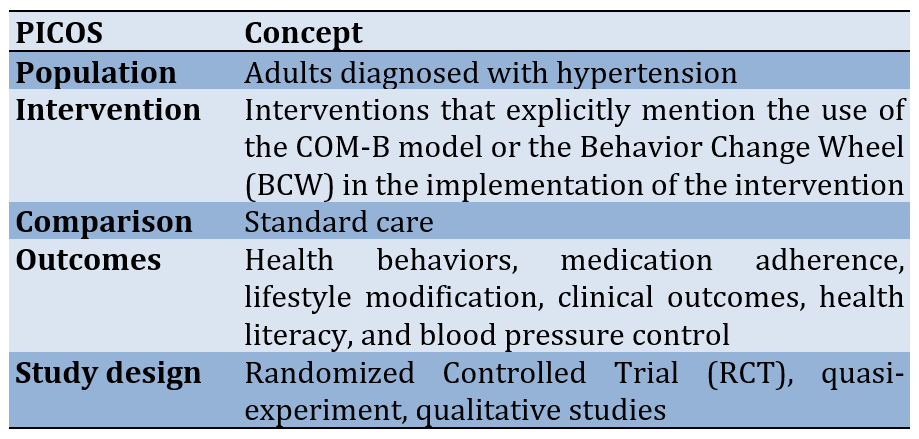
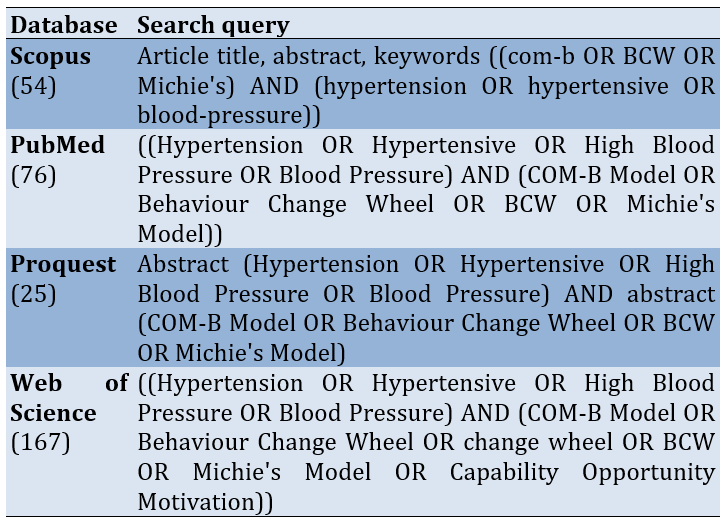
The literature sources used as references for the articles come from four databases; Scopus, PubMed, ProQuest, and Web of Science. The research inclusion criteria were studies published from January 2015 to April 2025, in English or Indonesian, with full text, with a population aged>18 years, and that complied with the PICOS framework. Non-original articles (protocols, pilot, cross-sectional, case, retrospective, and reviews) were excluded. Literature search was conducted using keywords based on Medical Subject Heading (MeSH) in the form of "hypertension", "hypertensive", “high blood pressure", "blood pressure", "COM-B Model", "behaviour change wheel", "BCW", "Michie's Mode", and using boolean operators ("AND", "OR"; Table 2).
Data selection was carried out using the Rayyan tool. All references were imported into Rayyan, and the selection process began with the elimination of duplicate articles and the identification of eligible articles according to inclusion and exclusion criteria. Data were extracted using a standardized form that captured publication year, study design, population characteristics, intervention details, methodology, outcomes, and key findings (Figure 1).
Table 2. Searching strategy
The quality assessment of the research methodology was carried out using a critical appraisal tool developed by the Joanna Briggs Institute (JBI) to evaluate the quality of the articles used and to avoid potential biases. RCTs were appraised using the JBI checklist for randomized trials, quasi-experimental studies with the quasi-experimental checklist, and qualitative studies with the corresponding qualitative checklist. Only studies with a quality appraisal score of ≥75% were included in the final synthesis to ensure the robustness of the evidence (Table 3).
A narrative synthesis was performed due to the heterogeneity of the interventions and outcomes. Studies were grouped by intervention type (digital, community-based, educational). Findings were mapped onto the COM-B components to identify which capabilities, opportunities, and motivations were targeted and how they influenced behavior and outcomes. Thematic analysis was used to synthesize qualitative findings on barriers and facilitators
Table 3. Critical appraisal (- : Unclear; X = No; √ = Yes)
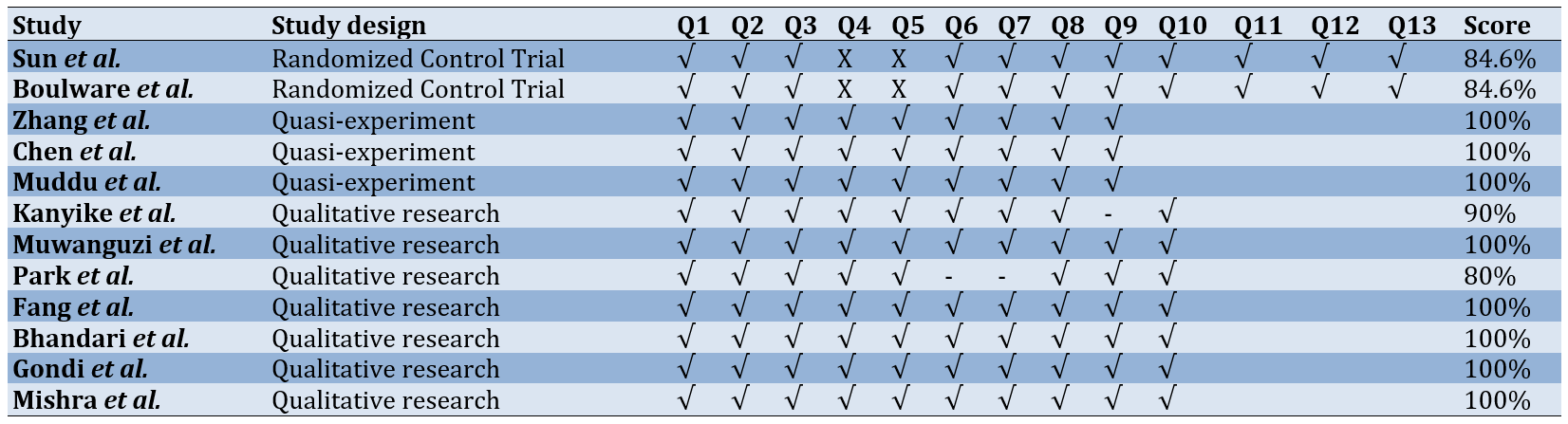
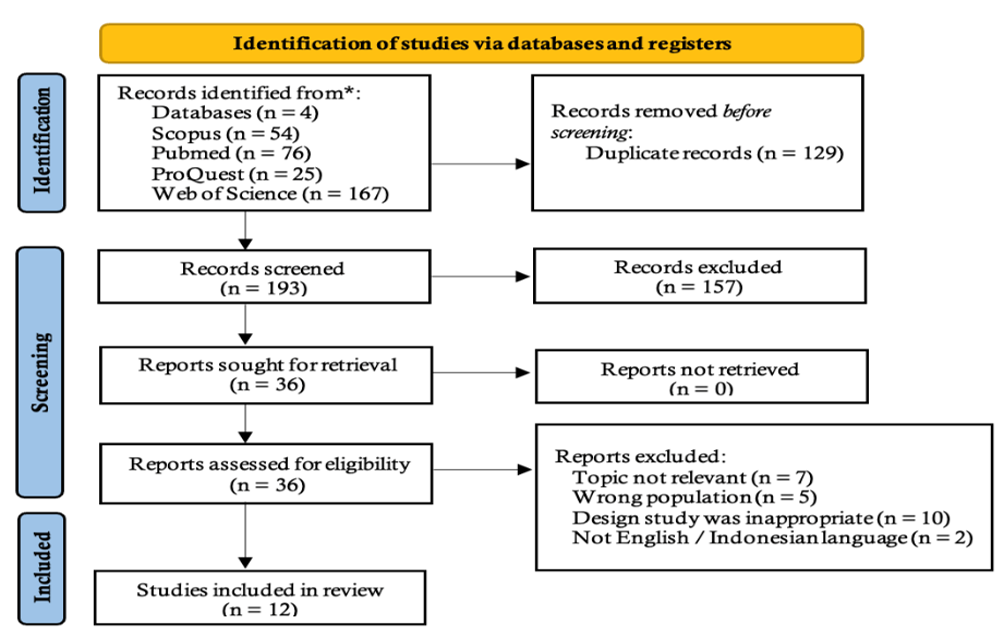
Figure 1. Diagram flow PRISMA [18]
Findings
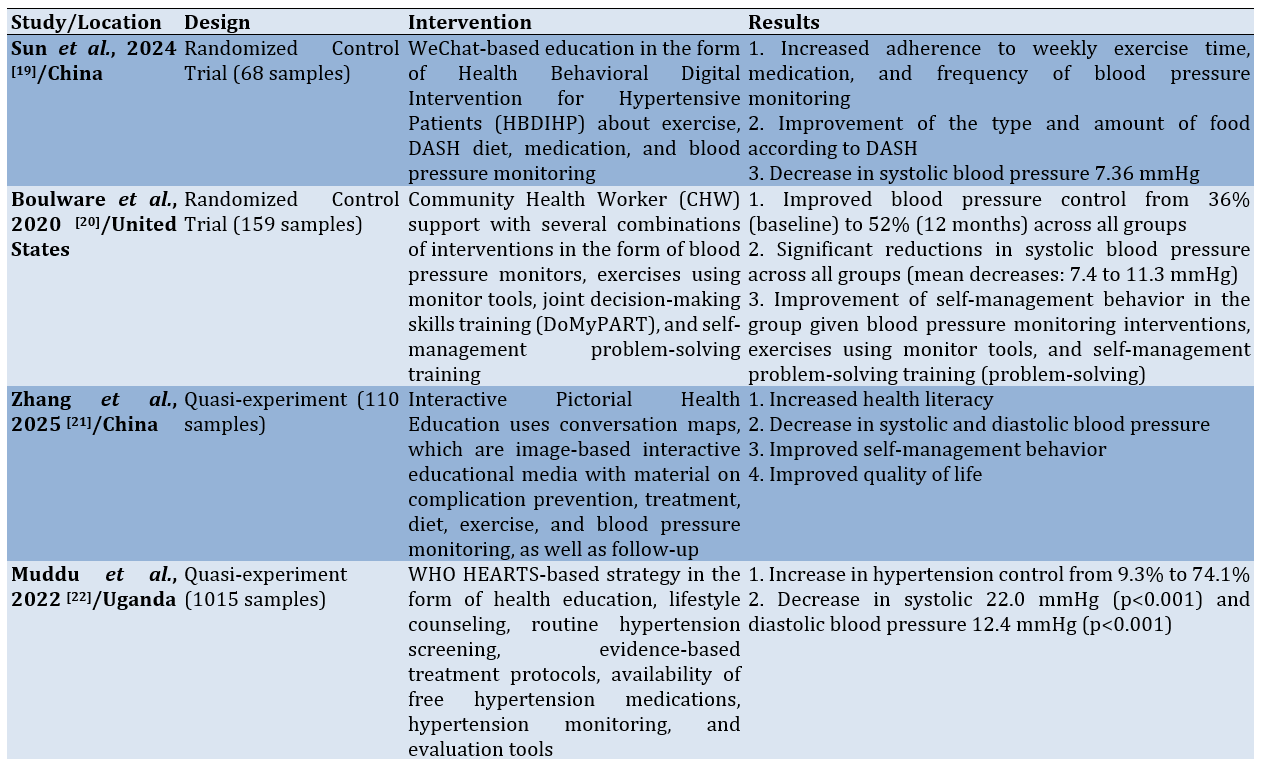
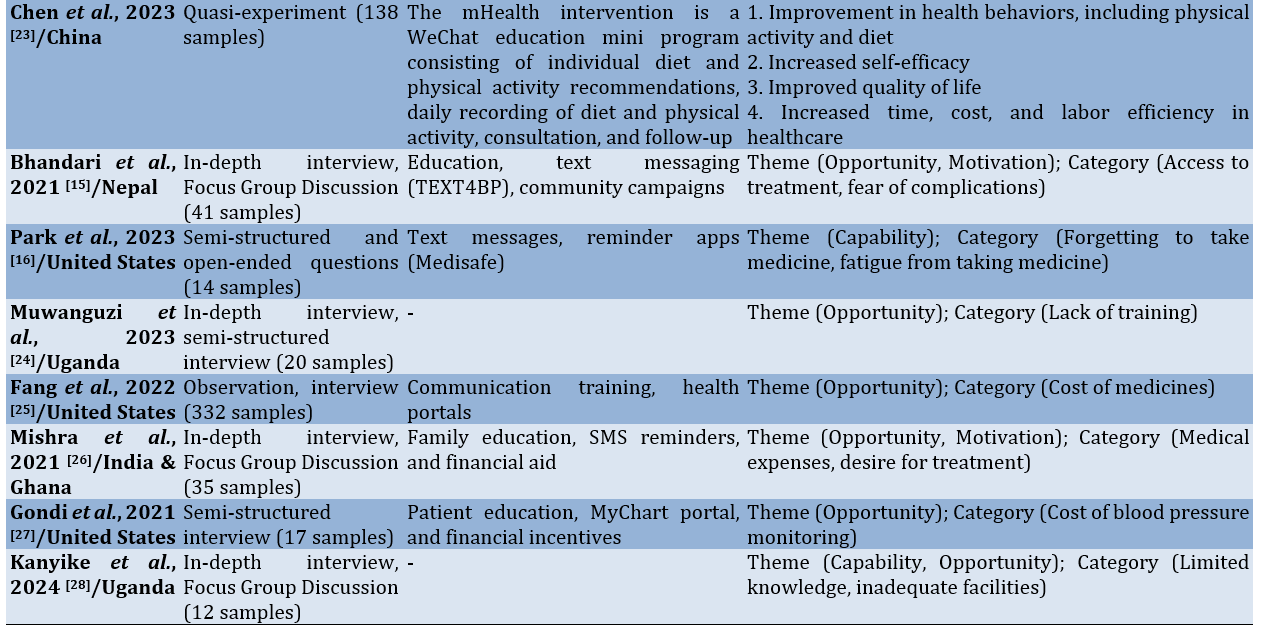
This systematic review included 12 studies (5 quantitative and 7 qualitative) involving 1,961 respondents from the United States, China, Ghana, India, Nepal, and Uganda (Table 4).
COM-B-based interventions demonstrated a clinically significant reduction in systolic blood pressure, with decreases ranging from 7.36 to 11.3 mmHg [19-22]. Additionally, significant diastolic blood pressure reductions were observed in merely two of the included studies [21, 22]. COM-B-based interventions yielded significant results in health behavior change. Three studies reported improvements in blood pressure control, with one study demonstrating an increase from 36% (baseline) to 52% (12 months) [19, 20, 22]. Additionally, two studies reported improvements in self-management behavioral capabilities [20, 21]. Evidence from two studies indicated that COM-B-based interventions effectively improved adherence to physical activity [19, 23]. Dietary improvements, including adherence to DASH-style diets, were reported as positive health behavior changes in two studies [19, 23]. Furthermore, interventions in two other studies were effective in enhancing quality of life, health literacy, and self-efficacy [21, 23].
This study found that the obstacles within the capability component, namely the lack of health worker training [24] and patient health literacy, remain relatively low [15]. In the opportunity section, there are obstacles in the limited access to medical equipment and treatment [25], short consultation time for health workers [26], and limitations on the cost of drugs and treatments [27, 28]. Then, the motivation of hypertensive patients is influenced by the social and family environment [15], as well as the patient's fatigue to continuously take medication (pill fatigue) and the patient's fear of drug side effects [16].
Table 4. Summary of quantitative (5 titles) and qualitative (7 titles) research
Discussion
A synthesis was carried out to identify barriers and facilitators of behavior change based on research on hypertension management interventions using the COM-B (Capability, Opportunity, Motivation) model, and to analyze behavior change strategies by identifying barriers and facilitators. The COM-B model is a behavioral model that aims to support the development of behavior change interventions by identifying desired [29]. Low knowledge of diseases and treatment reflects capabilities that can inhibit the formation of behavior change in hypertension management [25].
Studies in Ghana and India found that patients' understanding of the disease was a major barrier to adherence [27]. In addition, poor capabilities are exacerbated by misconceptions about hypertension, which are also an obstacle to optimal blood pressure control [30]. A common misconception is the understanding that hypertension treatment and control do not need to be done if there are no complaints. Individual capabilities are inseparable from the level of health literacy they have. Previous systematic reviews have found that low health literacy is associated with limited understanding of hypertension and impacts health outcomes [31]. Deficits in health literacy (Capability) directly impede accurate illness perceptions and self-management skills, which is consistent with cognitive theories of health behavior [32]. Health literacy problems can be addressed through education grounded in the COM-B model. Studies using interactive educational media on physical activity, diet, medication, blood pressure monitoring, and complication prevention are effective in improving health literacy and hypertension self-management behaviors in peri-urban areas of China [21]. Providing education can increase perceptions of individual seriousness, which can be a factor in improving treatment [33].
Providing education is one of the intervention strategies to improve capabilities. A lack of understanding of the disease will affect the response to treatment and the patient's motivation to make behavior changes. This is because COM-B affects each of its components.
As capabilities increase, motivation will increase as well. Motivation plays a big role in the human learning process. Motivation to develop knowledge in individuals is accompanied by positive emotions, leading to greater capabilities [34]. Capability will create a feeling of ability and confidence in individuals to do something [29]. Unfortunately, individuals often underestimate their ability to maintain intrinsic motivation without extrinsic incentives when performing long-term, repetitive work [35]. Examining this, encouragement from the surrounding environment and health workers to convince individuals of their capabilities is deemed necessary.
Other obstacles are forgetting to take medication and feeling bored with taking medication continuously [16]. Forgetting to take medication is among the cognitive problems that constitute an obstacle to the capability component. Forgetting is related to the length of time they have had hypertension; Patients who have had hypertension for 1-5 years generally experience forgetfulness more often [36]. In line with that, patients who forget to take medication have lower adherence [37]. Extensive research has examined intervention strategies to address medication nonadherence, including reminders, follow-ups, and medication boxes. Reminder text messages have been widely used and proven effective in increasing patient retention in treatment in Low-Income Countries [38]. Other researchers highlighted the use of reminders via digital applications [16].
Capability is accompanied by the opportunity to form behavior, but several conditions hamper its formation when the individual lacks the opportunity. The cost of control and treatment is often an obstacle that causes patients to avoid health care [25, 28]. This condition certainly affects the size of the opportunity for hypertension sufferers to get treatment. In Latin America, economic factors hinder access to the health system, including the costs of transportation, appointments, and medicines [39]. On the other hand, non-compliance indirectly increases financial expenses related to the treatment of disease complications resulting from poor hypertension management [40]. Opportunity is an external factor that enables the formation of obedient behavior.
The COM-B model research in Low-Income Countries (LMICs) integrating HIV-hypertension services with the WHO HEARTS approach, which focuses on the provision of free medications, non-physician training, and blood pressure monitoring, showed an improvement in blood pressure control from 9.3% to 74.1% over 6 months [22]. There was a significant association between accessibility to hospital treatment and blood pressure control [41, 42]. Research in Northwest Ethiopia shows higher levels of knowledge among patients living near hospitals than among those living in more remote areas [43].
Opportunity is not always about the availability of health and medical facilities, but economic factors are also included. Even though free treatment is available, patients still cannot comply with the medication and health information if they experience problems with transportation costs. Several COM-B intervention studies were conducted to improve patient opportunities by providing digital education through a community approach. Research in the United States involved Community Health Worker (CHW) support to provide joint decision-making skills training (DoMyPART) and self-management problem-solving training [20 ]. The intervention is considered highly innovative in increasing patients' opportunities to solve the problems they face.
Similar to capability, opportunity is a component that influences motivation. If an individual has strong capabilities but lacks the opportunity, the motivation to make a behavior change cannot be realized. A behavior arises from the interaction between a person's 'capability' to perform a behavior and the 'opportunity' and 'motivation' to perform that behavior [44]. Capabilities and opportunities influence the relationship between motivation and behavior. The more an individual feels capable of performing a behavior and is in a supportive environment, the more often motivation is present, so that the greater the individual's desire to do something [29].
Motivation involved in the selection of various behaviors concerns the extent to which behavior is possible [30]. Motivational barriers are illustrated by the results of a study that found that pill fatigue or medication fatigue and negative emotions have an impact on decreasing compliance of hypertension patients [16]. In addition, external factors also have a significant impact, such as the stigma related to hypertension that occurs in Nepal [15]. Patients sometimes choose to take medication because they are afraid of dying [15]. Fear of complications of illness and death is a facilitator that is formed to increase motivation for behavior change, so that the provision of information due to poor hypertension management behavior and disease case modeling is needed.
The study, which analyzed factors influencing medication adherence, found that the most dominant variable was motivation to seek treatment (p=0.0001), suggesting the need to develop educational strategies to increase motivation [45]. Some of the educational strategies used to improve intervention management include WeChat-based education [19, 23], education using conversation maps [21], education through campaigns [15], education via text messages [15], and direct education [20, 22]. One study found that the most effective method for providing primary prevention information about hypertension is using social media websites [46]. Meanwhile, other studies have found that providing multimedia information through videos and modules is highly effective in improving patient knowledge [47]. This illustrates that each individual has different abilities and comforts in using educational media.
Motivation factors, self-efficacy, and depression directly affected medication adherence [48]. Great motivation plays a significant role in increasing medication adherence; factors related to motivation include family support, understanding of treatment benefits, and confidence in managing hypertension [49]. There was a significant relationship between family support and knowledge of medication adherence (p=0.0001) [50]. Interventions such as motivational text messaging and family support [26] can increase reflective motivation and automatic motivation. Family presence, providing understanding, encouragement, and validation, is needed as emotional support for patients with hypertension [51]. Support from family can foster a person's confidence in obeying the rules or recommendations they must follow [52].
This study shows that COM-B-based interventions and multidisciplinary approaches have great potential for managing hypertension behaviors. However, long-term success requires adaptation to patient needs, social and family support, and support from health care providers and policymakers. In addition, there is still a need to explore the COM-B model in combination with interventions to achieve a more optimal impact on the wider population.
A key strength of the evidence synthesized in this review is the application of the robust COM-B theoretical framework across the included studies, such as a comprehensive COM-B model to identify and address barriers to behavior change in people with hypertension. This approach provides a holistic intervention that addresses capability, opportunity, and motivation, making it effective in improving medication adherence, blood pressure control, and quality of life. Several interventions, such as the use of digital technologies and community-based approaches (CHW), have shown effectiveness in improving medication adherence, blood pressure control, and health literacy. However, the studies analysed had some limitations, mostly being quasi-experimental or qualitative, which also limited the generalizability of the findings. This review is limited to English and Indonesian language studies, which may introduce language bias and omit relevant evidence from other linguistic contexts.
The findings of this review have direct implications for both clinical practice and future research. For health policymakers, integrating COM-B-based assessments into existing public health programs, such as Posbindu PTM (The Integrated Development Post for Non-Communicable Diseases), is recommended to systematically identify local barriers and tailor interventions, for instance, by subsidizing blood pressure monitors for low-income groups or training community health workers in motivational interviewing. For clinicians, adopting the COM-B model in patient consultations can provide a structured framework to quickly diagnose the root cause of non-adherence, whether it stems from a knowledge gap (capability), a financial or access barrier (opportunity), or a lack of motivation, thereby enabling more personalized and effective advice. To build upon this evidence, future research should prioritize conducting high-quality, large-scale randomized controlled trials with long-term follow-up to evaluate the sustained impact of multimodal COM-B interventions. Furthermore, studies should explore the adaptation and cost-effectiveness of these interventions in diverse, low-resource settings, such as rural Indonesia, and should use objective adherence measures, such as electronic pill monitors, to complement self-report data and minimize bias.
Conclusion
This review provides evidence supporting the COM-B model as a viable and effective framework for designing targeted hypertension management interventions. The findings advocate a paradigm shift from generic interventions to tailored, multi-component strategies that address specific deficits in capability, opportunity, and motivation within a given context. The COM-B model provides a structured approach to designing culturally relevant and sustainable interventions for hypertension management.
Acknowledgments: The author appreciates all parties who have supported and facilitated research at the Faculty of Nursing, Universitas Airlangga.
Ethical Permissions: Not applicable.
Conflicts of Interests: There is no conflict of interest.
Authors' Contribution: Abidah A (First Author), Introduction Writer/Main Researcher/Discussion Writer/Statistical Analyst (60%); Sukartini T (Second Author), Methodologist/Assistant Researcher (20%); Mariyanti H (Third Author), Methodologist/Assistant Researcher (20%)
Funding/Support: There was no external funding.
Hypertension is the main risk factor for various diseases, such as cardiovascular, brain, and kidney diseases, and death, but hypertension continues to increase globally [1, 2]. The continued increase in the incidence of hypertension is caused by the patient's ignorance that they have hypertensive disease and inadequate management of hypertension in patients who have been diagnosed [3]. Inadequate adherence behaviors in people with hypertension contribute to increased complications, risk of cardiovascular disease, and worsening clinical outcomes [4].
More than 1.3 billion adults in the world have high blood pressure, and hypertension has a major role in causing 5 million deaths in the world [5]. The prevalence of hypertension in Low- and Middle-Income Countries (LMICs) is 31.5%, which is higher than in high-income countries (28.5%) [1]. The Indonesian health survey in 2023 shows that 34.11% of hypertension cases are diagnosed by doctors [6]. 36.4% of people with hypertension regularly take medication, and 16.9% do not take hypertension medication [6].
These figures show that medication adherence is difficult to achieve when patients lack an understanding of compliance and when interventions are not developed based on factors that affect compliance [3]. In addition, hypertension management behavior is also influenced by low medication literacy, poorly perceived treatment outcomes, and reluctance to comply [7]. Hypertension management behavior is influenced by internal and external factors. However, often the treatment of hypertension provided by health services does not include both at the same time. The researcher's opinion is strengthened by a study in Indonesia, which found that three-quarters of patients with hypertension have not met their health care needs [8].
Hypertension management is generally provided more in primary services, as they have a large volume of patients, allowing education to be delivered in a short time [9]. One effort to treat hypertension in Indonesia is the Integrated Development Post for Non-Communicable Diseases (Posbindu PTM), but some Posbindu PTMs do not achieve satisfactory results due to suboptimal implementation of socialization, counseling for non-communicable diseases, and referral systems, which can lead to hypertension becoming uncontrollable [10].
The COM-B model-based intervention involves developing interventions to improve health behavior change by considering the barriers and facilitators people with hypertension face. The COM-B model's flexibility in adjusting intervention strategies can lead to long-term behavioral changes [11]. This model forms the core of the Behavior Change Wheel (BCW), a comprehensive framework for designing interventions [11]. While the COM-B model has been applied to various chronic conditions [12-14], its consolidated evidence specifically for hypertension—a condition heavily dependent on daily self-management behaviors—remains unexplored.
Studies on the application of the COM-B model in designing behavior change interventions and in identifying barriers and supports for people with chronic diseases have been widely conducted [12, 13, 15-17]. However, this systematic review will fill a critical knowledge gap by synthesizing evidence on how COM-B-based interventions target these components to improve hypertension outcomes. Therefore, this review aims to synthesize evidence on the effectiveness of COM-B model-based interventions in improving hypertension management behaviors and outcomes.
Information and Methods
This systematic review used the PRISMA guidelines to conduct a literature search, screening, feasibility assessment, and synthesis of articles. The research questions were prepared using the PICOS framework (Table 1).
Table 1. PICOS (Population, Intervention, Comparison, Outcome, Study Design) framework
The literature sources used as references for the articles come from four databases; Scopus, PubMed, ProQuest, and Web of Science. The research inclusion criteria were studies published from January 2015 to April 2025, in English or Indonesian, with full text, with a population aged>18 years, and that complied with the PICOS framework. Non-original articles (protocols, pilot, cross-sectional, case, retrospective, and reviews) were excluded. Literature search was conducted using keywords based on Medical Subject Heading (MeSH) in the form of "hypertension", "hypertensive", “high blood pressure", "blood pressure", "COM-B Model", "behaviour change wheel", "BCW", "Michie's Mode", and using boolean operators ("AND", "OR"; Table 2).
Data selection was carried out using the Rayyan tool. All references were imported into Rayyan, and the selection process began with the elimination of duplicate articles and the identification of eligible articles according to inclusion and exclusion criteria. Data were extracted using a standardized form that captured publication year, study design, population characteristics, intervention details, methodology, outcomes, and key findings (Figure 1).
Table 2. Searching strategy
The quality assessment of the research methodology was carried out using a critical appraisal tool developed by the Joanna Briggs Institute (JBI) to evaluate the quality of the articles used and to avoid potential biases. RCTs were appraised using the JBI checklist for randomized trials, quasi-experimental studies with the quasi-experimental checklist, and qualitative studies with the corresponding qualitative checklist. Only studies with a quality appraisal score of ≥75% were included in the final synthesis to ensure the robustness of the evidence (Table 3).
A narrative synthesis was performed due to the heterogeneity of the interventions and outcomes. Studies were grouped by intervention type (digital, community-based, educational). Findings were mapped onto the COM-B components to identify which capabilities, opportunities, and motivations were targeted and how they influenced behavior and outcomes. Thematic analysis was used to synthesize qualitative findings on barriers and facilitators
Table 3. Critical appraisal (- : Unclear; X = No; √ = Yes)
Figure 1. Diagram flow PRISMA [18]
Findings
This systematic review included 12 studies (5 quantitative and 7 qualitative) involving 1,961 respondents from the United States, China, Ghana, India, Nepal, and Uganda (Table 4).
COM-B-based interventions demonstrated a clinically significant reduction in systolic blood pressure, with decreases ranging from 7.36 to 11.3 mmHg [19-22]. Additionally, significant diastolic blood pressure reductions were observed in merely two of the included studies [21, 22]. COM-B-based interventions yielded significant results in health behavior change. Three studies reported improvements in blood pressure control, with one study demonstrating an increase from 36% (baseline) to 52% (12 months) [19, 20, 22]. Additionally, two studies reported improvements in self-management behavioral capabilities [20, 21]. Evidence from two studies indicated that COM-B-based interventions effectively improved adherence to physical activity [19, 23]. Dietary improvements, including adherence to DASH-style diets, were reported as positive health behavior changes in two studies [19, 23]. Furthermore, interventions in two other studies were effective in enhancing quality of life, health literacy, and self-efficacy [21, 23].
This study found that the obstacles within the capability component, namely the lack of health worker training [24] and patient health literacy, remain relatively low [15]. In the opportunity section, there are obstacles in the limited access to medical equipment and treatment [25], short consultation time for health workers [26], and limitations on the cost of drugs and treatments [27, 28]. Then, the motivation of hypertensive patients is influenced by the social and family environment [15], as well as the patient's fatigue to continuously take medication (pill fatigue) and the patient's fear of drug side effects [16].
Table 4. Summary of quantitative (5 titles) and qualitative (7 titles) research
Discussion
A synthesis was carried out to identify barriers and facilitators of behavior change based on research on hypertension management interventions using the COM-B (Capability, Opportunity, Motivation) model, and to analyze behavior change strategies by identifying barriers and facilitators. The COM-B model is a behavioral model that aims to support the development of behavior change interventions by identifying desired [29]. Low knowledge of diseases and treatment reflects capabilities that can inhibit the formation of behavior change in hypertension management [25].
Studies in Ghana and India found that patients' understanding of the disease was a major barrier to adherence [27]. In addition, poor capabilities are exacerbated by misconceptions about hypertension, which are also an obstacle to optimal blood pressure control [30]. A common misconception is the understanding that hypertension treatment and control do not need to be done if there are no complaints. Individual capabilities are inseparable from the level of health literacy they have. Previous systematic reviews have found that low health literacy is associated with limited understanding of hypertension and impacts health outcomes [31]. Deficits in health literacy (Capability) directly impede accurate illness perceptions and self-management skills, which is consistent with cognitive theories of health behavior [32]. Health literacy problems can be addressed through education grounded in the COM-B model. Studies using interactive educational media on physical activity, diet, medication, blood pressure monitoring, and complication prevention are effective in improving health literacy and hypertension self-management behaviors in peri-urban areas of China [21]. Providing education can increase perceptions of individual seriousness, which can be a factor in improving treatment [33].
Providing education is one of the intervention strategies to improve capabilities. A lack of understanding of the disease will affect the response to treatment and the patient's motivation to make behavior changes. This is because COM-B affects each of its components.
As capabilities increase, motivation will increase as well. Motivation plays a big role in the human learning process. Motivation to develop knowledge in individuals is accompanied by positive emotions, leading to greater capabilities [34]. Capability will create a feeling of ability and confidence in individuals to do something [29]. Unfortunately, individuals often underestimate their ability to maintain intrinsic motivation without extrinsic incentives when performing long-term, repetitive work [35]. Examining this, encouragement from the surrounding environment and health workers to convince individuals of their capabilities is deemed necessary.
Other obstacles are forgetting to take medication and feeling bored with taking medication continuously [16]. Forgetting to take medication is among the cognitive problems that constitute an obstacle to the capability component. Forgetting is related to the length of time they have had hypertension; Patients who have had hypertension for 1-5 years generally experience forgetfulness more often [36]. In line with that, patients who forget to take medication have lower adherence [37]. Extensive research has examined intervention strategies to address medication nonadherence, including reminders, follow-ups, and medication boxes. Reminder text messages have been widely used and proven effective in increasing patient retention in treatment in Low-Income Countries [38]. Other researchers highlighted the use of reminders via digital applications [16].
Capability is accompanied by the opportunity to form behavior, but several conditions hamper its formation when the individual lacks the opportunity. The cost of control and treatment is often an obstacle that causes patients to avoid health care [25, 28]. This condition certainly affects the size of the opportunity for hypertension sufferers to get treatment. In Latin America, economic factors hinder access to the health system, including the costs of transportation, appointments, and medicines [39]. On the other hand, non-compliance indirectly increases financial expenses related to the treatment of disease complications resulting from poor hypertension management [40]. Opportunity is an external factor that enables the formation of obedient behavior.
The COM-B model research in Low-Income Countries (LMICs) integrating HIV-hypertension services with the WHO HEARTS approach, which focuses on the provision of free medications, non-physician training, and blood pressure monitoring, showed an improvement in blood pressure control from 9.3% to 74.1% over 6 months [22]. There was a significant association between accessibility to hospital treatment and blood pressure control [41, 42]. Research in Northwest Ethiopia shows higher levels of knowledge among patients living near hospitals than among those living in more remote areas [43].
Opportunity is not always about the availability of health and medical facilities, but economic factors are also included. Even though free treatment is available, patients still cannot comply with the medication and health information if they experience problems with transportation costs. Several COM-B intervention studies were conducted to improve patient opportunities by providing digital education through a community approach. Research in the United States involved Community Health Worker (CHW) support to provide joint decision-making skills training (DoMyPART) and self-management problem-solving training [
Similar to capability, opportunity is a component that influences motivation. If an individual has strong capabilities but lacks the opportunity, the motivation to make a behavior change cannot be realized. A behavior arises from the interaction between a person's 'capability' to perform a behavior and the 'opportunity' and 'motivation' to perform that behavior [44]. Capabilities and opportunities influence the relationship between motivation and behavior. The more an individual feels capable of performing a behavior and is in a supportive environment, the more often motivation is present, so that the greater the individual's desire to do something [29].
Motivation involved in the selection of various behaviors concerns the extent to which behavior is possible [30]. Motivational barriers are illustrated by the results of a study that found that pill fatigue or medication fatigue and negative emotions have an impact on decreasing compliance of hypertension patients [16]. In addition, external factors also have a significant impact, such as the stigma related to hypertension that occurs in Nepal [15]. Patients sometimes choose to take medication because they are afraid of dying [15]. Fear of complications of illness and death is a facilitator that is formed to increase motivation for behavior change, so that the provision of information due to poor hypertension management behavior and disease case modeling is needed.
The study, which analyzed factors influencing medication adherence, found that the most dominant variable was motivation to seek treatment (p=0.0001), suggesting the need to develop educational strategies to increase motivation [45]. Some of the educational strategies used to improve intervention management include WeChat-based education [19, 23], education using conversation maps [21], education through campaigns [15], education via text messages [15], and direct education [20, 22]. One study found that the most effective method for providing primary prevention information about hypertension is using social media websites [46]. Meanwhile, other studies have found that providing multimedia information through videos and modules is highly effective in improving patient knowledge [47]. This illustrates that each individual has different abilities and comforts in using educational media.
Motivation factors, self-efficacy, and depression directly affected medication adherence [48]. Great motivation plays a significant role in increasing medication adherence; factors related to motivation include family support, understanding of treatment benefits, and confidence in managing hypertension [49]. There was a significant relationship between family support and knowledge of medication adherence (p=0.0001) [50]. Interventions such as motivational text messaging and family support [26] can increase reflective motivation and automatic motivation. Family presence, providing understanding, encouragement, and validation, is needed as emotional support for patients with hypertension [51]. Support from family can foster a person's confidence in obeying the rules or recommendations they must follow [52].
This study shows that COM-B-based interventions and multidisciplinary approaches have great potential for managing hypertension behaviors. However, long-term success requires adaptation to patient needs, social and family support, and support from health care providers and policymakers. In addition, there is still a need to explore the COM-B model in combination with interventions to achieve a more optimal impact on the wider population.
A key strength of the evidence synthesized in this review is the application of the robust COM-B theoretical framework across the included studies, such as a comprehensive COM-B model to identify and address barriers to behavior change in people with hypertension. This approach provides a holistic intervention that addresses capability, opportunity, and motivation, making it effective in improving medication adherence, blood pressure control, and quality of life. Several interventions, such as the use of digital technologies and community-based approaches (CHW), have shown effectiveness in improving medication adherence, blood pressure control, and health literacy. However, the studies analysed had some limitations, mostly being quasi-experimental or qualitative, which also limited the generalizability of the findings. This review is limited to English and Indonesian language studies, which may introduce language bias and omit relevant evidence from other linguistic contexts.
The findings of this review have direct implications for both clinical practice and future research. For health policymakers, integrating COM-B-based assessments into existing public health programs, such as Posbindu PTM (The Integrated Development Post for Non-Communicable Diseases), is recommended to systematically identify local barriers and tailor interventions, for instance, by subsidizing blood pressure monitors for low-income groups or training community health workers in motivational interviewing. For clinicians, adopting the COM-B model in patient consultations can provide a structured framework to quickly diagnose the root cause of non-adherence, whether it stems from a knowledge gap (capability), a financial or access barrier (opportunity), or a lack of motivation, thereby enabling more personalized and effective advice. To build upon this evidence, future research should prioritize conducting high-quality, large-scale randomized controlled trials with long-term follow-up to evaluate the sustained impact of multimodal COM-B interventions. Furthermore, studies should explore the adaptation and cost-effectiveness of these interventions in diverse, low-resource settings, such as rural Indonesia, and should use objective adherence measures, such as electronic pill monitors, to complement self-report data and minimize bias.
Conclusion
This review provides evidence supporting the COM-B model as a viable and effective framework for designing targeted hypertension management interventions. The findings advocate a paradigm shift from generic interventions to tailored, multi-component strategies that address specific deficits in capability, opportunity, and motivation within a given context. The COM-B model provides a structured approach to designing culturally relevant and sustainable interventions for hypertension management.
Acknowledgments: The author appreciates all parties who have supported and facilitated research at the Faculty of Nursing, Universitas Airlangga.
Ethical Permissions: Not applicable.
Conflicts of Interests: There is no conflict of interest.
Authors' Contribution: Abidah A (First Author), Introduction Writer/Main Researcher/Discussion Writer/Statistical Analyst (60%); Sukartini T (Second Author), Methodologist/Assistant Researcher (20%); Mariyanti H (Third Author), Methodologist/Assistant Researcher (20%)
Funding/Support: There was no external funding.
References
1. Mills KT, Stefanescu A, He J. The global epidemiology of hypertension. Nat Rev Nephrol. 2020;16(4):223-37. [Link] [DOI:10.1038/s41581-019-0244-2]
2. Kim HC, Lee H, Lee HH, Son D, Cho M, Shin S, et al. Korea hypertension fact sheet 2023: Analysis of nationwide population-based data with particular focus on hypertension in special populations. Clin Hypertens. 2024;30(1):7. [Link] [DOI:10.1186/s40885-024-00262-z]
3. Abbas H, Kurdi M, De Vries F, Van Onzenoort HA, Driessen JH, Watfa M, et al. Factors associated with antihypertensive medication non-adherence: A cross-sectional study among Lebanese hypertensive adults. Patient Prefer Adherence. 2020;14:663-73. [Link] [DOI:10.2147/PPA.S238751]
4. Ojangba T, Boamah S, Miao Y, Guo X, Fen Y, Agboyibor C, et al. Comprehensive effects of lifestyle reform, adherence, and related factors on hypertension control: A review. J Clin Hypertens. 2023;25(6):509-20. [Link] [DOI:10.1111/jch.14653]
5. Mishra SR, Satheesh G, Khanal V, Nguyen TN, Picone D, Chapman N, et al. Closing the gap in global disparities in hypertension control. Hypertension. 2025;82(3):407-10. [Link] [DOI:10.1161/HYPERTENSIONAHA.124.24137]
6. Ministry of Health of the Republic of Indonesia. Indonesian health survey [Internet]. Jakarta: Kemenkes; 2023 [cited 2025, April 21]. Available from: https://www.badankebijakan.kemkes.go.id/en/hasil-ski-2023/. [Indonesian] [Link]
7. Zhou X, Zhang X, Gu N, Cai W, Feng J. Barriers and facilitators of medication adherence in hypertension patients: A meta-integration of qualitative research. J Patient Exp. 2024;11:23743735241241176. [Link] [DOI:10.1177/23743735241241176]
8. Ainy A, Rosyada A, Idris H, Maharani A. Unmeet need for healthcare among people with hypertension in Indonesia. Indones J Health Adm. 2022;10(2):177-87. [Link] [DOI:10.20473/jaki.v10i2.2022.177-187]
9. Bakris GL, Weber MA. Overview of the evolution of hypertension: From ancient Chinese emperors to today. Hypertension. 2024;81(4):717-26. [Link] [DOI:10.1161/HYPERTENSIONAHA.124.21953]
10. Susilawati N, Adyas A, Djamil A. Analysis of the effectiveness of posbindu in control and prevention of communicable diseases. POLTEKITA: JURNAL ILMU KESEHATAN. 2021;15(2):178-88. [Indonesian] [Link] [DOI:10.33860/jik.v15i2.494]
11. Michie S, Van Stralen MM, West R. The behaviour change wheel: A new method for characterising and designing behaviour change interventions. Implement Sci. 2011;6(1):42. [Link] [DOI:10.1186/1748-5908-6-42]
12. Kavuran E, Özalp C, Ay E. The impact of a walking program on self-management, anxiety, stress, depression, quality of life, and seizure frequency in patients with epilepsy: A mixed methods approach using the COM-B behaviour change model. Epilepsy Behav. 2025;162:110149. [Link] [DOI:10.1016/j.yebeh.2024.110149]
13. Pirotta S, Joham AJ, Moran LJ, Skouteris H, Lim SS. Implementation of evidence-based PCOS lifestyle management guidelines: Perceived barriers and facilitators by consumers using the theoretical domains framework and COM-B model. Patient Educ Couns. 2021;104(8):2080-8. [Link] [DOI:10.1016/j.pec.2021.01.036]
14. Timlin D, McCormack JM, Simpson EE. Using the COM-B model to identify barriers and facilitators towards adoption of a diet associated with cognitive function (MIND diet). Public Health Nutr. 2021;24(7):1657-70. [Link] [DOI:10.1017/S1368980020001445]
15. Bhandari B, Narasimhan P, Vaidya A, Subedi M, Jayasuriya R. Barriers and facilitators for treatment and control of high blood pressure among hypertensive patients in Kathmandu, Nepal: A qualitative study informed by COM-B model of behavior change. BMC Public Health. 2021;21(1):1524. [Link] [DOI:10.1186/s12889-021-11548-4]
16. Park LG, Ng F, Handley MA. The use of the capability-opportunity- motivation behavior (COM-B) model to identify barriers to medication adherence and the application of mobile health technology in adults with coronary heart disease: A qualitative study. PEC Innov. 2023;3:100209. [Link] [DOI:10.1016/j.pecinn.2023.100209]
17. Wang WX, Qiu J, Kong LN, Yang J, Chen L, Zhao Y, et al. Effects of an exercise intervention based on the COM-B model among community-dwelling prefrail older adults with diabetes: Study protocol for a randomised controlled trial. BMJ Open. 2025;15(6):e098945. [Link] [DOI:10.1136/bmjopen-2025-098945]
18. Haddaway NR, Page MJ, Pritchard CC, McGuinness LA. PRISMA2020: An R package and shiny app for producing PRISMA 2020‐compliant flow diagrams, with interactivity for optimised digital transparency and open synthesis. Campbell Syst Rev. 2022;18(2):e1230. [Link] [DOI:10.1002/cl2.1230]
19. Sun T, Xu X, Ding Z, Xie H, Ma L, Zhang J, et al. Development of a health behavioral digital intervention for patients with hypertension based on an intelligent health promotion system and WeChat: Randomized controlled trial. JMIR Mhealth Uhealth. 2024;12:e53006. [Link] [DOI:10.2196/53006]
20. Boulware LE, Ephraim PL, Hill-Briggs F, Roter DL, Bone LR, Wolff JL, et al. Hypertension self-management in socially disadvantaged African Americans: The Achieving Blood Pressure Control Together (ACT) randomized comparative effectiveness trial. J Gen Intern Med. 2020;35(1):142-52. [Link] [DOI:10.1007/s11606-019-05396-7]
21. Zhang Q, Gan W, Pei R, Bao X, Shimpuku Y, Chen S, et al. Effectiveness of a BCW-based interactive pictorial health education program among patients with hypertension in the urban-rural fringe area in China. Patient Educ Couns. 2025;136:108782. [Link] [DOI:10.1016/j.pec.2025.108782]
22. Muddu M, Semitala FC, Kimera I, Mbuliro M, Ssennyonjo R, Kigozi SP, et al. Improved hypertension control at six months using an adapted WHO HEARTS-based implementation strategy at a large urban HIV clinic in Uganda. BMC Health Serv Res. 2022;22(1):699. [Link] [DOI:10.1186/s12913-022-08045-8]
23. Chen D, Zhang H, Wu J, Xue E, Guo P, Tang L, et al. Effects of an individualized mHealth-based intervention on health behavior change and cardiovascular risk among people with metabolic syndrome, based on the Behavior Change Wheel: Quasi-experimental study. J Med Internet Res. 2023;25(1):e49257. [Link] [DOI:10.2196/49257]
24. Muwanguzi M, Obua C, Maling S, Wong W, Owokuhaisa J, Wakida EK. Barriers and facilitators to cognitive impairment screeninga among older adults with diabetes mellitus and hypertension by primary healthcare providers in rural Uganda. Front Health Serv. 2023;3:1172943. [Link] [DOI:10.3389/frhs.2023.1172943]
25. Fang A, Abdelgadir D, Gopalan A, Ross T, Uratsu CS, Sterling SA, et al. Engaging patients in population-based chronic disease management: A qualitative study of barriers and intervention opportunities. Patient Educ Couns. 2022;105(1):182-9. [Link] [DOI:10.1016/j.pec.2021.04.038]
26. Mishra P, Vamadevan AS, Roy A, Bhatia R, Naik N, Singh S, et al. Exploring barriers to medication adherence using Com-B model of behaviour among patients with cardiovascular diseases in low-and middle-income countries: A qualitative study. Patient Prefer Adherence. 2021;15:1359-71. [Link] [DOI:10.2147/PPA.S285442]
27. Gondi S, Ellis S, Gupta M, Ellerbeck E, Richter K, Burns J, et al. Physician perceived barriers and facilitators for self-measured blood pressure monitoringa qualitative study. PLoS One. 2021;16(8):e0255578. [Link] [DOI:10.1371/journal.pone.0255578]
28. Kanyike AM, Kihumuro RB, Kintu TM, Lee S, Nakawuki AW, Apio K, et al. Barriers and facilitators of hypertension screening and referral by village health teams in eastern Uganda: A COM-B analysis. Discov Health Syst. 2024;3(1):86. [Link] [DOI:10.1007/s44250-024-00146-x]
29. West R, Michie S. A brief introduction to the COM-B model of behaviour and the PRIME theory of motivation. Qeios. 2020;2(4). [Link] [DOI:10.32388/WW04E6.2]
30. Abaynew Y, Hussien M. A qualitative study on barriers to treatment and control of hypertension among patients at dessie referral hospital, northeast Ethiopia, Ethiopia: Healthcare workers' perspective. Integr Blood Press Control. 2021;14:173-8. [Link] [DOI:10.2147/IBPC.S339773]
31. Mourouti N, Michou M, Costarelli V. Health literacy in relation to health outcomes in hypertension: A systematic review. J Atheroscler Prev Treat. 2022;13(3):109-18. [Link] [DOI:10.53590/japt.02.1040]
32. Zatihulwani EZ, Rustanti E, Puspita S, Bella S. Factors associated with perceived behavioral control and adolescents smoking behavior in a rural area of Indonesia. Fundam Manag Nurs J. 2022;5(1):23-8. [Link] [DOI:10.20473/fmnj.v5i1.39550]
33. Widiharti W, Eka Sari DJ. The effect of providing health education on transmission prevention behavior and treatment compliance among tuberculosis patients using the health belief model approach. Fundam Manag Nurs J. 2022;5(2):45-50. [Link] [DOI:10.20473/fmnj.v5i2.43446]
34. Stavropoulou G, Daniilidou A, Nerantzaki K. Exploring the interplay of motivation, self-efficacy, critical thinking, and self-regulation in predicting academic achievement among university students. F1000Res. 2025;14:344. [Link] [DOI:10.12688/f1000research.161821.2]
35. Kuratomi K, Johnsen L, Kitagami S, Hatano A, Murayama K. People underestimate their capability to motivate themselves without performance-based extrinsic incentives. Motiv Emot. 2023;47(4):509-23. [Link] [DOI:10.1007/s11031-022-09996-5]
36. Wong WJ, Van Nguyen T, Nguyen VT, Ngo KTT, Nguyen TN. Forgetfulness to take antihypertensive medications and poor blood pressure control in older adults with type 2 diabetes and hypertension in Vietnam. J Clin Hypertens. 2025;27(8):e70105. [Link] [DOI:10.1111/jch.70105]
37. Sharma S, Sharma CR, Sharma S, Aryal S, Bhandari B. Adherence to antihypertensive medication and its associated factors among patients with hypertension attending a tertiary hospital in Kathmandu, Nepal. PLoS One. 2024;19(7):e0305941. [Link] [DOI:10.1371/journal.pone.0305941]
38. Jubayer S, Akhtar J, Abrar AK, Sayem MdNN, Islam S, Amin KE, et al. Text messaging to improve retention in hypertension care in Bangladesh. J Hum Hypertens. 2024;38(11):765-71. [Link] [DOI:10.1038/s41371-024-00942-1]
39. Parra-Gómez LA, Galeano L, Chacón-Manosalva M, Camacho P. Barriers to knowledge, treatment, and control of hypertension in Latin America: a scoping review. REVISTA PANAMERICANA DE SALUD PÚBLICA. 2023;47:e26. [Spanish] [Link] [DOI:10.26633/RPSP.2023.26]
40. Religioni U, Barrios-Rodríguez R, Requena P, Borowska M, Ostrowski J. Enhancing therapy adherence: Impact on clinical outcomes, healthcare costs, and patient quality of life. Medicina. 2025;61(1):153. [Link] [DOI:10.3390/medicina61010153]
41. Adomako NO, Marfo AFA, Opare-Addo MNA, Nyamekye N, Owusu-Daaku FT. blood pressure control, accessibility, and adherence to antihypertensive medications: Patients seeking care in two hospitals in the ashanti region of Ghana. Int J Hypertens. 2021;2021:9637760. [Link] [DOI:10.1155/2021/9637760]
42. Harrison MA, Asare Marfo AF, Opare-Addo MNA, Amoo Ankrah DN, Acheampong F, Nelson F, et al. Anti-hypertensive medication access and affordability and their association with blood pressure control at a teaching hospital in Ghana. Pan Afr Med J. 2021;39:184. [Link] [DOI:10.11604/pamj.2021.39.184.27977]
43. Wolde M, Azale T, Debalkie Demissie G, Addis B. Knowledge about hypertension and associated factors among patients with hypertension in public health facilities of Gondar City, Northwest Ethiopia: Ordinal logistic regression analysis. PLoS One. 2022;17(6):e0270030. [Link] [DOI:10.1371/journal.pone.0270030]
44. West R, Michie S. Why are there different versions of the COM-B model diagram?. Qeios. 2023;1-5. [Link] [DOI:10.32388/AWANWG.2]
45. Fauziani I, Ramli A, Fitrianingsih J. Analysis of determinant factors affecting treatment compliance of hypertensive patients. JURNAL ILMIAH KESEHATAN SANDI HUSADA. 2024;13(2):282-9. [Link] [DOI:10.35816/jiskh.v13i2.1214]
46. Bezzubtseva MV, Demkina AE, Lipilina MN, Benimetskaya KS, Pivenstein AL, Gavrilyuk ND, et al. Video or Text? Education through a social media website in hypertension. Int J Cardiol Cardiovasc Risk Prev. 2022;14:200139. [Link] [DOI:10.1016/j.ijcrp.2022.200139]
47. Suratun, Yardes N, Ekarini NLP, Prasetyorini T, Banon E, Lusiani D. The effect of multimedia-based education on the management of hypertension on behavioral change for stroke prevention. Endless Int J Futur Stud. 2022;5(3):1-12. [Link] [DOI:10.54783/endlessjournal.v5i2.89]
48. Gong G, Dong A, Zhang Z, Mao J. Medication adherence and predictive factors among patients with rheumatoid arthritis: A COM-B model guided structural equation modeling analysis. Patient Educ Couns. 2024;119:108080. [Link] [DOI:10.1016/j.pec.2023.108080]
49. Wijayanti YT, Sasarari ZA, Sumiyati S, Prasetyowati P, Rusli R. Motivation can improve medication adherence in hypertension patients. JURNAL EDUKASI ILMIAH KESEHATAN. 2024;2(3):78-85. [Link] [DOI:10.61099/junedik.v2i3.58]
50. Febrianti D, Fitria. The relationship between family support and knowledge on medication compliance in hypertension patients at the Pante Ceureumen Health Center, West Aceh Regency. Int J Res Rev. 2025;12(9):99-106. [Link] [DOI:10.52403/ijrr.20250911]
51. Ogoy MJ, Napoles JC. Perceived familial support and medication adherence among hypertensive persons deprived of liberty. Int J Res Innov Soc Sci. 2025;9(7):228-50. [Link] [DOI:10.47772/IJRISS.2025.90700017]
52. Nadi HIK, Kurniawati D, Maryanti H. Social support and motivation were associated with adherence to search intake restriction adherence in chronic kidney patients undergoing hemodialysis. Crit Med Surg Nurs J. 2018;6(2):8-15. [Indonesian] [Link]