

TMU
Owner
Tarbiat Modares University (TMU) is the owner of HEHP.

0.8
Cite Score 2025
Volume 13, Issue 4 (2025)
Health Educ Health Promot 2025, 13(4): 653-660 |
Back to browse issues page
Article Type:


History
Received: 2025/10/1 | Accepted: 2025/11/8 | Published: 2025/11/14
Received: 2025/10/1 | Accepted: 2025/11/8 | Published: 2025/11/14
How to cite this article
Asadi F, Daeechini A, Paghe A, Moshirizadeh A. Core Educational Modules and Key Features in the Tracheostomy Mobile Health App. Health Educ Health Promot 2025; 13 (4) :653-660
URL: http://hehp.daneshafarand.org/article-4-82948-en.html
URL: http://hehp.daneshafarand.org/article-4-82948-en.html
Download citation:
BibTeX | RIS | EndNote | Medlars | ProCite | Reference Manager | RefWorks
Send citation to:


Rights and permissions
BibTeX | RIS | EndNote | Medlars | ProCite | Reference Manager | RefWorks
Send citation to:


1- Department of Health Information Technology and Management, Faculty of Allied Medical Sciences, Shahid Beheshti University of Medical Sciences, Iran
2- Scientific Research Center, Tehran University of Medical Sciences, Tehran, Iran
2- Scientific Research Center, Tehran University of Medical Sciences, Tehran, Iran
Keywords:
| Abstract (HTML) (1173 Views)
Full-Text: (124 Views)
Introduction
Tracheostomy is one of the oldest known methods of securing the airway, performed by creating an opening in the anterior wall of the trachea. In this procedure, a tube called a tracheostomy tube is inserted through this opening into the trachea to maintain the stoma and ensure airway patency. This artificial airway allows air to enter the trachea directly, bypassing the mouth and pharynx [1-5]. Approximately 250,000 tracheostomies are performed annually in developed countries, with around 10% of these procedures being conducted in children [6].
Tracheostomy is becoming more common in hospital ICUs, particularly for conditions like upper airway obstruction, the need for extended endotracheal intubation, and cases where pulmonary drainage is necessary. This procedure aids in airway suctioning, clears secretions, enhances patient comfort, improves mobility, supports ventilator weaning, and helps prevent long-term complications such as tracheal stenosis [7, 8].
While tracheostomies are crucial for maintaining an open airway, patients discharged with them often encounter various challenges. These include functional, physical, psychological, and social difficulties from the moment of admission until home care, all of which can impact their quality of life [9]. One of the most common issues faced by tracheostomized patients is the inability to speak through the tracheostomy tube, leading to significant anxiety and depression [10]. Improper care of the tracheostomy may result in complications such as tube obstruction, bleeding, cellulitis, ulcers, respiratory infections, and even death [11].
Identifying and developing patient-centered strategies to address these challenges is a central focus of the field of self-management [12]. Self-management is an essential strategy for individuals living with chronic illnesses [13]. In the context of patients with a tracheostomy, self-management is defined as an individual’s competence in performing tracheostomy care and managing its consequences in daily life [14]. This ability enables patients to follow and adjust their treatment according to a predetermined process, thereby gaining greater control over their condition [15].
Today, smartphones are essential tools for global communication and healthcare [16, 17]. Mobile technology is rapidly evolving and has the potential to transform various areas of the healthcare system. Mobile Health (mHealth) applications represent some of the core and innovative advancements designed to support and enhance the self-management of patients [16, 18-20]. These apps enable patients to monitor and manage their health more effectively and independently through educational materials, health status tracking, proactive feedback, medication reminders, and rehabilitation support [21].
Kiani et al. demonstrated that mHealth pulmonary rehabilitation programs for patients with respiratory disorders play a significant role in enhancing the quality of life, self-management, and physical activity of these patients [22]. However, mHealth applications vary regarding content and features, making it crucial to understand these differences [23]. Identifying and determining the essential educational modules and key features in tracheostomy mHealth apps can significantly enhance the empowerment, information, knowledge, and usability of these tools for patients. Given that no study has been conducted in this field to date, this study aimed to identify and determine the core educational modules and key features in tracheostomy mHealth apps.
Information and Methods
This systematic review was conducted in two stages in 2025. First, the modules and features were identifyed through a comprehensive literature review, and then these educational modules and key features were evaluated with insights from experts.
Initially, a systematic search strategy was developed. A comprehensive search was conducted across five databases, namely Web of Science, Scopus, PubMed, Cochrane, and Embase, using relevant keywords for the period from 2000 to 2025 (Table 1).
Table 1. Search strategy in five databases

The research team determined the eligibility of articles based on inclusion and exclusion criteria derived from similar studies. Articles eligible for inclusion were those published in English with full text available, that reviewed mHealth apps for tracheostomy, and that provided sufficient details about the educational modules and key features. Articles were excluded if they were review articles, meta-analyses, conference papers, letters to the editor, or book chapters. Additionally, articles that did not focus on the objectives of the present study or whose full text was not available, or that were written in a language other than English, were also excluded.
The screening and selection process of articles was conducted following the PRISMA guidelines. The identified articles were first entered into EndNote version 20 software, and duplicate entries were identified and removed. The titles and abstracts of the articles were then evaluated by two independent researchers (A.H.M. and A.P.) based on established criteria. In cases of disagreement or uncertainty regarding the inclusion or exclusion of studies, the third author (A.H.D.) was involved in the discussion and made the final decision (Figure 1).
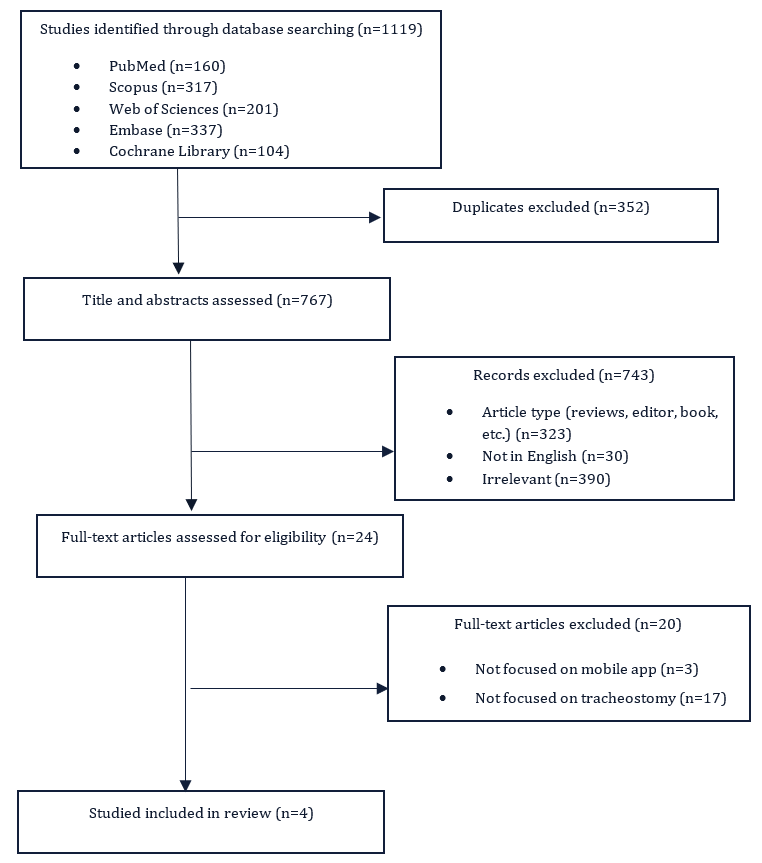
Figure 1. Flow diagram of the study selection process following the PRISMA guideline.
The 2018 version of the Mixed Methods Assessment Tool (MMAT) was used to assess the risk of bias in the included articles [24]. This tool is specifically designed for the critical appraisal of primary studies in systematic reviews. The MMAT has been developed to allow for rigorous and consistent assessment of quantitative, qualitative, non-randomized, randomized controlled, and mixed-methods studies. The MMAT questions offer three response options: “yes,” “no,” and “cannot tell.”
After reviewing the retrieved articles, A.P. and A.H.D. conducted the data extraction process and recorded the information in an Excel spreadsheet. The extracted data included the article title, journal name, country, study type, year of publication, app name, app purpose, platform type, digital tools used to access the app, app users, app content type, app content, app benefits, and app limitations.
To determine the core educational modules and key features based on the results of data extraction, the researchers designed a questionnaire consisting of 50 questions. The questionnaire was written in Persian and included five sections: user profile (7 questions), health status (17 questions), educational hub (9 questions), lifestyle (5 questions), and key features (12 questions). An open-ended question was included at the end of the questionnaire to collect suggestions and feedback from experts. The measurement scale used in this questionnaire was a 5-point Likert-type scale, with the following scores: very important, important, no opinion, somewhat important, and unimportant.
To ensure compliance with ethical standards, the identities and responses of the participants were kept confidential throughout the study. Participants were informed that their participation was voluntary and that they could withdraw from the study at any time.
An expert panel was formed to ensure the content validity of the questionnaire, comprising health information management experts (2 members), medical informatics specialists (2 members), and ear, nose, and throat (ENT) specialists (2 members). The panel members were carefully selected based on their extensive experience and expertise; all were university faculty members with more than ten years of professional experience. Once the questionnaire was approved, it was distributed for an in-person survey to 20 specialists, including five thoracic surgeons, five ENT specialists, five health information management specialists, and five medical informatics specialists. These 20 specialists were selected based on purposive sampling.
Findings
Out of 1,119 articles, four eligible articles were finally selected after removing duplicates and screening titles, abstracts, and full texts. Based on the quality assessment using MMAT, three articles scored 4 out of 5, while one article scored 3 out of 5.
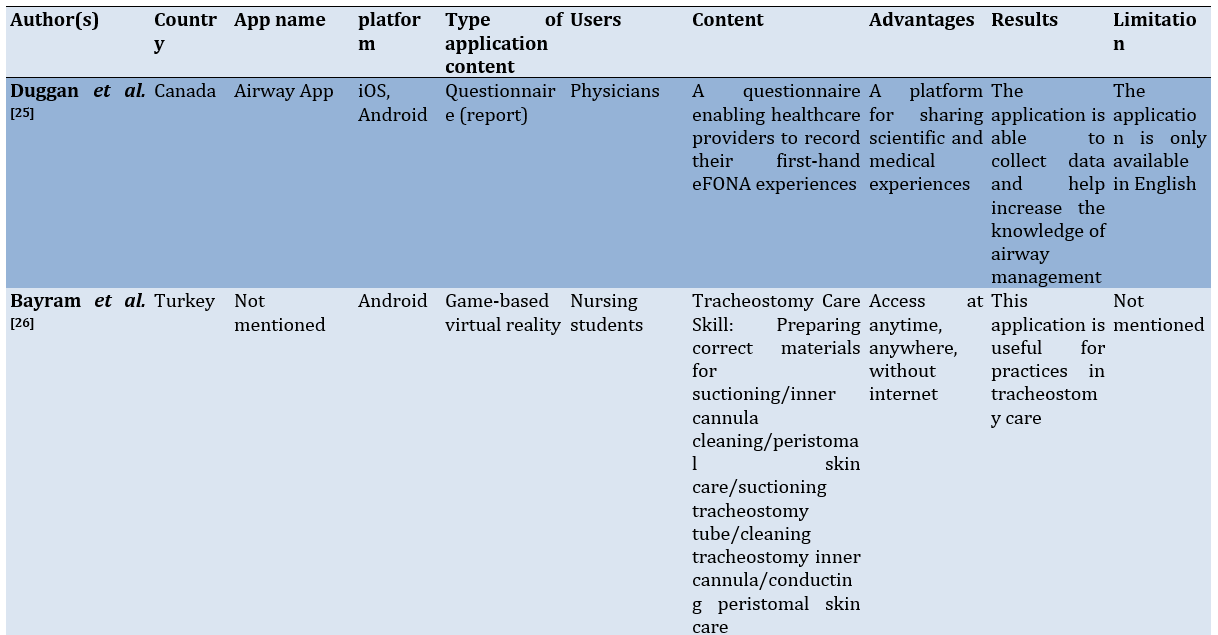
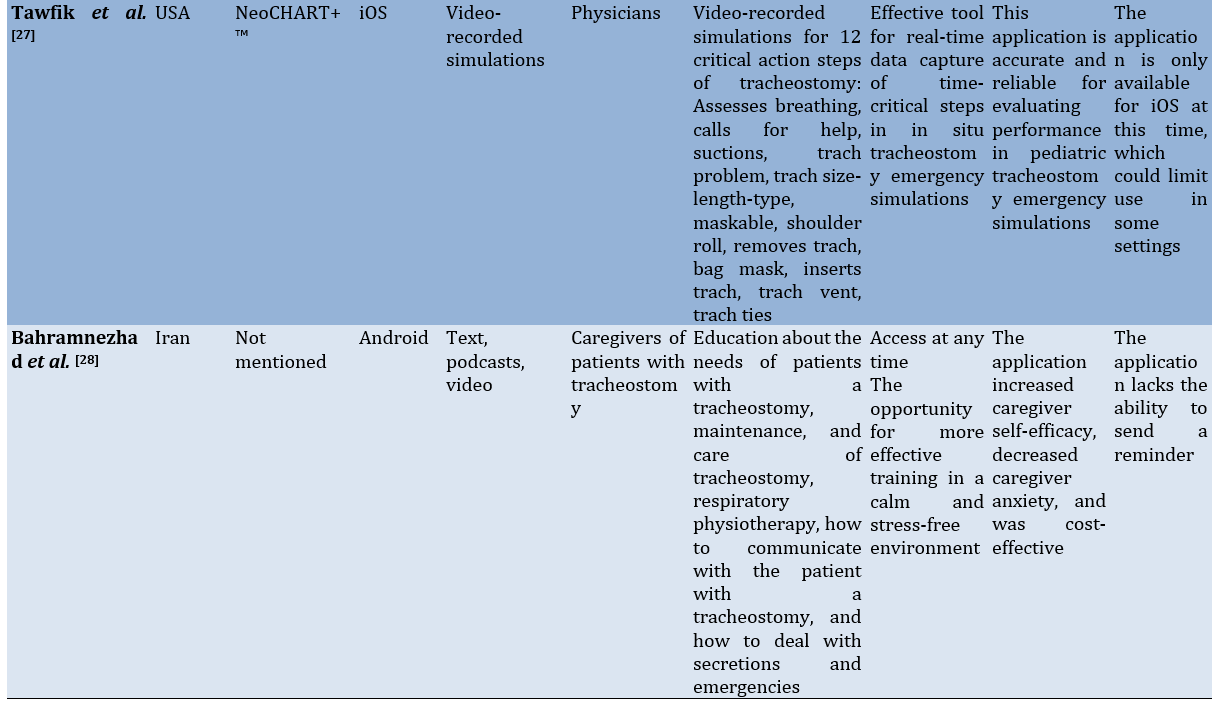
One study was from the United States, one from Canada, one from Iran, and one from Turkey, indicating the geographical distribution of the studies across three continents: America, Europe, and Asia. None of the study participants were patients. In two studies, the app users were physicians; in one study, they were caregivers; and in one study, they were nursing students. The application designed in two of the studies was developed for the Android platform, in one study for the iOS platform, and in another study for both iOS and Android platforms simultaneously. Two studies were published in 2024, one study in 2018, and one study in 2019. Although the number of studies conducted in this area is minimal, the increase in the number of published articles indicated growing attention and focus on the development of tracheostomy mHealth apps (Table 2).
Table 2. Characteristics of the stuAdies reviewed
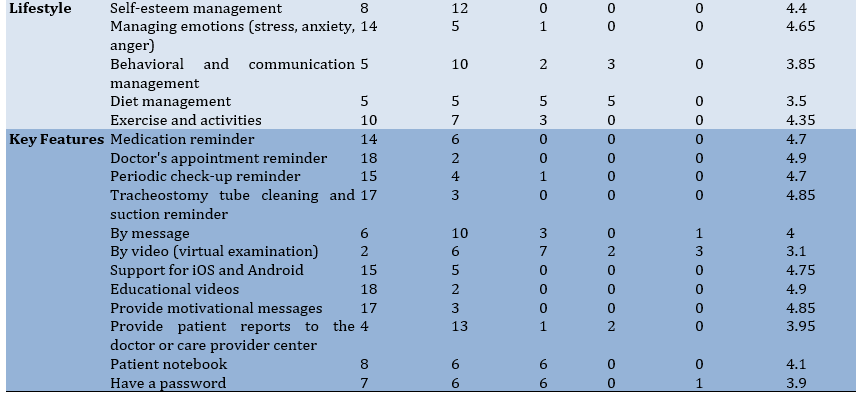
Overall, based on the experts’ views, the item “name and surname” in the user profile category, the item “history of respiratory diseases” in the health status category, the item “how to manage emergencies” in the educational hub category, the item “managing emotions” in the Lifestyle category, and finally, in the key features category, the items “doctor’s appointment reminder” and “educational videos” received the highest scores (Table 3).
Table 3. The core educational modules and key features in the tracheostomy mHealth app
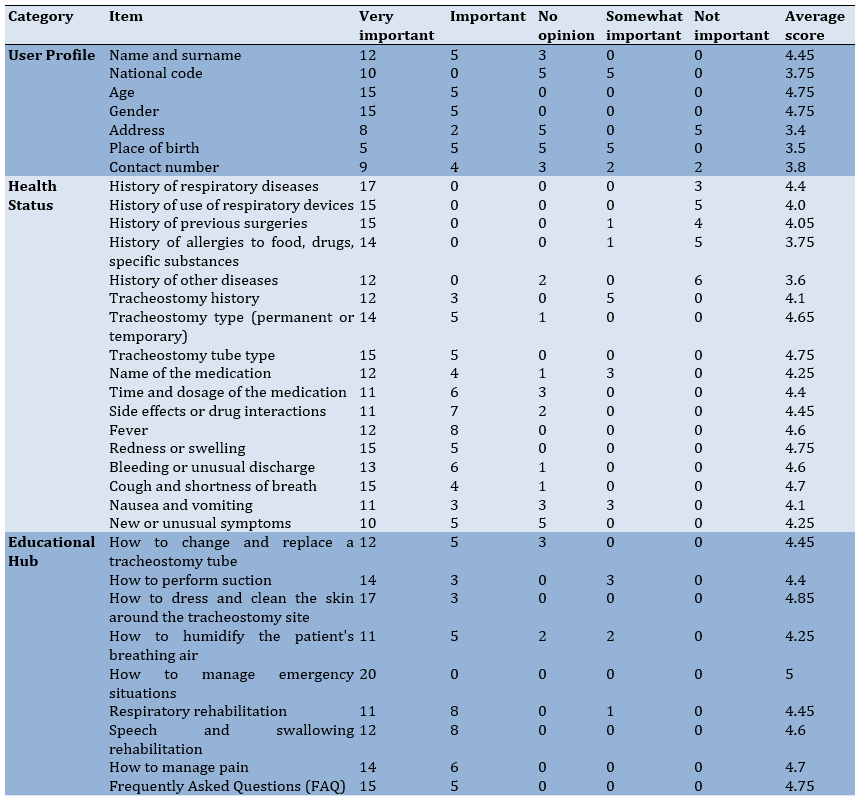
The educational hub category, with an average score of 4.62, was the most crucial from the experts’ perspective, followed by health status, which had an average of 4.52, key features, with an average of 4.39, and Lifestyle, with an average of 4.06. In contrast, the user profile category, with an average score of 3.8, was considered the least important from the experts’ viewpoint (Figure 2).
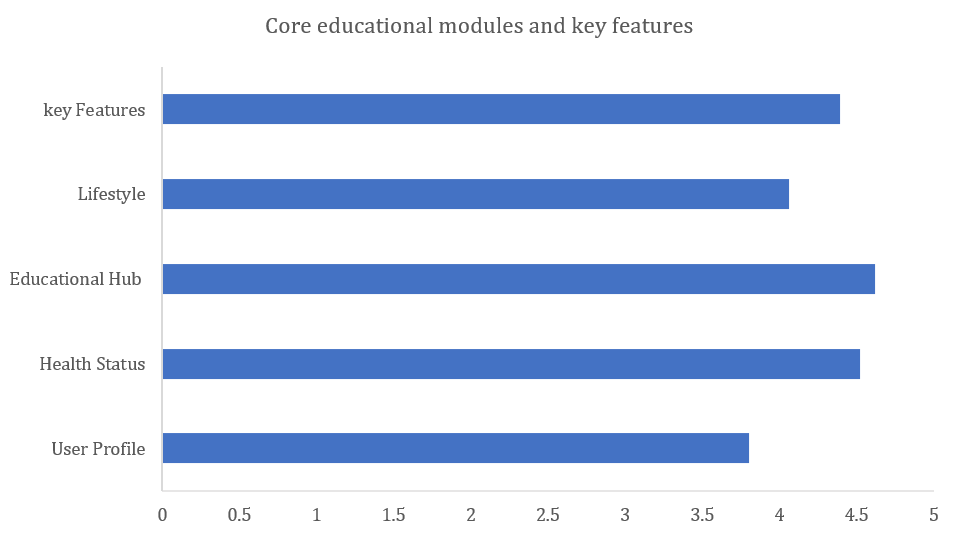
Figure 2. Average scores obtained in each category of modules and known key features of the tracheostomy mHealth app
Discussion
This study aimed to identify and determine the core educational modules and key features in tracheostomy mHealth apps. The core educational modules and key features of the tracheostomy mHealth app were identified and categorized into five sections: user profile, health status, educational hub, lifestyle, and key features. These requirements were extracted through a systematic review and a survey of experts. A total of 38 educational modules and 12 key features were identified and evaluated by experts.
The MMAT tool was employed to assess the quality of eligible articles from the systematic review. Most studies had appropriate methodology and design. Utilizing this tool enhances confidence and validity in the results and interpretations of the included articles.
mHealth can play a crucial role in the screening, diagnosis, prevention, and treatment of diseases by providing healthcare information. Mobile applications are particularly critical for patients with a tracheostomy, as these individuals require specialized training, continuous monitoring of respiratory status, and rapid access to accurate medical information. mHealth applications can effectively meet the educational needs of these patients.
One of our key findings is the special importance of educational modules in the educational hub category from the experts’ perspective, indicating the genuine need for tracheostomized patients to acquire informational knowledge related to tracheostomy. Additionally, these findings may highlight a gap and weakness in the existing education available for tracheostomized patients.
Duggan et al. [25] have developed an app called the Airway App for the emergency management of the anterior cervical airway. Their focus has been to collect clinical data and support group decision-making in the development of a mobile app. Although their results indicate potential for expanding knowledge in the field of emergency management of the anterior cervical airway, tracheostomized patients are not included in the study.
Bayram and Caliskan [26] conducted a clinical trial to evaluate a virtual reality-based application aimed at educating nursing students on how to properly care for patients who have undergone tracheostomy surgery and reported that using a game-based virtual reality application is very effective in teaching nursing students tracheostomy tube suction skills. Although the researchers focused on providing educational content in a practical and interactive format within the application, the target group for the designed application is not tracheostomized patients.
Tawfik et al. [27] in the United States used a mobile application called NeoCHART+™ to simulate the performance of group therapy and emergency procedures after tracheostomy, showing that the application is highly accurate.
In 2024, Bahramnezhad et al. [28] conducted as a randomized clinical trial to compare the effects of two training methods: simulation using a mannequin and training through a mobile application, indicating that training via a mobile app can significantly boost self-efficacy and reduce anxiety.
One of the strengths of this study was the use of a specialized panel of experts to validate the questionnaire. Additionally, a survey among these experts helped identify the most critical educational modules and key features for patients undergoing tracheostomy. This method combined scientific and practical insights from the experts.
However, a systematic review of the literature reveals a lack of studies on the development of mHealth apps specifically for tracheostomy patients, as most existing apps are designed for populations other than patients. This represents a significant research gap, especially given the critical role of mHealth tools in engaging patients in their treatment and improving their quality of life. The study not only identified this gap but also provided a practical solution for policymakers, developers, and health professionals by pinpointing essential modules and key features. Future research should expand on the development of mHealth tools for tracheostomized patients, building on the results of this study.
The study does have some limitations. Notably, the survey involved a small number of experts, which is significant. This constraint limits the ability to generalize the findings to larger populations, making it essential to interpret the results carefully. Additionally, the study only considered articles published in English, excluding those in other languages. This language restriction means that relevant studies published in non-English languages were not included in the analysis.
One of the main challenges for this group is limited access to specialized applications, primarily due to the small number of apps developed for tracheostomy. By identifying the educational modules and capabilities required for a tracheostomy mHealth application, this study can serve as a practical reference for specialists and developers, facilitating the creation of efficient and targeted applications. Additionally, it is recommended that healthcare professionals and technology developers consider incorporating artificial intelligence in the design of mHealth apps to enhance quality, efficiency, and user satisfaction, providing a foundation for further improving patients’ conditions.
Conclusion
Using mHealth apps provides a unique opportunity for tracheostomized individuals to manage their health status more effectively.
Acknowledgments: The authors would like to thank Shahid Beheshti University of Medical Sciences.
Ethical Permissions: This study was reviewed and approved by the review board and ethics committee of Shahid Beheshti University of Medical Sciences (IR.SBMU.RETECH.REC.1404.380).
Conflicts of Interests: The authors declared no conflicts of interests.
Authors' Contribution: Asadi F (First Author), Introduction Writer/Methodologist/Main Researcher (40%); Daeechini AH (Second Author), Methodologist/Assistant Researcher (30%); Paghe A (Third Author), Statistical Analyst/Discussion Writer (20%); Moshirizadeh AH (Fourth Author), Introduction Writer (10%)
Funding/Support: This study did not receive any financial support.
Tracheostomy is one of the oldest known methods of securing the airway, performed by creating an opening in the anterior wall of the trachea. In this procedure, a tube called a tracheostomy tube is inserted through this opening into the trachea to maintain the stoma and ensure airway patency. This artificial airway allows air to enter the trachea directly, bypassing the mouth and pharynx [1-5]. Approximately 250,000 tracheostomies are performed annually in developed countries, with around 10% of these procedures being conducted in children [6].
Tracheostomy is becoming more common in hospital ICUs, particularly for conditions like upper airway obstruction, the need for extended endotracheal intubation, and cases where pulmonary drainage is necessary. This procedure aids in airway suctioning, clears secretions, enhances patient comfort, improves mobility, supports ventilator weaning, and helps prevent long-term complications such as tracheal stenosis [7, 8].
While tracheostomies are crucial for maintaining an open airway, patients discharged with them often encounter various challenges. These include functional, physical, psychological, and social difficulties from the moment of admission until home care, all of which can impact their quality of life [9]. One of the most common issues faced by tracheostomized patients is the inability to speak through the tracheostomy tube, leading to significant anxiety and depression [10]. Improper care of the tracheostomy may result in complications such as tube obstruction, bleeding, cellulitis, ulcers, respiratory infections, and even death [11].
Identifying and developing patient-centered strategies to address these challenges is a central focus of the field of self-management [12]. Self-management is an essential strategy for individuals living with chronic illnesses [13]. In the context of patients with a tracheostomy, self-management is defined as an individual’s competence in performing tracheostomy care and managing its consequences in daily life [14]. This ability enables patients to follow and adjust their treatment according to a predetermined process, thereby gaining greater control over their condition [15].
Today, smartphones are essential tools for global communication and healthcare [16, 17]. Mobile technology is rapidly evolving and has the potential to transform various areas of the healthcare system. Mobile Health (mHealth) applications represent some of the core and innovative advancements designed to support and enhance the self-management of patients [16, 18-20]. These apps enable patients to monitor and manage their health more effectively and independently through educational materials, health status tracking, proactive feedback, medication reminders, and rehabilitation support [21].
Kiani et al. demonstrated that mHealth pulmonary rehabilitation programs for patients with respiratory disorders play a significant role in enhancing the quality of life, self-management, and physical activity of these patients [22]. However, mHealth applications vary regarding content and features, making it crucial to understand these differences [23]. Identifying and determining the essential educational modules and key features in tracheostomy mHealth apps can significantly enhance the empowerment, information, knowledge, and usability of these tools for patients. Given that no study has been conducted in this field to date, this study aimed to identify and determine the core educational modules and key features in tracheostomy mHealth apps.
Information and Methods
This systematic review was conducted in two stages in 2025. First, the modules and features were identifyed through a comprehensive literature review, and then these educational modules and key features were evaluated with insights from experts.
Initially, a systematic search strategy was developed. A comprehensive search was conducted across five databases, namely Web of Science, Scopus, PubMed, Cochrane, and Embase, using relevant keywords for the period from 2000 to 2025 (Table 1).
Table 1. Search strategy in five databases
The research team determined the eligibility of articles based on inclusion and exclusion criteria derived from similar studies. Articles eligible for inclusion were those published in English with full text available, that reviewed mHealth apps for tracheostomy, and that provided sufficient details about the educational modules and key features. Articles were excluded if they were review articles, meta-analyses, conference papers, letters to the editor, or book chapters. Additionally, articles that did not focus on the objectives of the present study or whose full text was not available, or that were written in a language other than English, were also excluded.
The screening and selection process of articles was conducted following the PRISMA guidelines. The identified articles were first entered into EndNote version 20 software, and duplicate entries were identified and removed. The titles and abstracts of the articles were then evaluated by two independent researchers (A.H.M. and A.P.) based on established criteria. In cases of disagreement or uncertainty regarding the inclusion or exclusion of studies, the third author (A.H.D.) was involved in the discussion and made the final decision (Figure 1).
Figure 1. Flow diagram of the study selection process following the PRISMA guideline.
The 2018 version of the Mixed Methods Assessment Tool (MMAT) was used to assess the risk of bias in the included articles [24]. This tool is specifically designed for the critical appraisal of primary studies in systematic reviews. The MMAT has been developed to allow for rigorous and consistent assessment of quantitative, qualitative, non-randomized, randomized controlled, and mixed-methods studies. The MMAT questions offer three response options: “yes,” “no,” and “cannot tell.”
After reviewing the retrieved articles, A.P. and A.H.D. conducted the data extraction process and recorded the information in an Excel spreadsheet. The extracted data included the article title, journal name, country, study type, year of publication, app name, app purpose, platform type, digital tools used to access the app, app users, app content type, app content, app benefits, and app limitations.
To determine the core educational modules and key features based on the results of data extraction, the researchers designed a questionnaire consisting of 50 questions. The questionnaire was written in Persian and included five sections: user profile (7 questions), health status (17 questions), educational hub (9 questions), lifestyle (5 questions), and key features (12 questions). An open-ended question was included at the end of the questionnaire to collect suggestions and feedback from experts. The measurement scale used in this questionnaire was a 5-point Likert-type scale, with the following scores: very important, important, no opinion, somewhat important, and unimportant.
To ensure compliance with ethical standards, the identities and responses of the participants were kept confidential throughout the study. Participants were informed that their participation was voluntary and that they could withdraw from the study at any time.
An expert panel was formed to ensure the content validity of the questionnaire, comprising health information management experts (2 members), medical informatics specialists (2 members), and ear, nose, and throat (ENT) specialists (2 members). The panel members were carefully selected based on their extensive experience and expertise; all were university faculty members with more than ten years of professional experience. Once the questionnaire was approved, it was distributed for an in-person survey to 20 specialists, including five thoracic surgeons, five ENT specialists, five health information management specialists, and five medical informatics specialists. These 20 specialists were selected based on purposive sampling.
Findings
Out of 1,119 articles, four eligible articles were finally selected after removing duplicates and screening titles, abstracts, and full texts. Based on the quality assessment using MMAT, three articles scored 4 out of 5, while one article scored 3 out of 5.
One study was from the United States, one from Canada, one from Iran, and one from Turkey, indicating the geographical distribution of the studies across three continents: America, Europe, and Asia. None of the study participants were patients. In two studies, the app users were physicians; in one study, they were caregivers; and in one study, they were nursing students. The application designed in two of the studies was developed for the Android platform, in one study for the iOS platform, and in another study for both iOS and Android platforms simultaneously. Two studies were published in 2024, one study in 2018, and one study in 2019. Although the number of studies conducted in this area is minimal, the increase in the number of published articles indicated growing attention and focus on the development of tracheostomy mHealth apps (Table 2).
Table 2. Characteristics of the stuAdies reviewed
Overall, based on the experts’ views, the item “name and surname” in the user profile category, the item “history of respiratory diseases” in the health status category, the item “how to manage emergencies” in the educational hub category, the item “managing emotions” in the Lifestyle category, and finally, in the key features category, the items “doctor’s appointment reminder” and “educational videos” received the highest scores (Table 3).
Table 3. The core educational modules and key features in the tracheostomy mHealth app
The educational hub category, with an average score of 4.62, was the most crucial from the experts’ perspective, followed by health status, which had an average of 4.52, key features, with an average of 4.39, and Lifestyle, with an average of 4.06. In contrast, the user profile category, with an average score of 3.8, was considered the least important from the experts’ viewpoint (Figure 2).
Figure 2. Average scores obtained in each category of modules and known key features of the tracheostomy mHealth app
Discussion
This study aimed to identify and determine the core educational modules and key features in tracheostomy mHealth apps. The core educational modules and key features of the tracheostomy mHealth app were identified and categorized into five sections: user profile, health status, educational hub, lifestyle, and key features. These requirements were extracted through a systematic review and a survey of experts. A total of 38 educational modules and 12 key features were identified and evaluated by experts.
The MMAT tool was employed to assess the quality of eligible articles from the systematic review. Most studies had appropriate methodology and design. Utilizing this tool enhances confidence and validity in the results and interpretations of the included articles.
mHealth can play a crucial role in the screening, diagnosis, prevention, and treatment of diseases by providing healthcare information. Mobile applications are particularly critical for patients with a tracheostomy, as these individuals require specialized training, continuous monitoring of respiratory status, and rapid access to accurate medical information. mHealth applications can effectively meet the educational needs of these patients.
One of our key findings is the special importance of educational modules in the educational hub category from the experts’ perspective, indicating the genuine need for tracheostomized patients to acquire informational knowledge related to tracheostomy. Additionally, these findings may highlight a gap and weakness in the existing education available for tracheostomized patients.
Duggan et al. [25] have developed an app called the Airway App for the emergency management of the anterior cervical airway. Their focus has been to collect clinical data and support group decision-making in the development of a mobile app. Although their results indicate potential for expanding knowledge in the field of emergency management of the anterior cervical airway, tracheostomized patients are not included in the study.
Bayram and Caliskan [26] conducted a clinical trial to evaluate a virtual reality-based application aimed at educating nursing students on how to properly care for patients who have undergone tracheostomy surgery and reported that using a game-based virtual reality application is very effective in teaching nursing students tracheostomy tube suction skills. Although the researchers focused on providing educational content in a practical and interactive format within the application, the target group for the designed application is not tracheostomized patients.
Tawfik et al. [27] in the United States used a mobile application called NeoCHART+™ to simulate the performance of group therapy and emergency procedures after tracheostomy, showing that the application is highly accurate.
In 2024, Bahramnezhad et al. [28] conducted as a randomized clinical trial to compare the effects of two training methods: simulation using a mannequin and training through a mobile application, indicating that training via a mobile app can significantly boost self-efficacy and reduce anxiety.
One of the strengths of this study was the use of a specialized panel of experts to validate the questionnaire. Additionally, a survey among these experts helped identify the most critical educational modules and key features for patients undergoing tracheostomy. This method combined scientific and practical insights from the experts.
However, a systematic review of the literature reveals a lack of studies on the development of mHealth apps specifically for tracheostomy patients, as most existing apps are designed for populations other than patients. This represents a significant research gap, especially given the critical role of mHealth tools in engaging patients in their treatment and improving their quality of life. The study not only identified this gap but also provided a practical solution for policymakers, developers, and health professionals by pinpointing essential modules and key features. Future research should expand on the development of mHealth tools for tracheostomized patients, building on the results of this study.
The study does have some limitations. Notably, the survey involved a small number of experts, which is significant. This constraint limits the ability to generalize the findings to larger populations, making it essential to interpret the results carefully. Additionally, the study only considered articles published in English, excluding those in other languages. This language restriction means that relevant studies published in non-English languages were not included in the analysis.
One of the main challenges for this group is limited access to specialized applications, primarily due to the small number of apps developed for tracheostomy. By identifying the educational modules and capabilities required for a tracheostomy mHealth application, this study can serve as a practical reference for specialists and developers, facilitating the creation of efficient and targeted applications. Additionally, it is recommended that healthcare professionals and technology developers consider incorporating artificial intelligence in the design of mHealth apps to enhance quality, efficiency, and user satisfaction, providing a foundation for further improving patients’ conditions.
Conclusion
Using mHealth apps provides a unique opportunity for tracheostomized individuals to manage their health status more effectively.
Acknowledgments: The authors would like to thank Shahid Beheshti University of Medical Sciences.
Ethical Permissions: This study was reviewed and approved by the review board and ethics committee of Shahid Beheshti University of Medical Sciences (IR.SBMU.RETECH.REC.1404.380).
Conflicts of Interests: The authors declared no conflicts of interests.
Authors' Contribution: Asadi F (First Author), Introduction Writer/Methodologist/Main Researcher (40%); Daeechini AH (Second Author), Methodologist/Assistant Researcher (30%); Paghe A (Third Author), Statistical Analyst/Discussion Writer (20%); Moshirizadeh AH (Fourth Author), Introduction Writer (10%)
Funding/Support: This study did not receive any financial support.
References
1. Rashid AO, Islam S. Percutaneous tracheostomy: A comprehensive review. J Thorac Dis. 2017;9(Suppl 10):S1128-38. [Link] [DOI:10.21037/jtd.2017.09.33]
2. Nyanzi DJ, Atwine D, Kamoga R, Birungi C, Nansubuga CA, Nyaiteera V, et al. Tracheostomy-related indications, early complications and their predictors among patients in low resource settings: A prospective cohort study in the pre-COVID-19 era. BMC Surg. 2023;23(1):59. [Link] [DOI:10.1186/s12893-023-01960-5]
3. Raimonde A, Westhoven N, Winters R. Tracheostomy. Treasure Island (FL): StatPearls Publishing; 2024. [Link]
4. Dawson D. Essential principles: Tracheostomy care in the adult patient. Nurs Crit Care. 2014;19(2):63-72. [Link] [DOI:10.1111/nicc.12076]
5. Baiu I, Backhus L. What is a tracheostomy?. JAMA. 2019;322(19):1932. [Link] [DOI:10.1001/jama.2019.14994]
6. Brenner MJ, Pandian V, Milliren CE, Graham DA, Zaga C, Morris LL, et al. Global tracheostomy collaborative: Data-driven improvements in patient safety through multidisciplinary teamwork, standardisation, education, and patient partnership. Br J Anaesth. 2020;125(1):e104-18. [Link] [DOI:10.1016/j.bja.2020.04.054]
7. Shiba T, Ghazizadeh S, Chhetri D, St. John M, Long J. Tracheostomy considerations during the COVID-19 pandemic. OTO Open. 2020;4(2):2473974X20922528. [Link] [DOI:10.1177/2473974X20922528]
8. Yelverton JC, Nguyen JH, Wan W, Kenerson MC, Schuman TA. Effectiveness of a standardized education process for tracheostomy care. Laryngoscope. 2015;125(2):342-7. [Link] [DOI:10.1002/lary.24821]
9. Nakarada-Kordic I, Patterson N, Wrapson J, Reay SD. A systematic review of patient and caregiver experiences with a tracheostomy. Patient. 2018;11(2):175-91. [Link] [DOI:10.1007/s40271-017-0277-1]
10. Singh RK, Saran S, Baronia AK. The practice of tracheostomy decannulation-a systematic review. J Intensive Care. 2017;5(1):38. [Link] [DOI:10.1186/s40560-017-0234-z]
11. Ishizaki M, Toyama M, Imura H, Takahashi Y, Nakayama T. Tracheostomy decannulation rates in Japan: A retrospective cohort study using a claims database. Sci Rep. 2022;12(1):19801. [Link] [DOI:10.1038/s41598-022-24174-w]
12. Grady PA, Gough LL. Self-management: A comprehensive approach to management of chronic conditions. Am J Public Health. 2014;104(8):e25-31. [Link] [DOI:10.2105/AJPH.2014.302041]
13. Kelly C, Heslop-Marshall K, Jones S, Roberts NJ. Self-management in chronic lung disease: What is missing?. Breathe. 2022;18(1):210179. [Link] [DOI:10.1183/20734735.0179-2021]
14. Weidlich S, Pfeiffer J, Kugler C. Self-management of patients with tracheostomy in the home setting: A scoping review. J Patient Rep Outcomes. 2023;7(1):101. [Link] [DOI:10.1186/s41687-023-00643-2]
15. Asadi F, Hosseini A, Daeechini AH. Designing the essential informational needs of a smartphone application for self-management of patients with inflammatory bowel disease. Health Sci Rep. 2024;7(11):e70186. [Link] [DOI:10.1002/hsr2.70186]
16. Park YT. Emerging new era of mobile health technologies. Healthc Inform Res. 2016;22(4):253-4. [Link] [DOI:10.4258/hir.2016.22.4.253]
17. Sharma S, Kumari B, Ali A, Yadav RK, Sharma AK, Sharma KK, et al. Mobile technology: A tool for healthcare and a boon in pandemic. J Fam Med Prim Care. 2022;11(1):37-43. [Link] [DOI:10.4103/jfmpc.jfmpc_1114_21]
18. Baig MM, GholamHosseini H, Connolly MJ. Mobile healthcare applications: System design review, critical issues and challenges. Australas Phys Eng Sci Med. 2015;38(1):23-38. [Link] [DOI:10.1007/s13246-014-0315-4]
19. Schnall R, Mosley JP, Iribarren SJ, Bakken S, Carballo-Diéguez A, Brown Iii W. Comparison of a user-centered design, self-management app to existing mHealth apps for persons living with HIV. JMIR mHealth uHealth. 2015;3(3):e91. [Link] [DOI:10.2196/mhealth.4882]
20. Paghe A, Daeechini AH, Valizadeh Laktarashi H, Naseri Z, Bornasi E, Sharafi S. Designing the critical informational components of a smartphone application for gestational diabetes self‐management. Health Educ Health Promot. 2025;13(2):297-303. [Link]
21. Quach S, Michaelchuk W, Benoit A, Oliveira A, Packham TL, Goldstein R, et al. Mobile health applications for self-management in chronic lung disease: A systematic review. Netw Model Anal Health Inform Bioinform. 2023;12(1):25. [Link] [DOI:10.1007/s13721-023-00419-0]
22. Kiani S, Abasi S, Yazdani A. Evaluation of m‐Health‐rehabilitation for respiratory disorders: A systematic review. Health Sci Rep. 2022;5(3):e575. [Link] [DOI:10.1002/hsr2.575]
23. Debon R, Coleone JD, Bellei EA, De Marchi ACB. Mobile health applications for chronic diseases: A systematic review of features for lifestyle improvement. Diabetes Metab Syndr. 2019;13(4):2507-12. [Link] [DOI:10.1016/j.dsx.2019.07.016]
24. Hong QN, Fàbregues S, Bartlett G, Boardman F, Cargo M, Dagenais P, et al. The Mixed Methods Appraisal Tool (MMAT) version 2018 for information professionals and researchers. Educ Inf. 2018;34(4):285-91. [Link] [DOI:10.3233/EFI-180221]
25. Duggan L, Lockhart S, Cook T, O'Sullivan E, Dare T, Baker P. The Airway App: Exploring the role of smartphone technology to capture emergency front‐of‐neck airway experiences internationally. Anaesthesia. 2018;73(6):703-10. [Link] [DOI:10.1111/anae.14247]
26. Bayram SB, Caliskan N. Effect of a game-based virtual reality phone application on tracheostomy care education for nursing students: A randomized controlled trial. Nurse Educ Today. 2019;79:25-31. [Link] [DOI:10.1016/j.nedt.2019.05.010]
27. Tawfik MM, Schiff E, Mosavian R, Campisi C, Shen A, Lin J, et al. Validation of a Novel Mobile Application for assessing pediatric tracheostomy emergency simulations. OTO Open. 2024;8(3):e145. [Link] [DOI:10.1002/oto2.145]
28. Bahramnezhad F, Jackson AC, Mousavi M, Mirmoghtadaie ZS, Asgari A. A randomized controlled trial comparing the effect of tracheostomy training using mannequin-based simulation and smartphone application on self-efficacy and anxiety of caregivers. Home Healthc Now. 2024;42(3):161-7. [Link] [DOI:10.1097/NHH.0000000000001245]